Geomechanics, Streamlined.
© 2026 Geomechanics.io. All rights reserved.
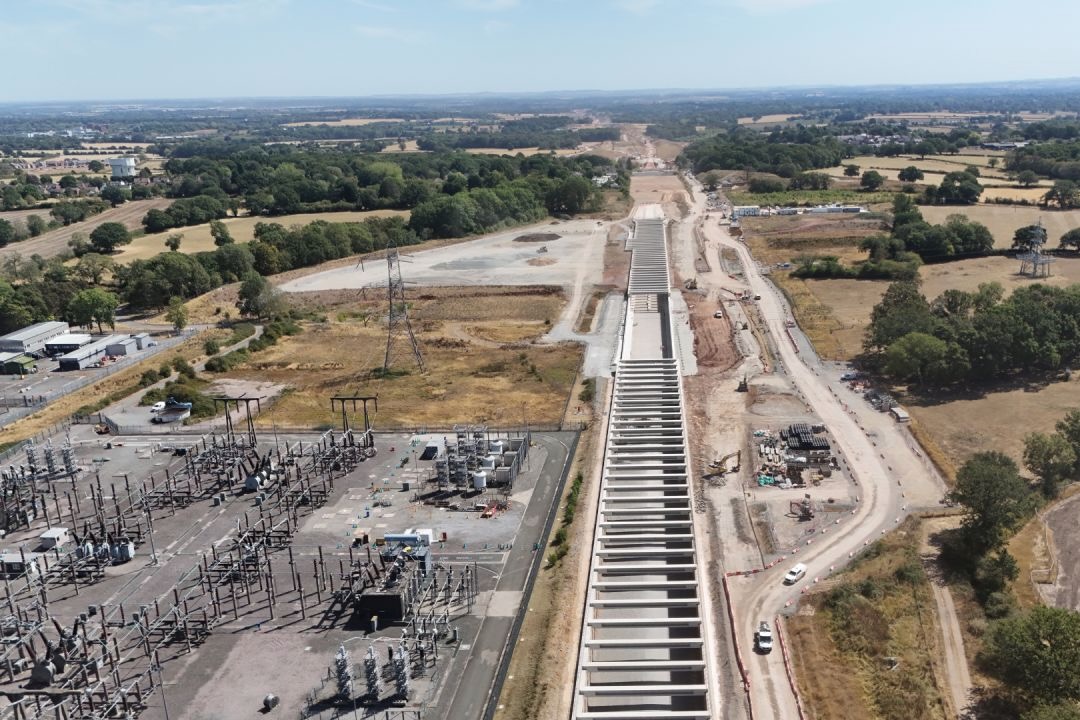
Construction has begun on a 200MW/857MWh battery energy storage system at Berkswell, near Solihull, being delivered by Sisk-owned Farrans for BW ESS, part of the BW Group. Designed to supply over 500,000 homes for four hours, the grid‑scale BESS will provide flexibility and resilience close to major electricity demand centres, supporting integration of variable renewable generation. The project is co‑owned with AIP Management, signalling continued investor appetite for large, strategically located storage assets in the UK.
A planning application from Slate Island Developments proposes converting IBM’s former Spango Valley campus at Greenock into a hyperscale-style data centre complex. Indicative plans show four data centre buildings totalling about 80,000 m² of floorspace on the brownfield platform, with new parking, landscaping and sustainable drainage while retaining most perimeter woodland. The scheme is tied to a separate Battery Energy Storage System (BESS), signalling future high electrical demand and potential grid reinforcement needs for the site.
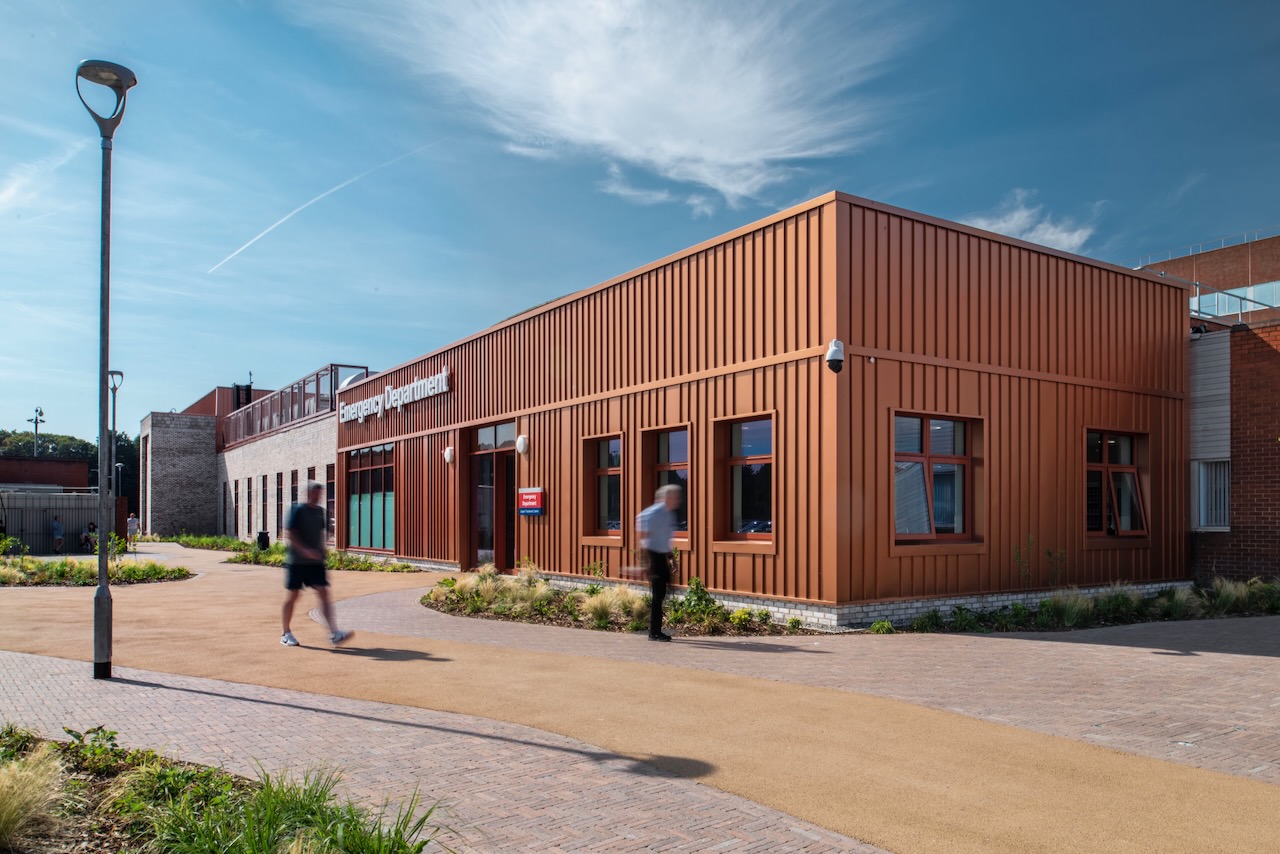
Tilbury Douglas has completed Arrowe Park Hospital’s Urgent & Emergency Care Upgrade Programme, the largest redevelopment at the Wirral site since it opened in 1982, procured through the Procure 22 Framework. The works were delivered in four phases while the hospital remained fully operational, adding a new ambulance drop-off area, separate adult and paediatric emergency departments, and facilities for major trauma and mental health patients. Reconfigured layouts aim to shorten patient journeys, increase ambulance throughput and provide modern clinical, training and staff wellbeing spaces.
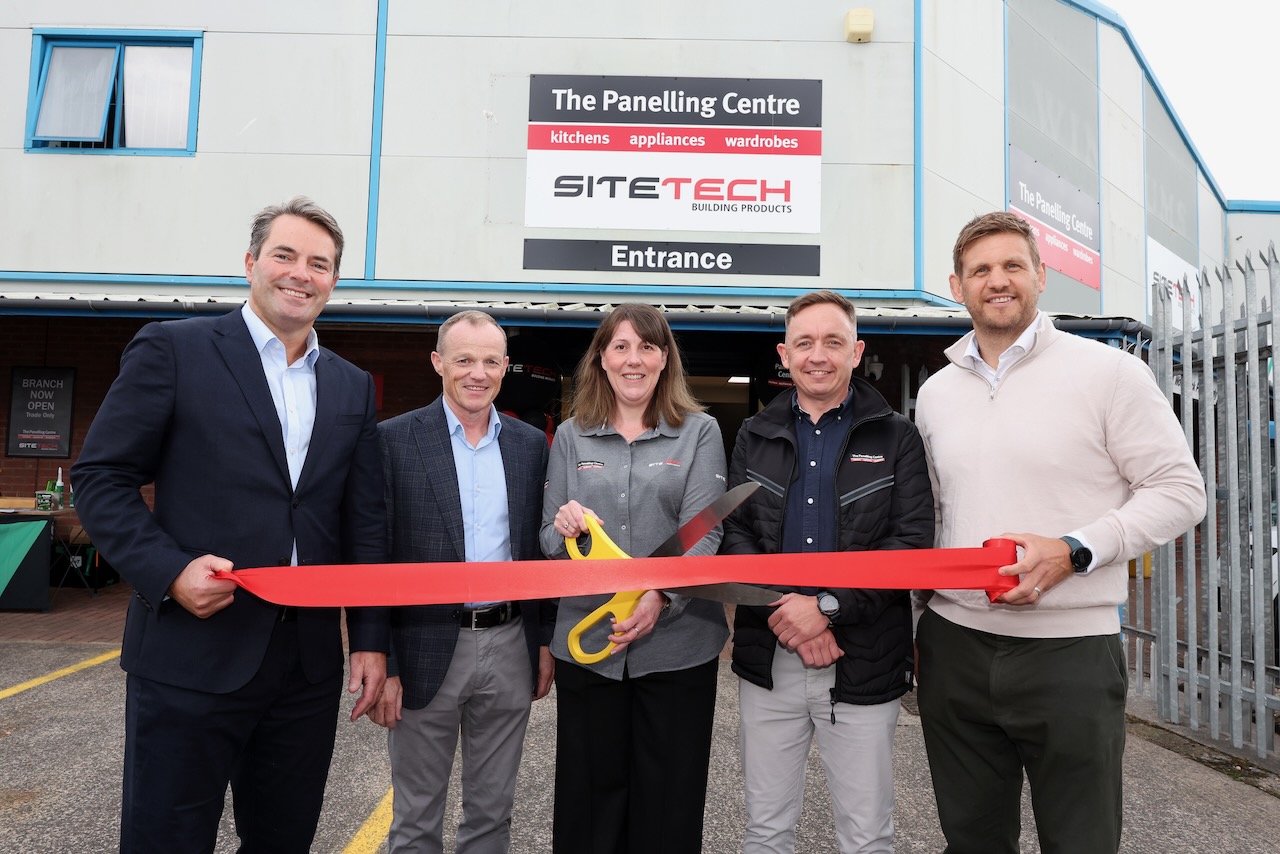
Chadwicks Group has opened its first Northern Ireland branch at Ravenshill Business Park, Belfast, combining The Panelling Centre and Sitetech to supply specialist kitchens, wardrobes and construction and civil engineering products. The site will employ eight staff and is led by branch manager Amanda Bothwell, who brings 20 years’ sector experience, including 11 years with Homebase and nine with Doorways. The branch targets trade customers across Belfast and the wider region, positioning itself as a technical support hub as well as a materials outlet.
NatureScot has launched a public consultation on the Scottish Planning Biodiversity Metric, a standardised tool required under National Planning Framework 4 (2023) to evidence biodiversity net gain on large-scale developments. The metric starts from a baseline habitat survey – covering grassland, peatland and woodland – to quantify pre-development biodiversity value and calculate the area and type of habitat creation or restoration needed to offset and enhance losses. Consultation on the working tool, user guide and habitat condition assessment runs to 30 November, with a refined version due in spring 2027.
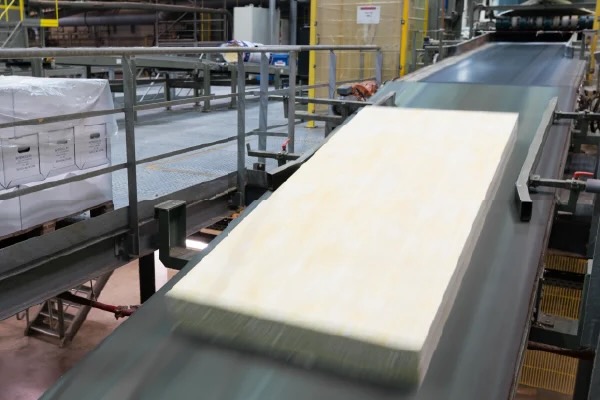
Revenue at Belgian building materials group Etex rose 4.9% in H1 2026, with cash flow up 8.8%, driven by stronger demand across several global markets. The supplier of lightweight construction systems, fibre cement boards and plasterboard reported that France and the UK lagged, reflecting weaker residential activity and delayed refurbishment work. For contractors and specifiers, the figures signal continued availability and investment capacity in Etex’s product lines, but with potentially tighter pricing and lead times in underperforming Western European markets.
Sandvik has unveiled “Sami”, a fully autonomous, battery-electric surface drilling concept at its Future of Mining event in Tampere, Finland, combining AI-driven drilling control, enhanced robotics and digital connectivity in a single platform. The concept drill is designed to operate without an onboard cabin, relying on remote supervision and connected fleet data to optimise drilling patterns and machine utilisation. For mine planners and maintenance teams, the package signals a move towards cabless, high-precision surface rigs that integrate directly with planning software and real-time production monitoring.
EACON has almost doubled its autonomous haulage fleet to more than 3,100 trucks in a year, reporting a 53% share of China’s autonomous mining market and an 18.9% gross profit margin as of 30 June 2026, up 1,011.8% year on year. Large-scale deployments at sites such as Zijin Mining’s Julong Copper mine in Tibet, operating in high-altitude, low-oxygen conditions, are being used to validate system reliability, fleet management algorithms and integration with existing dispatch and drilling–blasting workflows.
Royal Tyres has formed a strategic partnership with Indian manufacturer Ascenso to distribute its new radial off-the-road (ROTR) tyre range to mining customers across southern Africa. The Durban-based firm, with 87 years in the regional tyre market, will localise support and logistics for Ascenso’s giant ROTR products, targeting large haul trucks and loaders. The move signals increased competition in the radial OTR segment, giving mines an additional supplier option for high-load, long-haul applications on ultra-class fleets.
Sandvik is hosting its two-day Future of Mining 2026 event in Tampere, Finland, bringing global mining leaders together for live demonstrations of automation, electrification and AI-based systems. The OEM is using its Tampere test mine and surface facilities to show interoperable autonomous loading and hauling fleets, battery-electric underground equipment and data-driven optimisation tools integrated across the mining value chain. For engineers, the focus is on how these technologies can be deployed in brownfield operations, retrofit into existing fleets and supported through long-term technology partnerships.
Rockwell Automation has partnered with Mimosa Mine and local integrator Mine Elect to upgrade operational technology cybersecurity as part of a multi‑year digital migration at the platinum‑group metals and base metals operation in Zimbabwe’s Midlands Province. The collaboration focuses on securing industrial control systems and networked assets as Mimosa modernises plant automation, data acquisition and remote monitoring. For engineers, the move signals tighter integration of cybersecurity with process control upgrades, with implications for risk assessments, network segmentation and lifecycle management of legacy OT hardware.
Metso has signed an agreement with the Geological Survey of Finland (GTK) to engineer and deliver concentrator process technology for GTK Mintec’s new minerals processing and circular economy pilot plant in Outokumpu. The delivery will cover a full concentrator flowsheet, enabling pilot-scale testing of ore beneficiation and secondary raw materials, supporting clients with process design, upscaling and feasibility work. For engineers, the facility offers a Nordic test centre to de-risk comminution, separation and recycling circuits before commercial deployment.
Enginuity is redirecting its industrial microwave systems towards mineral processing, using more than 900 kW of installed 915 MHz generation capacity to precondition ore and concentrates ahead of grinding, flotation and leaching. The company, operating from South Africa and Switzerland, is targeting improved liberation and energy use by selectively heating sulphide and gangue phases before comminution. Rising adoption of coarse particle flotation is a key driver, as microwave preconditioning could enable coarser grind sizes while maintaining recovery.
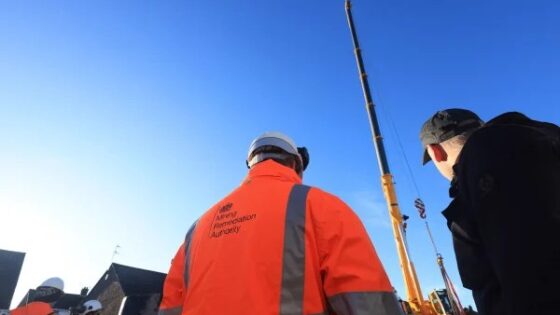
Homes on Benbuck View and Dunmoss View in Coalsnaughton, Clackmannanshire are to be demolished after Mining Remediation Authority investigations confirmed historic underground workings had caused active mine subsidence beneath the two streets. The decision follows visible ground movement reported on 18 May and subsequent detailed geotechnical assessments that ruled out practical stabilisation options for the affected plots. Engineers will now need to manage demolition, backfilling and long-term ground monitoring, with implications for foundations and service corridors on adjacent properties built over former coal measures.
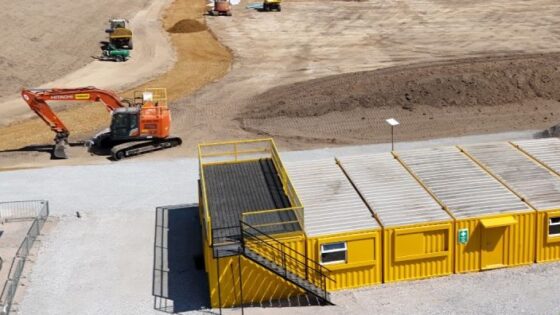
Construction has started on the Berkswell Battery Energy Storage System (BESS) in the West Midlands, with Farrans delivering the scheme for client BW ESS. The grid‑scale facility will use containerised lithium‑ion battery units and associated high‑voltage switchgear to provide rapid‑response storage and frequency support to the local transmission network. Key civil works will centre on heavy-duty foundations, cable routing and fire‑segregated compound layouts, with interfaces to National Grid connection assets driving programme and design constraints.
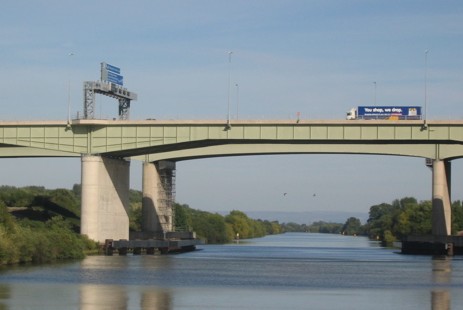
A £27M upgrade has begun on the Thelwall Viaduct, which carries the M6 over both the Manchester Ship Canal and the River Mersey and is one of the busiest strategic crossings in the North West. Works centre on replacement of ageing expansion joints and associated deck components to address long‑term movement, leakage and fatigue issues on the multi-span structure. Traffic management on this key motorway link will be critical, with phased lane closures likely to influence construction sequencing, joint installation methods and night-time working strategies.
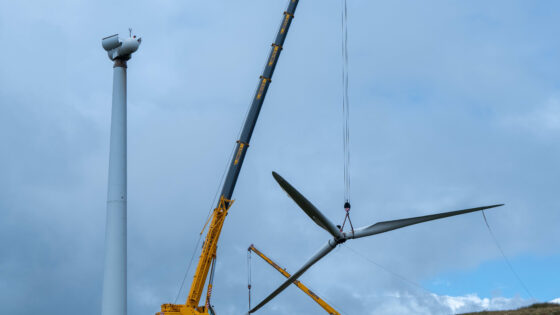
Decommissioning of Scotland’s first commercial wind farm, operated by ScottishPower, is being used as a UK-first testbed to align turbine end-of-life with material reuse and circular economy principles. Analysis of the dismantling process tracks recovery pathways for steel towers, concrete foundations and composite blades, examining options such as onshore recycling, repowering and secondary construction uses. Outcomes will inform future decommissioning strategies for UK wind assets, with direct implications for design-for-disassembly, waste permitting and contractual requirements on recyclability.
Rio Tinto chair Dominic Barton has been appointed chair of Invest in Canada and MEM Growth Partners founder Gurinder Grewal named CEO, tasked with steering a C$1 trillion ($720 billion) investment drive over five years into critical minerals, energy, artificial intelligence and major infrastructure. Ottawa expects about C$280 billion in federal capital and incentives to leverage more than C$1 trillion from public, private and institutional sources, building on C$96.8 billion of foreign direct investment in 2025. Invest in Canada will work closely with the federal Major Projects Office to move foreign investors from early interest to construction.
Sibanye-Stillwater has approved development of the Mt Lyell copper-gold restart in Tasmania and the Burnstone gold project in South Africa, budgeting $7.5 million and $5 million respectively in 2026 capex as part of a $340 million total for Mt Lyell. Mt Lyell is planned to deliver 26,000 t/y copper, 16,000 oz/y gold and 116,000 oz/y silver over 23 years at an all-in sustaining cost of $2.56/lb Cu, while Burnstone, with 2.7 Moz in reserves, targets 130,000 oz/y over 25 years. The decisions follow a threefold rise in half-year profit, with headline EPS at $0.33 and a $0.11/share interim dividend.
Larvotto Resources has restarted the historic Hillgrove mine in New South Wales as a gold–antimony operation, targeting 4,900 tonnes of antimony and 40,500 oz of gold per year over an initial eight-year mine life. The project is expected to supply about 7% of global antimony demand and more than half of non-Chinese output, making Larvotto Australia’s largest antimony producer alongside Alkane Resources’ Costerfield mine. Acquired for A$8 million in 2023, including a A$5-million environmental bond, Hillgrove’s rapid restart comes despite antimony prices falling to less than half their May 2025 peak of $59,000/t.
Venezuela’s push to reopen the Orinoco Mining Arc to global investors for gold, bauxite, coltan, iron ore and nickel is colliding with the presence of at least four uncontacted Indigenous peoples (Jödi/Hoti, Uwottüja/Piaroa, Yanomami and Eñepá/Panare) whose territories overlap or lie close to planned mining zones. Survival International reports 196 uncontacted groups worldwide, over 96% threatened by extractives, with Venezuelan Yanomami already facing mercury contamination, infectious disease and violent crime linked to illegal gold mining. The op-ed argues that without legally recognised territories, buffer zones, FPIC-compliant frameworks and IRMA-level safeguards, large-scale mining and associated access roads risk illegal encroachment, corporate complicity and potentially existential impacts on isolated communities.
Copper’s rally stalled just short of record levels as Comex December futures slipped 1.3% to $6.6020/lb and three-month LME prices retreated after coming within $2.50 of their all‑time high, even as LME inventories fell to 234,275 tonnes and Comex stocks swelled to about 688,000 tonnes. Chilean output dropped to 403,424 tonnes in July, its weakest July since 2011, after El Niño‑linked storms shut Antofagasta’s Los Pelambres and Lundin’s Caserones and forced 2026 guidance cuts at both operations. CRU now sees a previously forecast 639,000‑tonne 2026 surplus as effectively neutral, with continued US‑bound shipments and weather‑related Chilean disruptions risking a de facto deficit.
Mass drone warfare, with an estimated 15 million units deployed in the Russia-Ukraine conflict this year and US$150 billion pledged globally for drone and counter-drone systems, is sharply increasing defence demand for gallium, germanium and magnetic rare earths, where China supplied 98% of refined gallium and 77% of refined germanium in 2023. Teck Resources plans up to C$850 million of investment at its Trail complex to double germanium and antimony output and add gallium, while Rio Tinto is piloting gallium recovery at Jonquière targeting 40 tonnes a year, about 5% of current global supply. Heavy rare earth capacity is also edging forward, with Neo Performance Materials’ new dysprosium/terbium separation line in Estonia and Aclara’s Carina project in Brazil aiming for 156 t/y Dy and 27 t/y Tb from 2028.
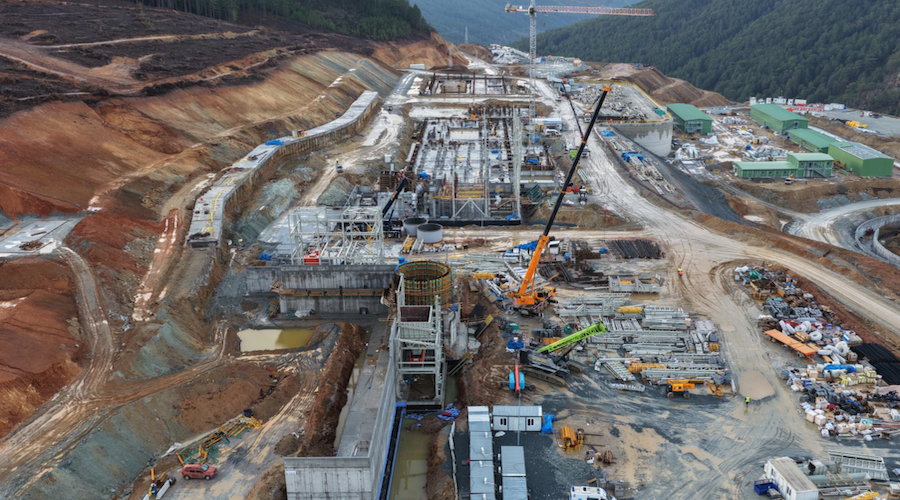
ACG Metals has produced its first copper concentrate from the Gediktepe mine in Turkey, completing the site’s shift from a single-stream gold-silver-zinc operation towards copper-focused output. The company is targeting 40,000 tonnes of copper per year at steady state and expects to reach full production by the end of 2026, with the ramp-up centred on higher throughput, improved recoveries and consistent concentrate quality. Management links the move to copper to growing demand from AI, electrification and other technology-led applications.