Southern Copper’s $319M Cuajone overhaul: design, tailings and throughput notes
Reviewed by Tom Sullivan
First reported on MINING.com
30 Second Briefing
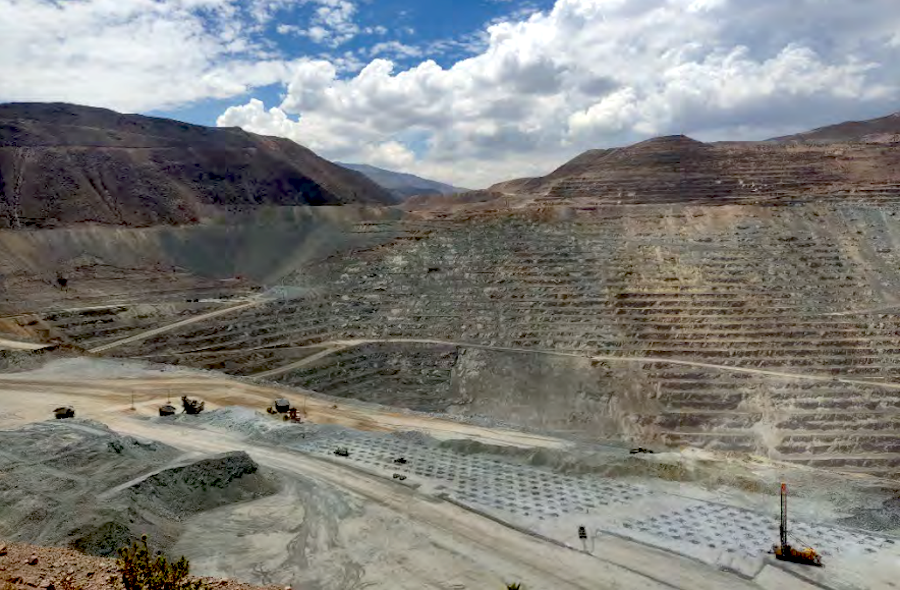
Southern Copper will spend $318.6 million over 17 months to overhaul the Cuajone mine in Peru’s Moquegua region, adding a new filter press at the concentrator, a dedicated electrical substation and control room, and relocating part of the freshwater pipeline. The programme also prepares 25.3 hectares for additional leaching and upgrades the sewer network, aiming to sustain roughly 163,000 tonnes per year of fine copper output as ore grades decline. Parallel $79 million works at Toquepala include a desliming unit, new tailings thickeners and seepage controls, building on Copper Mark and GISTM-compliant tailings management.
Technical Brief
- Installation of a new concentrator filter press is explicitly targeted at maintaining throughput during planned shutdowns.
- Relocation of the freshwater pipeline reduces interference risk with existing mine infrastructure and future leach-pad expansions.
- Sewer network adaptation at Cuajone indicates upgraded containment and segregation of domestic and potentially contaminated effluents.
- A dedicated electrical substation and control room for the filter system improves power reliability and operational isolation for critical equipment.
- Both Cuajone and Toquepala hold Copper Mark accreditation tied to ICMM’s Global Industry Standard on Tailings Management compliance.
- Toquepala’s new desliming unit is designed specifically for low‑grade ore, reducing slimes load into downstream circuits and tailings.
- Additional tailings thickeners at Toquepala focus on higher water recovery, lowering decant pond volume and seepage driving head.
- Seepage management enhancements at Toquepala directly address GISTM expectations for seepage control, monitoring and defensive design around TSFs.
Our Take
Southern Copper’s Cuajone and Toquepala upgrades in southern Peru come as the company is simultaneously navigating permitting volatility at the $1.8 billion Tía María copper project, suggesting a deliberate strategy to de-risk its Peruvian portfolio by reinforcing existing Moquegua-region assets while greenfield approvals remain uncertain.
With a defined 17‑month upgrade window at Cuajone and a separate $79 million improvement programme at Toquepala, Southern Copper appears to be prioritising near‑term reliability and cost control in Peru ahead of the 2033 horizon, which could help buffer the company against the copper price swings highlighted in recent bear‑market coverage of majors such as Southern Copper and BHP.
Copper dominates our 361 keyword‑matched pieces, and Southern Copper features repeatedly alongside other LatAm producers, signalling that incremental brownfield investments in Peru are becoming as closely watched by the market as headline greenfield projects, particularly where safety and sustainability tags are attached.
Prepared by collating external sources, AI-assisted tools, and Geomechanics.io’s proprietary mining database, then reviewed for technical accuracy & edited by our geotechnical team.
Related Articles

Related Industries & Products
Mining
Geotechnical software solutions for mining operations including CMRR analysis, hydrogeological testing, and data management.
Construction
Quality control software for construction companies with material testing, batch tracking, and compliance management.
CMRR-io
Streamline coal mine roof stability assessments with our cloud-based CMRR software featuring automated calculations, multi-scenario analysis, and collaborative workflows.
HYDROGEO-io
Comprehensive hydrogeological testing platform for managing, analysing, and reporting on packer tests, lugeon values, and hydraulic conductivity assessments.
GEODB-io
Centralised geotechnical data management solution for storing, accessing, and analysing all your site investigation and material testing data.