Geomechanics, Streamlined.
© 2026 Geomechanics.io. All rights reserved.
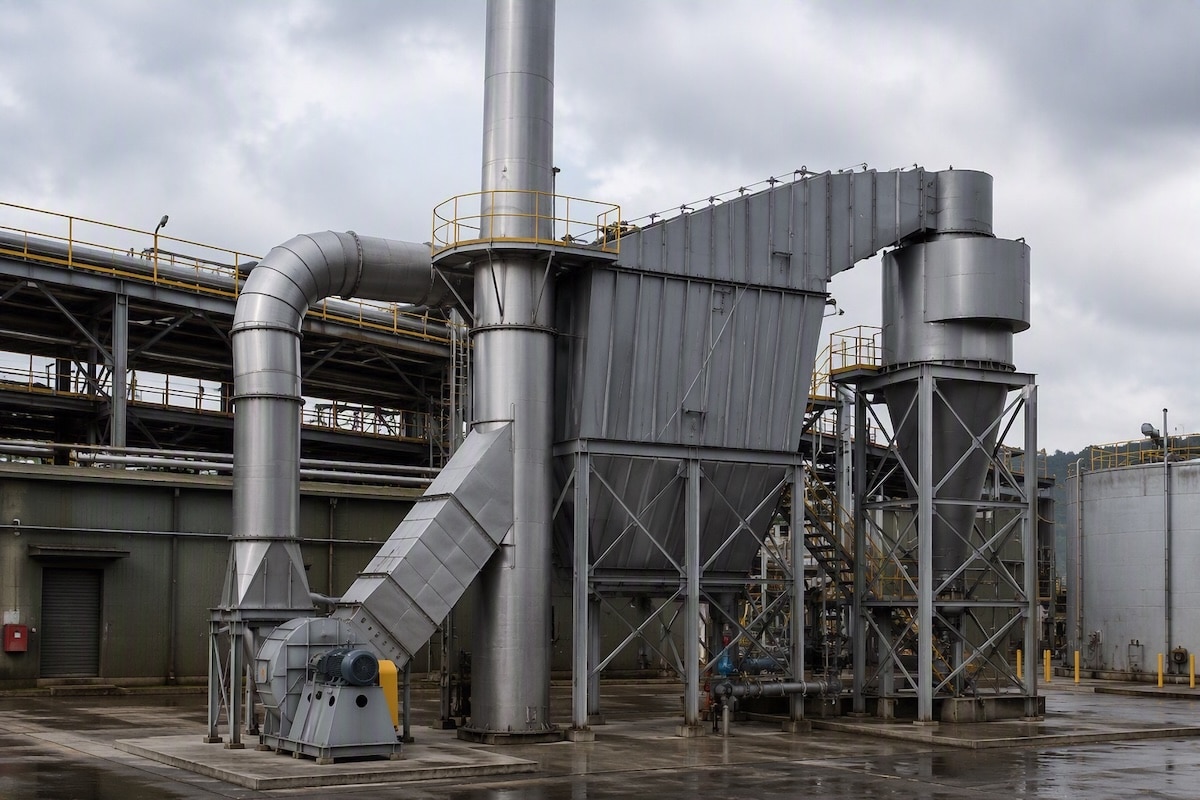
A collaboration between Nederman MikroPul’s Australian and Indonesian engineering teams is building a more integrated global solutions network for dust and fume control in complex mining and minerals processing plants. The cross-border model pairs local site delivery and commissioning experience in Australia and South-East Asia with centralised design standards for large baghouses, filtration systems and materials-handling interfaces. For operators, this points to more consistent performance specifications and lifecycle support on multi-site ventilation and emissions-control projects, especially where plants span multiple jurisdictions.
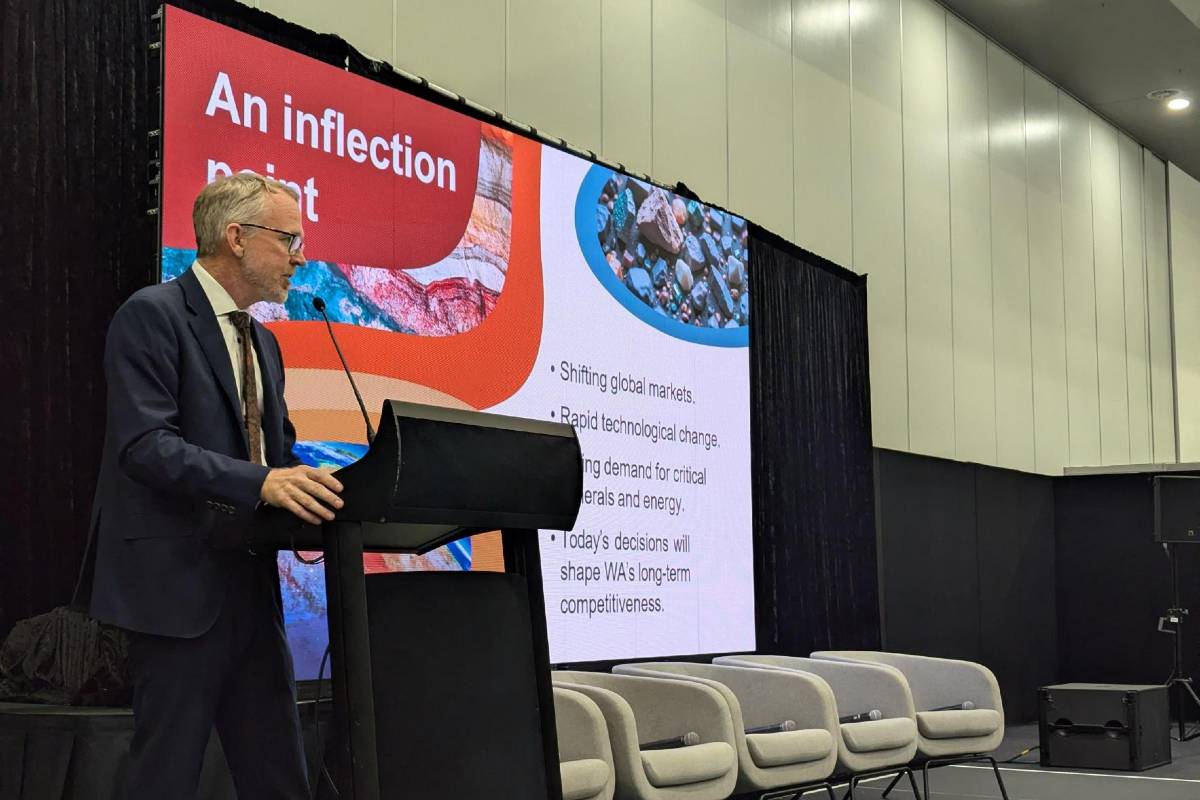
Western Australia’s Department of Mines, Petroleum and Exploration is pushing to cut mining project assessment times and embed more digital workflows in its approvals process, with director general Chris Shaw telling the WA Mining Conference 2026 that timeliness, effectiveness and efficiency are now core performance measures. The regulator is prioritising end‑to‑end online lodgement and tracking of applications, along with better data integration across environmental, geotechnical and safety assessments. For proponents, this signals stronger scrutiny of technical submissions but potentially faster decisions for complex greenfield and brownfield projects.
Critical Metals plans a $1.85 billion refinery in Romania capable of processing up to 100,000 tonnes per year of eudialyte concentrate from its Tanbreez project in Greenland, using a patent-pending mixed-acid leach that dissolves over 99% of the mineral and recovers 19 ultra-high-purity rare earth and critical metal products. Current modelling forecasts about 27,943 tonnes per year of chloride salts and related products plus 25,670 tonnes per year of high-purity SiO2, with silica by-product revenues alone estimated at roughly $600 million annually. The flowsheet targets tailings of only ~1% of feed and includes production of 50–70 tpa of high-purity hafnium metal and 20–30 tpa hafnium chloride, with projected NPV10 of $4.5 billion, 55% IRR and a two-year payback.
Wiltshire Council has let a new specialist highways framework covering road retexturing, in-situ pavement recycling, surface treatments, minor civil engineering works and traffic data collection across its local road network. The framework consolidates multiple workstreams into a single procurement route, giving term contractors clearer visibility on planned retexturing and surface treatment volumes and enabling coordinated programming with small structures, drainage and junction improvements. For geotechnical and pavement engineers, the inclusion of pavement recycling and data-led traffic monitoring signals continued emphasis on whole-life pavement performance and targeted asset management.
Arup has become a Taskforce on Nature-related Financial Disclosures (TNFD) adopter, committing to publish nature-related risks and dependencies across its global project portfolio by the end of 2027. The consultancy plans to embed TNFD-aligned screening into project design and delivery, covering impacts on ecosystems such as wetlands, river catchments and urban green corridors. For geotechnical and civil teams, this signals earlier constraints mapping around biodiversity, soil and groundwater, and more explicit reporting of nature-related liabilities alongside traditional geotechnical and flood risk assessments.
Engineers from nine specialist drainage consultancies have criticised National Highways’ current design rules for road runoff assets, warning that the standards constrain effective sizing and placement of features such as attenuation ponds, swales and filter drains. They argue the prescriptive approach limits designers’ ability to account for site-specific hydrology, climate change allowances and exceedance routing, potentially leaving trunk road schemes with underperforming systems during extreme rainfall. The dispute signals likely revisions to design guidance and may affect ongoing and future highway drainage designs and approvals.
Ireland recording its four warmest years on record consecutively since 2022 is exposing roads, rail and water assets to higher thermal loading, more frequent heat-induced deformation and accelerated material ageing. Asphalt pavements designed for historic temperature envelopes risk rutting and bleeding, while continuously welded rail faces greater buckling risk without upgraded stress management and ballast maintenance. For geotechnical and structural engineers, design and asset management now need explicit allowance for elevated ground temperatures, altered soil moisture regimes and more frequent extreme heat events in line with updated Eurocode-based climate actions.
Universal has named its first wave of contractors and consultants for the planned multi‑billion‑pound theme resort near Bedford, as enabling works start on the former Stewartby brickworks site. Early packages cover site clearance, ground investigation and utilities diversions to prepare the large brownfield plot for major earthworks, foundations and transport links to the nearby A421 and Midland Main Line. The appointments signal imminent demand for geotechnical design, ground remediation and complex phasing to manage high visitor loads and tight programme constraints.
Transport Scotland has advanced to the final procurement stage on its £1.94bn multi‑lot framework to dual the remaining sections of the A9 between Perth and Inverness, issuing a shortlist of major contractors for the programme. The framework will cover design and construction of the outstanding single‑carriageway stretches to continuous dual two‑lane standard, including earthworks, structures and junction upgrades along the roughly 80km corridor. Geotechnical risk, rock cut stability and drainage design in constrained Highland terrain will be central bid differentiators as teams refine construction phasing and traffic management proposals.
UK Fusion Energy Ltd has become a Tier 1 member of the Manufacturing Technology Centre as it advances procurement for the Spherical Tokamak for Energy Production (STEP) prototype fusion plant at West Burton, Nottinghamshire. The partnership gives STEP access to MTC’s advanced manufacturing testbeds for high-integrity nuclear components, including precision fabrication, remote handling and automated welding of complex vacuum vessel and breeder blanket assemblies. Civil and geotechnical teams can expect early engagement on constructability, modularisation and tolerances for heavy nuclear structures with tight alignment and maintenance access requirements.
IMT is deploying Wabtec’s Generation 3 Collision Avoidance System (CAS) across the Liebherr T 264 haul truck fleet at Vedanta Zinc International’s Gamsberg open-pit zinc mine in South Africa, integrating it with the Wabtec Digital Mine platform. The Gen 3 CAS provides 360° detection, operator alerts and configurable risk zones around each truck, designed to manage mixed-traffic interactions with light vehicles and ancillary equipment on wide, high-speed haul roads. For mine operators, the roll-out signals growing standardisation of OEM-agnostic CAS on ultra-class fleets, with implications for traffic rules, training and incident investigation workflows.
Hexagon has launched CAS Insights, a web-based analytics tool that aggregates collision and near-miss data from Hexagon Collision Avoidance System (CAS) units across entire mixed fleets to create a mine-wide safety performance view. The platform correlates high-volume event logs and device telemetry generated every shift, enabling users to pinpoint recurring risk locations, operator behaviours and interaction patterns between light vehicles, haul trucks and ancillary equipment. For mine operators, this supports targeted controls such as geofenced slow zones, revised traffic rules and focused operator training based on quantified exposure rather than anecdotal reports.
Recurring failure of mining machine components is framed as a design signal rather than a pure maintenance issue, with repeated breakdowns driving higher planned and unplanned interventions and cutting equipment availability. MASPRO points to patterns such as identical wear on crusher liners or repeat cracking in the same boom or bucket locations as evidence that load paths, material selection or geometry need re-engineering, not just parts replacement. Reliability teams are urged to treat failure data as feedback for redesign, integrating field wear measurements and failure modes into upgraded component specifications.
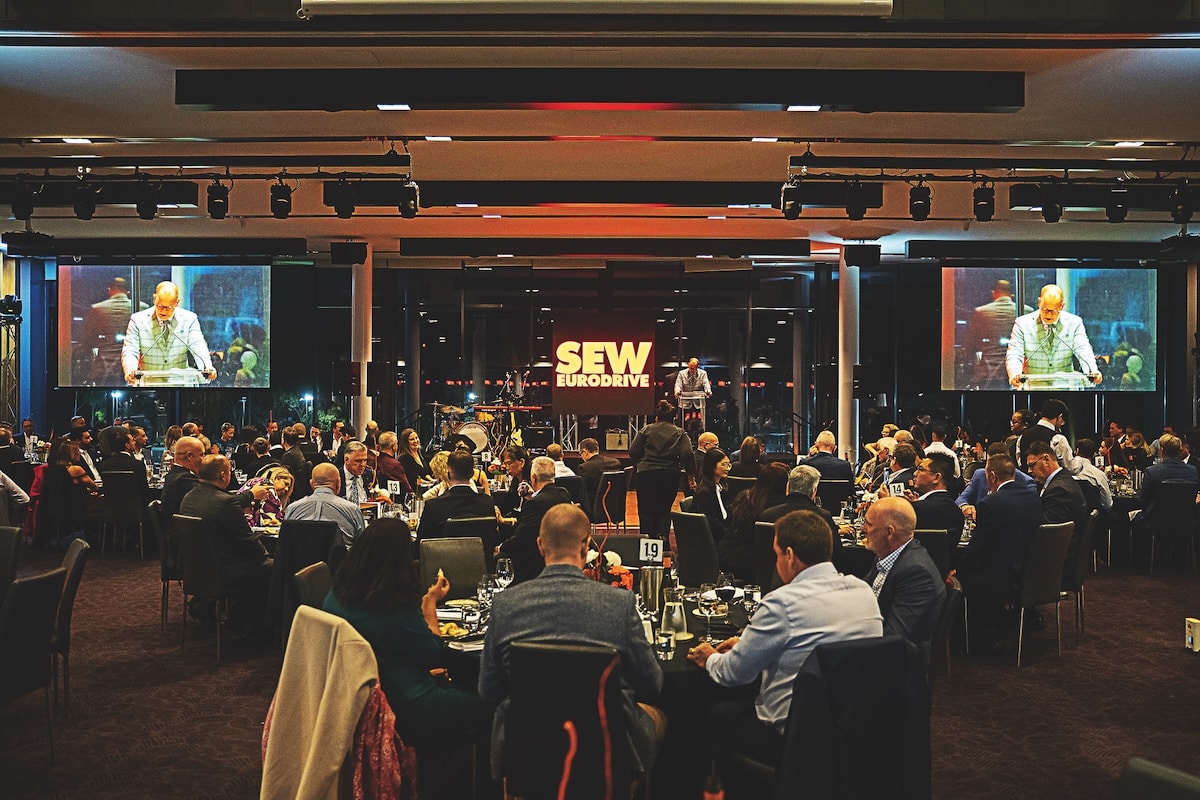
The 2026 Australian Mining Prospect Awards in Perth’s Fraser’s Kings Park named winners across three individual and 16 group categories, spanning mine safety, environmental management, innovation and productivity. Major honours went to operations deploying autonomous haulage fleets, advanced collision-avoidance systems and real-time geotechnical monitoring to cut exposure in highwall and stope environments. For engineers, the awards signal where capital and management attention are flowing, particularly towards data-driven maintenance, low-emission power systems and tailings risk reduction.
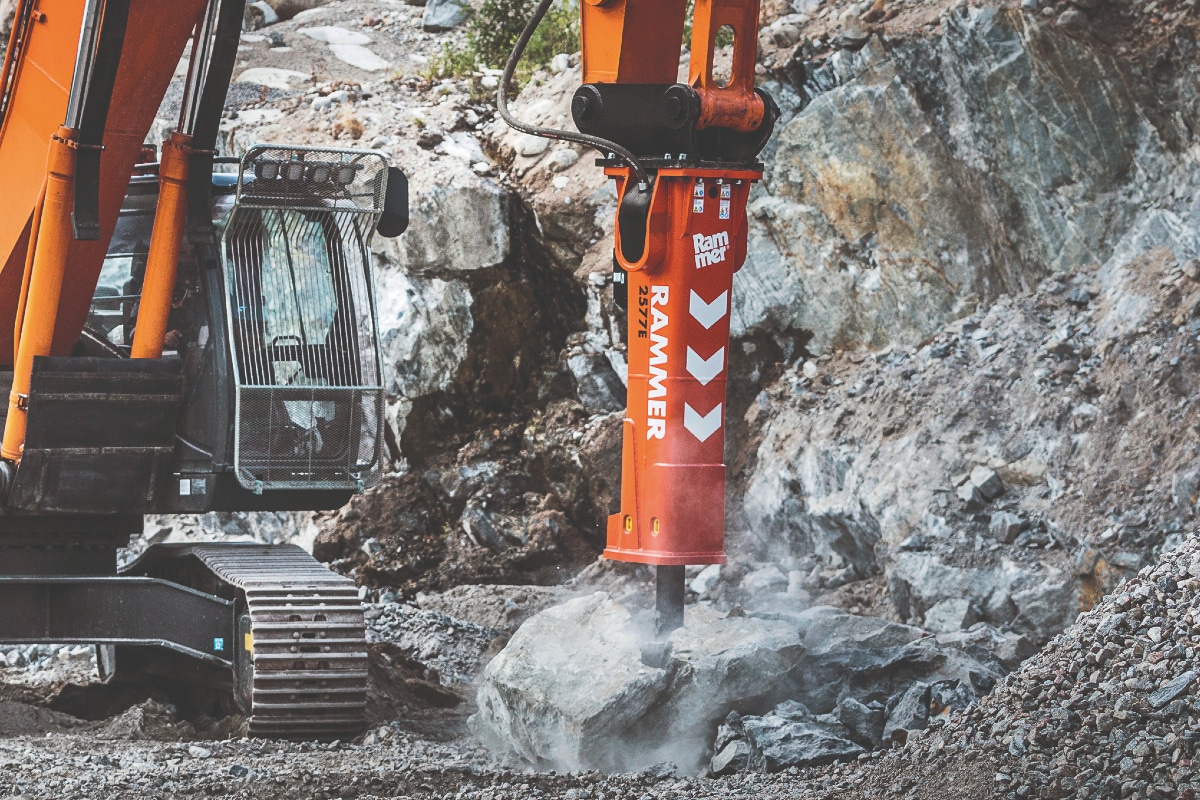
Rammer has launched the E06 compact hydraulic rockbreaker, designed for 4.5–13‑tonne carriers and positioned below its 777E and 9033E units to cut fuel burn and boom and slew bearing wear in mining and quarrying duties. The hammer uses a sealed, high-pressure accumulator and Rammer’s Constant Blow Energy system to maintain impact power under fluctuating oil flow, targeting lower specific fuel consumption per broken tonne. Australian customers are supported through Sandvik’s national dealer network, geared for parts and service on remote mine and quarry sites.
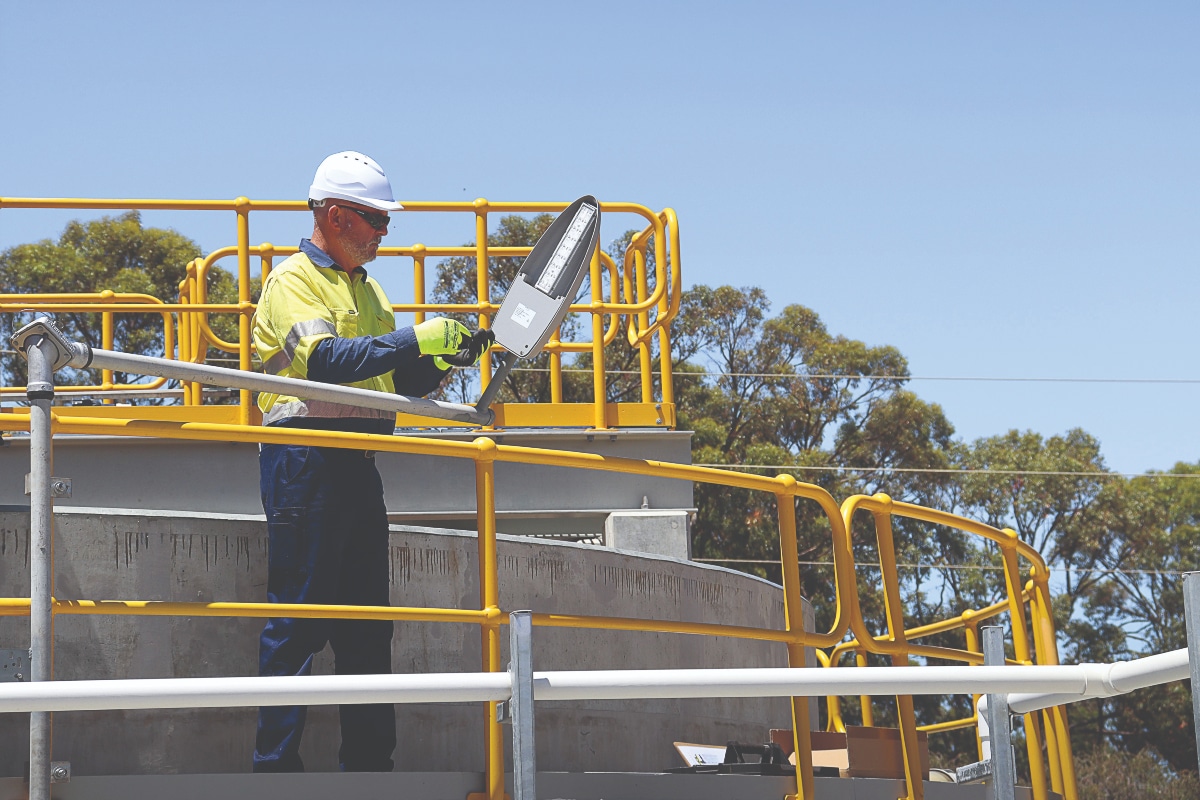
Swivelpole is enabling mine operators to service pole‑mounted lighting, CCTV and communications equipment from walkways or platforms by allowing poles to be lowered to ground level rather than using EWP baskets or working at height. The hinged system retrofits to existing poles, keeping cabling and terminations intact while rotating the headframe down for lamp, camera or antenna maintenance. For brownfield plants and remote haul roads, this reduces working‑at‑height permits, isolation complexity and access issues around conveyors, stackers and transfer towers.
Global uranium supply is slipping into structural deficit as mined output of 61,924 tU in 2024 and 116,000+ tU over 2023–24 fails to keep pace with reactor demand that could reach 84,800–143,900 tU annually by 2050, despite 8.1 million tU of identified resources below $260/kgU. Benchmark Mineral Intelligence forecasts a deficit widening to 18% of demand by 2027, with Kazakhstan’s in-situ recovery operations constrained by sulphuric acid shortages and labour, and no new mines yet commissioned in the latest reporting period. Long 10–20 year mine lead times, tight conversion/fabrication capacity and surging baseload demand from AI data centres and 73 tracked SMRs requiring <2,000 tU/year are pushing utilities towards higher prices and longer-term contracting.
G Mining Ventures has reported a new near-surface gold discovery at the Grodiocal target within its 2,100 sq. km Gurupi project in Maranhão, where maiden drilling of 17,667 metres in 127 holes has defined multiple mineralised zones along a 5 km by 1 km corridor on the Chega Tudo trend. Key intercepts include 23 metres grading 1.97 g/t gold from 51 metres at Grodiocal, 79.6 metres at 1.78 g/t from 146 metres at Blanket, and 48.4 metres at 1.32 g/t from 277 metres at Mandiocal. Gurupi currently hosts 1.83 Moz indicated and 0.77 Moz inferred, with an updated resource and PEA due by year-end and 65,000 metres of 2026 drilling planned.
Outcrop Silver & Gold has more than doubled inferred silver resources and lifted indicated silver by 23% at its Santa Ana project in Colombia, now totalling 1.8 Mt indicated at 376 g/t Ag and 1.8 g/t Au (21.7 Moz Ag, 104,000 oz Au) plus 2.3 Mt inferred at 266 g/t Ag and 1.29 g/t Au (20.1 Moz Ag, 98,000 oz Au). The update incorporates 130,006 m of drilling in 646 holes, models 46 domains across 13 vein systems including new Guadual, Aguilar and Los Mangos zones, and constrains resources within potentially mineable underground shapes. Mineralisation is largely within 300 m of surface along a 17 km corridor, with a further 35,000 m drill campaign targeting depth extensions and at least 12 undrilled vein systems.
Nord Precious Metals Mining has defined 1.85 million tonnes of historical tailings grading 47.4 g/t silver for 2.81 million oz. indicated at its Gowganda project in northeastern Ontario, using a 10 g/t cut-off and assuming $65/oz silver, C$17/t operating cost and 82% recovery. The Main and South tailings plus two outflow areas lie about 100 km west of Nord’s TTL Laboratories plant in Cobalt, within the historic Cobalt-Gowganda silver belt that produced more than 60 million oz. from Gowganda alone. Nord is advancing engineering, metallurgy, water management and permitting towards a mineral recovery operation intended to fund wider exploration at Castle, Siscoe-O’Brien, Millerett and Castle East.
New Found Gold has achieved commercial production at its Hammerdown mine in central Newfoundland after 60 consecutive days averaging 748 tpd through the Pine Cove mill, with 87.7% gold recovery and a 2.92 g/t feed grade. Hammerdown produced 9,140 oz of gold in the first eight months of 2026 and carries a PEA-based 13-year life for 251,287 oz at all-in sustaining costs of $2,429/oz, with a post-tax NPV (5%) of C$199.2 million at $3,475/oz gold. The company plans a new crusher-sorter at Hammerdown by Q4 2026 and to convert Pine Cove from a 700 tpd flotation–leach–Merrill-Crowe circuit to a 1,400 tpd gravity–CIL plant by Q4 2027.
Ecuador’s Internal Revenue Service has issued a US$154 million sovereign adjustment tax claim against Lundin Gold for 2023, comprising US$73 million in assessed tax plus US$81 million in fines and penalties at the Fruta del Norte gold mine. The dispute centres on how the sovereign adjustment mechanism calculates the state’s minimum 50% share of cumulative project benefits, including 22% corporate income tax, a 5% NSR royalty and 12% labour profit sharing, versus Lundin’s net present value of cumulative free cash flows. Analysts are urging an independent international review of investment and expense accounting to clarify when sovereign adjustments apply, while mine operations and guidance remain unchanged.
Financial author and forecaster Harry Dent blames the latest asset bubble on unprecedented US government money-printing, warning that another “couple trillion” dollars of stimulus will be less effective because investors have already seen repeated crisis rescues. He labels gold’s surge from about $1,600 to roughly $5,600 in three years as “the fastest, most extreme bubble in history”, far above its long-term trend. Dent expects a severe deflationary downturn would drag gold down alongside commodities and equities, though with smaller percentage losses.
Canada’s inaugural Investment Summit in Toronto produced nearly C$500 billion in broad commitments, yet only one mine-specific deal emerged: a C$140 million Canada Growth Fund investment in Generation Mining’s Marathon copper-palladium project about 800 km northwest of Toronto, despite 63 minerals and metals projects among 167 schemes needing over C$1 trillion in five years. CPP Investments and Brookfield’s Maple Fund is targeting equity tickets above C$5 billion, far larger than typical single-mine needs, exposing a scale mismatch for developers such as E3 Lithium, Li-FT Power, Nouveau Monde Graphite and PMET Resources. Mark Carney’s “one project, one review, one year” approvals pledge and proposed permanent immediate tax write-offs for mining property, pipelines and rail aim to accelerate coordinated supply chains, particularly for lithium processing where Canada currently lacks large-scale chemical conversion capacity.