Geomechanics.io

  • Free Tools
Sign UpLog In

Geomechanics.io

Geomechanics, Streamlined.

© 2026 Geomechanics.io. All rights reserved.

Geomechanics.io

CMRR-ioGEODB-ioHYDROGEO-ioQCDB-ioFree Tools & CalculatorsBlogLatest Industry News

Industries

MiningConstructionTunnelling

Company

Terms of UsePrivacy PolicyLinkedIn
    Standard/Guideline
    Sustainability

    Better Planning Coalition planning reset: policy takeaways for project teams

    June 9, 2026|

    Reviewed by Joe Ashwell

    Better Planning Coalition planning reset: policy takeaways for project teams

    First reported on The Construction Index

    30 Second Briefing

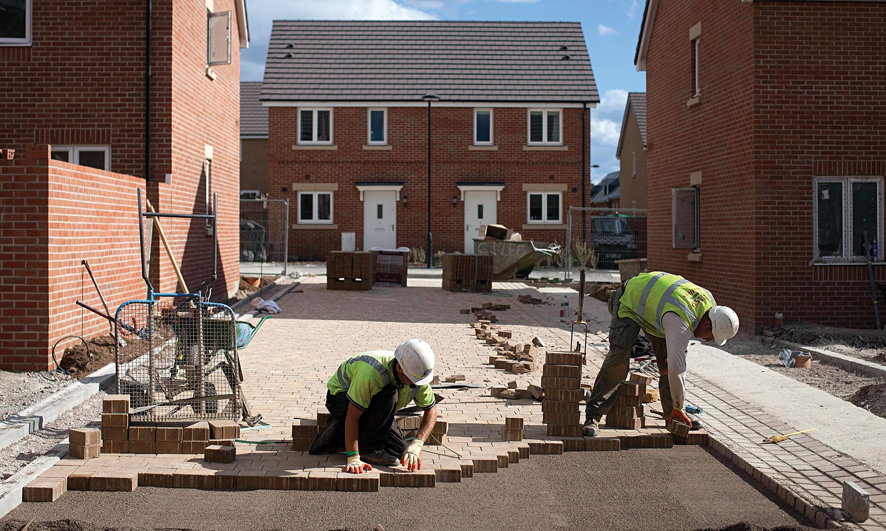
    Charities in the Better Planning Coalition, including the RSPB, Woodland Trust and CPRE, have urged the Prime Minister to reset planning reforms ahead of this summer’s National Planning Policy Framework (NPPF) decisions. Their letter backs measures on compulsory purchase, curbing “hope value”, expanding public bodies’ land assembly powers and enforcing build‑out of consented schemes, alongside extra funding for social and affordable homes. They warn that repeated weakening of planning policy is driving speculative, poor‑quality development in unsuitable locations while major housebuilders cut output amid higher costs and weak demand.

    Technical Brief

    • Better Planning Coalition members include RSPB, Woodland Trust and CPRE, signalling strong environmental policy focus.
    • Housing output cuts by major housebuilders are tied to higher construction costs and weak market demand.

    Our Take

    The concentration of large civil and infrastructure schemes in the United Kingdom in our recent coverage means any NPPF reset this summer would likely tighten baseline expectations on biodiversity, net gain and landscape impact for geotechnical and construction consents, even where developers are not directly engaging with the Better Planning Coalition members.

    Because many of the 638 tag-matched ‘Standard/Guideline’ and ‘Sustainability’ pieces track how national frameworks cascade into local plan wording, practitioners should expect that successful lobbying here could quickly translate into more prescriptive local policies on nature protection and carbon for new schemes entering the planning pipeline this year.

    Geotechnical Software for Modern Teams

    Centralise site data, logs, and lab results with GEODB-io, CMRR-io, and HYDROGEO-io.

    No credit card required.

    • Save and export unlimited calculations
    • Advanced data visualisation
    • Generate professional PDF reports
    • Cloud storage for all your projects

    Prepared by collating external sources, AI-assisted tools, and Geomechanics.io’s proprietary mining database, then reviewed for technical accuracy & edited by our geotechnical team.

    Related Articles

    Ontario threat to cut US electricity, critical minerals: risks for project teams
    Policy
    about 11 hours ago

    Ontario threat to cut US electricity, critical minerals: risks for project teams

    Ontario Premier Doug Ford has warned he is prepared to cut off both electricity exports and critical minerals to the United States after Trump imposed 50% tariffs on about US$20 billion of Canadian goods, including autos, auto parts and steel. Michigan currently receives about 6% of its power from Ontario via four cross-border transmission lines with 2,000 MW transfer capacity, and Ford has already imposed a 25% surcharge on electricity exports to Michigan, Minnesota and New York in 2025. Any suspension of Ontario shipments would hit US supply of high‑grade nickel from the Sudbury Basin (Vale, Glencore) and uranium refined at Cameco’s Blind River facility, the world’s largest commercial uranium refinery.

    US scrap rules: processing bottlenecks and security ratio for engineers
    Policy
    1 day ago

    US scrap rules: processing bottlenecks and security ratio for engineers

    US export restrictions taking effect later in August will force some lithium-ion battery scrap, including black mass, and tungsten scrap to be sold to US buyers, but GEM Mining Consulting’s Alina Karpunina argues supply security hinges on how much of this material is actually converted into qualified secondary minerals. DOE data show a 2023 US mismatch, with intermediate facilities able to process nearly 175,000 tons of batteries and scrap, but only about 35,500 tons of battery-material recovery capacity and 76,000 tons more merely planned. Karpunina proposes a “scrap-to-security conversion ratio” based on contained critical-mineral units recovered to customer specification, warning that export controls without robust domestic processing risk idle feedstock and continued reliance on primary mining.

    NAIA ‘Ground Truth’ survey: supply chain readiness lens for US project teams
    Policy
    3 days ago

    NAIA ‘Ground Truth’ survey: supply chain readiness lens for US project teams

    New American Industrial Alliance and supply chain AI firm Exiger have launched the “Ground Truth” Critical Minerals Readiness Survey to map gaps between US industrial demand and available domestic or allied supply, following White House Executive Order 14415 on defence supply chains. The survey drills down to unmet needs by spec, grade, alloy and purity, and contrasts reshoring goals with actual sourcing capabilities across NAIA’s member base and wider manufacturers. Results, processed via Exiger’s 1EXIGER.AI platform, will feed a policy and investment “blueprint” to be unveiled on 16 September 2026 in Washington, DC.

    Related Industries & Products

    Construction

    Quality control software for construction companies with material testing, batch tracking, and compliance management.

    Mining

    Geotechnical software solutions for mining operations including CMRR analysis, hydrogeological testing, and data management.

    QCDB-io

    Comprehensive quality control database for manufacturing, tunnelling, and civil construction with UCS testing, PSD analysis, and grout mix design management.

    AllGeotechnicalInfrastructureHazardsEnvironmental