Geomechanics, Streamlined.
© 2026 Geomechanics.io. All rights reserved.
Iron ore prices, mining investment and labour demand are projected by a new Curtin University report to drive a sharp population surge in Western Australia, particularly in the Pilbara and other iron ore hubs. The analysis links sustained prices above long‑run averages with expanded mine capacity, new rail and port upgrades, and intensified competition for skilled trades and geotechnical professionals. For engineers and planners, the report signals mounting pressure on regional housing, transport corridors and supporting civil infrastructure over the medium term.
Santos has launched the first stage of a “first-of-its-kind” agreement in the Cooper Basin that gives Traditional Owners formal responsibility to manage Country across its oil and gas tenements. The program establishes a Traditional Owner–led land management framework alongside Santos’ existing exploration and production activities, rather than relying solely on company-run heritage surveys. For mining and energy operators, this signals a shift towards co-designed access, monitoring and rehabilitation regimes that may materially affect project approvals, fieldwork scheduling and long-term closure planning in similar onshore basins.
US–Iran conflict is tightening sulphur shipments from the Middle East, raising fertiliser and sulphuric acid costs and opening a window for Australian battery metals producers reliant on acid-intensive leaching. Reduced sulphur availability threatens pressure acid leach and heap leach operations globally, particularly for nickel, cobalt and laterite projects, while Australian operations with integrated acid plants or alternative reagents gain a relative cost advantage. Investors are expected to reassess project economics, logistics chains and offtake contracts for new battery metals developments in Western Australia and Queensland.
Rox Resources has approved the final investment decision for the Youanmi gold project in Western Australia, clearing the way for construction to start in the June 2025 quarter and first gold production in the March 2027 quarter. The project is planned as a combined open-pit and underground operation targeting historic high-grade lodes around the existing Youanmi mine infrastructure. For geotechnical and mine planners, the timeline locks in near-term demand for pit design, underground access development and tailings storage expansion in a remote Mid West setting with legacy workings.
Magnetite Mines has reported promising copper and silver assays from the Mutooroo Ridge prospect in South Australia, reviving historic ground last drilled in the 1960s and located about 60km west of its Razorback iron ore project. The company is testing structurally controlled, sulphide-rich mineralisation along a regional shear zone using modern geophysics and targeted diamond drilling to refine grade continuity and depth extent. Results will guide follow-up drilling and resource definition, with potential to integrate future copper production logistics with existing iron ore infrastructure planning.
Guinness Partnership has signed more than £1bn of Planned Investment and Major Works contracts over 15 years to upgrade its 70,000-home portfolio with higher energy efficiency and long-term maintenance. Axis Europe will manage Greater London, the south-east and coast, Fortem Solutions Yorkshire, Humberside and the East Midlands, Morgan Sindall Property Services the home counties, Novus Property Solutions the south west, and UI Social Infrastructure the north west and Greater Manchester. Each framework includes commitments to social value programmes, including local employment and community project support.
FP McCann has been fined £110,000 at Antrim Crown Court after subcontractor William Houston died at the company’s Loughside Quarry cone crushing plant in Larne in April 2023. A 45kg stone, manually removed from a blocked cone crusher and carried along a raised conveyor catwalk about 15ft above ground, fell through the railings and struck Houston as he walked below. HSENI’s major investigation team stressed the need for controls to prevent falling objects, citing simple measures such as exclusion zones beneath elevated work areas.
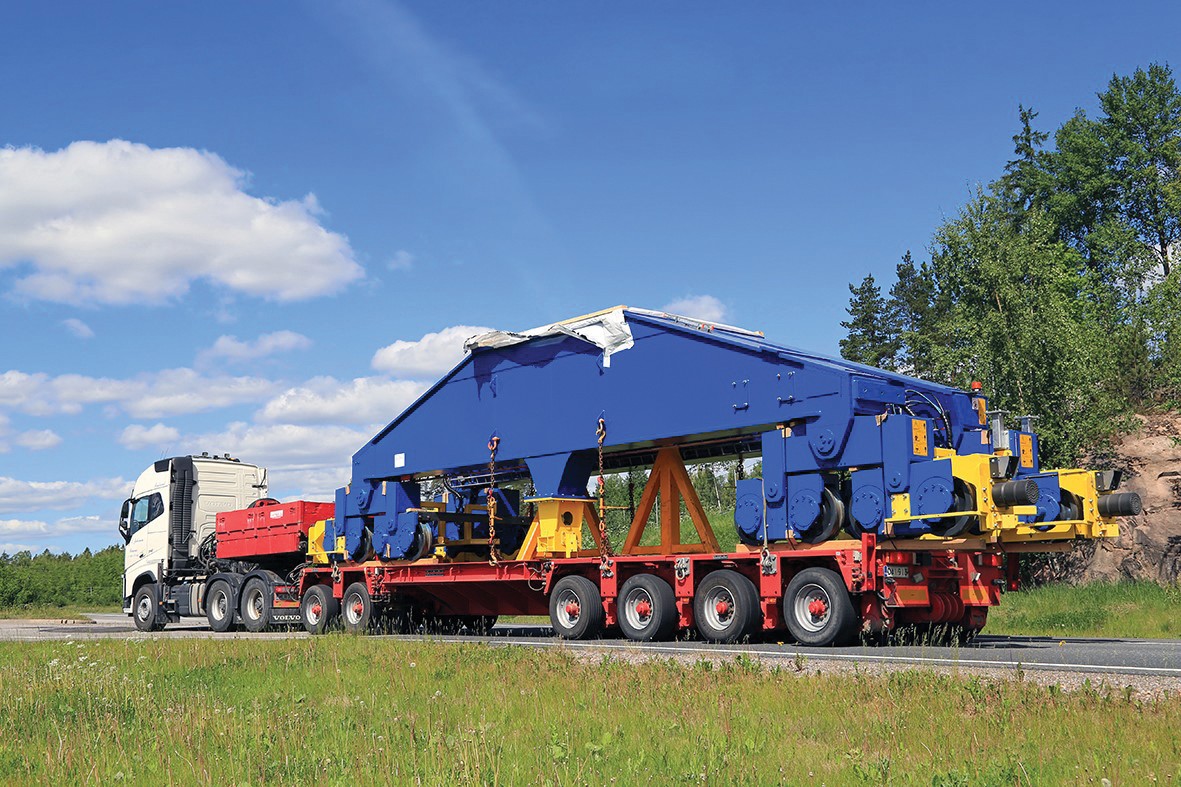
West Midlands Police’s treatment of abnormal load notifications as de facto approval requests, contrary to National Police Chiefs’ Council guidance, is forcing plant-hire firms to use paid police escorts instead of long-established self-escorting for cranes, piling rigs and rail plant serving HS2 and other schemes. A Construction Plant-hire Association survey of more than 2,000 members found over 80% reporting operational disruption, two-thirds serious project delays, and one in six facing extra costs above £100,000, with many rerouting to avoid the force’s area. Freedom of Information data show West Midlands Police’s abnormal load escort income rising from about £15,000 to £1.1m a year over five years, prompting calls for the Department for Transport to reimpose a single national regime.
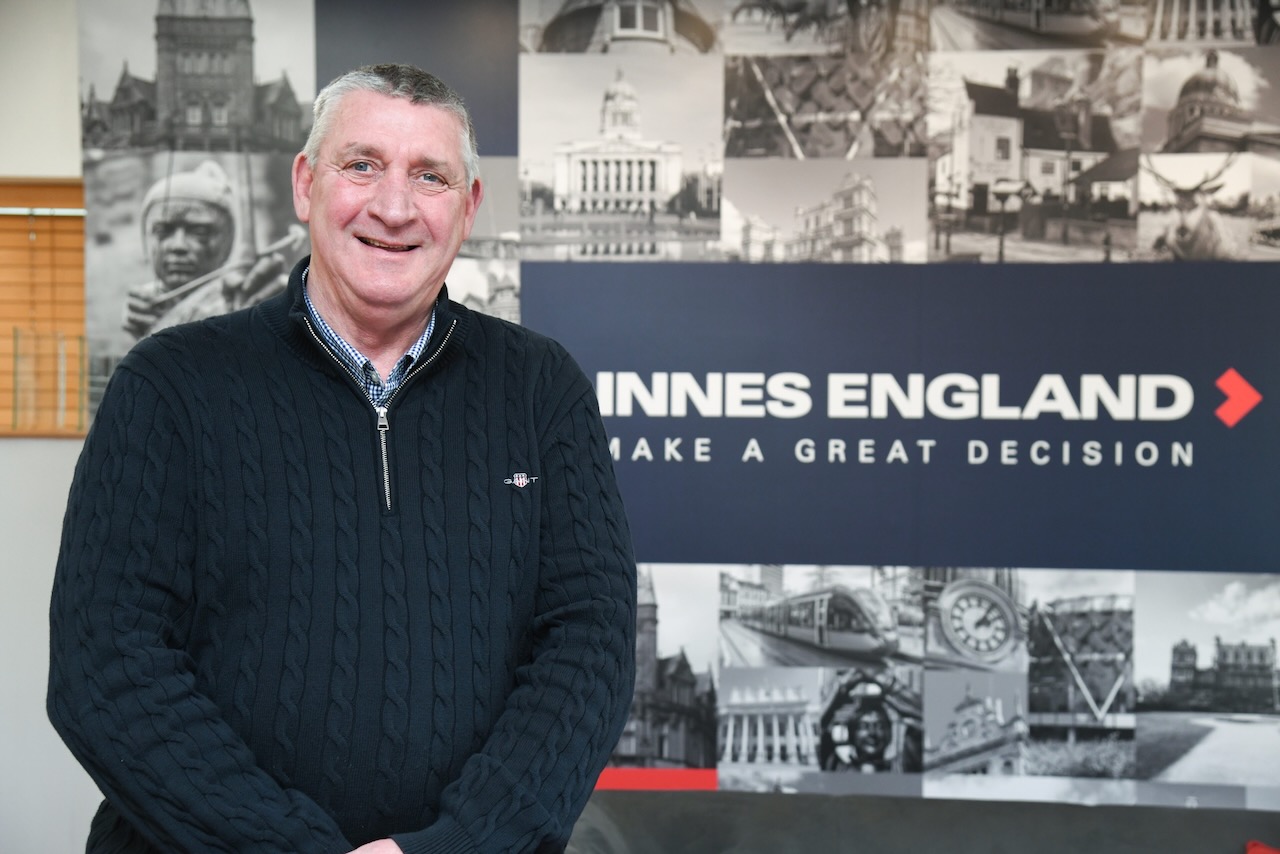
Innes England’s Birmingham office has appointed building surveyor Andy Johnson as director, bringing 43 years’ experience across party wall matters, dilapidations, defect diagnosis, technical due diligence and risk-managed schedules of condition. Johnson previously worked for MPP Group, Mace and Faithful+Gould, and has delivered clerk of works and estate planning roles on major automotive and university estates, including Jaguar Land Rover’s Triangle building at Gaydon, BMW’s Hams Hall plant, and Aston and Wolverhampton universities. The hire expands Innes England’s Midlands offer in project monitoring, asset management and lease-related building surveys alongside its existing valuation services.
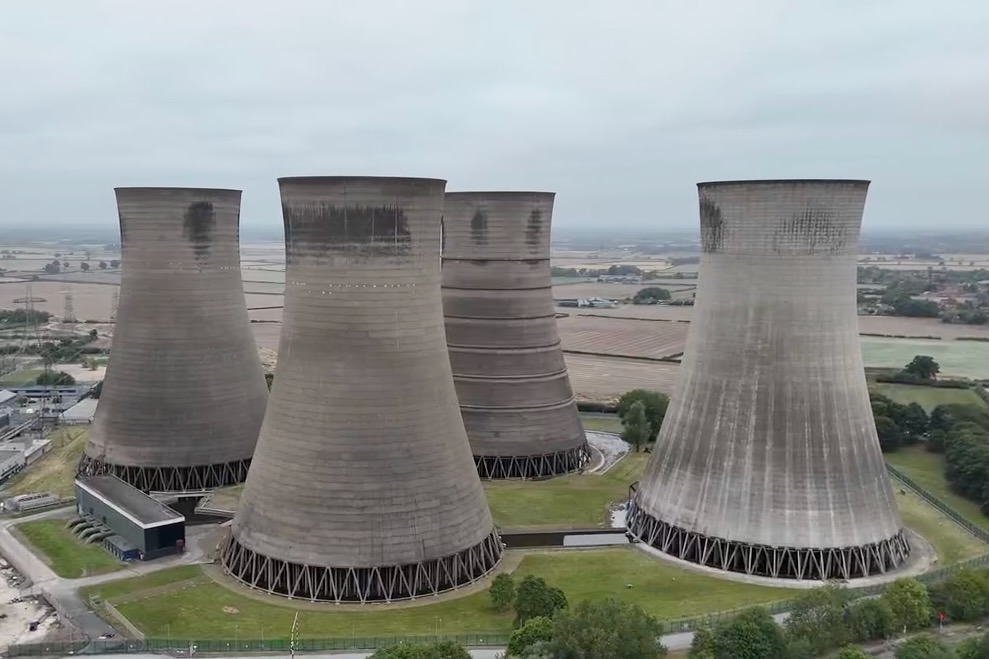
ILIOS, a Kier–Nuvia joint venture backed by Aecom, AL_A Architects and Turner & Townsend, has secured a £200m principal design-and-build contract for the STEP spherical tokamak fusion prototype at the former West Burton power station in Nottinghamshire. Under STEP Fusion and UKAEA’s UK Fusion Energy, ILIOS will manage all enabling works, civil engineering, buildings and site infrastructure, including design integration, logistics and supply chain coordination. The build programme targets first operation around 2040, with the key technical objective of achieving net energy output to prove commercial fusion viability.
New analysis by Ordnance Survey maps how climate-driven flood risk intersects with England’s strategic roads and railways, calling for a “clear, forward-looking understanding” of exposure. Using its national topographic database and elevation models, OS identifies low-lying corridors, embankments and cuttings where overtopping, scour and trackbed saturation could disrupt key routes. The work signals a need to integrate updated flood extents into asset management, drainage design and resilience upgrades for highways structures and rail earthworks.
Millions of people are effectively excluded from Britain’s rail and bus networks because stations still lack step-free access, level boarding and compliant wayfinding, according to a new Institution of Mechanical Engineers report. Engineers warn that new rolling stock with retractable ramps and wider doors cannot compensate for legacy platforms with large stepping distances, narrow footbridges and non-DDA-compliant lifts. The report presses for whole-journey design, prioritising station retrofits, interchange layouts and consistent kerb heights over piecemeal vehicle upgrades.
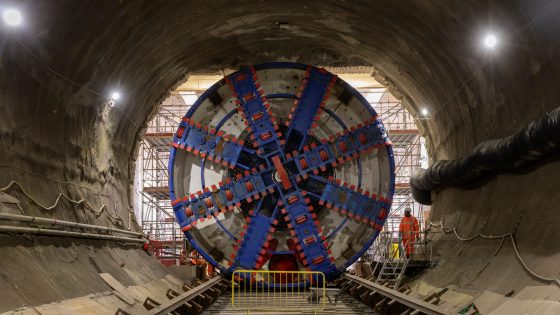
HS2’s tunnelling programme in London has entered its final phase as the 11th and last tunnel boring machine launches from Old Oak Common to drive the second 7.2km bore of the Euston Tunnel towards central London. The TBM will complete the twin-bore connection between Old Oak Common and Euston station, a key approach section for high-speed services entering the capital. For geotechnical and tunnelling teams, this marks the transition from multiple concurrent drives to a single remaining long urban drive beneath densely built central London ground conditions.
National Highways plans to roll out the £11bn Lower Thames Crossing’s sustainability framework – including whole‑life carbon baselining, low‑carbon materials selection and circular economy targets – across all future strategic road schemes. Standardised requirements for early contractor involvement, digital design twins and carbon‑optimised alignments are expected to be embedded in DCO submissions and procurement, influencing pavement design, structures and earthworks strategies. For designers and contractors, this signals tighter carbon performance specifications, more rigorous materials provenance checks and greater emphasis on reuse of aggregates and excavated soils.
London’s Mayor and London Councils have launched the London Infrastructure Framework, identifying 51 priority projects to support planned growth across transport, energy, water and digital networks. Developed with boroughs, utilities, industry partners and Transport for London, the framework is intended to coordinate long‑term investment and sequencing of major upgrades, rather than relying on isolated scheme-by-scheme delivery. For civil and geotechnical engineers, it signals a pipeline of multi-utility corridors, station and interchange upgrades, and brownfield-enabling works concentrated in high-growth opportunity areas.
Centaurus Metals has secured a binding five-year offtake with Glencore for 20,000 tonnes per year of 32% nickel concentrate from the Jaguar project in Brazil, worth about $450 million and feeding Glencore’s Sudbury smelter with roughly 6,400 tonnes of nickel annually. Jaguar is designed as a 3.5‑million‑tonne‑per‑year operation, targeting 22,600 tonnes per year of contained nickel at all‑in sustaining costs of $9,764 per tonne, with capex of $380 million and a post‑tax NPV of $735 million at $19,800/t nickel. Centaurus aims for FID by September and first production in early 2029, with Brazilian development bank debt under discussion amid a tightening sulphide concentrate market.
BHP has secured a UK Court of Appeal ruling that terminates contempt of court proceedings over allegations it funded Brazilian litigation via mining lobby group Ibram to stop municipalities joining UK lawsuits arising from the 2015 Samarco tailings dam collapse, which released about 50 million tonnes of waste into the Rio Doce. The decision comes as BHP seeks permission to appeal a separate High Court finding of liability, ahead of a London damages trial set for October 2026 and a further compensation phase in April 2027. BHP, Samarco and Vale continue implementing a ~$32 billion remediation agreement in Brazil, with over 625,000 people having received about $6.5 billion to date.
Orion Resource Partners has closed its Mine Finance Fund IV at $2.2 billion, taking total assets under management above $9 billion and committing 61% of the new fund to critical minerals projects across North and South America, Europe, Australasia and Africa. The New York-based specialist lender is deploying mine construction loans, royalties and other structured capital as producers seek alternatives to traditional project finance for new critical minerals capacity. Recent deals include a US-backed $1.8 billion consortium, a $1.2 billion JV with Abu Dhabi’s ADQ, and a new partnership with SNB Capital to develop Saudi mining.
Falcon Energy Materials has launched a US$100 million arbitration claim at the World Bank’s ICSID, alleging Guinea illegally expropriated its Lola graphite project by a May 2025 presidential decree that revoked 51 mining and exploration permits, including its 2019 exploitation licence. The Lola deposit hosts about 54 million tonnes at 3.98% graphitic carbon (2.15 million tonnes contained), previously underpinning a 2022 feasibility study with US$185 million capex and a US$73 million Morocco processing plant, targeting coated spherical purified graphite. Falcon, now Abu Dhabi-based, recently raised C$25 million to fund legal costs while advancing a Moroccan pilot plant and EIA for full-scale anode material production.
Harena Rare Earths has entered an exclusivity agreement to acquire Paradigm Critical Minerals’ heavy rare earth and uranium exploration portfolio in San Bernardino County, California, near MP Materials’ Mountain Pass mine, the only operating rare earth mine in North America. Historical work on the former gold-silver operation reports rare earth samples up to 2% TREO with elevated heavy rare earths, plus uranium intercepts of 30.3 m at 0.37% U₃O₈e and internal zones up to 10% U₃O₈e. Harena plans modern mapping, trenching, geophysics and drilling following due diligence.
ACG Metals is pursuing up to 10 acquisitions of producing or near-producing copper mines, mainly along the Tethyan Copper Belt, after its $300 million purchase of the Gediktepe gold-silver operation in western Turkey, where copper output is due to start this year. The London-listed miner aims to lift annual copper production to about 300,000 tonnes, supplying European smelters from low-cost Turkish and eastern European assets, with current operations in the first quartile of the global gold cost curve. Founder and CEO Artem Volynets is betting on long-term copper prices in the $13,000–$15,000/t range despite near-term volatility from energy costs and macro headwinds.
Drilling at Southern Cross Gold’s Sunday Creek project in Victoria has delivered its strongest Apollo target intercept, with hole SDDSC200 cutting 17.3 metres from 251.1 metres depth grading 15.3 g/t gold and 3.2% stibnite, including 6.3 metres at 32.3 g/t gold and 7% stibnite. Additional holes SDDSC195 and SDDSC199 intersected up to eight epizonal vein sets, with best intervals of 10.3 metres at 7.9 g/t gold and 0.4% stibnite from 137 metres and 17.9 metres at 5 g/t gold and 1.4% stibnite from 210.4 metres. The 200,000‑metre programme, with nine rigs active and 46 holes pending, targets one of Australia’s few high‑grade antimony systems amid a multi‑year global supply deficit and prices near US$50/kg.
Recycling technology developer Nth Cycle has signed a 10‑year, $1.1 billion offtake agreement with Trafigura for 2,000 tonnes of contained nickel in mixed hydroxide precipitate and 1,500 tonnes of lithium carbonate refined from 12,000 tonnes of black mass. Building on its 2024 commercial plant in Fairfield, Ohio, Nth Cycle will deploy its portable ‘Oyster’ electro-extraction units in new facilities in South Carolina (Project SHIELD) and the Netherlands, with site selection in 2026 and operations targeted for 2028. The EU plant is backed by a €7.5 million National Growth Fund grant under the CRM Lion initiative, designed to meet net-zero rules on recycled cobalt and nickel and restrictions on cross-border black mass shipments.
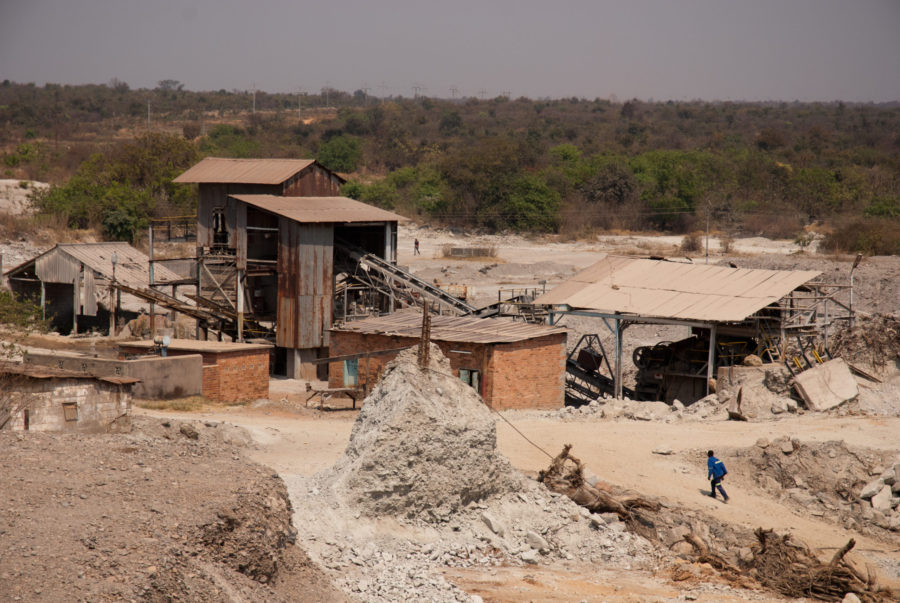
US officials have delayed finalising a proposed $1.5 billion PEPFAR-linked health aid package for Zambia while pushing for broader economic cooperation that includes copper and cobalt mining in the Central African Copperbelt. The move comes as Washington seeks to secure strategic minerals for electric vehicles, grid infrastructure and battery technologies amid intensifying competition with China. Critics, including Representative Gregory Meeks, warn that conditioning HIV and infectious disease funding on opaque mining-related deals risks politicising global health programmes and reshaping how resource agreements are negotiated in Africa.