Geomechanics, Streamlined.
© 2026 Geomechanics.io. All rights reserved.
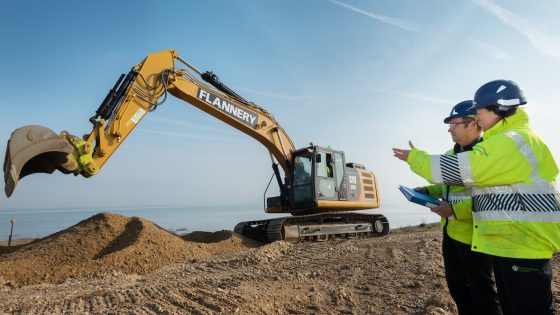
The Environment Agency has launched procurement for a £6.6bn, 10‑year engineering and environmental works framework to deliver flood risk, coastal defence and asset management projects across England. The programme will cover design and construction of hard defences such as embankments, flood walls and culverts, alongside nature‑based solutions including wetlands and river restoration, under multiple regional and national lots. Contractors will be expected to manage long‑term asset performance, integrate carbon‑reduction measures and work within live operational environments and constrained urban floodplains.
Traffio’s expansion into the United States marks the next phase of its cloud-based traffic management platform, used to schedule field crews, allocate traffic control devices and manage compliance for roadwork sites. Co-founders Nicholas Inglis and Nathan Wright are targeting large contractors running multi-crew operations, integrating job booking, digital SWMS, asset tracking and invoicing into a single system. For civil contractors and traffic control providers, the move signals growing availability of integrated, software-driven planning tools for lane closures, workzone layouts and labour allocation across multiple jurisdictions.
Quality Fabrication & Engineering (QFEAUS) is pushing into the United States market with newly granted patents covering its RoadAnt forward-moving aggregate spreader. The Australian-designed RoadAnt allows aggregate to be spread while the truck travels forwards rather than reversing, improving control around live traffic and reducing backing movements on narrow pavements. QFE directors David Lockwood and Glenn Hardiman see the patented system as a platform for broader export growth, particularly for high-output spray sealing and rehabilitation works on constrained road corridors.
Former Sizewell C joint managing director Julia Pyke has been appointed executive chair of Agilia Infrastructure Partners, the consultancy advising on more than £100bn of UK infrastructure schemes. Agilia’s portfolio includes the Sizewell C nuclear power station using the regulated asset base (RAB) financing model, the Havant Thicket Reservoir in Hampshire, and the UK small modular reactor programme, with offices in London and Teesside. Pyke succeeds James Stewart, who recently led the government-sponsored Stewart Review into major infrastructure projects.
Planning permission has been granted for phase two of Mercia Real Estate’s Haüs student scheme at 12 Calthorpe Road, Edgbaston, adding 129 units to the 266 bedsits already under conversion in the 95,000 sq ft former HSBC office complex. The expansion lifts total capacity to 395 beds and increases the project budget from £32m to £45m, with practical completion of the initial phase targeted for June this year. Student accommodation specialist Yugo has been appointed to manage the building on completion, signalling a long-term operational model rather than a forward sale.
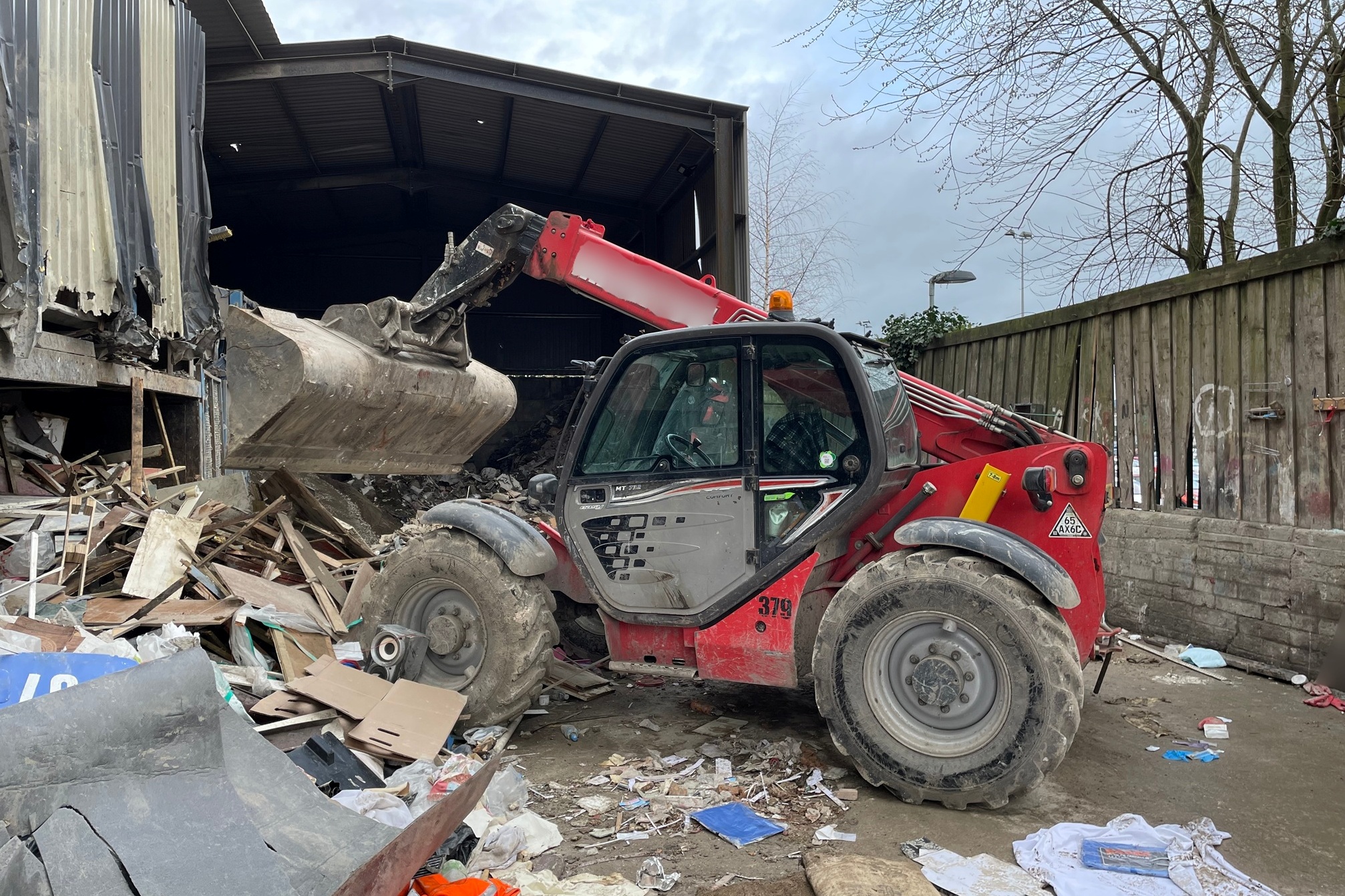
A 19-year-old worker at Sheridan Skips Burnley’s Smiths Yard site in Burnley suffered life-changing crush injuries on 12 March 2024 when a reversing telescopic handler, operating without rear-view mirrors, pinned him against a brick wall while he was hand-sorting waste. A Health & Safety Executive investigation found no effective vehicle–pedestrian segregation, no physical barriers or refuges, and routine concurrent yard operations with mobile plant and manual pickers. Sheridan Skips Burnley Limited pleaded guilty to breaching Section 2(1) of the Health and Safety at Work etc. Act 1974 and was fined £24,000 plus £4,777 costs at Blackburn Magistrates’ Court.
Caddick Construction has secured a £25m design-and-build contract from Whitesmocks Limited for the 232-bed Melbury Court purpose-built student accommodation scheme off Old Dryburn Way in Durham, scheduled for completion in summer 2027. The project will deliver fully integrated student living spaces rather than retrofitted housing stock, signalling continued demand for higher-density PBSA in the city. The win follows Caddick’s 2023 Durham office launch and adds to its regional workload, including a distribution centre for German courier DPD at Richardson Barberry’s Forrest Park, Newton Aycliffe.
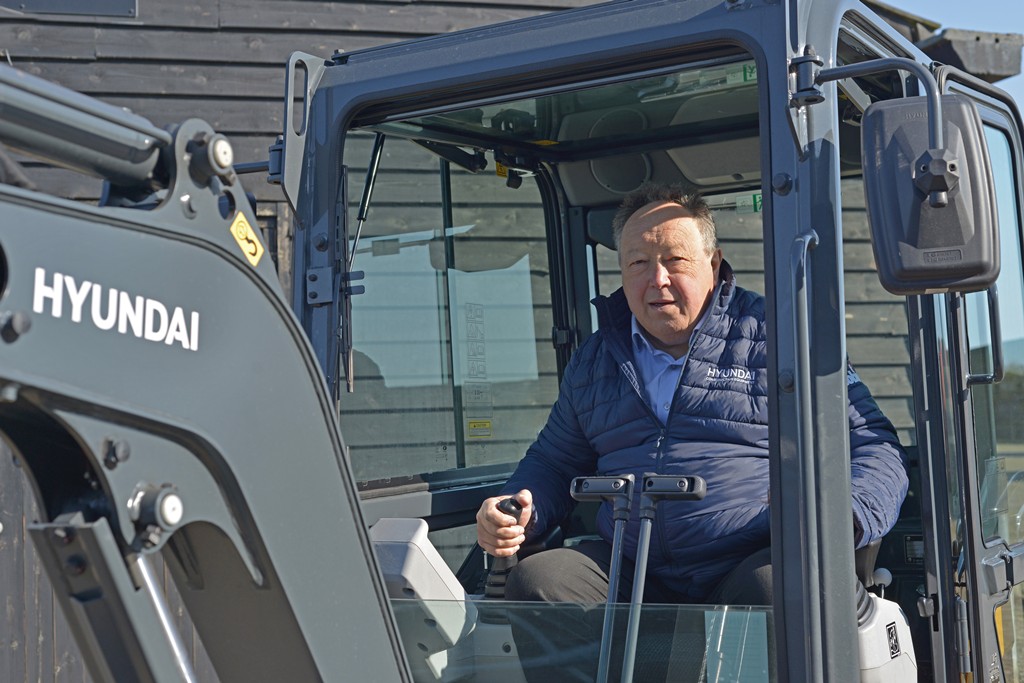
Hyundai Construction Equipment has appointed Suffolk-based Tobin Plant as its compact equipment dealer for seven eastern counties, covering Suffolk, Norfolk, Essex, Hertfordshire, Cambridgeshire, Bedfordshire and Lincolnshire. Tobin Plant will supply Hyundai machines under 10 tonnes operating weight, including compact tracked and wheeled excavators, skid steers and compact tracked loaders, from depots in Southwold and Lakenheath. The dealer has already received an initial batch of mini excavators and will be among the first in the UK to offer a new compact model due for launch in the coming weeks.
Revised outline planning permission has been granted for Barking Riverside, allowing an uplift from 10,800 to up to 20,000 homes across the 443-acre east London brownfield site, with more than 3,000 units already built and backed by over £170m of Homes England infrastructure funding. The consent secures more than 4,000 affordable homes, two public parks, an additional health facility, up to three extra schools, two new community centres and extensive commercial space. Improved riverfront access plus upgraded walking and cycling infrastructure will shape long-term transport, drainage and public realm design parameters for the masterplan.
Skills card data from the Construction Skills Certification Scheme (CSCS) show the proportion of under‑30s holding cards has risen from 17% in 2021 to 25.2% in 2025, challenging long‑standing concerns over an ageing UK construction workforce. CSCS chief executive Sean Kearns attributes the shift to verified digital registration data that track who is actually working on site and entering the industry. The key issue now is retaining these younger workers through structured upskilling to maintain a flexible, long‑term site workforce.
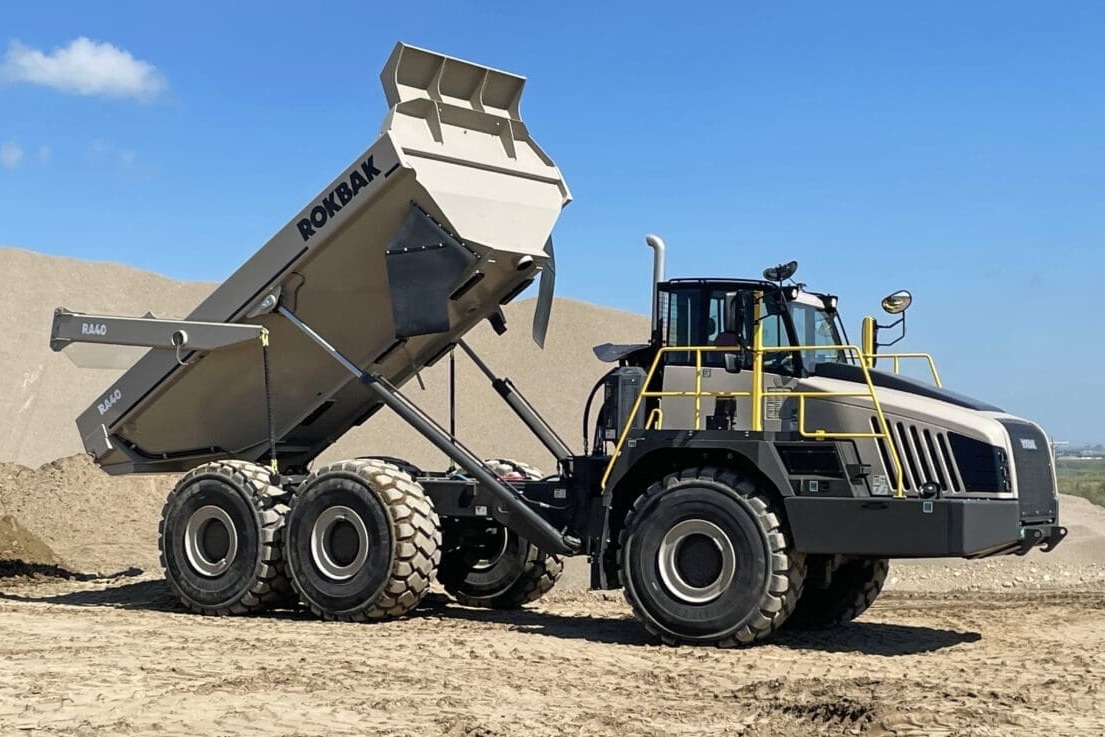
Volvo Construction Equipment is shutting its Motherwell-based Rokbak articulated hauler line by the second half of 2026, citing unsustainable financial performance driven by rising operational and supply chain costs and US tariffs. The Motherwell plant, acquired from Terex in 2014 and building articulated trucks since 1950, will be refocused solely on Volvo rigid hauler development and manufacture. A core Rokbak team will be retained for long-term product support, while Volvo negotiates with unions and government on a managed transition for affected staff.
Local roads in England and Wales now carry a record £18.62bn maintenance backlog, with the 2026 Alarm survey warning it would take more than 10 years to restore networks even after the government’s reallocation of HS2 funding to local transport. Councils report accelerating carriageway deterioration, with more potholes forming on ageing asphalt surfaces that are already beyond typical 20–30 year design lives. For highway engineers, the figures signal continued pressure to triage works, prioritise structural resurfacing over patching, and justify asset-management-led interventions.
Graham has been appointed by Herefordshire Council to deliver initial design and technical development for phase one of the 3.6km Hereford Bypass, progressing a scheme that has been on the table for several years. The commission covers early-stage alignment, geotechnical and drainage strategy, and highway geometry to tie into the existing A49 and local road network. Early design decisions on earthworks balance, floodplain crossings and junction layouts will strongly influence later pavement design, structures requirements and construction phasing.
Resolution Copper, the Rio Tinto (55%)–BHP (45%) joint venture in Arizona, has completed a land exchange with the US Forest Service, clearing a key federal hurdle for developing one of the world’s largest undeveloped copper orebodies at Oak Flat. The deal transfers federally owned land above the deep underground deposit to the company in return for conservation parcels elsewhere, enabling progression of mine permitting and detailed engineering. Geotechnical design for very deep block-cave mining and associated surface subsidence management now moves to the foreground.
Haultrax has completed what it calls the first dedicated mining Fleet Management System deployment for prime movers and road trains operating outside the pit, extending real-time tracking beyond traditional in-pit haul trucks. The system targets multi-trailer road trains hauling ore and waste on long-distance mine and public-road corridors, where payloads, queues, and delays have typically been unmanaged or manually logged. For engineers, this closes a major data gap in end-to-end material movement, enabling more accurate cycle-time analysis, road design validation, and interaction management with light vehicles.
3ME Technology has completed what it calls a world‑first DC ArcFlash testing programme with Rio Tinto on high‑voltage battery systems for mining fleets, generating empirical data on arc energy, blast pressure and thermal effects to refine PPE categories and enclosure designs. In a parallel development, 3ME is collaborating with Toshiba to integrate lithium titanate oxide (LTO) cells into its Bladevolt battery platform, targeting fast‑charge, high‑cycle underground mining vehicles. The work directly informs electrical protection coordination, battery pack architecture and risk assessments for diesel‑to‑battery conversions.
BHP has lodged an Environmental Impact Assessment application in Chile for the New Escondida Concentrator, intended to replace the ageing Los Colorados plant at the Escondida copper operation in the Atacama Desert. The project forms part of a long-term investment plan to sustain concentrator throughput and copper production over coming decades as existing processing infrastructure nears the end of its design life. For engineers, the key issue will be how the new plant’s layout, water and energy systems integrate with Escondida’s high-altitude, water-constrained site conditions.
Sangdong tungsten mine in Gangwon Province, South Korea, has restarted production after more than 30 years, with Phase 1 commissioning complete and a new plant processing about 640,000 tonnes of ore per year to produce roughly 2,300 tonnes of concentrate at an average grade of 0.51% WO₃. A Phase 2 expansion targeted for 2027 will lift capacity to around 1.2 million tonnes of ore and about 4,600 tonnes of concentrate annually, supported by 4 km of new underground development and Metso-supplied SAG and ball mills. With a mine life exceeding 45 years, Sangdong is projected to supply about 40% of tungsten demand outside China, directly feeding Almonty’s planned tungsten oxide facility and adjacent Sangdong molybdenum deposit.
Qiyuan Green Power’s battery swapping system at Rio Tinto’s Oyu Tolgoi copper-gold mine has been supporting continuous operation of eight 91 t Tonly DTE145 battery-electric wide-body trucks since October 2025 using 13 interchangeable 800 kWh packs. The containerised swap station enables rapid hot-swaps rather than static charging, reducing truck idle time and avoiding new high-capacity grid connections in the Gobi desert location. For mine planners, the trial provides early operational data on duty cycles, swap frequency and fleet availability for high-payload BEV haulage in large open pits.
NMDC Ltd is on track to become India’s first miner to produce 50 Mt of iron ore in a single financial year, driven by technology upgrades across its major assets in Chhattisgarh and Karnataka. The state-owned Navratna company is deploying digital mine planning, higher-capacity crushing and screening plants, and advanced fleet management systems to lift output and reduce unit costs. For geotechnical and operations teams, the scale-up implies tighter control of slope stability, haul road performance and equipment availability under significantly higher annual extraction rates.
Haver & Boecker Niagara used CONEXPO-CON/AGG 2026 in Las Vegas to position its St Catharines, Ontario-based screening business as a global supplier with sales offices and facilities on every continent under parent group Haver & Boecker OHG of Oelde, Germany. President Karen Thompson emphasised the company’s digital and analytics offering, signalling a push towards data-driven optimisation of vibrating screens and classification circuits rather than purely mechanical upgrades.
Western Australia has temporarily amended road rules so 25.7‑metre and 36.5‑metre road trains can carry up to an extra 10 tonnes per load when hauling petrol, diesel or fertiliser into designated priority regional areas. The change is aimed at maintaining fuel and agricultural supply amid concerns over petrol availability, effectively increasing payloads without adding vehicle movements. Operators and road managers will need to reassess pavement wear, bridge load limits and stopping distances for these higher-mass combinations on regional freight routes.
The Victorian Government and Transport Accident Commission have awarded almost $1 million under the TAC’s 2025 Best Client Outcomes Grant Program to five health and disability organisations supporting road trauma recovery. The grants build on $1.87 billion in healthcare, recovery supports and compensation funded by TAC in the previous year, signalling continued investment in post-crash rehabilitation capacity. For transport and road authorities, the funding reinforces the need to integrate serious-injury recovery pathways alongside traditional crash reduction and pavement or intersection upgrade programmes.
Western Sydney’s 16‑kilometre M12 Motorway has opened after four years of construction, providing an intersection‑free link to the new Western Sydney (Nancy‑Bird Walton) International Airport and tying directly into the existing motorway network. The dual‑carriageway corridor is designed to carry high volumes of airport traffic at motorway speeds, reducing stop‑start conditions and heavy‑vehicle delays on local arterials. For civil and pavement engineers, the project sets the long-term access geometry and load environment that will govern future upgrades around the airport precinct.