Geomechanics, Streamlined.
© 2026 Geomechanics.io. All rights reserved.
A new Skills Centre has opened on The Hill Group’s City Centre South regeneration site in Coventry, providing on-site training, apprenticeships and upskilling directly linked to live construction works. The facility is geared to trade and site-management roles needed for large mixed-use urban schemes, giving learners exposure to real programme, logistics and temporary works constraints. For contractors and consultants in the region, it signals a growing local pipeline of site-ready labour familiar with inner-city regeneration conditions and modern construction methods.
New modular single living accommodation at Trenchard Lines, Upavon has completed its first phase, with Reds10 and Arcadis handing over two SLA blocks providing 82 en-suite bedspaces for junior ranks as part of a 200-person scheme. A further 21 officer bedspaces will come from refurbishment of Lord House, a heritage building beside the Officers’ Mess, integrating modern services into an existing structure. The SLA blocks include drying rooms, shared kitchens and furnished communal areas, plus rooftop solar panels and energy management systems to cut operational energy demand and bolster resilience.
M Group has recycled more than 200,000 mixed-material water meters for Yorkshire Water and Netmore, tackling encapsulated lithium batteries and complex assemblies as part of an AMP8 programme that could replace over four million meters in five years. After a year-long review of more than 40 organisations, Yorkshire-based Areera was selected to recover plastics, ferrous and non-ferrous metals, and small quantities of precious materials from printed circuit boards. The process is now being scaled, with automation, robotics and AI under evaluation to increase throughput and improve data capture from returned assets.
The Construction Plant-hire Association has appointed Mel Edwards as training and skills support manager in a new member-facing role focused on plant operator training, skills development, recruitment and funding access. Edwards will work directly with CPA’s 1,900+ member companies, many running large earthmoving, lifting and piling fleets, to navigate CITB grants, apprenticeship schemes and competency card requirements. The move signals more structured support for filling operator and maintenance technician shortages on major UK infrastructure and ground engineering projects.
Argentina’s rapid mining build-out under President Javier Milei, anchored by major copper and lithium projects such as Taca Taca, Los Azules, El Pachón, Josemaría, Rincon and PPG, is triggering new in-country investments by OEMs FLSmidth (FLS) and Sandvik. Both suppliers are opening additional Argentine locations to support large-scale concentrators and leach operations, positioning for long-life copper porphyry and brine projects that will demand high-throughput crushing, grinding and materials handling systems. For engineers, this signals growing local availability of technical services, spares and process optimisation support.
Continental has opened an In-Company Store inside Vale’s S11D iron ore complex at Canaã dos Carajás, Pará, to supply conveyor belting and related technology directly on site. The facility is intended to shorten response times for high-wear components on S11D’s extensive overland conveyor network, reducing downtime risk on one of the world’s largest truckless mining operations. Embedded support staff will handle belt selection, splicing materials, and condition-based service, tightening integration between Continental’s maintenance expertise and Vale’s production teams.
Emerging Chinese mining truck manufacturer Zhejiang Shuanglin Technology has signed a strategic cooperation agreement in Shanghai with autonomous haulage system specialist Beijing TAGE Zhixing Technology (TAGE Idriver) to jointly develop “mine intelligence” solutions. The partnership will integrate Shuanglin’s new-generation electric and hybrid haul trucks with TAGE Idriver’s AHS stack, including autonomous driving, fleet scheduling and vehicle–infrastructure coordination. For mine operators, the move signals another OEM–AHS pairing in China, potentially expanding options for greenfield autonomous fleets and retrofits on existing haul roads.
Government has been accused of having no contingency plan for large-scale data centres if an AI investment bubble bursts and facilities become stranded assets, a gap campaigners call “alarming”. With new hyperscale campuses typically demanding tens of megawatts of grid capacity, deep foundations, extensive cooling infrastructure and multi-decade planning consents, critics warn that unplanned obsolescence could leave local authorities managing redundant, highly serviced shells. Engineers are urged to consider future-proofing, adaptive reuse of high-spec M&E systems, and decommissioning strategies at the planning and design stage.
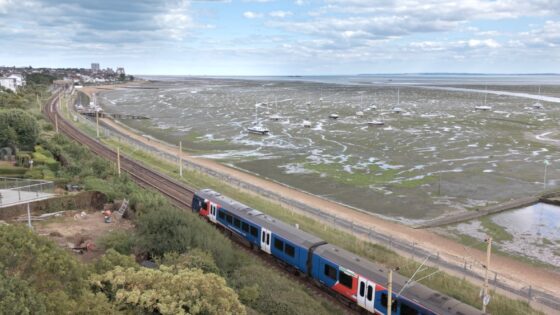
Deployment of on-board overhead line (OHL) and track defect monitoring systems across GBR Anglia routes is being used to capture live condition data directly from in-service trains, rather than relying solely on periodic inspection trains. Instrumented rolling stock is recording contact wire geometry, stagger and uplift, as well as railhead condition and track geometry, allowing faults to be geo‑referenced to specific masts, spans and sleepers. The joined‑up approach is intended to tighten maintenance intervals, prioritise high‑risk locations and reduce disruptive manual access to the four‑foot and cess.
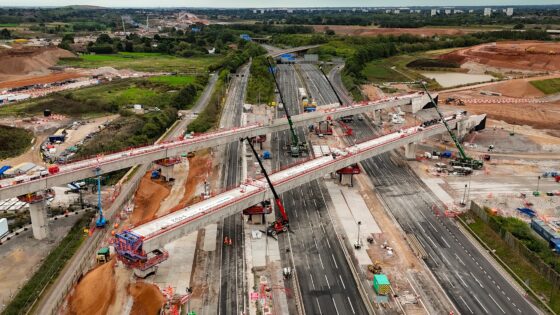
Balfor Beatty Vinci has installed the final one of six major spans for HS2’s Water Orton viaduct over the M42 in the West Midlands, completing the primary superstructure over the live motorway. The operation required heavy-lift cranes working within tight possession windows above multiple carriageways, with spans preassembled off-line to minimise disruption to M42 traffic. For designers and contractors, the milestone confirms that the staged erection methodology and temporary works strategy for HS2’s major overbridges are performing to programme under complex traffic and logistics constraints.
This summer’s extreme weather is presented as a clear warning that UK infrastructure is still being designed and operated for historic, not future, climate loads. The piece calls for engineers to treat climate resilience as a primary design parameter, integrating updated rainfall intensity–duration–frequency curves, higher peak river flows and compound flooding into asset standards, not just emergency plans. For geotechnical and civil practitioners, that means revisiting drainage capacities, freeboard allowances, slope stability factors and redundancy in power, transport and water networks before the next shock.
Capstone Copper is selling its Cozamin underground copper-silver-zinc-lead mine in Zacatecas, Mexico to Luca Mining for up to $385 million, comprising $275 million cash at closing, $15 million in Luca shares, $35 million deferred, and as much as $60 million linked to 2027–2029 LME copper prices. Cozamin is forecast to produce 20,000–24,000 tonnes of copper and 1.3–1.7 million oz silver annually to 2030 at C1 costs of about $1.46–$1.51/lb, and will become Luca’s third producing Mexican asset. Capstone will redeploy capital into its Santo Domingo project and the $176-million Mantoverde Optimized expansion in Chile and Arizona copper growth.
Cameco’s US$2.1 billion purchase of a 49% stake in Westinghouse Electric in 2023 could be worth more than US$24.5 billion if Westinghouse secures a US IPO valuation above US$50 billion, driven by a pipeline of up to 91 AP1000 reactors over 20+ years. Scotiabank estimates a typical two‑reactor AP1000 project could generate US$8–11 billion in revenue and US$1.6–2.2 billion in EBITDA for Westinghouse, with the company now expecting to capture 40–45% of AP1000 construction spend. A conditional US Department of Energy commitment of up to US$17.5 billion for long‑lead AP1000 equipment and a potential US government participation interest linked to at least US$80 billion of new US builds add both financing support and future dilution risk for Cameco.
Australian gold production held near its decade average at 303 tonnes (9.7 million oz.) worth about A$60 billion in the year to 30 June, with June-quarter output at 76 tonnes despite a 60,000 oz. drop at Newmont’s Cadia mine after seismic disruptions. Boddington led with 563,000 oz. for the year, ahead of the Super Pit at 480,429 oz. and Tropicana at 478,095 oz., while Northern Star is doubling Super Pit processing capacity to 27 Mtpa from 13 Mtpa. Copper credits are materially shifting cost structures, with Evolution’s 80%-owned Northparkes treating 0.17 g/t Au and 0.57% Cu and reporting a negative AISC of A$10,696/oz.
Artemis Gold will acquire Vista Gold in a $427 million all-share deal, giving it 100% of the permitted Mt Todd project in Australia’s Northern Territory and a pathway to more than 1 million oz. of annual production alongside its Blackwater mine in British Columbia. Mt Todd is a feasibility-stage asset with a 50,000 t/d processing plant approval, 9.1 million oz. measured and indicated at 0.83 g/t, an after-tax NPV of $1.1 billion and 28% IRR at $2,500/oz gold. The project sits on Jawoyn Association land, has road, rail and gas access, and includes over 1,300 sq. km of contiguous exploration licences with gold, copper, tin and tungsten occurrences.
Silverco Mining’s PEA for the past-producing La Negra underground mine in Querétaro, 160 km north of Mexico City, assigns a post-tax NPV5 of US$329 million and 131% IRR against about US$21 million in initial capital, leveraging existing infrastructure to restart output. At 2,500 t/d over 8.2 years, the plan forecasts 19.3 Moz silver, 39.8 Mlb copper, 93.5 Mlb lead and 197.1 Mlb zinc, with commercial production targeted for H2 2027. Resources stand at 15.2 Mt indicated at 106 g/t Ag plus Pb-Zn-Cu credits, with a 15,000 m surface and underground drill campaign now in progress.
Almonty Industries has secured South Korean approval to commercially process tungsten concentrate at the redeveloped Sangdong underground mine, targeting about 200,000 metric tonne units (MTU) per year from a new crushing and processing plant built with over $100 million of investment. Mining facility inspection certificates issued on 17 September authorise operation of the plant and sale of concentrate domestically and overseas, with more than 90% of Phase I output locked into a 21‑year, 4,410,000 MTU offtake to Global Tungsten & Powders. The project positions a large‑scale, non‑Chinese tungsten supply ahead of tighter US defence procurement rules from January 2027.
A new US–Denmark–Greenland security pact, due to be signed at the 81st UN General Assembly, would bar non-NATO bases while expanding US military access, positioning Greenland as a secure allied hub for critical minerals. Greenland Mines says its Sarfartoq rare earths project could supply about 34% of neodymium–praseodymium oxide currently refined outside China at 2025 demand levels, and has applied for a licence that would more than double its footprint in the carbonatite district. The company is also promoting a North Atlantic Critical Metals Corridor linking Greenland output to allied processing and defence supply chains.
Copper climbed 3.3% intraday to $6.8410/lb on Comex and $14,710.50/t on the LME as visible stocks tightened, with LME on-warrant inventory down to 133,725 t and cash copper flipping from an $86/t discount to a $26/t backwardation in a week. Comex warehouses now hold 696,204 t, about 69% of exchange-monitored copper, but storage at the Port of New Orleans is near capacity even as another 100,000 t from Africa and South America is due by October. Supply disruptions at Grasberg and Kamoa-Kakula have removed roughly 600,000 t from 2026 mine output, supporting prices less than 2% below record highs.
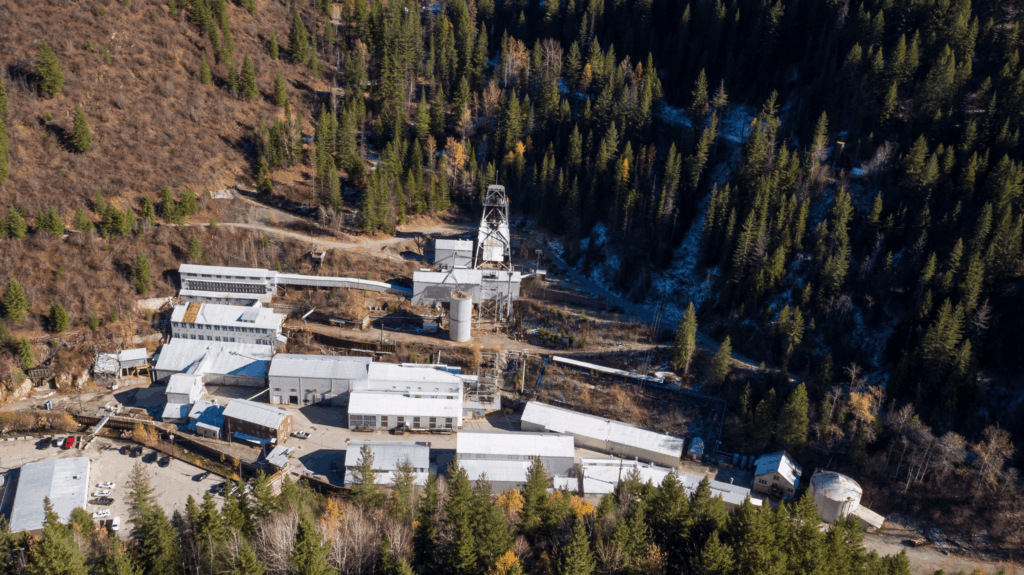
Sunshine Silver Mining & Refining has expanded its consolidated mineral rights in Idaho’s Silver Valley by about 14,100 acres, a 60% increase to roughly 38,000 acres, making it the largest mineral rights holder in the district. The company is launching a multi-year, 45,000-metre surface drilling campaign starting Q4, initially targeting East Sunshine (along strike from the Sunshine mine), Rock Creek and Pine Creek. Much of the enlarged land package has seen limited modern exploration, signalling significant upside for additional deposits beyond the existing Sunshine mine.
Water licence renewal and a land use permit for Fortune Minerals’ NICO cobalt-gold-bismuth-copper project in the Northwest Territories have been approved, setting binding conditions for mine construction, operation, and closure security. The development combines an open pit and underground mine plus concentrator linked by an approved access road to the territorial highway, with concentrates shipped to a dedicated hydrometallurgical plant in Alberta. NICO hosts about 12% of known global bismuth reserves and 1.1 million in-situ ounces of gold, targeting domestic output of cobalt sulphate, bismuth ingots and copper cement.
Caravel Minerals has signed a non-binding, non-exclusive MoU with Thiess to develop mining services and support the definitive feasibility study for the Caravel copper project in Western Australia. Thiess will deliver engineering and cost estimates for a proposed full-service mining contract, covering drill and blast, load and haul, and ancillary services. The mine plan under review includes options for autonomous drilling and haulage fleets, signalling potential deployment of large-scale autonomous truck and drill rigs in a greenfield copper operation.
Mineral Mining Services (MMS) has secured a new underground mining services contract from Tennant Mines, a subsidiary of ASX-listed Pan African Resources, at the newly established White Devil project about 50 km from Tennant Creek in Australia’s Northern Territory. The award rapidly extends MMS’s operating footprint in the Tennant Creek mineral field, positioning the contractor for further work as White Devil ramps up from initial development to full ore production. For geotechnical and mine planning teams, the contract signals imminent demand for detailed ground control, ventilation design and short-interval scheduling support on a new high-grade underground front.
Lycopodium Limited has secured a A$49.4 million EPCM contract to manage delivery of Greatland Resources’ Havieron gold-copper project in Western Australia, taking responsibility for project execution through the pre-production phase. The mandate covers engineering, procurement and construction management for surface and underground infrastructure ahead of first ore, positioning Lycopodium as project delivery partner rather than lump-sum contractor. For geotechnical and mine infrastructure teams, this signals an EPCM-led approach to early works, with design control and constructability reviews centralised under Lycopodium during the critical build-out period.