Geomechanics, Streamlined.
© 2026 Geomechanics.io. All rights reserved.
Nth Cycle has signed a binding 10-year offtake term sheet with Glencore worth an estimated $1 billion, securing 100% of black mass feedstock from Glencore’s US shredding network for Project SHIELD, its planned South Carolina battery materials refinery. The deal covers offtake of high-purity mixed hydroxide precipitate (nickel/cobalt MHP) and battery-grade lithium carbonate, and includes assessing an existing Glencore US site to accelerate construction alongside Nth Cycle’s 21,000-square-foot Fairfield, Ohio facility. Both parties will also evaluate deploying Nth Cycle’s portable ‘Oyster’ electrochemical refining system for black mass, copper and rare earth recovery in Europe and globally.
Wabtec Corporation has secured a long-term services agreement worth more than $700 million with La Compagnie du TransGuinéen (CTG) to support a new fleet of Evolution Series locomotives on the Simandou iron ore rail corridor in Guinea. Combined with CTG’s 2024 locomotive orders, Wabtec’s total Simandou-related contract value now exceeds $1.2 billion, its largest services package in Africa. The deal signals long-horizon OEM support for heavy-haul rail operations that will underpin bulk ore export logistics from the greenfield Simandou development.
Metso has signed its largest analyser Life Cycle Services (LCS) agreement to date, a five-year contract with a major South American copper producer covering performance-based support for on-stream analysers. The deal centres on an outcome-based model, with Metso responsible for maintaining analyser availability and measurement accuracy across the concentrator to stabilise grade control and process optimisation. For plant and maintenance engineers, it signals deeper OEM involvement in long-term condition monitoring, remote diagnostics and KPI-linked service for critical assay instrumentation.
Globe 24-7 has launched Globe Trust 24-7, a joint venture with Guinea-based Trust Africa, to expand mining recruitment and workforce solutions across Guinea and the wider West African belt. The JV targets operators in gold, bauxite and iron ore projects seeking local and expatriate technical talent in geology, mine planning, processing and HSE. For project owners, this signals easier access to regionally based recruiters familiar with OH&S regimes, francophone labour markets and rapid mobilisation for new pits, plant expansions and feasibility teams.
OreNova Engineering is deploying proprietary AI-based design tools to accelerate the definitive feasibility study for Horizon Gold’s Gum Creek project in Western Australia, targeting faster engineering of the mineral processing plant. The Perth-based firm is using automated process modelling and plant layout optimisation to compress design cycles that traditionally take months into weeks, while iterating multiple comminution and gold recovery flowsheets. For project engineers, this points to shorter DFS schedules, earlier capex definition and the ability to rapidly compare alternative plant configurations under varying throughput and ore characteristics.
Contracts have been awarded for five major Western Sydney road projects worth nearly $3 billion, jointly funded by the Australian Government and New South Wales Government to expand capacity on key corridors. Works include multiple intersection upgrades, new and duplicated carriageways, and improved local connectors feeding Western Sydney International Airport at Badgerys Creek. For designers and contractors, the programme signals sustained demand for high-capacity pavements, complex traffic staging, and airport-linked freight access geometry across the region’s arterial network.
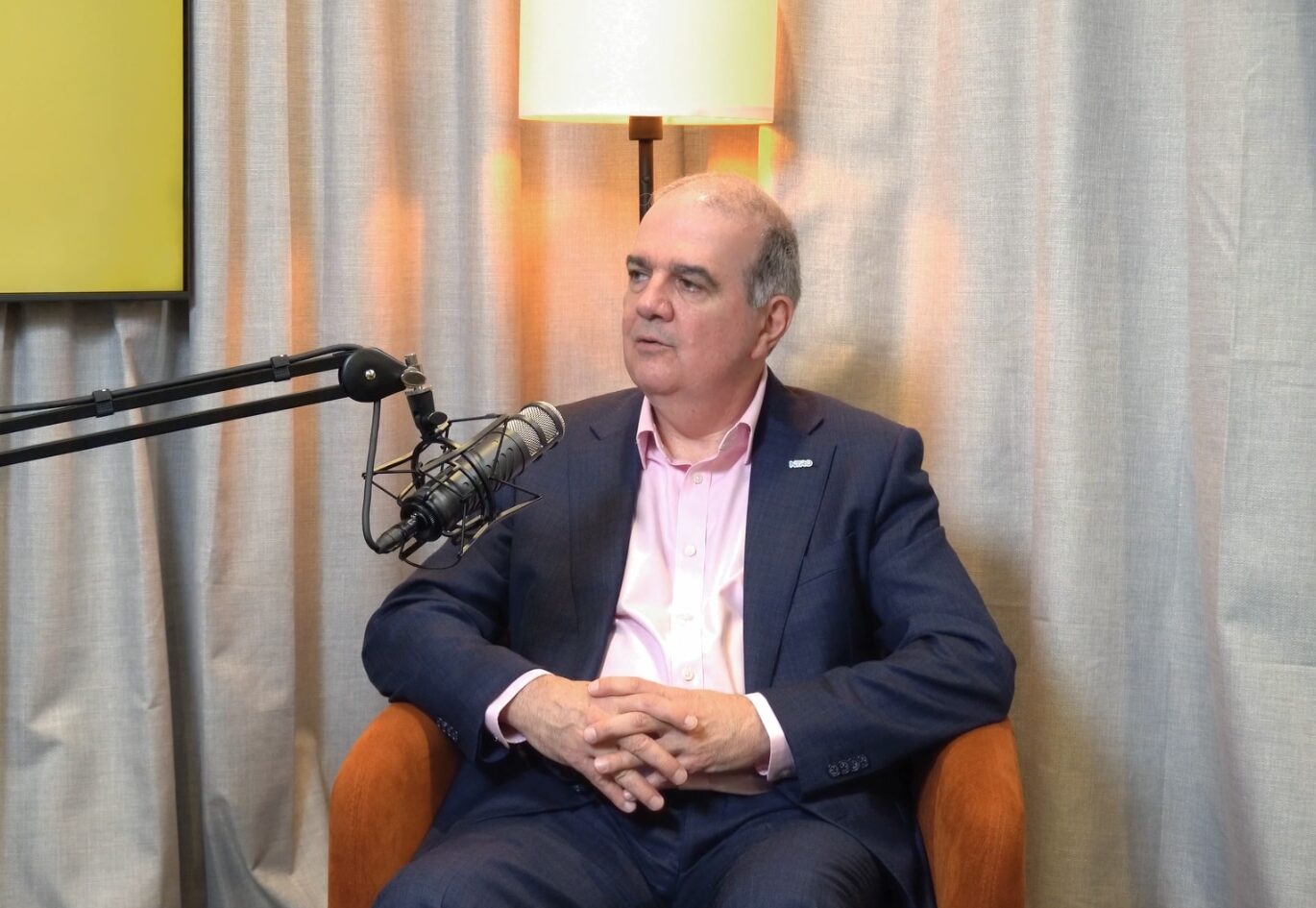
Michael Caltabiano, Chief Executive Officer of the National Transport Research Organisation, outlines future priorities for Australian transport research, focusing on road safety, emerging vehicle and sensor technologies, and community expectations around network performance. He discusses how NTRO’s work on pavement materials, asset management and data-driven planning is feeding into long-term infrastructure strategies across state and local road networks. For engineers, the conversation signals growing emphasis on evidence-based design, whole-of-life asset performance and integrating new vehicle technologies into existing corridors.
A construction tender has opened to upgrade the Stuart Highway–Schwarz Crescent intersection in Alice Springs, targeting safer pedestrian movements between the eastern suburbs and the town centre and improving access to nearby schools and businesses. Works will realign Schwarz Crescent and reconfigure the intersection geometry to reduce conflict points between vehicles and crossing pedestrians. Civil contractors can expect typical urban arterial treatments, likely including new kerb alignments, signal and crossing upgrades, and drainage adjustments within a constrained existing corridor.
Antipa Minerals has selected a dual-product processing route for the Minyari Dome project in Western Australia, targeting on-site production of gold doré and a saleable copper concentrate, and has pushed release of its pre-feasibility study to November 2026. The company reports that its main PFS technical workstreams are complete and a preferred development configuration has been chosen, implying a defined flowsheet and plant layout. The gold–copper pathway signals a shift from a pure gold concept to a polymetallic operation, with implications for flotation circuit design, tailings management and offtake strategy.
Rio Tinto is staging its 21st annual Colours of our Country exhibition in Perth, displaying more than 120 artworks from 29 Pilbara Aboriginal artists that explore connections between people, Country and culture in one of Australia’s key iron ore mining regions. Running until 2 October, the programme is backed by Rio Tinto’s long-term partnerships with Kariyarra, Yindjibarndi and other Traditional Owners. For miners operating in the Pilbara, the exhibition signals ongoing expectations around cultural heritage engagement alongside large-scale resource development.
Saturn Metals has extended the Apollo Hill gold system in Western Australia by up to 1km north of the existing 2.83Moz mineral resource after first-pass aircore, reverse circulation and diamond drilling confirmed new mineralisation along strike. The newly defined zone opens an additional structural corridor for potential resource growth beyond the current pit shells, with mineralisation intercepted in multiple drill types indicating continuity from near-surface oxide into deeper fresh rock. For mine planners and resource geologists, the results point to a likely revision of pit limits and longer-term production scheduling if follow-up drilling converts the zone to JORC-compliant ounces.
BHP and China Baowu Steel have extended their steel decarbonisation partnership for five years, focusing on trials of Pilbara iron ore in modified blast furnaces and piloting emerging steelmaking technologies. The renewed memorandum of understanding, building on a 2020 agreement, targets lower emissions from Baowu’s large-scale blast furnace fleet rather than a wholesale switch to scrap-based electric arc furnaces. For miners and steelmakers, the work will test how Pilbara ores perform under higher injection of alternative reductants and other furnace modifications without sacrificing throughput.
Silver Mines has launched a $70 million two‑tranche equity placement to advance development of the Bowdens silver project in New South Wales and fund further exploration across its portfolio. New and existing investors are being offered shares at $0.145, a 10 per cent discount to the last close, with tranche one executed under existing placement capacity and tranche two subject to shareholder approval. The raise signals progression towards construction at Bowdens, one of Australia’s largest undeveloped silver deposits, with implications for regional processing and infrastructure planning.
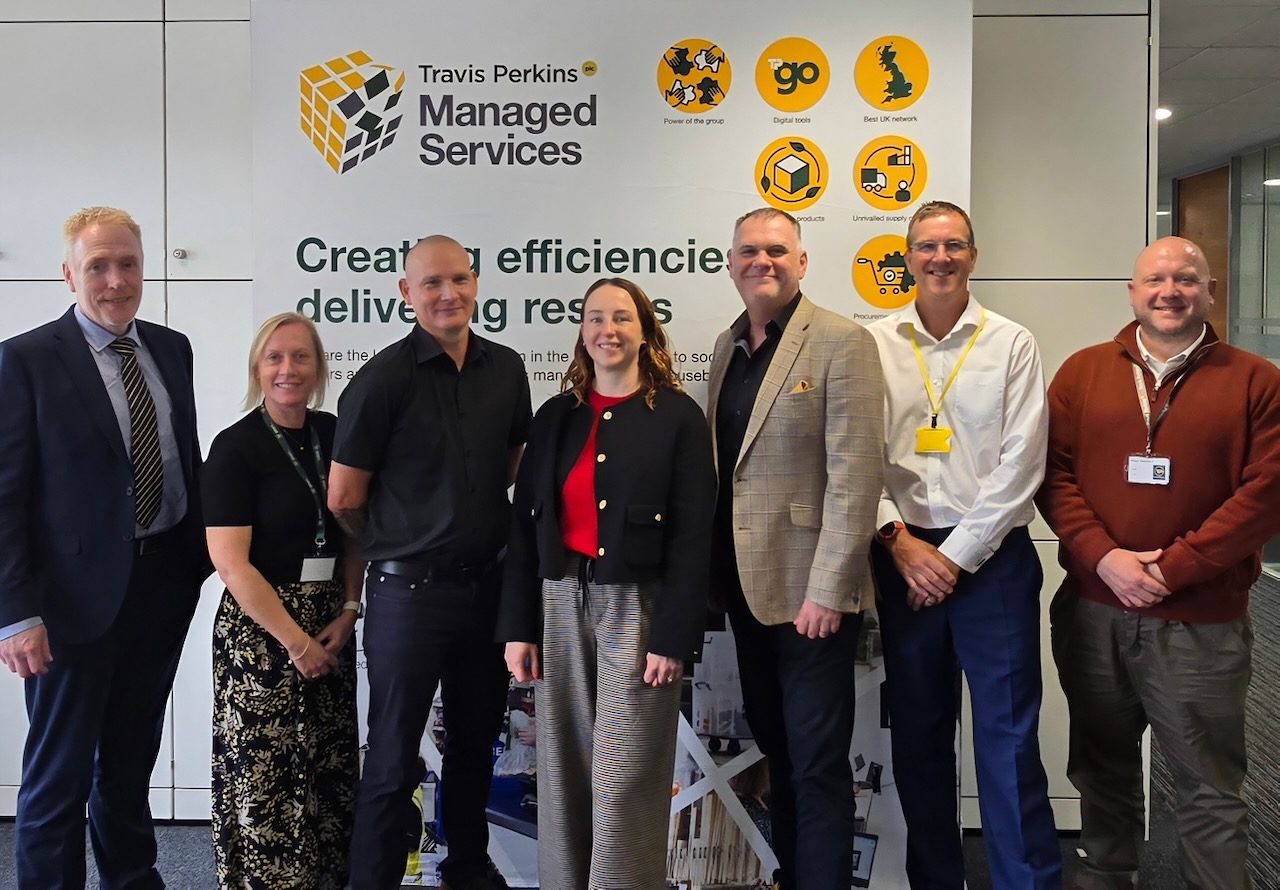
Travis Perkins Managed Services has secured a place on the Communities and Housing Investment Consortium’s Merchants and Materials framework until 2036, covering general construction, plumbing, hire and managed stores for social housing repair and maintenance. TPMS, which already serves over 180 housing associations and local authorities via Travis Perkins’ national branch network, will deploy dedicated branches, autonomous TPgo SelfServe units and its TPgo digital suite to support compliant, just‑in‑time materials supply. CHIC’s framework, restricted to its 350+ members and 1,500 supply chain partners, underpins asset management for 4.3 million UK homes.
Blue Sky Building has been appointed construction manager for the Barbican Renewal Programme, a major upgrade of the Grade II-listed arts complex and residential estate in the City of London. The works will focus on restoring the original architectural vision while supporting the City’s environmental targets, all delivered in a fully operational setting with residents, performance venues and public circulation remaining in use. Blue Sky’s selection leans on its track record managing complex refurbishments in live environments at the National Gallery, British Museum, Selfridges and United Kingdom House.
Severfield has created a new chief commercial officer role and appointed Terry Fitzmaurice to lead the structural steel group’s commercial, procurement and estimating functions across its UK and international projects. Fitzmaurice joins from Manchester Airports Group, where he was group procurement and contracts director, and previously held senior commercial roles at Mitie. Reporting directly to CEO Paul McNerney and working closely with CFO Andrew Page on strategy deployment, he is expected to tighten cost, contract and supply-chain control on complex steelwork packages.
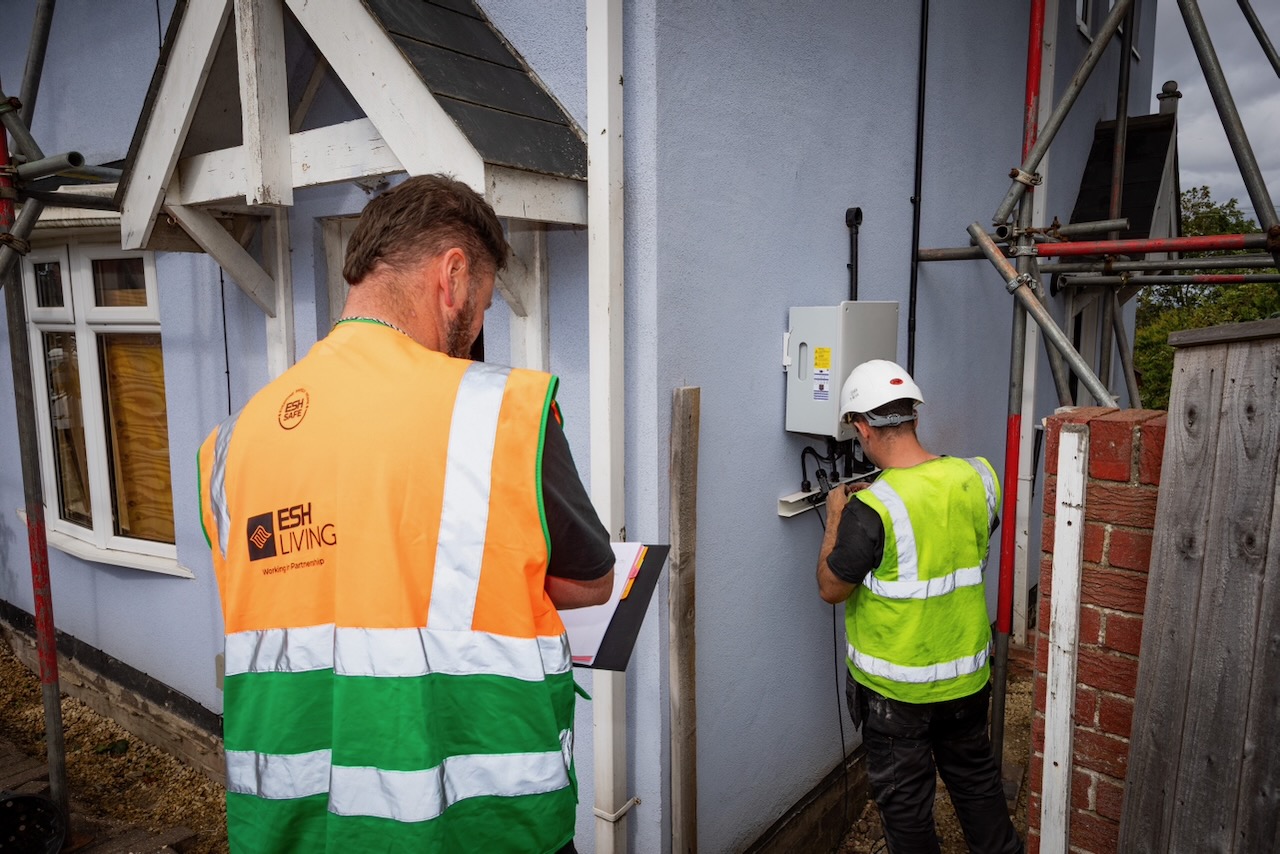
Esh Construction has secured a £2.5m Gateshead Council contract under the Warm Homes: Social Housing Fund Wave 3 to upgrade the energy performance of 82 homes over six months. Works include installing photovoltaic panels and ventilation measures to 70 bungalows and insulated flat roof upgrades to 12 flats, with retrofit designs informed by pre-construction technical surveys and updated EPC ratings. Storm Tempest has been appointed to deliver retrofit assessment, design and coordination in line with PAS retrofit standards, signalling structured, standards-led delivery for future social housing schemes.
Transport for London has appointed Costain under its Infrastructure Improvement Framework to deliver a design-and-build upgrade of South Kensington station, including step-free access and bringing a new dedicated eastbound Circle and District line platform into use by 2031. Works will integrate with a Native Land/Places for London joint venture, which has consent for a RSHP-designed around-station scheme adding 50 homes, refurbished retail and a four-storey “Bullnose” building fronting the station. Funding comes from TfL’s Business Plan, a £12m contribution from the Royal Borough of Kensington and Chelsea, and a separate 1851 Commission contribution.
Construction has started on 41 new council homes in Shirecliffe, delivered by Sheffield Housing Company – a joint venture between Sheffield City Council, Keepmoat and Great Places Housing Group – with all units to be purchased by the council for mainly affordable rent plus some shared ownership. The scheme, part funded by the South Yorkshire Mayoral Combined Authority, provides a mix of one- to four-bedroom properties targeted at local demand. It forms part of SHC’s wider programme for 2,300 multi-tenure homes across 23 sites, over 70% for open-market sale.
Manitou has entered a cross-distribution partnership with HD Construction Equipment, manufacturer of Hyundai and Develon machines, to add compact excavators, loaders and related equipment to its portfolio. The compact models will be sold globally through Manitou’s existing dealer network under both the Manitou and GEHL brands, targeting rental fleets and small to mid-size contractors. For contractors and plant hirers, the move consolidates access to Korean-built compact kit alongside Manitou’s telehandlers and access platforms through a single supply and service channel.
Completion of the £24m Eastern Transfer Station in Ware delivers a 1.4-hectare waste facility for Hertfordshire County Council, built by Balfour Beatty with Pick Everard as project manager, quantity surveyor, NEC supervisor and CDM principal designer under the SCAPE BECS framework. The site includes a main transfer building, a secondary building, new office space, a weighbridge and gatehouse, plus odour and dust suppression, fire water retention tanks and a dedicated pumping station feeding sprinklers and water cannons. The layout is designed to cut waste haul distances across the county and associated carbon emissions.
Proof-of-concept tests have been completed on the UKRI-supported Manufacturer’s Information Hub (MIH), a not-for-profit platform to share structured construction product data across Europe via a standard API. Phase one defined how to connect manufacturer databases, created requirements for a standard data dictionary to validate and present attributes, and set rules to cut complexity and compliance risk around safety and environmental performance. Subject to funding, a small-scale working prototype linking a handful of manufacturers and users is targeted for spring 2027, with full-scale testing through 2027 and initial platform functionality from 2028.
Approval has been granted for McLaren Living’s Fish Island co-living scheme in Hackney Wick, completing the Neptune Wharf masterplan with 280 co-living studios and 44 affordable homes in two HTA Design blocks of ten and seven storeys. The fully car-free, cycle-first scheme incorporates rain gardens, bioswales and permeable paving for sustainable drainage, plus a central landscaped courtyard linking into the surrounding public realm and retaining mature boundary trees. Roof-mounted PV panels and an energy strategy targeting BREEAM Excellent signal a strong operational performance focus for dense urban residential design.
McLaren Construction has appointed Martin Ewing as divisional director for construction management and specialist projects, tasking him with overseeing a growing portfolio of complex building and infrastructure schemes and reporting to managing director Vince Lydon. Ewing brings more than 40 years’ experience delivering major London projects, including the refurbishment and upgrade of the Ritz Hotel, The Peninsula Hotel (billed as the city’s first 6‑star hotel), the historic Selfridges upgrade and Colchester Garrison. The move signals McLaren’s push to expand construction management services for technically challenging, high-spec refurbishments and new builds.