Geomechanics, Streamlined.
© 2026 Geomechanics.io. All rights reserved.
Omniflex is installing a new wireless telemetry system across the Nkomati nickel plant in South Africa to restore mine-wide monitoring of water and pumping infrastructure as the operation restarts after a R753 million ($46 million) investment. The system replaces legacy Omniflex equipment supplied under previous ownerships and is expected to give centralised visibility of dam levels, boreholes and pump stations over the entire site. For engineers, the upgrade signals renewed focus on remote supervision of dewatering and process water balance ahead of ramp-up.
Liebherr-Australia has opened a new mining training centre in Perth, Western Australia, built around an administrative hub with three dedicated training rooms housing three machine simulators, including a T 264 haul truck unit. The facility is designed for advanced, technology-enabled training for mine operators, maintenance personnel and Liebherr support teams from sites across Australia. For mines running large Liebherr truck and excavator fleets, the centre enables off-site operator upskilling, scenario-based training and reduced in-pit onboarding time.
Sandvik used its Future of Mining 2026 event in Turku to set a new underground electrification strategy built around a “Toro standard” for its battery-electric load and haul fleet. Head of BEV Strategy Tommi Valkonen outlined plans to unify battery systems and controls across Toro-branded loaders and trucks, targeting faster battery swaps and simplified maintenance compared with today’s mixed platforms. The strategy signals tighter integration of BEV hardware, software and charging, with implications for mine power design, fleet standardisation and lifecycle cost modelling.
The Greater Connect Alliance has secured the contract to deliver the Lloyd Street Extension Project in Western Australia, the first stage of a broader upgrade to the Great Eastern Highway and the road network around Perth Airport. Works will create a new north–south link tying Lloyd Street into the Great Eastern Highway freight corridor, intended to relieve congestion on existing local roads carrying airport and industrial traffic. For designers and contractors, the staged approach signals upcoming packages involving complex interface management with live airport access routes and existing highway structures.
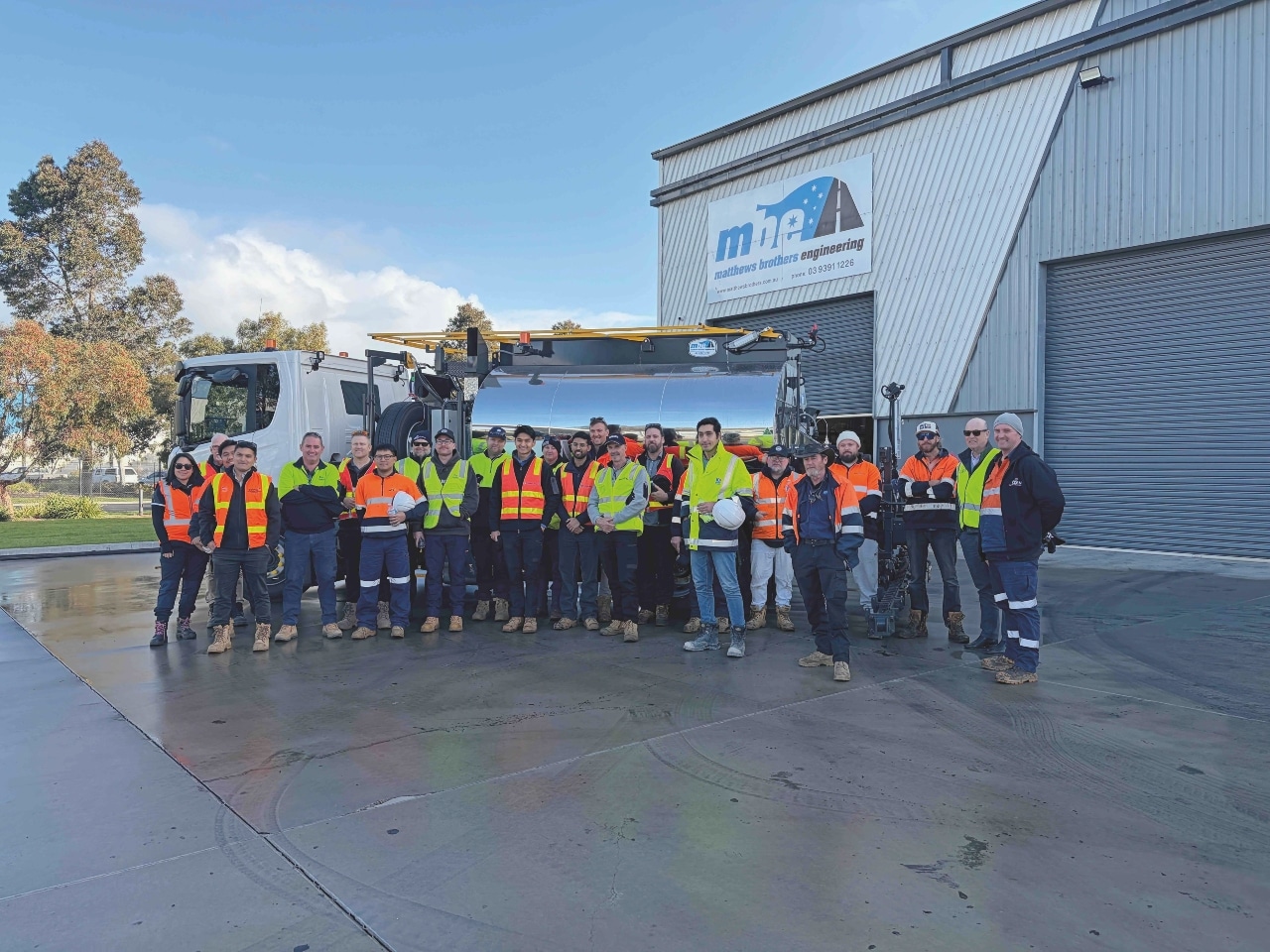
A ‘spray seal essentials’ workshop has positioned Matthews Brothers Engineering (MBE) as a technical partner in upskilling road maintenance crews on binder selection, aggregate grading and application rates for chip seals. MBE used its own spray sealing equipment and calibration procedures to demonstrate correct nozzle configuration, bar height and transverse distribution checks, directly linking plant settings to Austroads-compliant surface texture and waterproofing performance. The initiative signals growing reliance on OEMs to transfer practical know‑how on seal design, construction tolerances and troubleshooting bleeding, stripping and early-life failures.
Three regional contracts have been let for spring road maintenance, resurfacing and repair across Tasmania, covering 84 sites on the state network. Victorian surfacing specialist Roadways will deliver asphalt and spray seal works in the north-west and southern regions, while Hazell Bros will manage civil and pavement works in the north. The programme signals a concentrated seasonal push on surface condition, drainage and structural repairs, with implications for traffic management planning and quarry/asphalt plant scheduling across multiple districts.
Pressure on UK water resources is intensifying as Ofwat’s major projects senior director outlines a combined gated process for large strategic schemes, integrating regulatory approval with project delivery milestones. The approach is aimed at multi‑billion‑pound assets such as new reservoirs, regional transfer pipelines and advanced treatment works, where long construction lead times and climate‑driven demand uncertainty have previously deterred private finance. By tying funding decisions to clearly defined technical gates, Ofwat is seeking to give investors greater certainty on cost recovery while maintaining scrutiny of environmental impacts on rivers and aquifers.
Calls to add ground condition metrics to public weather forecasts argue that engineers, utilities and transport operators now need near real-time data on soil moisture, pore pressure and desiccation risk, not just rainfall totals and wind speeds. Proponents point to recent UK failures on clay cuttings, embankment slips and buried pipe bursts after prolonged drought–storm cycles, where Met Office rainfall data alone gave little warning of loss of shear strength or shrink–swell movement. Integrating sensor networks, satellite soil-moisture indices and probabilistic geotechnical models into daily forecasts could materially change inspection, access planning and temporary works decisions.
Yorkshire Water’s £7.9M storm overflow improvement scheme in Pudsey, West Yorkshire will be delivered by Kier Infrastructure with design by Sweco, targeting reduced spill frequency and improved network resilience during intense rainfall. The project will focus on upgrading existing combined sewer and overflow assets rather than full replacement, aiming to increase storage and conveyance capacity within the constrained urban catchment. For civil and geotechnical teams, key issues will include working around live sewers, limited access in built-up areas, and strict environmental compliance on discharge quality.
Railway renewals between Cardiff and Bridgend via Pontyclun will be delivered by Network Rail over three weekend possessions in September and October, closing sections of the South Wales Main Line to passenger services. Works are expected to focus on track renewals and associated ballast and drainage improvements on this intensively used four-track corridor, which carries both Great Western Main Line intercity traffic and heavy freight. Contractors will need tightly sequenced access, high-output plant and robust temporary works to manage interfaces with existing signalling, overhead line equipment and adjacent live lines.
Gallows Corner flyover and roundabout in east London have fully reopened after a £67.4M programme of strengthening and refurbishment works to the elevated structure. The scheme focused on extending the life of the flyover through concrete repair, steelwork strengthening and replacement of key deck components, along with new waterproofing and surfacing. For designers and asset managers, the project signals continued investment in life-extension of 1970s-era elevated junctions rather than full replacement, with implications for inspection regimes and phased strengthening strategies on similar structures.
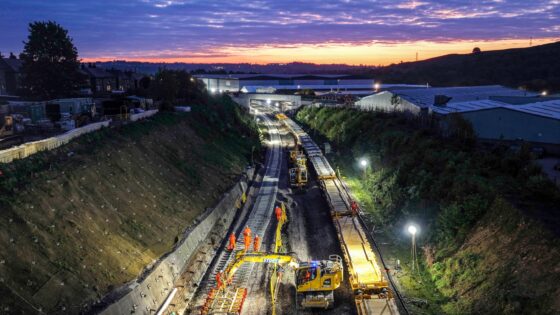
Engineers have begun a major 24/7 blockade on the Transpennine Route Upgrade in Huddersfield, targeting one of the scheme’s most constrained four-track sections between Manchester and Leeds. Works are expected to focus on track realignment, new overhead line equipment and resignalling to increase line speed and capacity through the Huddersfield station throat and adjacent junctions. Continuous working will compress disruptive possessions but will demand tight control of temporary works, track geometry tolerances and interface management with existing Victorian structures.
Sinclair Gold has intersected new gold mineralisation about 180m beyond the current resource boundary at the central section of the Mt Henry deposit in Western Australia, following a recent doubling of the resource to 1.8 million ounces. The step-out drilling results arrived after the 31 July cut-off for the updated resource estimate, so the additional mineralisation is not yet captured in reported ounces. For mine planners and resource geologists, the extended mineralised footprint suggests potential for a larger pit shell and revised economic envelopes in upcoming studies.
Antipa Minerals’ fourth batch of drilling at the Tim’s Dome prospect in Western Australia’s Paterson Province has extended the 2026 gold–copper mineralised footprint to roughly 2.2km of strike. The latest programme comprises 13 reverse circulation holes totalling 3073m, with drilling now progressing from surface to test a large deeper target beneath the known mineralisation. For geologists and mine planners, the expanded strike length and move to deeper testing signal potential for a larger-scale resource and future underground or bulk-tonnage scenarios.
Ramelius Resources is advancing a major expansion of its Mt Magnet gold hub in Western Australia, targeting group production of 560,000–610,000 ounces per year by FY30, up 11 per cent on its October 2025 plan. The revised growth strategy lifts projected FY30 output by 205,000 ounces compared with FY24 levels, consolidating ore supply from satellite deposits into a central processing complex at Mt Magnet. For mine planners and geotechs, the scale-up implies longer pit lives, higher total movement and potential upgrades to haulage, waste storage and tailings capacity across the hub.
Regis Resources has extended the known mineralised system at the Rosemont underground mine in Western Australia, with drilling confirming gold mineralisation 600m south of the current Stage 3 resource envelope at the Duketon operations. Resource development drilling is targeting down-plunge and southern extensions of the existing underground lodes, with multiple holes intersecting mineralisation outside the modelled stopes. The results point to potential incremental underground reserve growth and longer mine life, prompting likely updates to resource models, mine design and development scheduling.
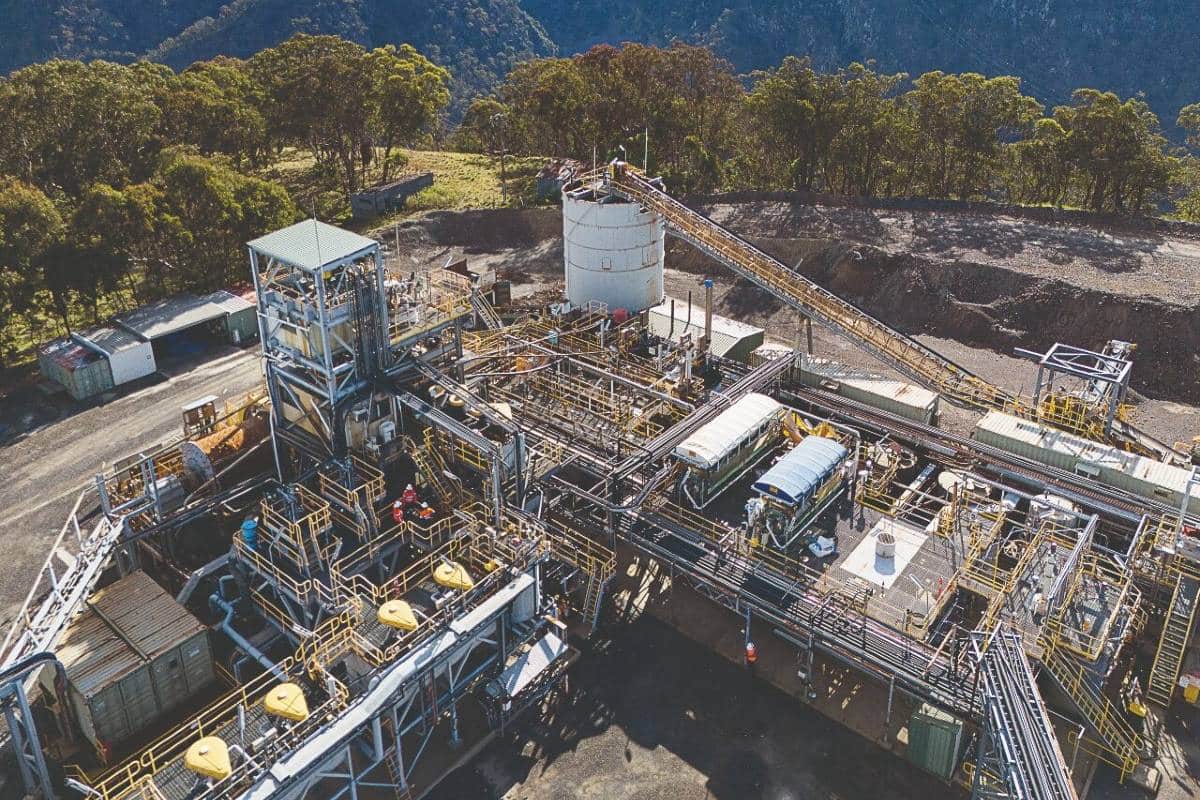
Larvotto Resources has produced the first antimony and gold concentrate from the redeveloped Hillgrove mine in New South Wales, following the August restart of processing operations. The milestone comes after completion of a plant upgrade programme that brought new flotation cells and concentrate filter presses online to handle antimony–gold ore. Commissioning progress towards steady-state production signals renewed sulphide flotation capacity at a site historically known for complex refractory mineralogy, with implications for concentrate quality and downstream smelting contracts.
Active risk management in Australian mining is shifting towards real-time, technology-driven controls that separate people from heavy plant in shared work zones. New systems from suppliers such as Aptella integrate collision avoidance, proximity detection and geofencing around haul trucks, loaders and autonomous fleets, using on-board sensors and wearable tags to trigger alarms or automatic slow-downs. For geotechnical and operations teams, this means redesigning traffic flows, exclusion zones and training to match digital risk maps, with the aim of making “zero harm” credible rather than aspirational.
Geoscience Australia has mapped a 1000km continental-scale magmatic arc beneath the Delamerian project region spanning South Australia, New South Wales and Victoria, identifying concealed potential for critical minerals, copper and gold in previously under-explored terrane. Delivered as the first deep-dive study under the Federal Government’s 35-year Resourcing Australia’s Prosperity initiative, the work integrates deep-crustal geophysics and geochemistry to image mineral systems buried beneath thick cover. For explorers, the results materially expand prospective search space below cover sequences rather than in outcropping belts.
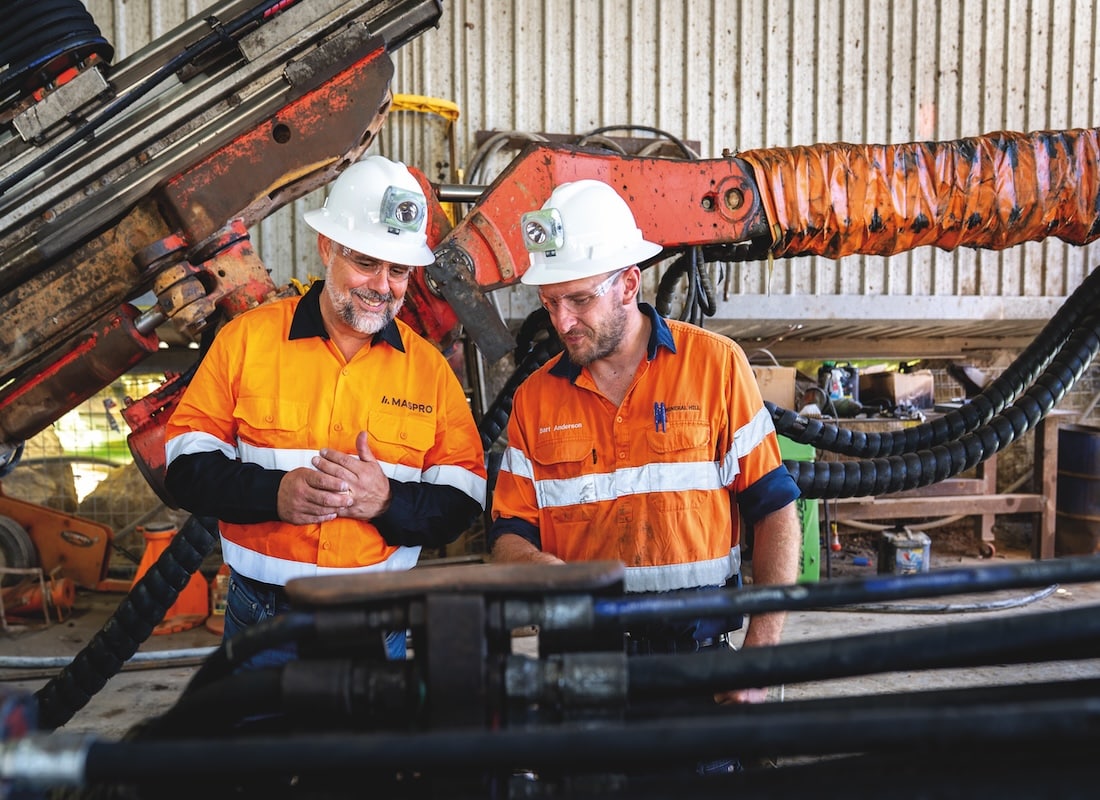
MASPRO is working with underground mines to extend hydraulic cylinder and wear-component life by forensically analysing premature failures that often occur within days in high-load, high-contamination environments. Using teardown inspections, metallurgical assessment and seal and surface finish analysis, the company traces root causes such as side-loading, misalignment, poor lubrication and abrasive ingress rather than accepting short service intervals as “normal”. The approach is feeding back into redesigns of rod eyes, bearing areas and sealing systems, giving maintenance teams data to adjust operating practices and stocking strategies.
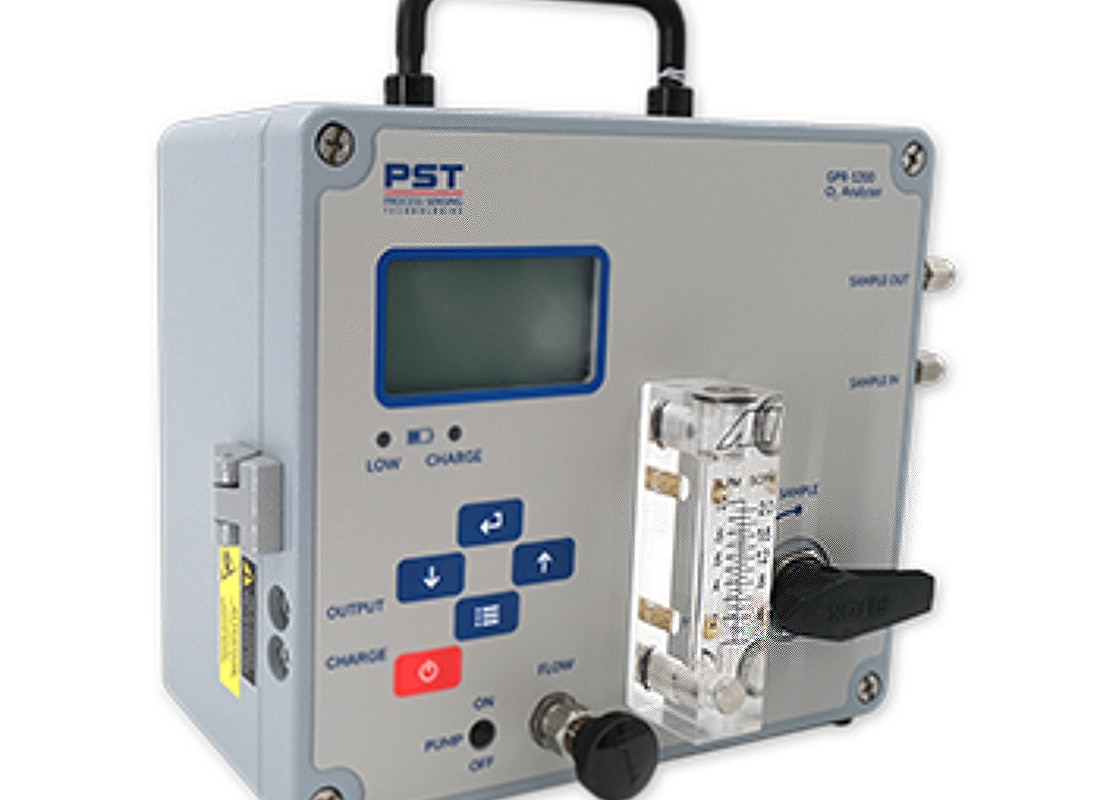
The Analytical Industries Inc. GPR-3500 Portable Purity Oxygen Analyser is a battery-powered unit for field and plant verification of enriched oxygen streams from 0–100 per cent, with selectable high-purity ranges such as 90–100 per cent O₂. Designed for portable use around gas plants, pipelines and on-site storage, it targets purity checks on oxygen-enriched process gas rather than trace-level safety monitoring. For mining operations relying on oxygen for leaching, smelting or cutting, it offers on-the-spot confirmation of gas quality without returning samples to a fixed analyser.
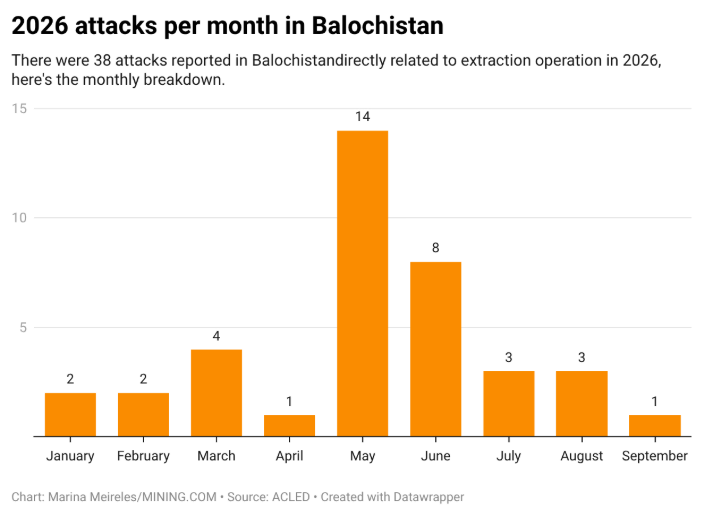
More than 30 mining operations in Pakistan’s Balochistan province have been attacked in 2026, with ACLED recording 38 incidents linked to extractive activity between January and September and over 130 in the past three years. Nearly 90% of separatist attacks on mineral projects occur on haul and access roads, typically disabling coal and copper-gold trucks by shooting tyres and burning vehicles, while heavily guarded sites such as Reko Diq and Saindak see fewer direct assaults. The pattern exposes critical vulnerabilities in transport corridors and raises security, reputational and community‑relations risks for foreign-backed projects.
BOTON and SimFer, the Rio Tinto-controlled operator of Guinea’s Simandou iron ore project, have signed a long-term intelligent operations support services agreement for the site’s conveyor belts and systems, formalised on 14 September in Wuxi, China. The deal extends BOTON’s role from supplying and installing high-capacity overland conveyor belts to providing ongoing intelligent monitoring, diagnostics and optimisation support. For mine operators, this signals deeper OEM involvement in lifecycle performance of critical bulk-handling infrastructure on one of the world’s largest undeveloped iron ore deposits.
XCMG has broken ground on its first overseas Remanufacturing Centre in Balikpapan, Indonesia, dedicated to overhaul and reman of large mining equipment components such as engines, transmissions and hydraulic systems. The facility is positioned as a localised lifecycle support hub for XCMG haul trucks and excavators operating in Indonesian coal and nickel projects around Kalimantan and beyond, reducing downtime and long-distance shipping for major component rebuilds. For mine operators, this signals tighter OEM support for high-hour fleets and potentially more predictable maintenance planning in the region.