Geomechanics.io

  • Free Tools
Sign UpLog In

    Geomechanics.io

    Geomechanics, Streamlined.

    © 2026 Geomechanics.io. All rights reserved.

    Geomechanics.io

    CMRR-ioGEODB-ioHYDROGEO-ioQCDB-ioFree Tools & CalculatorsBlogLatest Industry News

    Industries

    MiningConstructionTunnelling

    Company

    Terms of UsePrivacy PolicyLinkedIn
    Projects
    Research
    Safety

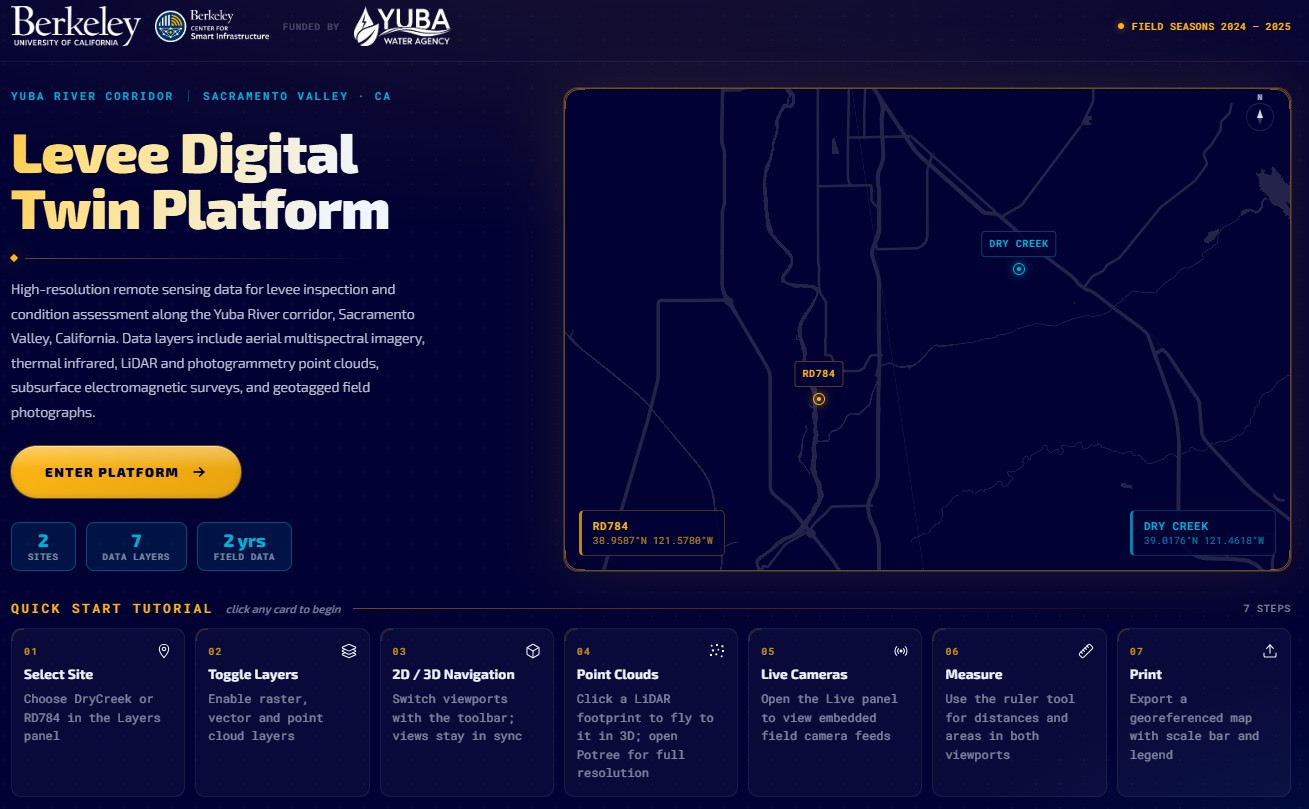
    Levee Digital Twin Platform for Yuba River: condition monitoring insights for engineers

    June 12, 2026|

    Reviewed by Tom Sullivan

    Levee Digital Twin Platform for Yuba River: condition monitoring insights for engineers

    First reported on Geoengineer.org – News

    30 Second Briefing

    Researchers at UC Berkeley, funded by Yuba Water, have launched a Levee Digital Twin Platform for the Yuba River corridor, integrating continuous sensor data, geotechnical models and inspection records into an interactive system for levee condition assessment. The platform combines real-time pore pressure and deformation monitoring with historical performance data to flag anomalous behaviour along specific reaches and embankment sections. Engineers can use the tool to prioritise field investigations, refine seepage and stability analyses, and plan targeted remediation before high-flow events.

    Technical Brief

    • Approach provides a template for regulated levee systems globally where dispersed legacy data hinder risk-based safety management.

    Our Take

    Because this piece is tagged under both Research and Safety, it aligns with a small subset of geotechnical coverage where academic institutions like UC Berkeley are directly embedded in operational risk management, which often accelerates the transfer of new modelling methods into agency practice.

    For operators such as Yuba Water, a corridor-scale digital twin in the United States context typically implies better support for real-time flood operations and capital planning, potentially influencing how other Californian water agencies justify upgrades and monitoring spend to regulators and funders.

    Geotechnical Software for Modern Teams

    Centralise site data, logs, and lab results with GEODB-io, CMRR-io, and HYDROGEO-io.

    No credit card required.

    • Save and export unlimited calculations
    • Advanced data visualisation
    • Generate professional PDF reports
    • Cloud storage for all your projects

    Prepared by collating external sources, AI-assisted tools, and Geomechanics.io’s proprietary mining database, then reviewed for technical accuracy & edited by our geotechnical team.

    Related Articles
    Vattenfall picks Natural Power: geotechnical investigation lens for Scottish wind farms
    Geotechnical
    11 days ago

    Vattenfall picks Natural Power: geotechnical investigation lens for Scottish wind farms

    Vattenfall has appointed Natural Power to deliver comprehensive ground investigations for its planned 100MW Qurack and 90MW Quantans Hill onshore wind farms in Scotland, extending a 15‑year collaboration. Natural Power’s construction and geotechnical teams will deploy specialist site investigation techniques and advanced survey technologies to characterise geotechnical, geological and environmental conditions across both sites. The data will feed directly into turbine foundation design, access road alignment and construction risk reduction, giving Vattenfall higher confidence in earthworks, drainage and infrastructure layouts before detailed design and procurement.

    Transpennine Route Upgrade: legacy ground risks and mitigation for engineers
    Geotechnical
    18 days ago

    Transpennine Route Upgrade: legacy ground risks and mitigation for engineers

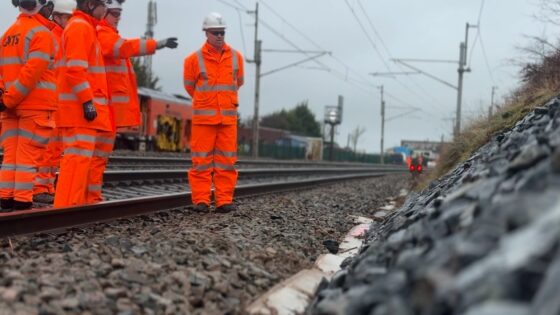
    Extensive ground engineering works are under way on the West of Leeds section of the Transpennine Route Upgrade to manage legacy risks from historic industrial activity beneath and adjacent to the railway. Contractors are deploying a mix of ground investigation, grouting, soil stabilisation and structural retaining solutions to deal with old mine workings, made ground and buried obstructions that could compromise track formation and structures. The interventions aim to secure long-term track geometry, reduce differential settlement and maintain line availability during and after capacity and electrification upgrades.

    1960s cold case ground investigation: forensic lessons for geotechnical teams
    Geotechnical
    19 days ago

    1960s cold case ground investigation: forensic lessons for geotechnical teams

    Ground investigation techniques typically used for highways and foundations have been deployed in a 1960s missing person cold case, with RSK geophysicists leading the subsurface search. The team is combining ground-penetrating radar (GPR) with intrusive investigation methods such as boreholes or trial pits to characterise stratigraphy and detect potential burial anomalies. The work shows how standard site investigation tools can be adapted for forensic applications, including in constrained or previously disturbed ground.

    Related Industries & Products

    Mining

    Geotechnical software solutions for mining operations including CMRR analysis, hydrogeological testing, and data management.

    CMRR-io

    Streamline coal mine roof stability assessments with our cloud-based CMRR software featuring automated calculations, multi-scenario analysis, and collaborative workflows.

    HYDROGEO-io

    Comprehensive hydrogeological testing platform for managing, analysing, and reporting on packer tests, lugeon values, and hydraulic conductivity assessments.

    GEODB-io

    Centralised geotechnical data management solution for storing, accessing, and analysing all your site investigation and material testing data.

    AllGeotechnicalInfrastructureHazardsEnvironmental