Geomechanics, Streamlined.
© 2026 Geomechanics.io. All rights reserved.
Tasmania’s Bass Highway will receive $420 million of safety upgrades along the northern corridor under stage two of the Tasmanian Roads – Northern Roads Package, jointly funded by $366 million from the Federal Government and $84 million from the state. Works are expected to target high‑risk sections between Wynyard and Marrawah identified in the Bass Highway Corridor Strategy, with treatments likely to include shoulder widening, overtaking lanes and intersection upgrades. Geotechnical and pavement engineers should anticipate substantial design and construction demand on existing formations and coastal embankments.
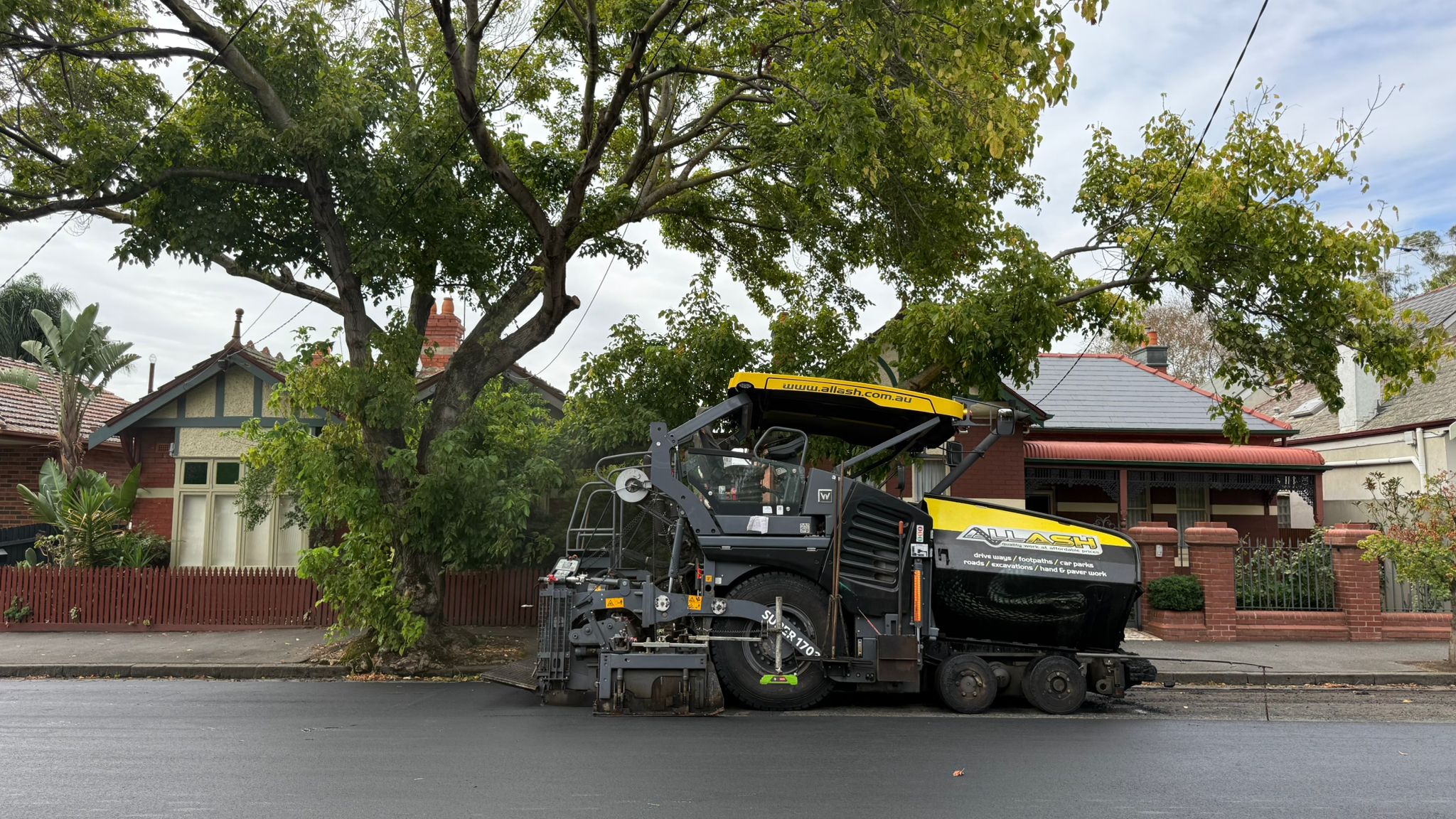
All Ash Asphalt, a small Melbourne family contractor, is using a fleet of Wirtgen Group machines to secure work on some of Victoria’s largest road and rail infrastructure projects. The company relies on Wirtgen cold milling machines and Vögele pavers for profiling, full-depth reconstruction and high-spec asphalt surfacing on major corridors, integrating these with Hamm rollers for compaction to state authority tolerances. For engineers, the case shows how tightly integrated milling–paving–compaction trains can help smaller contractors meet Tier 1-level ride quality and density requirements on fast-track programmes.
Record copper production at Hillgrove Resources’ Kanmantoo underground mine in South Australia is being reported alongside active exploration and development by Caspin Resources and Group 6 Metals across Australian base and critical metals projects. Kanmantoo’s ramp-up signals stronger utilisation of existing underground infrastructure and processing capacity at a brownfield site previously operated as an open pit. For geotechnical and mining teams, the activity points to continued investment in underground copper, nickel and tungsten targets, with emphasis on resource extension drilling and re‑use of established shafts, declines and plant.
Pilbara Ports handled 63.7Mt of cargo in March 2026, an 8 per cent drop year-on-year after Cyclone Narelle forced temporary closures at Port Hedland, Dampier and Ashburton. Iron ore exports from Port Hedland, which typically exceed 50Mt per month, were most affected as shipping channels and berths underwent post-cyclone inspections and staggered re-openings under marine safety protocols. The disruption highlights the need for cyclone-resilient berth structures, dredged channel management and robust stockyard capacity planning across Pilbara export supply chains.
Western Australia has moved to ease fuel security pressures on small mining and exploration operators by allowing exemptions under the state’s fuel supply framework. Junior miners reliant on diesel for pit haulage, remote power generation and long-distance road transport can now apply for regulatory relief when supply disruptions or price spikes threaten operations. The measure is expected to particularly affect remote gold, lithium and critical minerals projects with single-fuel dependencies and limited on-site storage, where short-term outages can halt production and drilling campaigns.
Resources Victoria has partnered with CSIRO to map critical minerals potential in the northwest Wimmera–Mallee region using soil geochemistry and machine-learning analysis of regolith and landscape evolution. The programme will integrate shallow soil sampling with existing airborne geophysics and drilling data to detect pathfinder elements for commodities such as rare earths, nickel and cobalt concealed beneath transported cover. Outcomes are expected to refine prospectivity models over thousands of square kilometres of deeply weathered terrain, guiding explorers towards undercover targets and reducing blind drilling.
Rio Tinto has agreed to forgo delivery of eight million litres of diesel, diverting the fuel to Western Australia’s strategic stockpile as the state manages supply constraints. The redirected volume, equivalent to several days’ consumption for a large Pilbara iron ore operation running multiple 300‑tonne haul truck fleets, is intended to bolster resilience for mining, transport and remote power generation. Operators in WA may still face short‑term scheduling and refuelling adjustments, but the move reduces immediate risk of critical diesel shortages at mine sites.
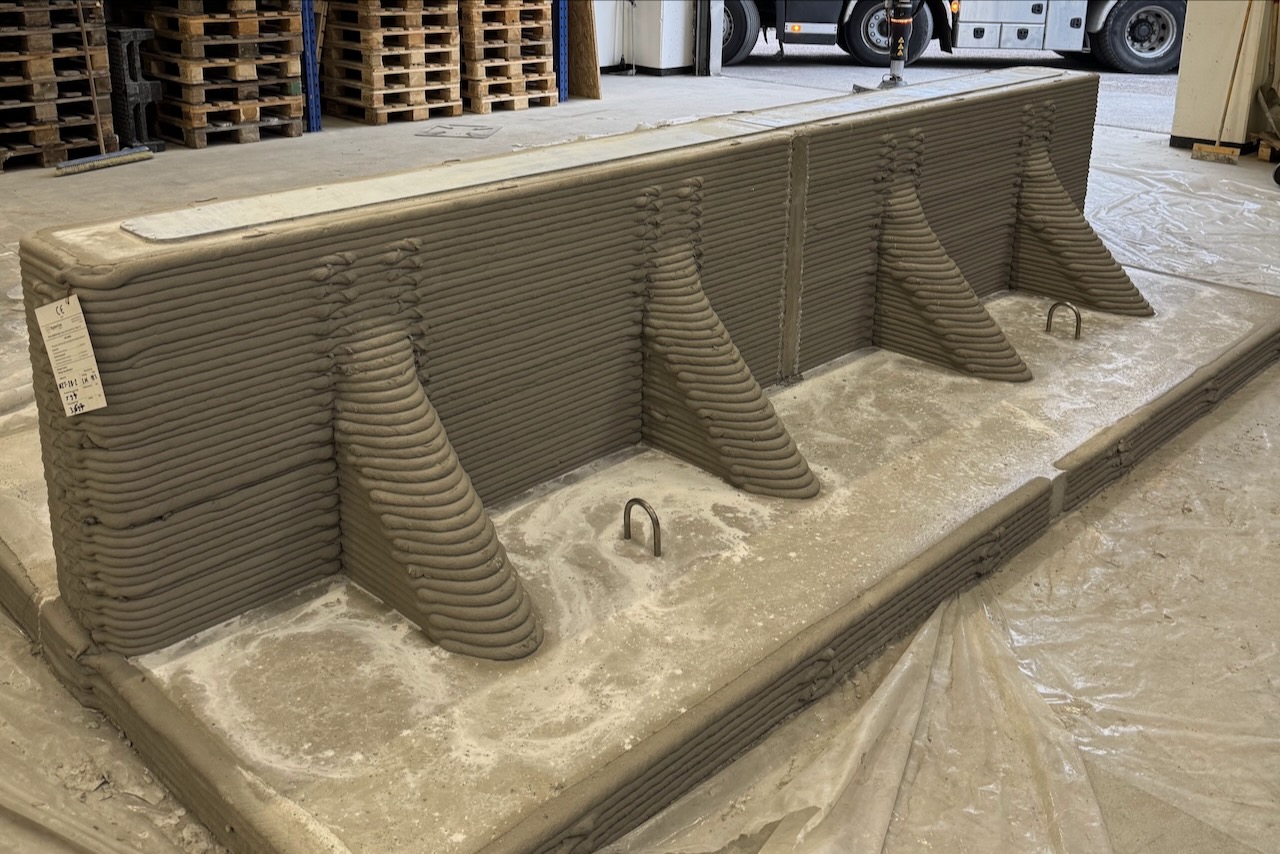
Costain is deploying low-carbon 3D printed concrete sleepers from Hyperion Robotics as pipe support bases on the East Coast Cluster CO₂ transport network being built by Northern Endurance Partnership and A E Yates. Hyperion’s formwork-free printing from its new Forge I facility near Scunthorpe delivers sleepers up to 60% lighter yet up to ten times stronger than traditional units, with a thin, reinforced base design. Compared with conventional precast supports, the solution cuts soil excavation, reduces concrete and steel use by about 40%, and lowers embodied carbon by up to 50%, while enabling faster offsite-led installation.
JCB is adopting CESAR’s Emissions Compliance Verification (ECV) on its RS generator range, combining a tamper-proof ID label, hidden transponders and DNA-based adhesive to link each unit to a verified emissions category. The move, announced at the 2026 AMPS annual meeting, is the first application of CESAR ECV to this type of power generation equipment and enables quick on-site checks as generators move between projects. For contractors, this simplifies proving compliance with site-specific emissions rules while retaining established CESAR theft-deterrent tracking.
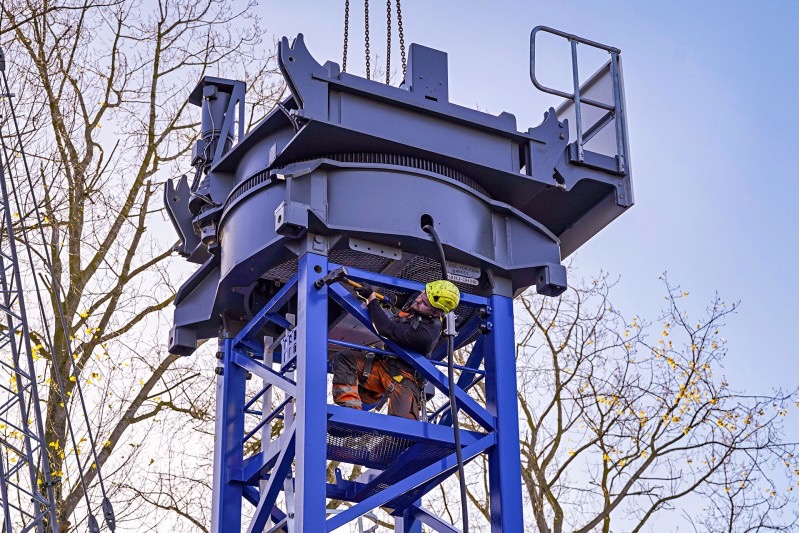
London’s City Lifting has deployed the UK’s first Liebherr 195 HC-LH hydraulic luffing jib tower crane, offering a 3 m minimum working radius, 10 m out-of-service radius and sub‑90‑second luffing, with Load‑Plus boosting capacity by up to 25% and components limited to 8 tonnes for erection with smaller assist cranes. The hoist winch is integrated into the first jib section, reducing transport to four vehicles and simplifying rope management and maintenance access from a fixed platform. Separately, Global Crane Services has ordered two Liebherr LTM 1250‑5.1 all terrains with bespoke elevated cabs to improve line‑of‑sight for quayside and wind turbine work.
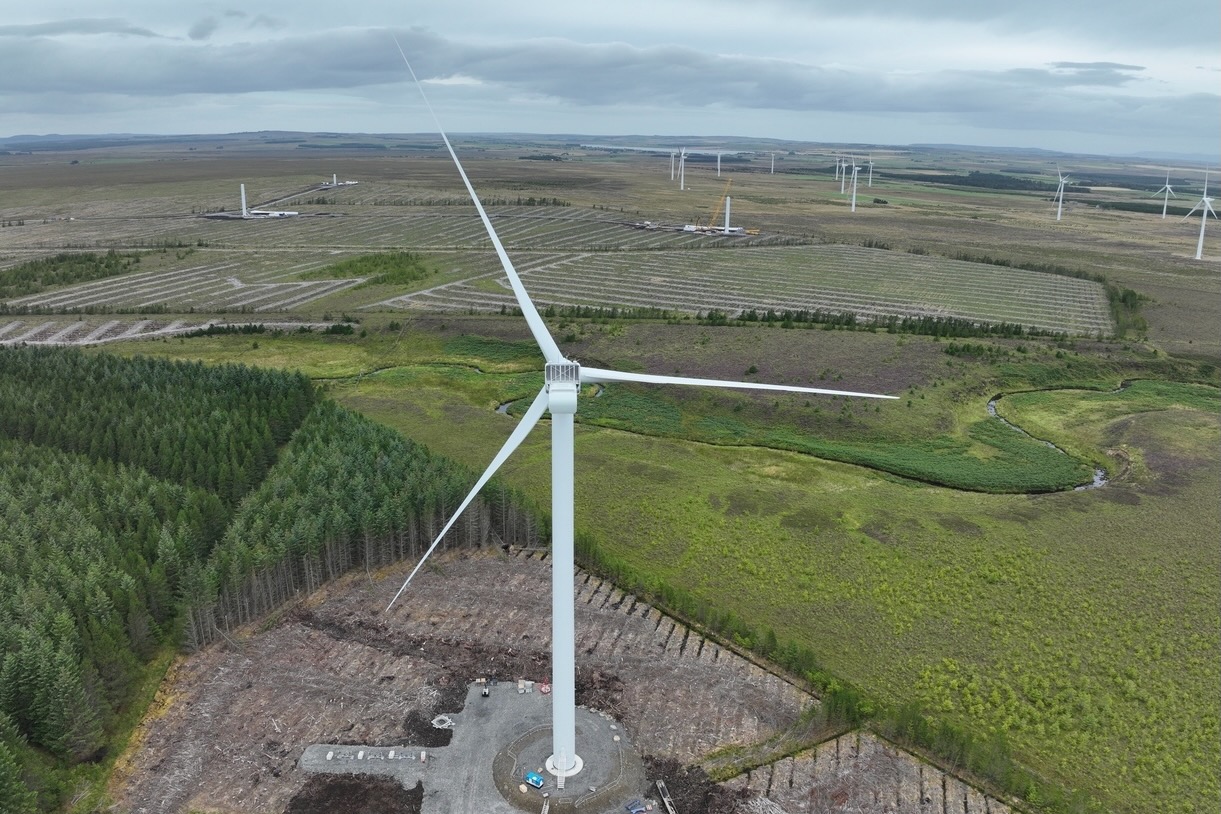
RWE has completed the 36 MW Camster II onshore wind farm in Caithness, comprising 10 turbines and enough capacity to supply electricity equivalent to about 51,000 typical homes, as the first of four new Scottish RWE onshore projects totalling up to 232 MW. Principal contractor Farrans supported over 50 construction roles, took on two early careers civil engineering students and an apprentice, and sourced 54% of subcontractors within 20 miles of the site, including Gow Earthworks, GMR Hendersons and John Gunn and Sons. Operations and maintenance will be handled by locally based engineers, consolidating a regional wind cluster that now includes four operational RWE farms in Caithness.
A Hill Group–Pinnacle Investments joint venture, Dollis Hill Wembley LLP, has acquired two former United Colleges Group sites in Brent to deliver 1,900 mixed‑use homes plus retail, community facilities and landscaped public space. The Wembley scheme, on the former College of North West London site at the start of Olympic Way, will comprise linked 18‑ and 30‑storey residential towers, while the Dudden Hill Lane site in Dollis Hill will provide up to 1,627 homes in blocks from four to 28 storeys. GLA Homes for Londoners grant funding will support affordable units, with Sovereign Network Group delivering 154 social rent homes.
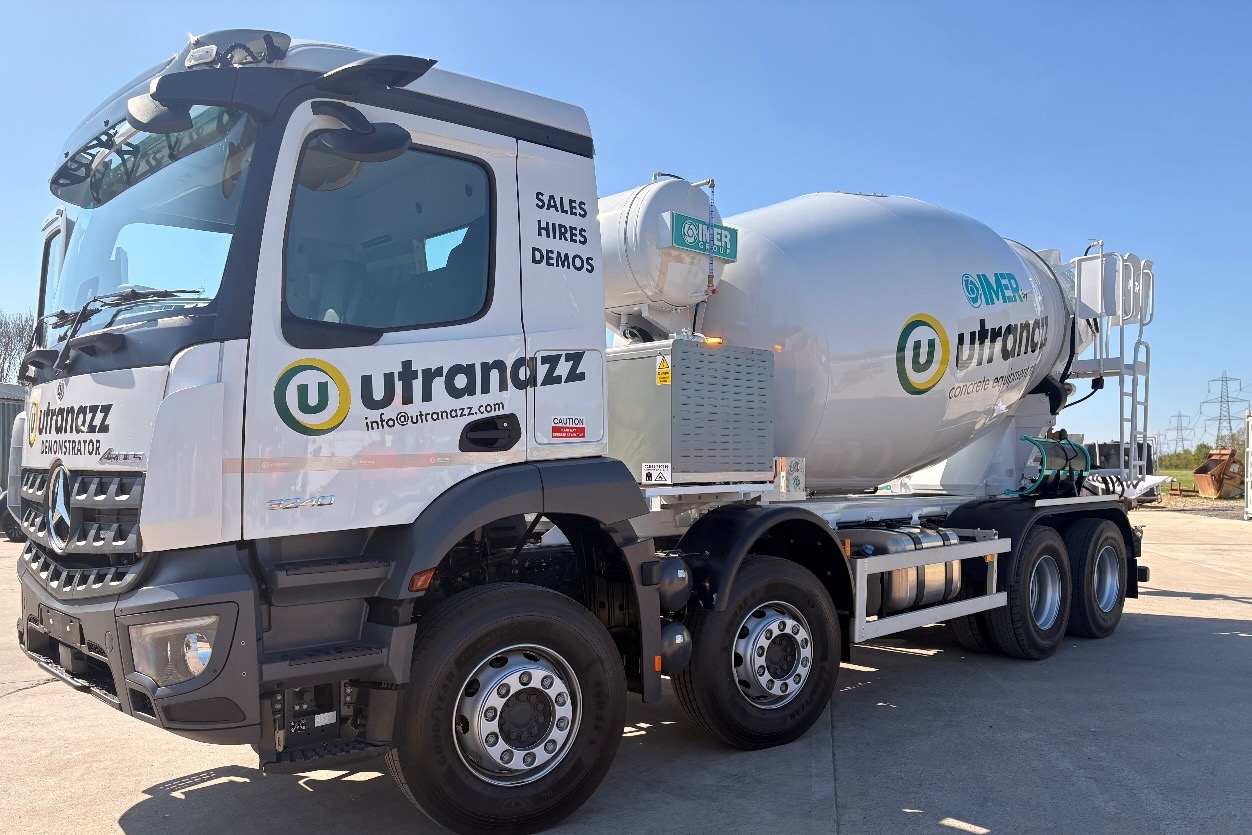
Utranazz has launched Ultradrive, an electric retrofit that powers concrete mixer drums with the truck engine switched off, cutting on-site energy use by up to 70% and reducing noise and emissions. The lightweight, integrated package replaces the conventional upper-structure drive, is compatible with most existing chassis, and is intended for quick installation across current fleets. In a two‑month trial on a 31,000kg GVW truck with an 8m³ drum, Ultradrive enabled 270 engine‑off hours out of 818 total, delivering a 30% fuel saving.
Ramboll has appointed former Royal Engineer Darren Carlile as head of growth and sales for buildings, targeting defence, national security, government, research and polar sectors. Carlile previously spent nine years at Aecom leading its defence and national security sector, where he positioned the firm as a Tier 1 multidisciplinary engineering services provider to the UK Ministry of Defence, Foreign Office, global defence OEMs and US visiting forces in the UK. The move aligns Ramboll with the UK’s recent strategic defence review and an upcoming ten‑year defence investment plan, signalling more complex secure and extreme‑environment infrastructure programmes.
Donaldson Timber Systems has launched an Affordable Housing Range of 16 architect-designed house types, all based on its Sigma II closed panel timber frame system and accredited to BOPAS+, BBA and STA Gold. The one- to four-bedroom terraced, semi-detached and detached units achieve Future Homes Standard performance without additional on-site works, reach at least 55% Pre-Manufactured Value using only the timber frame, and can be made windproof and watertight in a single day. Standardised window sizes, uniform bathroom/WC layouts, Revit files, embodied carbon calculations and PMV assessments target faster procurement and lower embodied energy.
The Scottish Plant Owners Association has appointed Cheryl MacLennan as skills and industry engagement officer to strengthen member training and recruitment, with a core remit to deploy the SPOA’s Tenstar plant simulator for machine operator development and safety training. MacLennan, who has a background in apprenticeships, employability and construction-sector training delivery, will help contractors link workforce plans to accredited courses and apprenticeship pathways. SPOA president David Jarvie expects members to use the role to tackle skills shortages, upskill existing operators and improve long-term workforce sustainability across Scotland’s plant sector.
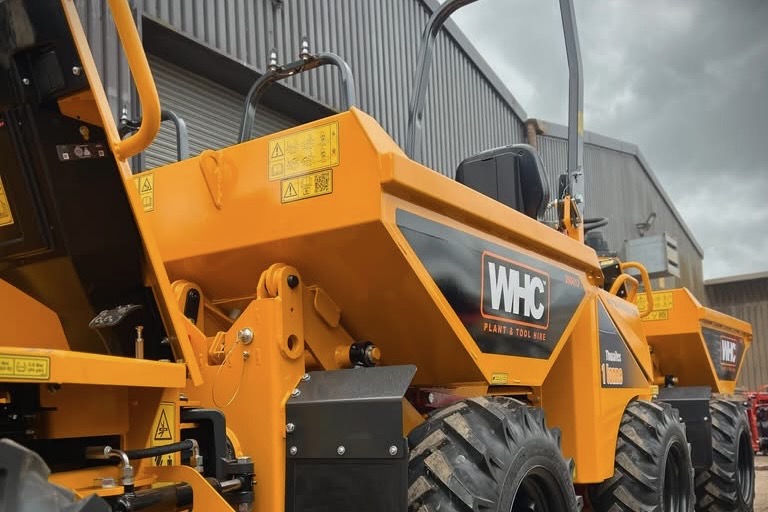
WHC Services has ordered 39 Thwaites site dumpers from distributor Lister Wilder, including eight of the newly launched 9‑tonne Straight Tip ROPS+ units, among the first delivered in the UK. The fleet mix also includes 18 one‑tonne Hi‑Tips, four 2.3‑tonne Power Swivels, five 3‑tonne Power Swivels and four 6‑tonne ROPS+ Power Swivels, signalling a broad spread of capacities for earthworks and materials handling. The ROPS+ design adds a wrap‑around steel frame, pull‑down roll bar and triple‑lock motion inhibitor that prevents drive unless the operator is seated, belted and the bar is locked.
Crane Building Services & Utilities workers at the company’s Hitchin headquarters have voted 84% in favour of strike action, the second walkout in under two years at the US-owned subsidiary of $10bn NYSE-listed Crane Co. More than 100 GMB members, who previously struck for five of a planned nine days before accepting a 7% pay rise, are again threatening to “shut down” the site. Any prolonged stoppage could disrupt supply of Crane BS&U valves, fittings and building services components to UK infrastructure and construction projects.
The Serious Fraud Office has arrested four people over an alleged £44m fraud linked to the Energy Company Obligation 4 (ECO4) home insulation scheme involving Warmfront, JJ Crump and South Coast Insulation Services. Investigators are examining suspected false claims for ECO4-funded retrofit works, which support measures such as cavity wall, loft and solid wall insulation in low-income and hard-to-heat homes. Contractors and consultants on ECO4 and similar retrofit programmes should expect closer scrutiny of installation records, compliance evidence and funding claims.
Sandvik Mining has delivered a DR410i rotary drill rig, factory-equipped for autonomous operation with AutoMine Surface Drilling, to Mariana Minerals’ Copper One open-pit copper mine in Utah. Commissioning of the AutoMine system is under way, setting up an autonomy-first drilling operation rather than retrofitting automation onto an existing manual fleet. The deployment will test fully automated rotary drilling in a greenfield context, with implications for blast-hole quality control, shift utilisation and remote operation in similar large-scale copper projects.
£500M spent on cancelled National Highways schemes has delivered no confirmed benefit to road users or the organisation, MPs on the Public Accounts Committee were told. Senior executives were unable to identify any retained value from design work, land acquisition or statutory processes on the scrapped projects, despite the expenditure coming from the government’s roads investment budget. The session raises pressure for tighter front-end scheme appraisal, clearer cancellation criteria and stronger governance of major highway design and planning spend.
Galliford Try’s Building business has secured a place on Sovereign Network Group’s new £750m Affordable Homes framework, targeting large-scale residential delivery across SNG’s housing portfolio. The multi-year framework is expected to cover design-and-build of low- to mid-rise schemes, integrating modern methods of construction and fabric-first energy performance to meet current Part L and Future Homes Standard trajectories. For civil and geotechnical teams, the pipeline signals sustained demand for foundation, drainage and site infrastructure packages on brownfield and constrained urban sites across SNG’s operating regions.
Heritage group the Victorian Society is urging Londoners to write to mayor Sadiq Khan opposing Network Rail’s proposed £1.2bn redevelopment of Liverpool Street Station. Campaigners object to the scale of the over-station commercial scheme, warning that major alterations to the existing concourse and historic fabric could compromise the Grade II-listed station and adjoining Great Eastern Hotel. For designers and contractors, the dispute signals continued scrutiny of large overbuild projects above operational rail hubs in densely built historic settings.
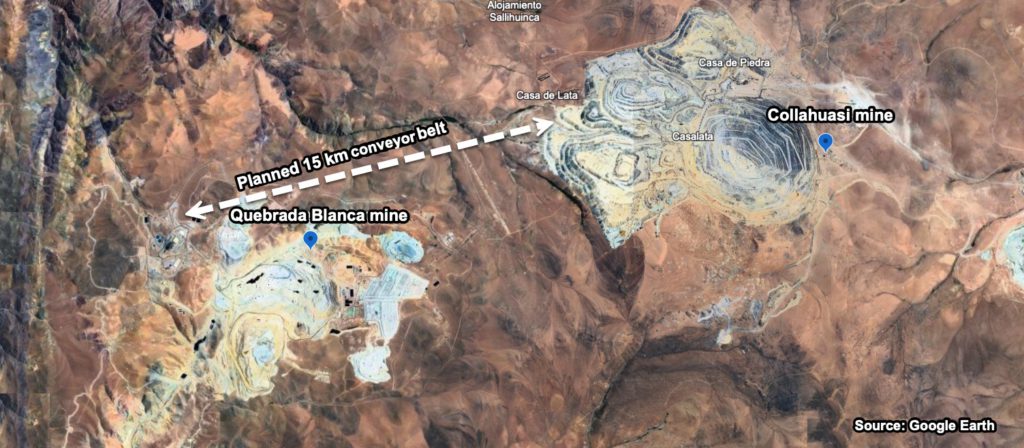
Teck Resources warns that imported diesel and freight cost spikes linked to Strait of Hormuz disruptions will lift Q2 2026 operating costs at its Chilean copper mines, with knock-on increases in explosives prices but no immediate fuel shortages expected. First-quarter copper output rose to 140,000 tonnes, including a 31.2% jump at Quebrada Blanca to 55,500 tonnes, supporting guidance of 455,000–530,000 tonnes in 2026 and 505,000–580,000 tonnes in 2027. The planned Anglo American tie-up would integrate Quebrada Blanca with Collahuasi via a 15 km conveyor, targeting an extra 175,000 tonnes per year from 2030–2049.