16 UK offshore wind projects: supply-chain gaps and opportunities for engineers
Reviewed by Tom Sullivan
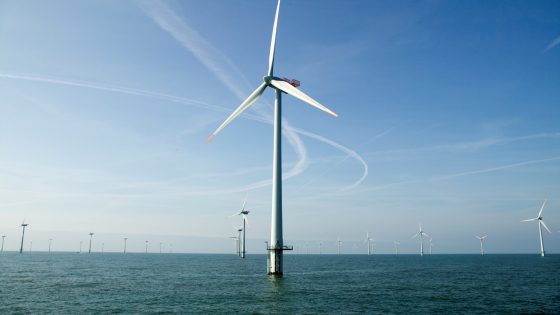
First reported on New Civil Engineer
30 Second Briefing
Sixteen projects across England, Wales and Scotland will share more than £13M from The Crown Estate’s Supply Chain Accelerator to develop UK offshore wind manufacturing, installation and operations capability. Funding is aimed at critical supply chain gaps such as large-diameter monopile and jacket fabrication, high-voltage export cable systems, and specialised installation and service vessels. Civil and geotechnical contractors should expect opportunities around deep-water foundations, port upgrades for heavy-lift components, and logistics hubs supporting Round 4 and Celtic Sea leasing areas.
Technical Brief
- Early-stage development funding implies focus on feasibility, design and prototyping rather than full capex build-out.
- Individual project grants are relatively small, so co-funding from developers and OEMs will be essential.
- Time-limited accelerator structure suggests compressed design and qualification schedules for funded technologies.
- Port, yard and quayside upgrades funded here will precondition sites for later heavy civil works.
- Similar accelerator-style funding models could be replicated for floating wind and grid-scale storage supply chains.
Our Take
Within the 225 Infrastructure stories in our database, The Crown Estate appears most often in connection with seabed leasing and early-stage enabling works, so this supply chain-focused funding suggests it is pushing further upstream into de‑risking fabrication and logistics capacity rather than just sites.
For UK projects across England, Wales and Scotland, our coverage shows that relatively modest public or quasi-public pots (sub‑£20M) are often used to unlock much larger private capex, implying this £13M‑plus accelerator round is likely aimed at proving concepts or facilities that can then attract commercial financing.
Among the 570 tag‑matched pieces on Projects and Sustainability, UK offshore wind is one of the few areas where supply chain interventions are framed as a resilience measure as much as a decarbonisation tool, signalling that developers may be worried about bottlenecks in foundations, cables and installation vessels over the next build‑out cycle.
Prepared by collating external sources, AI-assisted tools, and Geomechanics.io’s proprietary mining database, then reviewed for technical accuracy & edited by our geotechnical team.
Related Articles


Related Industries & Products
Construction
Quality control software for construction companies with material testing, batch tracking, and compliance management.
Mining
Geotechnical software solutions for mining operations including CMRR analysis, hydrogeological testing, and data management.
QCDB-io
Comprehensive quality control database for manufacturing, tunnelling, and civil construction with UCS testing, PSD analysis, and grout mix design management.