Geomechanics, Streamlined.
© 2026 Geomechanics.io. All rights reserved.
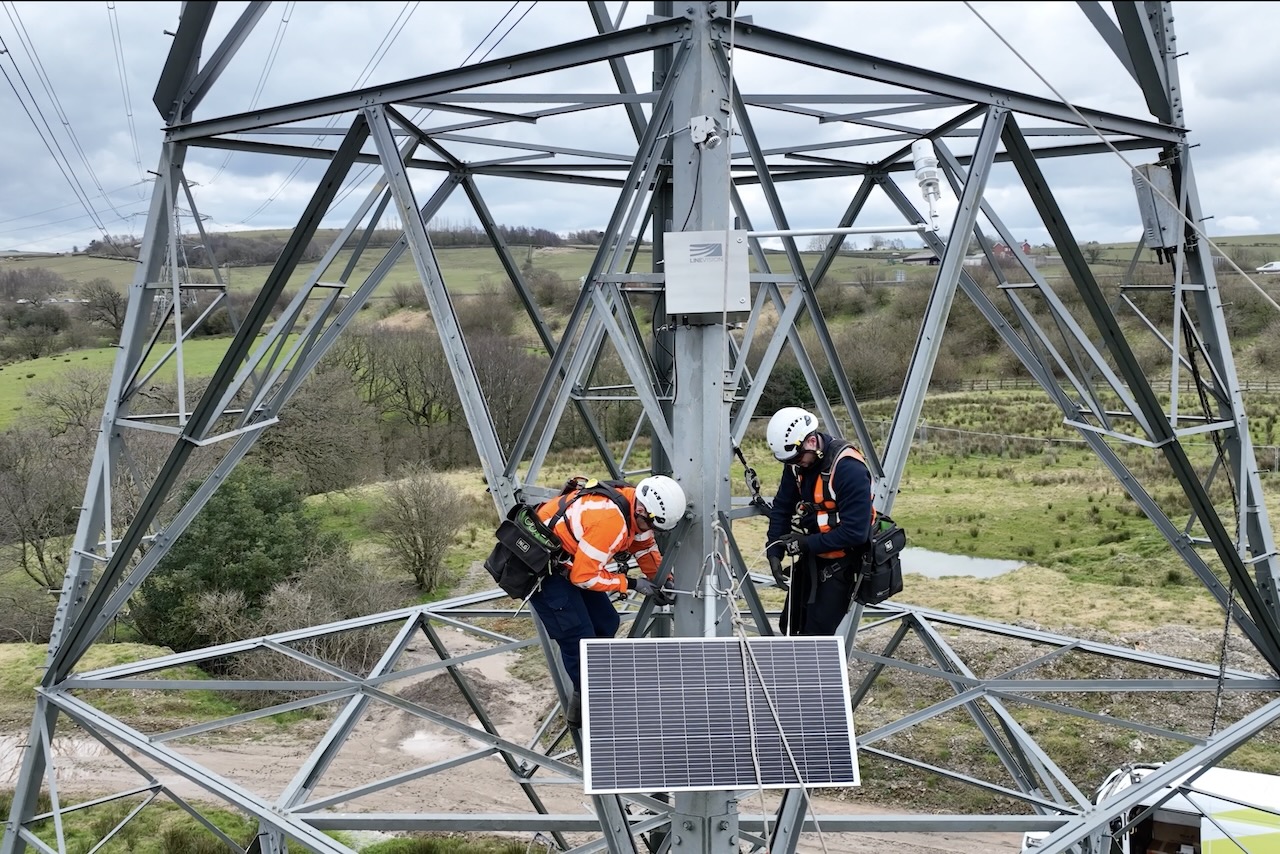
National Grid is rolling out dynamic line rating (DLR) on 585km of 275kV north–south transmission routes after a two-year trial on the Penwortham–Kirkby circuit showed average capacity gains of about 8%. Sensors from LineVision, Ampacimon and Heimdall will be installed on 39 circuits totalling over 900km, with drones used to mount equipment on live overhead lines across three key boundaries in the North East, Humber and East Anglia. The five-year programme, largely completing by 2028, aims to cut constraint payments and could save consumers up to £50m.
The University of Bristol has selected UPP as preferred bidder to deliver three Allford Hall Monaghan Morris‑designed PBSA blocks with 890 student bedrooms on Temple Island within the Temple Quarter Enterprise Campus, due to open in 2026. The scheme includes 1,143 m² of amenity space with flexible study and social areas, and will primarily house one‑year postgraduate students. UPP, working with Watkin Jones and adviser Cushman & Wakefield, is targeting BREEAM ‘Excellent’ and EPC ‘A’, signalling high‑performance fabric and services expectations for designers and contractors.
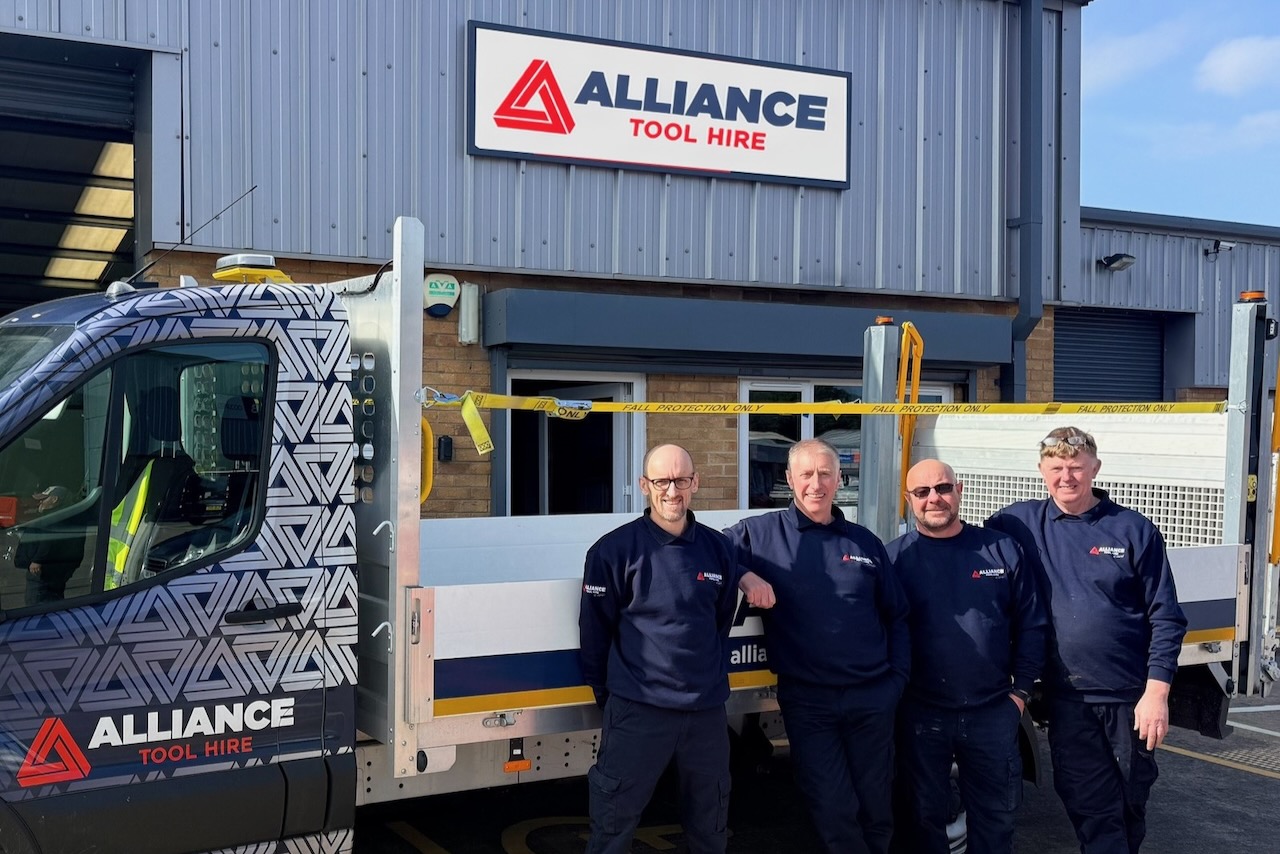
Alliance Tool Hire is investing £1.6m over five years in a new depot at Queensway Meadows Industrial Estate, Newport, marking its third opening in three years after acquiring Avon Tools Hire in Bath (2023) and West Tool in Bristol (2024). The site launches with a modern fleet of power tools, access and survey equipment, plus a dedicated lifting division with LEEA-qualified engineers and bespoke software for testing, inspection and asset management. Four senior staff from a departing competitor, led by depot manager Martin Fanthorpe, have joined, with two further hires planned.
Schaeffler has signed a strategic cooperation agreement with Chinese autonomous haulage specialist CiDi to develop all-electric smart mining trucks and logistics trucks for large open-pit operations. The partnership centres on distributed electric drive systems, integrating multiple in-wheel or axle-mounted motors, and on the full-vehicle electrical and electronic architecture to support high-level autonomy. For mine operators, this points to future fleets combining zero tailpipe emissions with CiDi’s autonomous haulage stack, potentially simplifying powertrain layouts and reducing mechanical maintenance on ultra-class trucks.
Applied Intuition is partnering with Heidelberg Materials to deploy its Self-Driving System (SDS) for Construction on autonomous haul trucks at the Clarence Sands quarry in New South Wales, Australia. The collaboration targets full quarry fleet autonomy, integrating perception, planning, and control software with existing haulage equipment and site traffic management. For geotechnical and operations teams, this signals growing demand for highly repeatable haul road geometry, consistent berm and ditch maintenance, and robust geofencing to support safe driverless operation in active extraction faces.
Thames Water has begun replacing 19km of ageing potable water mains in Loughton, Essex, as part of its wider £20bn network upgrade across London and the Thames Valley. The programme targets leakage reduction and resilience by swapping legacy cast iron and asbestos cement sections for modern polyethylene pipework with improved joint performance and pressure management compatibility. For civil and geotechnical teams, works will involve staged open-cut and possible trenchless installation in dense urban streets, with careful traffic management, service crossings and shallow utility congestion.
Graham has secured a pre-construction services agreement for the first phase of a £206M regeneration of Solihull town centre, signalling the start of detailed design and buildability input before main works procurement. The contract will focus on early-stage programming, value engineering and coordination of utilities and town-centre interfaces, de-risking subsequent construction packages in a constrained urban environment. For civil and geotechnical teams, the PCS stage will be critical for ground investigation scoping, foundation strategy and phasing around existing structures and transport links.
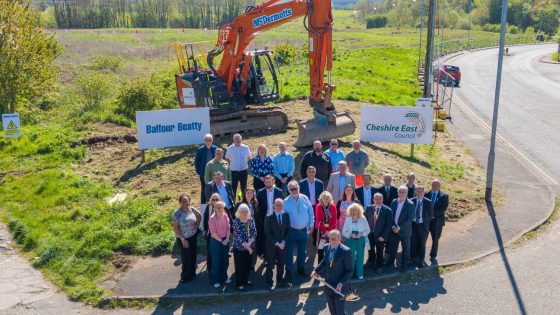
Balfour Beatty has received Notice to Proceed on the £53.8M Middlewich Eastern Bypass in Cheshire, enabling main works to start on the long-planned relief route east of the town. The scheme will create a new single carriageway link tying into the A54 and A533, diverting through-traffic from Middlewich’s constrained historic centre and existing signalised junctions. Key delivery issues for designers and contractors will include tie-ins to live A‑roads, drainage for low-lying Cheshire farmland, and ground engineering in variable Mercia Mudstone and glacial deposits.
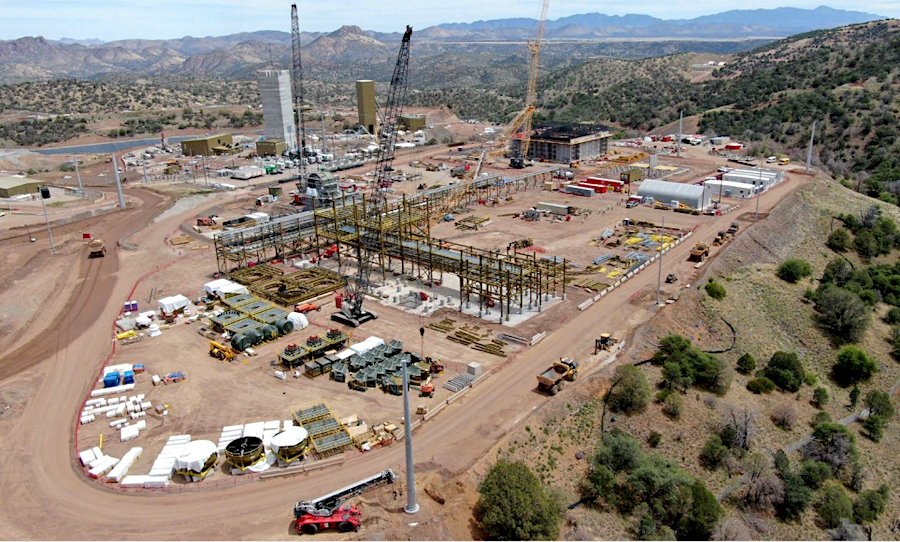
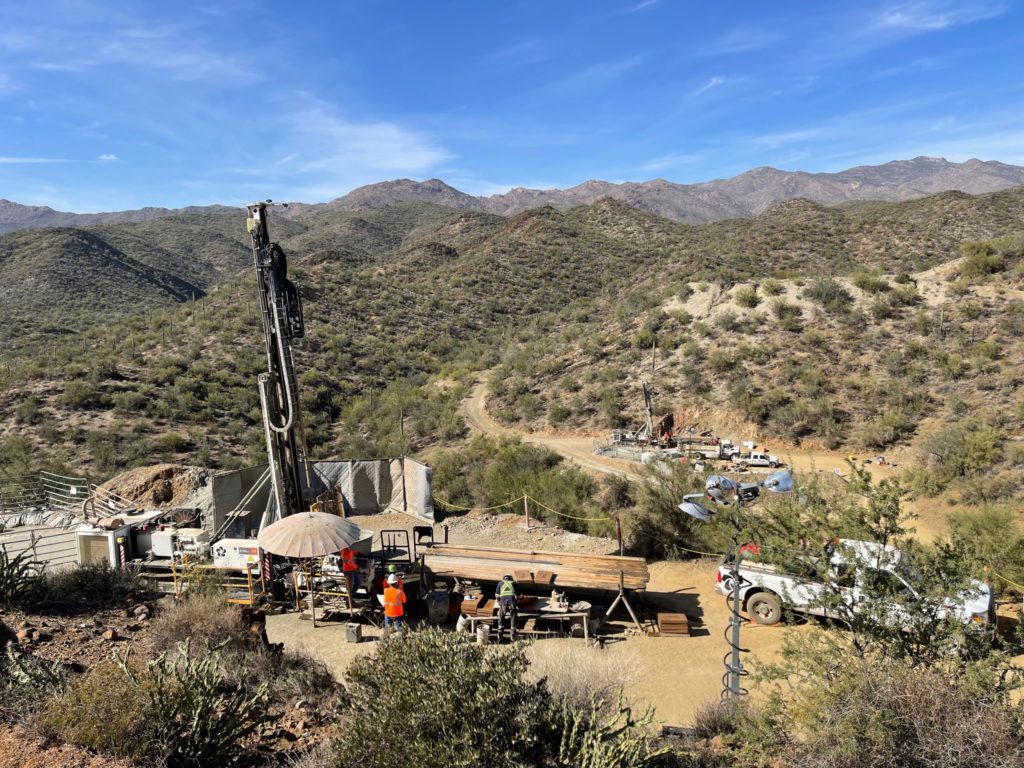
South32 has lifted first-stage capex for the Taylor deposit at its Hermosa zinc-silver project in Arizona by over 50% to $3.3 billion, pushed first production to H2 FY2028, and now expects unit operating costs of $100/t versus $86/t, citing contractor underperformance, shaft construction issues and US tariffs. Full production is delayed to FY2031, sustaining capital rises to about $50 million a year, and the project IRR drops from 22% to ~19%, prompting a 5.4% share price fall and analyst downgrades to Hermosa’s investment case. Offsetting this, Taylor’s ore reserves are up 52%, mineral resources 10%, and mine life extended from 28 to roughly 33 years, with the adjacent Peake copper deposit’s resources up 32%.
Endeavour Mining’s first-quarter EBITDA jumped to $872 million from $540 million as a realised gold price of $4,810/oz offset a production drop to 282,000 oz and a sharp rise in all-in sustaining costs to $1,834/oz. The company swung to a $405 million net cash position from $158 million net debt and plans to return at least $1 billion in dividends between 2026 and 2028, with total shareholder returns above $2 billion if gold stays over $3,000/oz. At the Assafou project in Côte d’Ivoire, the DFS outlines 320,000 oz/y for eight years at $1,026/oz AISC, a 16-year life, and a $5.1 billion after-tax NPV with 55% IRR at $4,000/oz, with FID targeted before year-end.
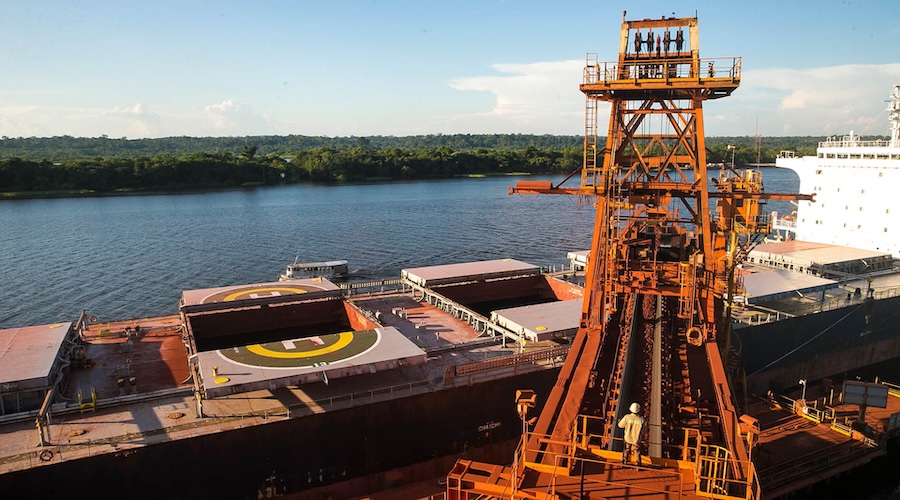
Mineracao Rio do Norte (MRN), backed by Glencore, South32 and Rio Tinto, has secured an IBAMA installation licence for its Novas Minas project, enabling construction at five new bauxite mining sites across three municipalities in Pará and extending operations at Porto Trombetas to 2041. MRN plans to invest about R$9 billion ($1.8 billion) between 2027 and 2041, targeting annual production of 12.5 million tonnes of bauxite, close to its current output. The operation’s installed capacity remains 18 million tonnes per year, reinforcing Porto Trombetas as a key Brazilian bauxite hub.
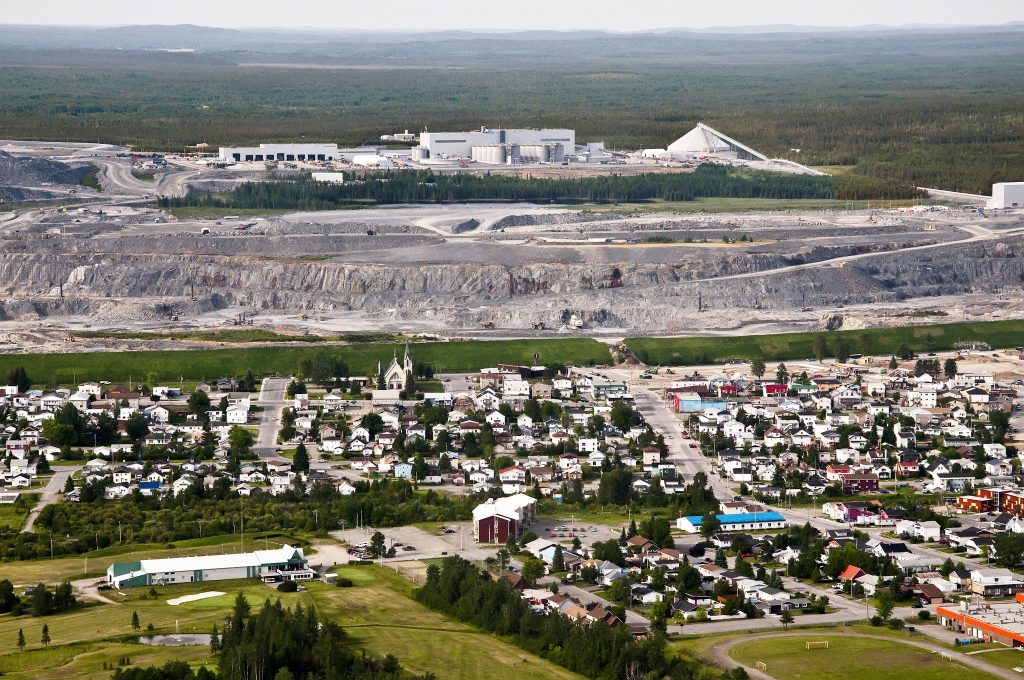
Val-d’Or’s evolution from a 1930s bush camp around early high-grade discoveries at Sullivan Consolidated, Lamaque and Sigma into a hard-rock gold city shows how rapid underground development, deeper shafts and mechanised mining turned a remote Abitibi Greenstone Belt outpost into a durable production hub. Successive waves of operators, culminating in Agnico Eagle’s Goldex, LaRonde and Canadian Malartic mines, have kept the district active on the same structures for nearly a century. For engineers and geologists, Val-d’Or now functions as both a live training ground and a case study in long-term camp-scale mine planning and infrastructure build-out.
Datavault AI is launching GoldVault, a $150 million gold tokenisation programme with King Mining Capital that will mint blockchain-based tokens giving pro-rata digital ownership in in-ground and refined US-linked gold, using patented smart contracts for ownership verification, AI-driven valuation and revenue participation tied to future production. Tokens will track COMEX per-ounce pricing but be issued at a discount and include a royalty stream on King Mining Capital’s output, with at least $150 million of tokens targeted by Q3 FY2026. Datavault will also take a 5% equity stake plus 5% warrants in King Mining Capital and secure rights to 20,000 oz of physical gold payable in discounted DVLT stock, which it estimates could yield about $40 million profit.
Kinross Gold generated about $840 million in operating cash flow in Q1 2026, its fourth straight record quarter, driven by margins of $3,476/oz. gold equivalent—up 92% year-on-year and 22% quarter-on-quarter, with all-in sustaining costs guided at $1,730/oz. Revenues rose 61% to $2.4 billion, with adjusted net earnings of $854.1 million ($0.71/share) more than doubling year-on-year and beating the $0.68 consensus, lifting the New York–listed stock about 5% to $30.50 and a $36.5 billion market cap. The company plans to return 40% of 2026 free cash flow via dividends and buybacks, having already returned $350 million and cut its share float by over 3% in 12 months.
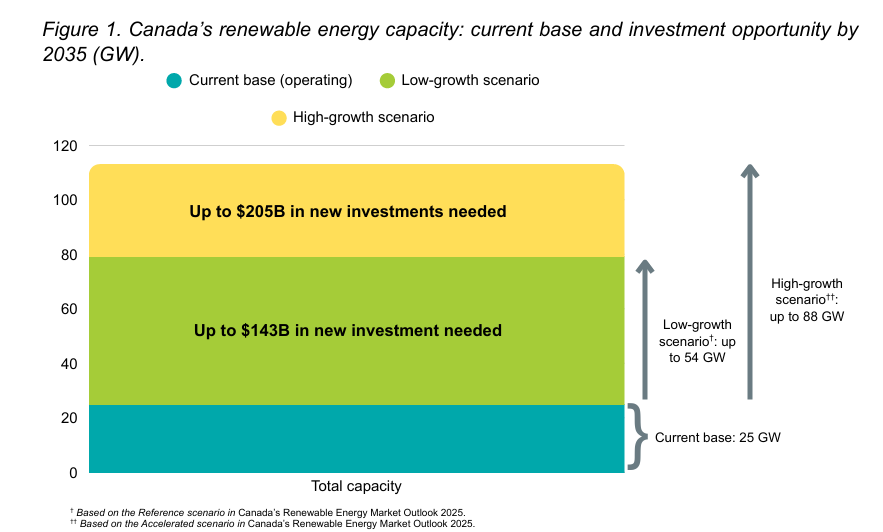
Canada could attract up to C$200 billion over 10 years to build 54–88 GW of new wind, solar and storage capacity—more than tripling its current ~25 GW—driven by industrial electrification, data centre growth and expanding mining and manufacturing loads, according to CanREA. The report warns that lengthening approvals, permitting and grid interconnection queues are now the main constraint, raising carrying costs and schedule risk for developers. China’s addition of 430 GW of renewables in 2025, backed by over US$600 billion in annual clean energy investment and parallel transmission and storage build-out, is cited as the benchmark for coordinated delivery.
Arizona Metals’ Kay polymetallic project in Arizona has delivered a rare negative-value PEA, with a post-tax NPV5 of -$6 million, IRR of 4.9% and upfront capital of $731 million for a 1,918 t/d underground operation, triggering a 46% share price drop to C$0.29. Even a spot-price case at $6.05/lb copper and $4,745/oz gold only lifts the post-tax NPV to $445 million with a modest 14.9% IRR, constrained by limited initial tonnage. The PEA uses just 71% of the 9.28 Mt indicated resource, with no inferred material, so future economics hinge on adding tonnes, higher mining rates and alternative processing routes.
A $1.1 billion tungsten project in Kazakhstan’s Karaganda district is being advanced by newly formed Kaz Resources, created via the merger of US construction group Skyline Builders (Nasdaq: SKBL) and Cove Kaz Capital, with Skyline having paid $20 million for a 20% stake. The project covers the Northern Katpar and Upper Kairakty deposits, holds a 2023 JORC resource of 1.4 million tonnes WO₃, and targets output equivalent to about 15% of global tungsten production within three years. Cove/Kaz Resources will own 70% alongside Kazakh state miner Tau-Ken Samruk (30%), with potential debt support of up to $900 million from US Ex-Im Bank and $700 million from the US International Development Finance Corporation.
Gold refined by the Royal Canadian Mint may include material from Colombian mines linked to the Clan del Golfo cartel, after an unidentified Texas supplier mixed Antioquia-sourced gold with US metal that the Mint then classified as “North American”, a New York Times investigation found. About 5% of the Mint’s 2024 feedstock came from this US supplier, which held a valid audit naming Colombia as a source, while the Mint relied on supplier due diligence and said “it’s not our responsibility” to probe further. The Mint has now halted Colombian gold intake, launched an “incident review”, and plans to start disclosing source countries despite already deploying Bullion Genesis traceability software and LBMA-aligned KYC and AML controls.
Weir Group PLC has confirmed that Jon Stanton will step down as CEO on 1 August 2026 after a decade leading the company’s shift towards mining technology solutions such as high‑pressure grinding rolls and digital wear‑monitoring systems. He will be succeeded by Andrew Neilson, currently Group Finance Director, who will be elected to the Board as CEO‑designate ahead of the transition. The changeover gives mine operators and EPCMs two years’ visibility on leadership continuity at a key supplier of slurry pumps, comminution equipment and process optimisation services.
Thiess has secured a two-year mining services agreement with Yilgarn Iron to restart iron ore production in the Koolyanobbing district of Western Australia, about 400 km east of Perth. The contract, formalised after a Letter of Intent signed in September 2025, runs to March 2028 and covers mine development and production activities to bring dormant pits back into operation. For contractors and suppliers, the deal signals near-term demand for load-and-haul fleets, drill-and-blast services and associated mine infrastructure in the Yilgarn region.
Weir reported Q1 2026 Group orders up 4%, driven by a growing pipeline of large equipment projects for mine debottlenecking and brownfield expansion at existing sites. CEO Jon Stanton said customers are prioritising productivity upgrades using Weir’s process plant equipment and Software Solutions portfolio, which includes digital tools for mill optimisation and wear monitoring. Demand for ground engaging tools (GET) remained strong, signalling continued high utilisation of loading and haulage fleets and ongoing spend on wear parts rather than major greenfield builds.
OceanaGold is weighing the next phase of mine fleet electrification at Macraes and the Waihi North project after technical studies completed for its 2025 Sustainability Report, focusing on options that are both economically feasible and technically viable. Work centres on securing renewable power through new procurement and supply agreements and matching this with future electric mobile equipment requirements rather than retrofitting the current fleet. For engineers, the key signal is that mine design, power reticulation and fleet selection at these New Zealand sites may increasingly assume high-penetration renewables and battery-electric units.
Boliden’s Somincor operation at Neves-Corvo in Portugal’s Alentejo province, about two hours’ drive from Lisbon, is emerging as a leading European testbed for underground equipment automation. The polymetallic mine, acquired by Boliden in 2024, is advancing remote and autonomous operation of load–haul–dump fleets and drilling rigs in deep orebodies typical of the Iberian Pyrite Belt. For engineers, the site signals growing scope for high-automation underground layouts, communications infrastructure upgrades and workforce reskilling in what has traditionally been a conventional mining district.
Beijing-based RETTAR is deploying 3D spatial sensing systems in mines and aggregate stockyards to automate volumetric measurement and material tracking, replacing manual surveys hampered by low visibility and data lag. Using fixed LiDAR scanners and mobile platforms to generate high-density point clouds, the technology delivers near real-time stockpile models and reconciled tonnage estimates across crushers, conveyors and storage pads. For mine planners and plant operators, this enables tighter inventory control, faster reconciliation cycles and reduced on-foot exposure around active stockpiles and loading areas.