CMA civil engineering ‘negative cycle’: delivery lessons for UK project teams
Reviewed by Tom Sullivan
First reported on The Construction Index
30 Second Briefing
The Competition & Markets Authority’s interim market study finds UK road and rail civil engineering “caught in a negative cycle”, with Boston Consulting Group data showing 58% of 48 road schemes and 56% of 27 rail schemes finishing late, with average time overruns of around 27–29%. Root causes cited include uncertain, short‑term funding, risk‑averse procurement favouring low‑risk contract forms, complex accreditation, and heavy reliance on subcontracting. Proposed remedies under development focus on a more stable project pipeline, stronger client procurement capability, streamlined regulatory processes and rebalanced risk to incentivise innovation and new entrants.
Technical Brief
- CMA interim report focuses specifically on public roads and railways civil engineering procurement behaviour.
- Study scope explicitly spans both national and local public authorities procuring infrastructure works.
- Competition watchdog is being repositioned from cartel enforcement towards supporting the government’s economic growth mission.
Our Take
The UK-focused concerns raised by the Competition & Markets Authority sit against a wider backdrop in our 295 Infrastructure stories where road and rail delivery issues recur far more often in the UK than in, for example, Australian coverage, which tends to emphasise equipment roll-out and maintenance capability rather than systemic market failures.
With Boston Consulting Group’s analysis highlighting schedule risk on UK road and rail schemes, suppliers like Secmair in the related coverage are likely to find more traction where clients can demonstrate robust asset management and maintenance planning, as this is one of the few levers contractors can still control when upstream governance is weak.
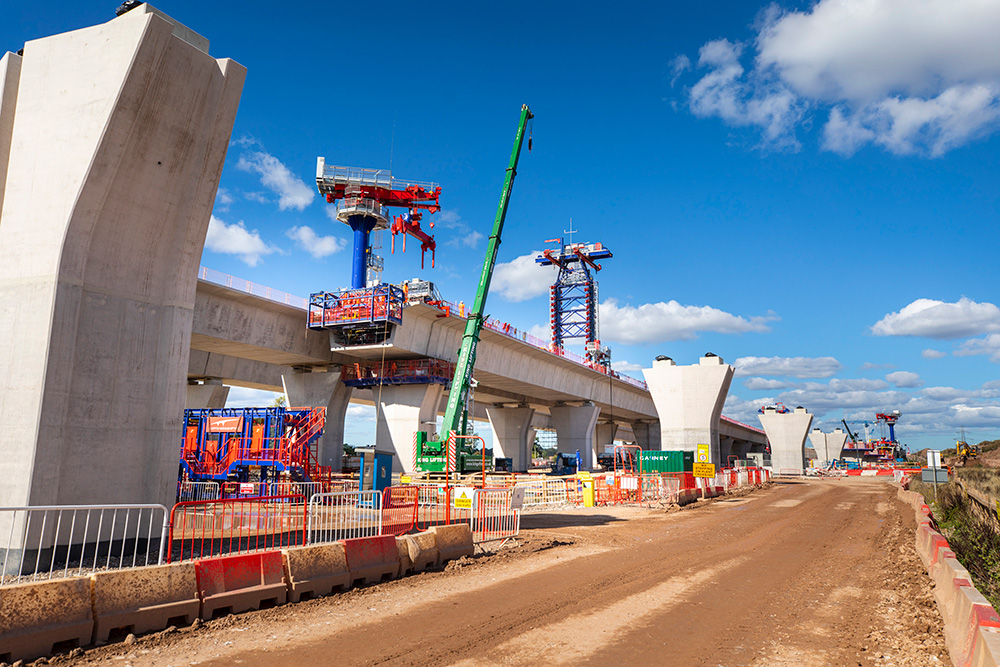
The reference to HS2 in the UK adds political sensitivity that bodies like the National Infrastructure Commission and Infrastructure & Projects Authority will need to manage carefully, as our database shows that high-profile megaprojects tend to drive reactive policy changes that then cascade down into contract structures on more routine schemes.
Prepared by collating external sources, AI-assisted tools, and Geomechanics.io’s proprietary mining database, then reviewed for technical accuracy & edited by our geotechnical team.
Related Articles


Related Industries & Products
Construction
Quality control software for construction companies with material testing, batch tracking, and compliance management.
Mining
Geotechnical software solutions for mining operations including CMRR analysis, hydrogeological testing, and data management.
CMRR-io
Streamline coal mine roof stability assessments with our cloud-based CMRR software featuring automated calculations, multi-scenario analysis, and collaborative workflows.
HYDROGEO-io
Comprehensive hydrogeological testing platform for managing, analysing, and reporting on packer tests, lugeon values, and hydraulic conductivity assessments.
GEODB-io
Centralised geotechnical data management solution for storing, accessing, and analysing all your site investigation and material testing data.