Geomechanics, Streamlined.
© 2026 Geomechanics.io. All rights reserved.
Brisbane’s preparation for the 2032 Olympic and Paralympic Games is driving an “unprecedented” infrastructure pipeline that project advisory firm WT warns will strain Queensland’s transport and construction capacity. WT’s landmark report calls out labour shortages, materials escalation and overlapping megaprojects across road, rail and venue works as key delivery risks, urging earlier packaging, standardised design and more collaborative contracts. For civil and geotechnical teams, the message is to lock in investigation, design and procurement strategies now, before market congestion erodes programme and cost certainty.
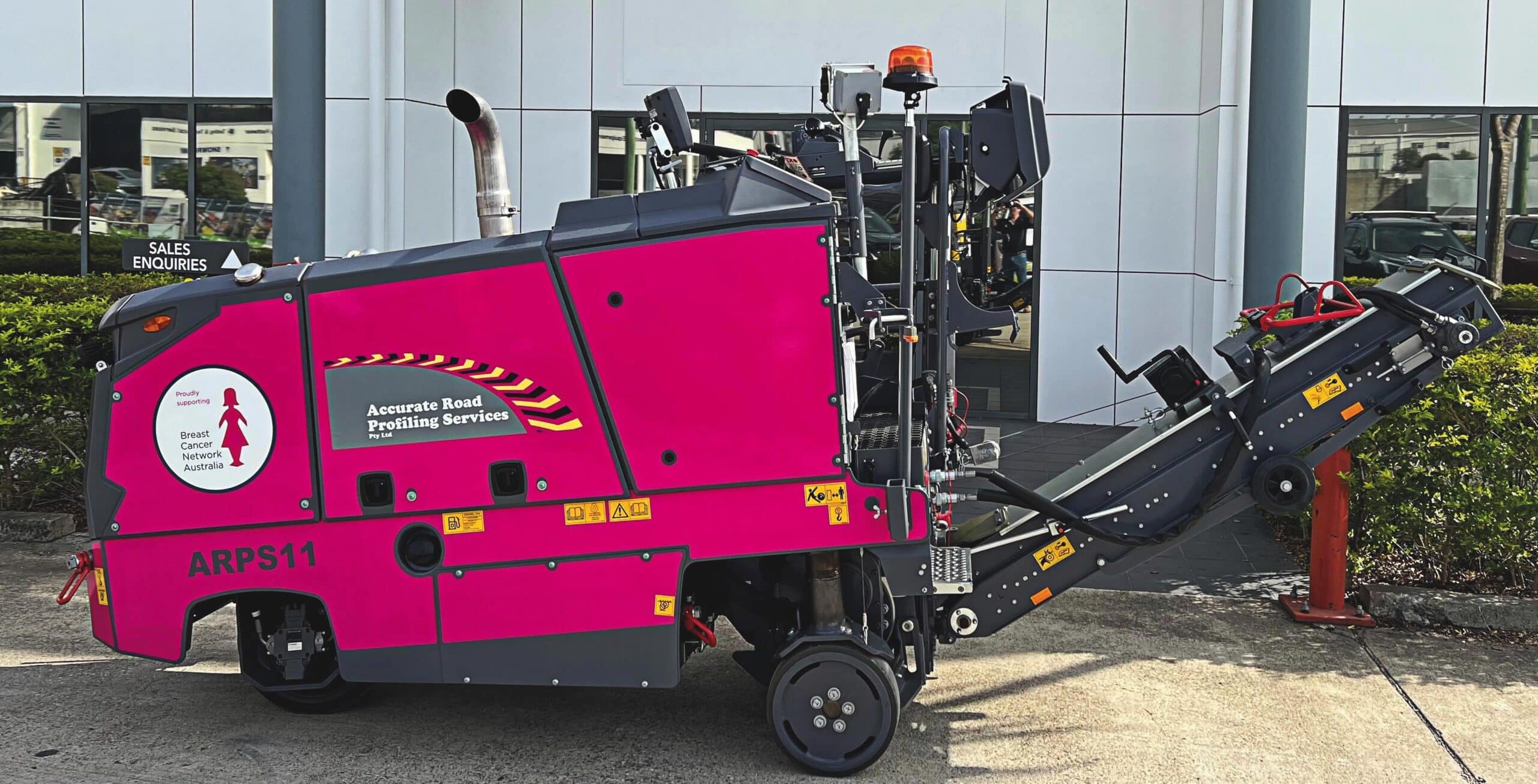
Accurate Road Profiling Services is marking its 10-year anniversary after expanding from two profiling machines at start-up to a fleet of more than 20 units working on road rehabilitation projects across Australia. The company has diversified its fleet to cover a range of milling widths and depths suited to asphalt and concrete removal, while maintaining year-on-year growth in contract profiling for state road agencies and major contractors. Its ‘Pink Lady’ profiler is dedicated to fundraising and awareness for Breast Cancer Network Australia, adding a strong community dimension to its operations.
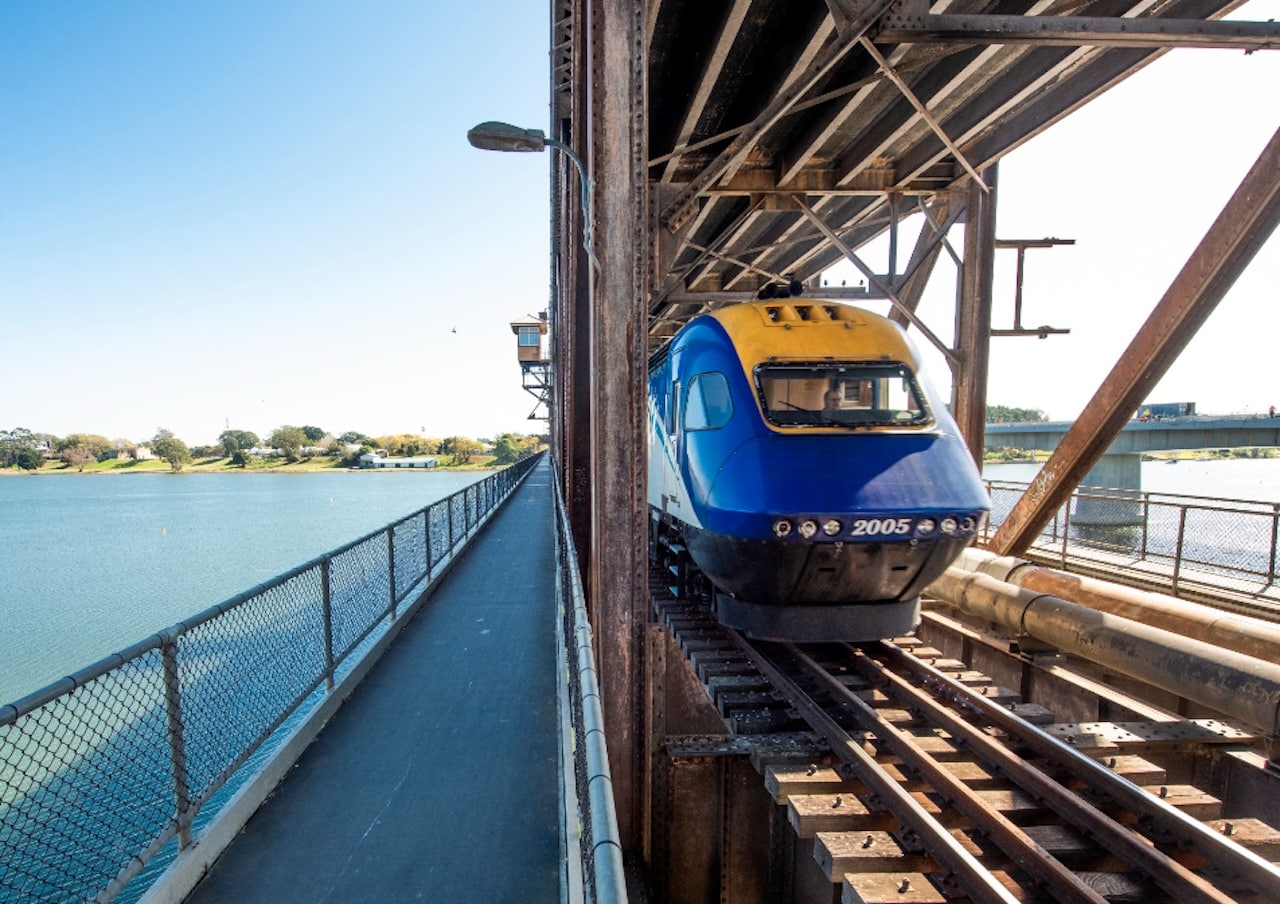
New South Wales has released the draft North Coast Strategic Regional Integrated Transport Plan, a 20‑year framework covering road, rail, bus and active transport links from Tweed Heads to Port Macquarie and Coffs Harbour. The draft sets corridor priorities for the Pacific Highway and key inland freight routes, and flags staged upgrades to bridges, flood‑prone sections and public transport interchanges. Geotechnical and civil teams should expect a pipeline of brownfield widening, pavement rehabilitation and resilience works shaped by regional growth and coastal flood risk.
Regional development schemes such as multi-phase regeneration projects and New Towns, often exceeding £1bn and spanning 10–20 years, are increasingly being managed through a Programme Delivery Partner (PDP) model rather than traditional single-project commissions. Under a PDP, an integrated client–consultant team oversees portfolio-wide functions such as land assembly, phased infrastructure delivery (roads, utilities, flood defences) and procurement across dozens of work packages. This approach is used to manage shifting planning requirements, multiple developers and statutory bodies, and to keep programme-level risks, interfaces and cost escalation under tighter control.
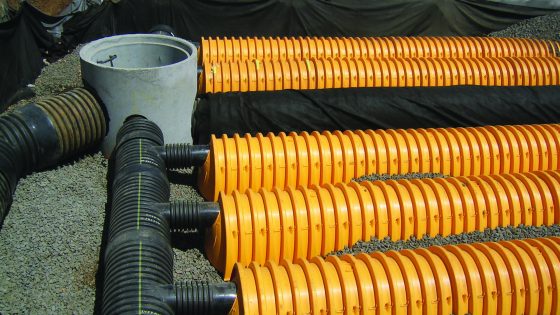
Growing deployment of subsurface stormwater tanks and pipes in SuDS schemes is putting thermoplastic structural design under scrutiny, as Stuart Crisp, UK manager at Advanced Drainage Systems (ADS), contrasts North American AASHTO LRFD / ASTM approaches with Eurocode-based practice. He notes that AASHTO/ASTM methods explicitly integrate long-term creep, installation quality and soil–structure interaction for buried HDPE and PP chambers, whereas Eurocode design often relies on traditional rigid pipe assumptions. The comparison signals a need for clearer Eurocode-aligned guidance on ring stiffness, deflection limits and verification of large modular attenuation systems.
The UK Government has launched a sweeping reform programme for Ofgem, saying the energy regulator must be modernised to keep pace with the energy transition and the rapid build-out of grid-scale renewables and new transmission capacity. Proposals are expected to tighten oversight of network investment decisions, streamline approvals for major reinforcement schemes, and clarify how Ofgem balances bill-payer protection with funding for low-carbon infrastructure. For civil and grid engineers, this signals potential changes to cost allowances, delivery timelines and risk allocation on large transmission and distribution projects.
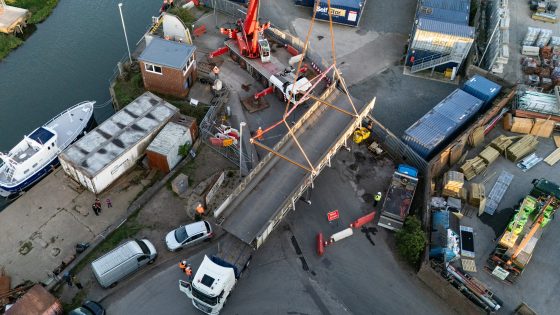
Weel Bridge, a 73-year-old mid-century structure over the River Hull in East Yorkshire, has been fully lifted clear of the river by Esh Construction as part of a £1M refurbishment programme. The removal marks a critical phase in extending the bridge’s service life, allowing off-line inspection, steelwork repairs and repainting under controlled conditions rather than over water. For asset managers and bridge engineers, the operation illustrates how planned lift-out refurbishments can modernise ageing rural crossings while minimising disruption to river navigation.
Bam UK has secured approval to build a public garden on part of a former hospital site in partnership with the Eden Project, signalling a high-profile testbed for integrating large-scale landscape and ecology into urban infrastructure. The scheme is expected to convert previously developed healthcare land into accessible green space, with Eden’s involvement likely to drive complex planting design, soil remediation and long-term biodiversity management. For civil and geotechnical teams, the project will couple brownfield ground conditions with intensive soft landscaping and public-realm drainage requirements.
Northern Minerals has significantly expanded the mineral resource at its high-grade Dazzler rare earths deposit, bolstering the overall Browns Range project in northern Western Australia. The upgrade centres on dysprosium and terbium-rich xenotime mineralisation, which is typically hosted in steeply dipping, structurally controlled lenses amenable to selective open-pit mining. For geotechnical and mine planners, the larger, higher-confidence resource base supports longer mine life assumptions, more robust pit optimisation, and potential justification for expanded on-site beneficiation and hydrometallurgical circuits.
Mineral Resources has cut net debt to about $4.5 billion while lifting FY25 production guidance across its iron ore, mining services and lithium portfolios, supported by ramp-up at the Onslow Iron project and stronger volumes from its Utah Point and Port Hedland operations. The company has resumed haulage on the 150km Onslow Iron dedicated haul road after agreeing additional controls and risk mitigation with WorkSafe WA, de-bottlenecking ore movements to the Port of Ashburton. For contractors and owner-operators, the guidance upgrade signals sustained demand for crushing, haulage and drill-and-blast capacity in the Pilbara.
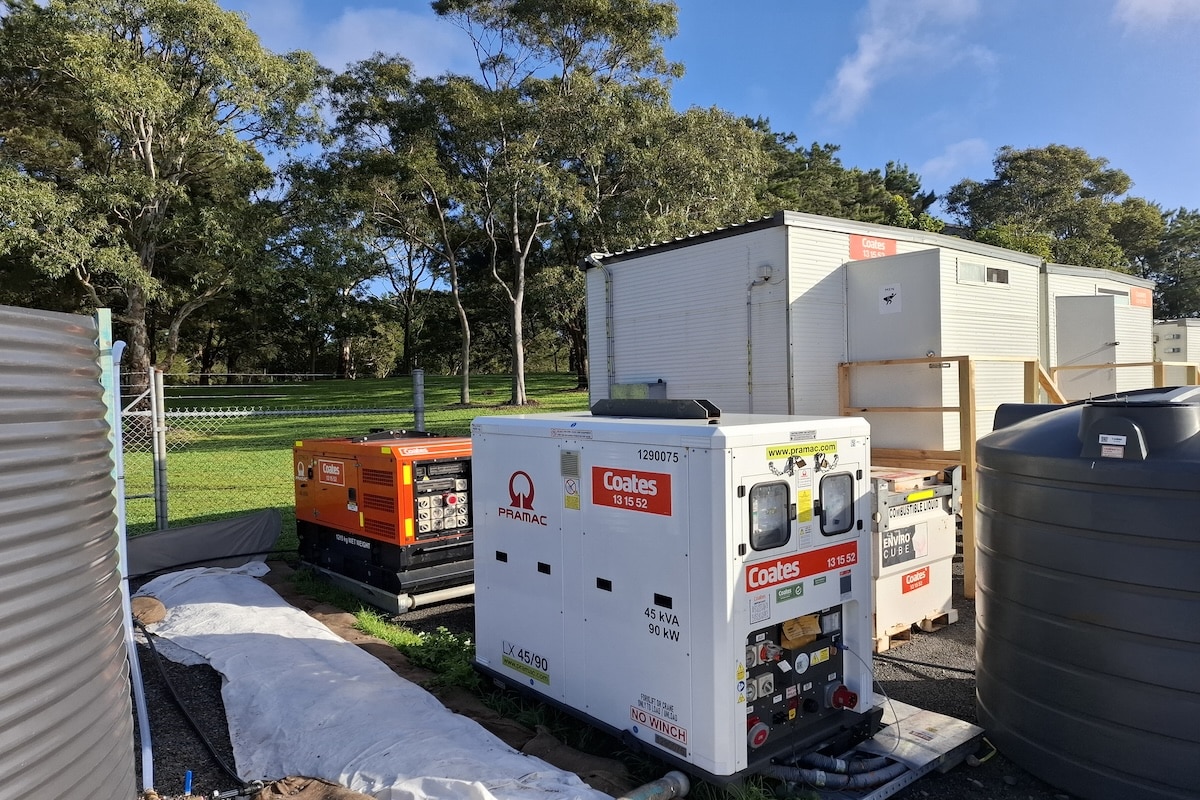
Fuel price volatility is pushing Australian miners, especially remote off‑grid operations, to swap or supplement diesel gensets with hybrid and battery systems supplied by rental specialists such as Coates. Containerised lithium-ion battery energy storage systems are being paired with existing 1–5MW diesel plants to shave peak loads, stabilise weak grids and cut fuel burn by double‑digit percentages. For engineers, the shift raises design questions around load profiling, transient response, and integrating modular BESS units into existing HV reticulation and control architectures.
Victoria is seeking partners with antimony processing expertise to accelerate development of its critical minerals and rare earths sector, positioning antimony alongside rare earths, lithium and other battery metals in its resource strategy. The state is targeting downstream processing rather than simple concentrate export, with a focus on refining antimony-bearing ores into higher-value products such as antimony trioxide and flame-retardant masterbatches. For miners and processors, this signals potential support for new hydrometallurgical and pyrometallurgical plants in Victoria, plus associated permitting and infrastructure opportunities.
The Australian Federal Government has committed more than $45 million to fast‑track environmental approvals for major projects, targeting duplication between state and Commonwealth processes under the Environment Protection and Biodiversity Conservation Act. Funding will expand assessment capacity within the Department of Climate Change, Energy, the Environment and Water and support digital lodgement and tracking systems for approvals. For miners and project developers, the move signals potential reductions in front‑end schedule risk and holding costs, particularly for large greenfield operations and critical minerals projects awaiting primary environmental sign‑off.
Temporary works on current UK schemes range from heavy propping towers and modular aluminium access platforms to sheet-piled cofferdams supporting deep excavations in constrained urban sites. Photos shared by the Temporary Works Forum show complex façade retention frames braced back to steel grillages, crane bases founded on high-capacity spread mats, and temporary bridges spanning live rail and highway corridors. For designers and contractors, the examples stress rigorous sequencing, load path verification and early coordination between permanent and temporary works to control movement and maintain programme.
The government’s new integrated transport strategy, Better Connected, proposes a more people-centric travel network across England, reshaping priorities for road, rail and active travel schemes. Early signals point to greater emphasis on multi-modal hubs, bus and rail integration, and reallocating road space to walking and cycling, with funding likely tied to corridor-level performance rather than isolated schemes. Civil and transport engineers should expect stronger requirements for whole-life carbon assessment, accessibility metrics and network resilience criteria in future business cases and design standards.
Flood and coastal defence assets are facing mounting maintenance backlogs as ageing embankments, culverts and sea walls are exposed to more frequent, higher-intensity storm events. Experts warn that current operational budgets and short funding cycles prevent timely renewal of critical structures such as tidal barriers, pumping stations and flap valves, increasing failure risk under extreme water levels. They call for a shift from reactive patch repairs to long-term, whole-life asset management with multi-year funding settlements to support planned inspections, resilience upgrades and adaptive design.
Calls from the Chartered Institution of Highways & Transportation (CIHT) urge the next Scottish Government to commit to long-term funding and asset management for roads, bridges and public transport infrastructure ahead of the 2026 Scottish Parliament election. CIHT is pressing for multi‑year investment programmes rather than short annual settlements to tackle a growing backlog of maintenance on trunk roads, local highways and ageing structures. For engineers, this signals potential shifts in budget certainty, whole‑life asset planning and prioritisation of renewal over short‑term patch repairs.
A nationwide expansion of the Institution of Civil Engineers’ partnership with Girlguiding will make a civil engineering badge available to Guides (10–14) and Rangers (14–18) across the UK. The badge activities introduce core concepts such as bridge stability, flood defences and transport networks through hands-on tasks like building simple beam or truss models and testing materials. For the sector, this creates a structured route to engage volunteers, run site visits and embed real project examples, strengthening the early skills pipeline, particularly for geotechnical and infrastructure roles.
Liam Eagle of Ward & Burke Construction has won the 30th annual James Rennie Medal, awarded by the Institution of Civil Engineers to the top Chartered Professional Review candidate. The medal, named after 19th‑century civil engineer James Rennie, recognises excellence in achieving Chartered Engineer status and the technical rigour demonstrated in the review process. For practitioners, the award signals ICE’s continued emphasis on strong early-career competence in design, construction management and professional judgement.
Thomas Telford Limited, the commercial arm of the ICE Group, reports activity spanning management of the NEC (New Engineering Contract) suite and operation of the 1,600m² One Great George Street conference and office facility in Westminster. Current priorities centre on digital and contractual innovation, including refining NEC contract tools and support services used on major UK infrastructure frameworks. For practitioners, this signals continued investment in standardised contract management, dispute avoidance mechanisms and professionally managed technical venues for design reviews, client meetings and industry training.
Collaboration across clients, designers and contractors is presented as critical to delivering long-life infrastructure rather than short-term, lowest-capital-cost schemes that lock in higher whole-life carbon and maintenance. The piece points to early contractor involvement, shared digital models and integrated programme risk registers as practical mechanisms to align decisions with 30–50 year performance horizons. For engineers, the message is that procurement, governance and data-sharing structures now materially influence asset durability, resilience and lifecycle cost as much as traditional design choices.
Trustee for Professional Conduct and Ethics at the Institution of Civil Engineers reports early but “welcome changes” in how engineers approach ethical decision-making on projects. The focus is shifting from narrow compliance with professional codes towards broader consideration of public safety, climate resilience and long-term societal impact in infrastructure design and delivery. For practitioners, this points to ethics being treated as a core design constraint—alongside cost, programme and Eurocode compliance—rather than an afterthought managed solely through formal procedures.
ICG Live 2026 frames the built environment sector as entering an ambitious but challenging reset, with infrastructure owners and contractors under pressure to decarbonise assets while coping with tighter public budgets. Delegates are expected to focus on whole‑life carbon in major programmes, shifting from capital cost to performance‑based procurement and digital delivery models such as BIM‑driven design and common data environments. For geotechnical and civil engineers, this signals greater scrutiny of embodied carbon in foundations and structures, and closer integration of ground risk, materials selection and asset management from concept stage.
Early works and long‑lead procurement have started for Liontown Limited’s planned expansion of the Kathleen Valley Lithium Operation in Western Australia, ahead of a formal Final Investment Decision targeted for the end of Q1 FY2027. The programme covers critical items and packages whose fabrication and delivery times could otherwise delay ramp‑up of the underground mine and processing plant. Early commitment to these components signals a push to lock in key OEM capacity and manage schedule risk in a tight lithium project pipeline.