Geomechanics, Streamlined.
© 2026 Geomechanics.io. All rights reserved.
Mining systems integrator Armstrong Industrial argues that meeting 2030 interim carbon and water targets will depend on “smarter” end‑to‑end mining systems rather than isolated equipment upgrades. Divyanshu Shrivastava points to gaps between corporate net zero commitments and site‑level execution, citing fragmented data, poorly integrated process control, and limited real‑time visibility across drilling, hauling and processing circuits. The piece signals growing demand for interoperable automation, energy‑aware dispatch, and water‑optimised plant control strategies that can be retrofitted into existing brownfield operations.
Electric haulage is now the preferred option in most new mine trade-off studies, with Mining Plus modelling showing battery-electric trucks and Railveyor’s cable-powered rail haulage often outperforming diesel on both unit cost and emissions over life-of-mine. Tim Wiitanen, Railveyor Vice-President of Product Engineering, notes that orebody geometry, ramp length and gradient, power price, and ventilation constraints remain the decisive variables in choosing between BEVs and fixed-guideway systems. For engineers, the work signals that early-stage layouts and power strategies must be optimised explicitly for electric haulage.
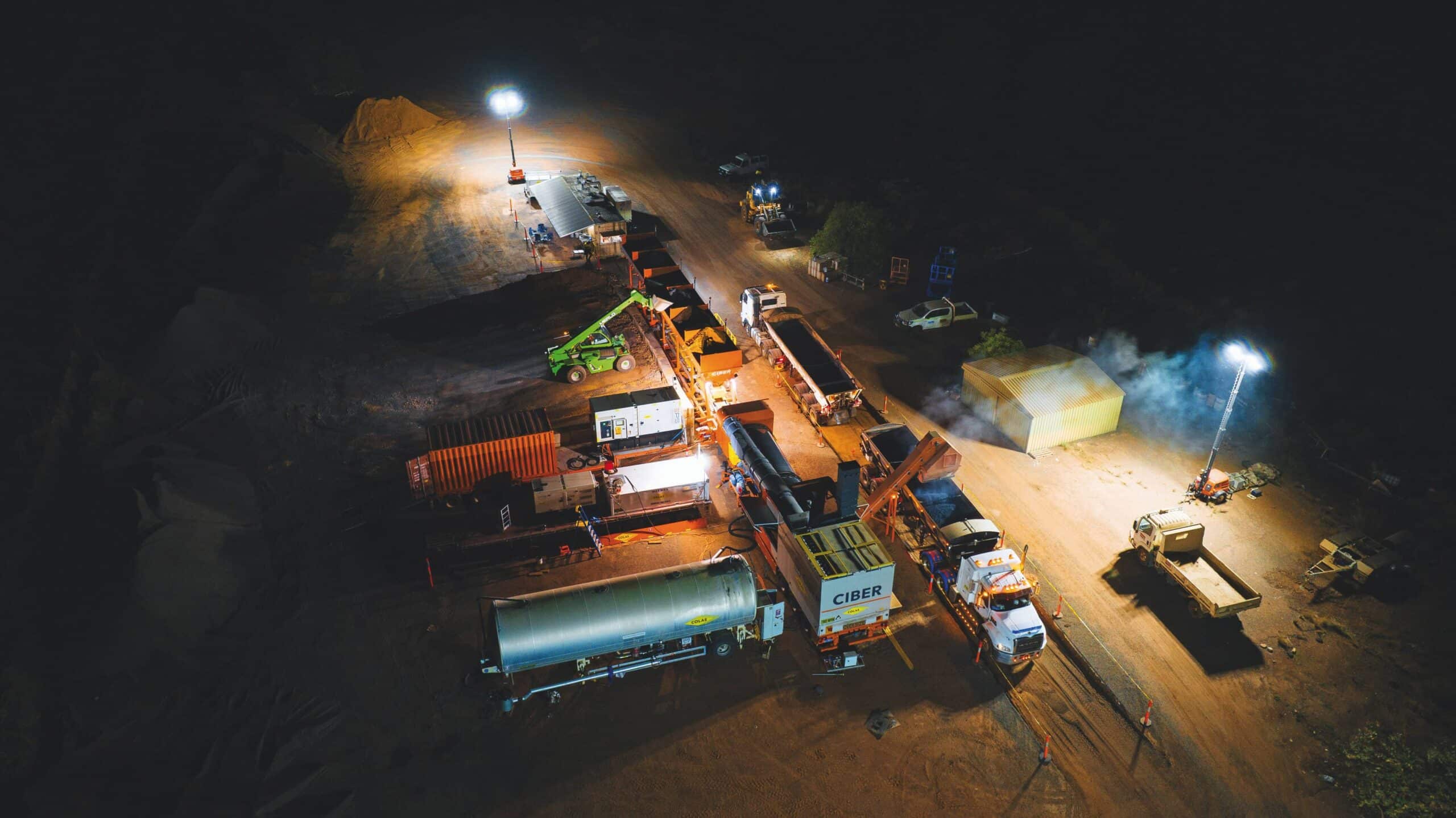
SAMI’s I-Brid asphalt has been installed at East Kimberley Regional Airport in Kununurra, Western Australia, as a high-stress runway and taxiway surfacing designed for heavy aircraft loading and braking. The hybrid mix combines polymer-modified binder with a stone mastic-type aggregate skeleton to resist rutting, shear and fuel spillage, targeting longer life and fewer maintenance closures on a remote regional asset. For airport and heavy-duty pavement designers, the trial signals growing interest in high-modulus, deformation-resistant mixes for critical airside pavements.
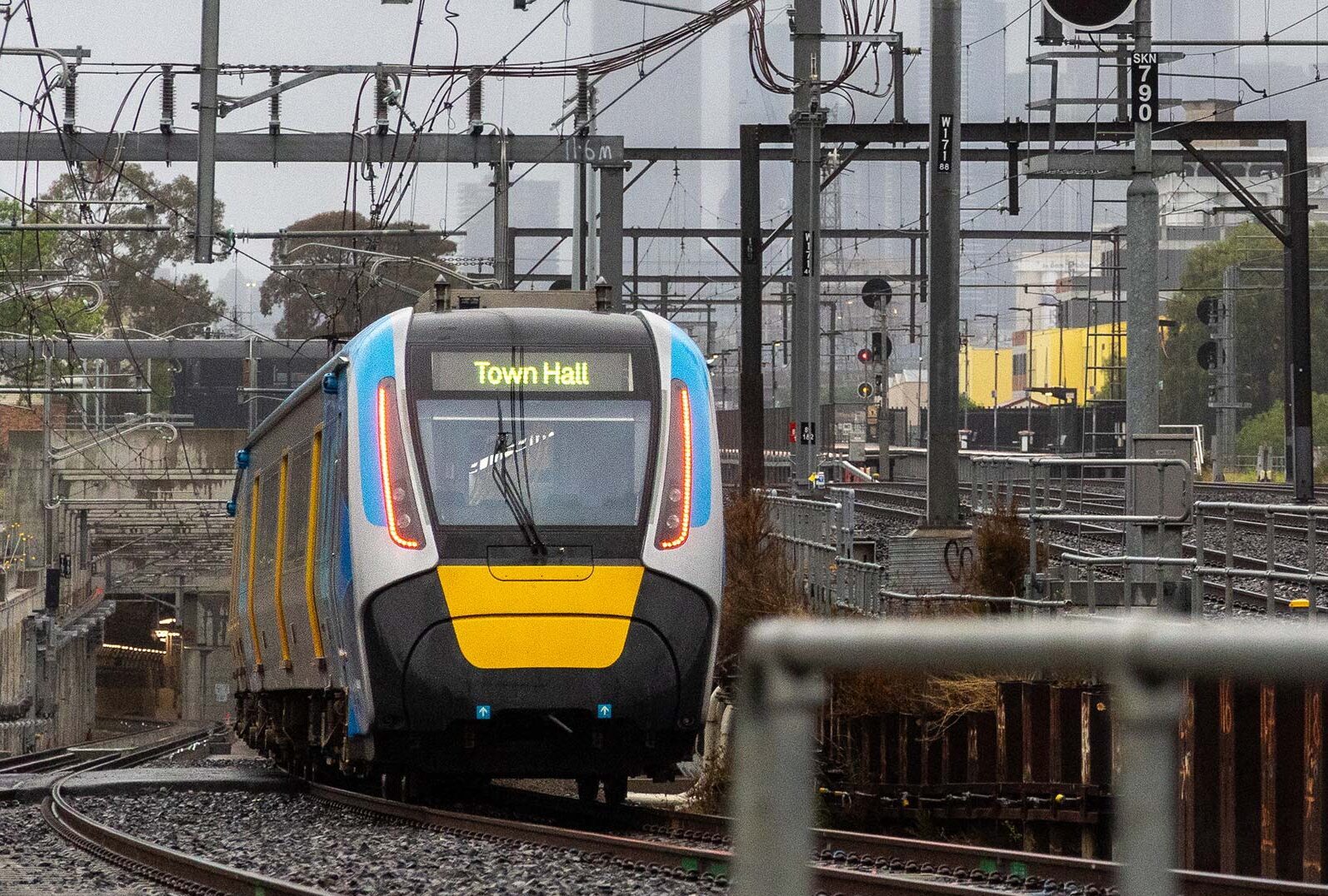
Half‑price public transport has commenced in Victoria, cutting the full daily fare cap from $11.40 to $5.70 for travel anywhere across the state until 31 December. The measure targets households hit by rising fuel costs and is expected to shift more commuters from private cars to trains, trams and buses, increasing peak‑period passenger loads on existing rail corridors and bus routes. Operators may need to adjust service frequencies, rolling stock allocation and station crowd management to handle higher demand without degrading network reliability.
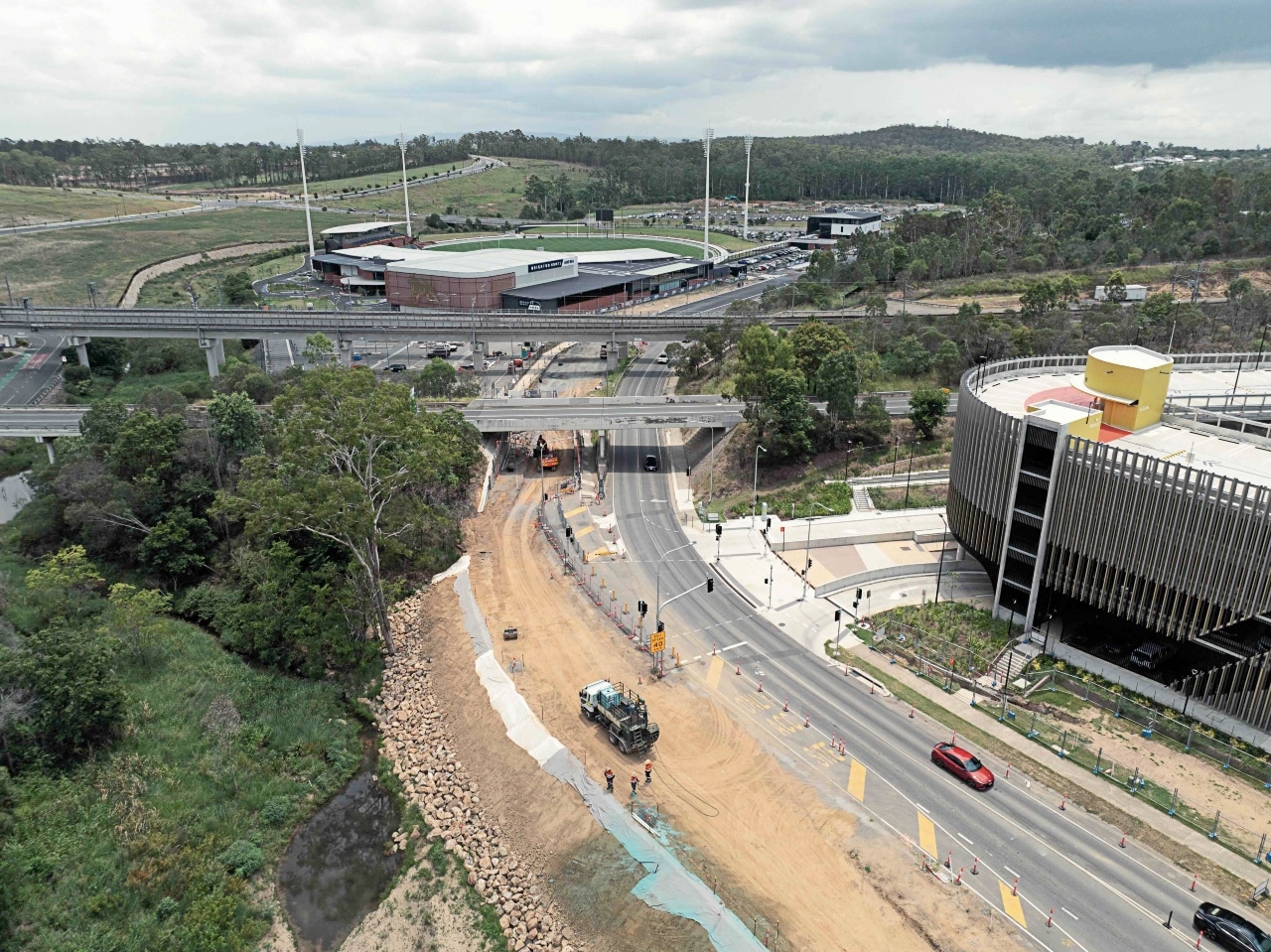
Preparatory earthworks have commenced to convert Brisbane’s Victoria Park into a 63,000-seat Brisbane Stadium that will host the 2032 Olympic and Paralympic opening and closing ceremonies plus athletics. The venue is planned as the city’s primary oval stadium post-Games, serving AFL and Big Bash League tenants, which will drive design for a full-size cricket/AFL playing surface, high-intensity lighting and broadcast infrastructure. Early works will need careful staging around existing park topography, drainage and services to accommodate the large bowl excavation and future transport links.
Work zones on active Australian road networks are being redesigned with engineered traffic management plans, temporary barriers and variable message signs to protect thousands of workers operating daily in live traffic. Coates is promoting early-stage constructability reviews, site‑specific risk assessments and compliant layouts using devices such as portable traffic lights, crash cushions and speed‑activated warning signs rather than ad hoc cone lines. For civil contractors, the emphasis is on formalising separation distances, taper lengths and safe access points so designs match actual driver behaviour and changing traffic volumes.
Final registrations are open for the 2026 Women in Industry Awards, which will recognise outstanding women across Australia’s infrastructure, construction, transport, mining, manufacturing and engineering sectors. The gala event, organised by Prime Creative Media and hosted in Sydney, will bring together contractors, asset owners, consultants and suppliers from road, rail and broader civil disciplines. For geotechnical, civil and materials professionals, the awards offer a focused networking forum to connect with senior female leaders influencing project delivery, asset management and industrial innovation.
Australian-owned Vital Chemical, approaching its 50th year, is supplying erosion and dust control solutions to major Queensland civil and construction projects, with products formulated for environmentally and sustainably sound performance. The company’s portfolio targets typical road and earthworks issues such as exposed batter erosion, haul road dust and stockpile stabilisation, aiming to reduce sediment run-off and particulate emissions without relying on traditional solvent-based binders. For geotechnical and civil contractors, this signals wider availability of project-scale, compliance-focused surface treatments that can be integrated into construction environmental management plans.
Forrestania Resources has issued a maiden JORC mineral resource estimate for the MacPhersons gold deposit in Western Australia, comprising 1.84 million tonnes at 1.25 grams per tonne and lifting its global gold inventory to 1,007,800 ounces. Chairman David Geraghty said the MacPhersons addition pushes the company past the one‑million‑ounce milestone across its portfolio. For mine planners and geotechnical teams, the new tonnage and grade provide a basis for pit optimisation, geotechnical drilling design and sequencing studies at MacPhersons.
An airborne electromagnetic survey by the Geological Survey of Victoria and Geoscience Australia will be flown from June to November across central Victoria, targeting areas north and west of Melbourne to refine critical mineral prospectivity, including antimony. A specially equipped fixed‑wing aircraft will collect AEM conductivity data to map subsurface structures and groundwater to depths typically of several hundred metres, improving geological models beneath cover. The work is expected to upgrade targeting for deposits similar to the Goschen rare earths project footprint and guide future drilling programmes.
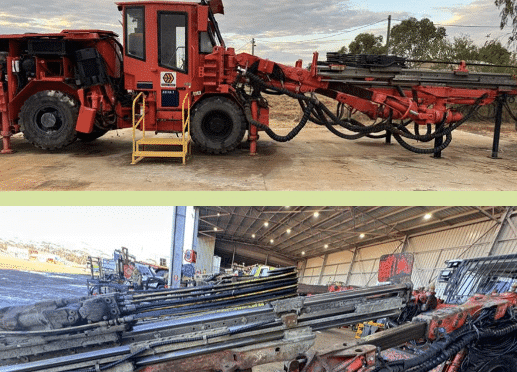
A 48 per cent reduction in feed rope consumption on a fleet of Sandvik DD421 hard-rock development jumbos was achieved after MASPRO re-engineered the feed system rather than simply extending rope life. The contractor had been facing frequent feed rail rope changes and unplanned stoppages, prompting a focus on rope path, tensioning behaviour and compatibility with DD421 feed rails. The optimisation reduced rope wear and replacement frequency, cutting maintenance interactions and offering a template for reliability-centred design of high-cycle underground drill components.
Aurelia Metals is expanding its Cobar Basin footprint via an earn‑in with Legacy Minerals over exploration licences EL9511 and EL9858 in central western New South Wales, with a pathway to secure up to a 90 per cent interest. The move consolidates ground in a proven polymetallic district hosting high‑grade copper, lead, zinc and gold deposits, where existing underground operations commonly exceed 1 km depth. For geotechs and mine planners, the enlarged tenure signals continued demand for deep, structurally controlled base‑metal targets in highly altered Ordovician volcanics.
Rio Tinto has partnered with Sandvik to integrate Sandvik i-series drill rigs with Rio’s in-house Autonomous Drilling System, with site-based trials planned at Western Australian iron ore operations. The project links Sandvik’s AutoMine automation platform with Rio’s existing autonomous and remote operations infrastructure, targeting fully integrated control of drill navigation, positioning and drilling cycles from central control rooms. For drill and blast engineers, the move signals further standardisation around OEM-agnostic autonomous drilling interfaces and tighter coupling between rig automation and mine planning systems.
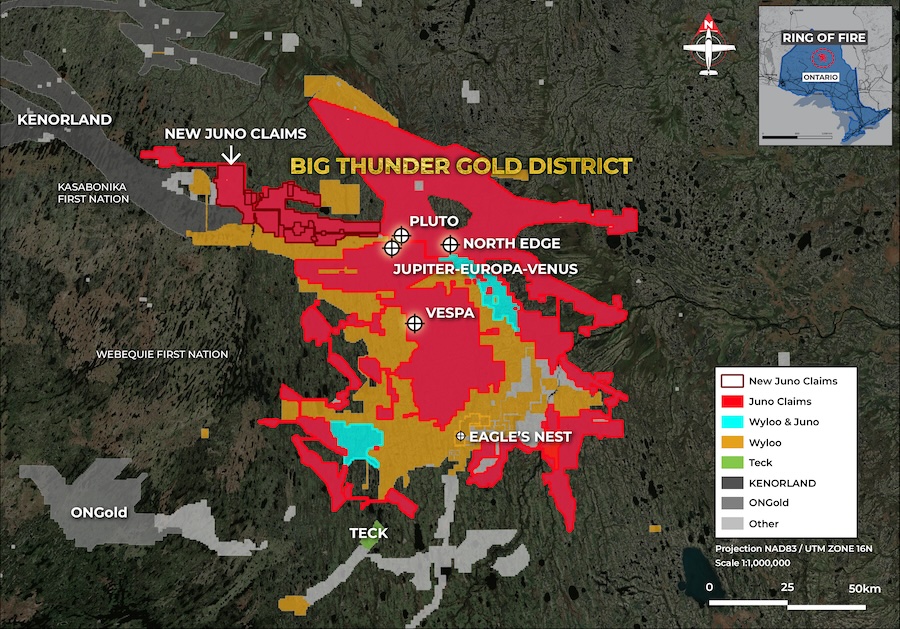
Juno Corp, led by founder and CEO Robert Cudney, is launching the largest exploration programme in more than a decade in Ontario’s Ring of Fire, controlling 29,956 claims over roughly 5,796 km²—just over half the camp—and anchored by the high‑grade Jupiter copper‑zinc‑silver VMS deposit. Cudney is renaming Northfield Capital as Juno International and has secured logistics by acquiring Sudbury-based True North Airways, while the company’s Big Thunder grassroots gold find has already earned the 2026 Bernie Schnieders Discovery of the Year Award. Veteran geologist John Harvey compares the camp’s long‑term potential to, and possibly exceeding, the Sudbury Basin and South Africa’s Bushveld Complex.
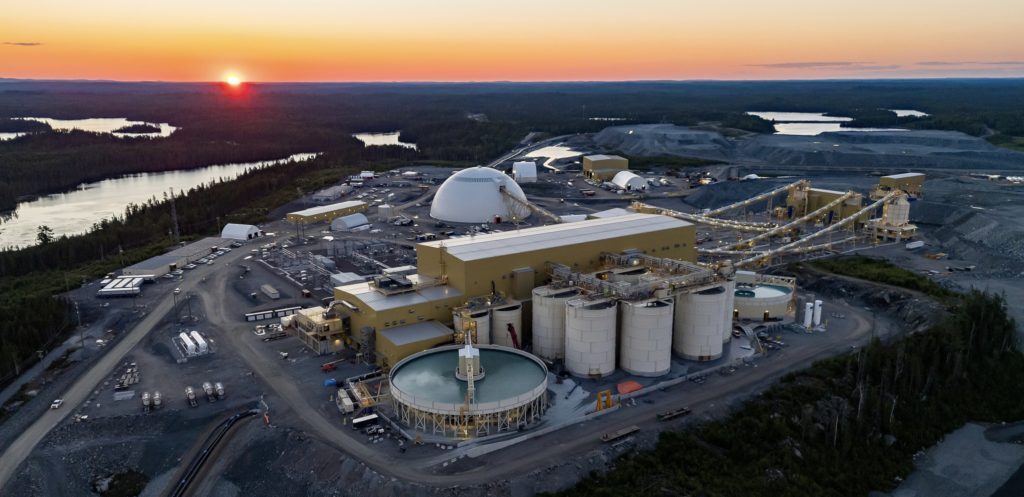
Iamgold has lifted contained gold at the Côté mine in northeastern Ontario by 12% to 20.34 million oz., integrating the Gosselin zone into a combined resource of 838 million tonnes at 0.75 g/t and inferred resources of 177.1 million tonnes at 0.61 g/t for 3.48 million oz. The update uses a higher gold price assumption of US$2,500/oz and a lower cut-off grade of 0.25 g/t, and underpins a planned 40% plant expansion to more than 50,000 tonnes per day. A new technical report due by year-end will address reserve conversion, strip ratio, tailings and processing rates, while 30,000 metres of additional diamond drilling is scheduled for 2026 to refine the Côté-Gosselin model and test district targets such as Jerome, Northshore and Monella Point.
Cameco has agreed to pay C$115.75 million to acquire TEPCO Resources’ 2.871% stake in the Cigar Lake uranium joint venture, lifting its ownership in the northern Saskatchewan mine to 57.418% while Orano’s share rises to 42.582%. Cigar Lake, about 660 km north of Saskatoon, has produced 174.5 million lb of U3O8 since 2014 and still holds 172.4 million lb in reserves plus 46.3 million lb in combined resources. Cameco forecasts 2026 output at 17.5–18 million lb U3O8 (100% basis) and is targeting mine life extension to 2036.
Gold prices fell nearly 2% on Monday, with spot gold hitting a weekly low of about $4,450/oz and three‑month New York futures holding just above $4,500/oz, as renewed US strikes on Iranian military sites pushed oil and the dollar higher. Traders now assign roughly a 39% probability to a 25‑basis‑point Federal Reserve rate hike in December, according to CME FedWatch, dampening appetite for non‑yielding bullion. Despite the pullback from January’s record near $5,600/oz, JPMorgan and Goldman Sachs still project average 2026 prices of $5,000/oz and $5,400/oz respectively.
Barrick is considering carving out its African mines into a London‑listed vehicle via a potential $30 billion combination with Endeavour Mining, while retaining a Toronto holding company for its New York‑listed shares. The move would mirror Barrick’s earlier Acacia spin‑off and comes as it plans a separate New York listing for its Nevada and Dominican Republic assets by end‑2026, shifting capital towards lower‑risk jurisdictions. A tie‑up would pool Barrick’s Kibali, North Mara, Bulyanhulu, Lumwana and Tongon operations with Endeavour’s West African portfolio, currently targeting about 1.2 million oz of gold output this year.
Activist fund Elliott Investment Management has confirmed a roughly A$1 billion stake in Northern Star Resources, giving it about 4% of the ASX-listed gold producer and placing it among the top five shareholders alongside Van Eck and BlackRock. Elliott is pushing for a new mining-experienced board, an external CEO and a formal strategic review, citing “repeated operational missteps”, cost overruns and “deeply inadequate disclosures” at assets including the KCGM open pit in Kalgoorlie. The move follows two production downgrades in 2026, supply issues at KCGM and a share price fall of up to 30% this year despite strong gold prices.
Orla Mining has halted all operations at its Camino Rojo open-pit gold mine in Zacatecas, Mexico, after unionised workers launched a blockade over a productivity bonus and statutory profit-sharing payments, knocking TSX-listed shares down 7.5%. The mine produced 96,764 oz of gold in 2025 and was guided to deliver 110,000–120,000 oz in 2026 at all-in sustaining costs of $1,150–$1,250/oz, making any prolonged stoppage material for mine planning and contractor utilisation. The disruption also injects risk into Orla’s planned all-stock $18.5 billion merger with Equinox Gold, which targets combined output of about 1.1 Moz/year.
Americas Gold and Silver’s latest Cosalá infill drilling at the San Rafael Upper and 120 zones is returning silver grades up to five times above the current resource model, including 14 metres at 599.8 g/t Ag and 0.83% Cu from 38.2 metres and 45 metres at 342.9 g/t Ag and 0.85% Cu from 106 metres, feeding directly into H2 mine plans. At Idaho’s Galena Complex, narrow-vein hits such as 0.21 metre at 24,913 g/t Ag and 16.9% Cu on the 149 Vein and new 43L-TJ vein mineralisation sit close to existing infrastructure. The company is backing a 64,000‑metre, US$20 million drilling campaign with processing upgrades including a paste backfill plant, No. 3 shaft hoist to ~105 short tons/hour and a mill expansion from 750 to 1,200 tons/day, supporting guidance of 3.2–3.6 Moz Ag in 2026.
Ramaco Resources has signed a non-binding MoU with REalloys Inc. to supply mixed rare earth carbonate from the Brook mine in Wyoming, described as the USA’s largest unconventional rare earth and critical mineral deposit hosted in coal and carbonaceous ore. REalloys will separate Ramaco’s MREC into individual oxides at the Saskatchewan Research Council facility in Canada, while Ramaco will also provide separated scandium oxide for alloy metallisation at REalloys’ Euclid, Ohio plant. A 2025 preliminary economic assessment for Brook reported a post-tax NPV of about $1.2 billion, 38% IRR and initial capex of $473 million.
Sandvik has partnered with Rio Tinto to integrate an autonomous drilling system (ADS) with Sandvik surface drill rigs, combining Rio Tinto’s remote operations experience with Sandvik’s AutoMine automation platform. Development will start at Sandvik’s Finnish facilities, then shift to Rio Tinto’s Perth operations centre for field trials across multiple rigs and sites. The work targets interoperable, mixed‑model autonomous drill fleets for large open‑pit mines, signalling future requirements for common control platforms and remote supervision of distributed drilling operations.
BHP is advancing renewable electricity self-supply and storage at its Escondida and Spence copper mines in Chile through new long-term agreements with Sungrow to keep both operations on 100% renewable power. The deals cover large-scale solar generation and battery energy storage systems sized to support long-term production growth and process stability at high-altitude, grid-constrained sites. For mine planners and process engineers, firmed renewable supply reduces exposure to grid curtailment and power price volatility while tightening decarbonisation baselines for future brownfield expansions.