Geomechanics.io

  • Free Tools
Sign UpLog In
AllGeotechnicalMiningInfrastructureMaterialsHazardsEnvironmentalSoftwarePolicy

Geomechanics.io

Geomechanics, Streamlined.

© 2026 Geomechanics.io. All rights reserved.

Geomechanics.io

CMRR-ioGEODB-ioHYDROGEO-ioQCDB-ioFree Tools & CalculatorsBlogLatest Industry News

Industries

MiningConstructionTunnelling

Company

Terms of UsePrivacy PolicyLinkedIn
    Projects
    Sustainability

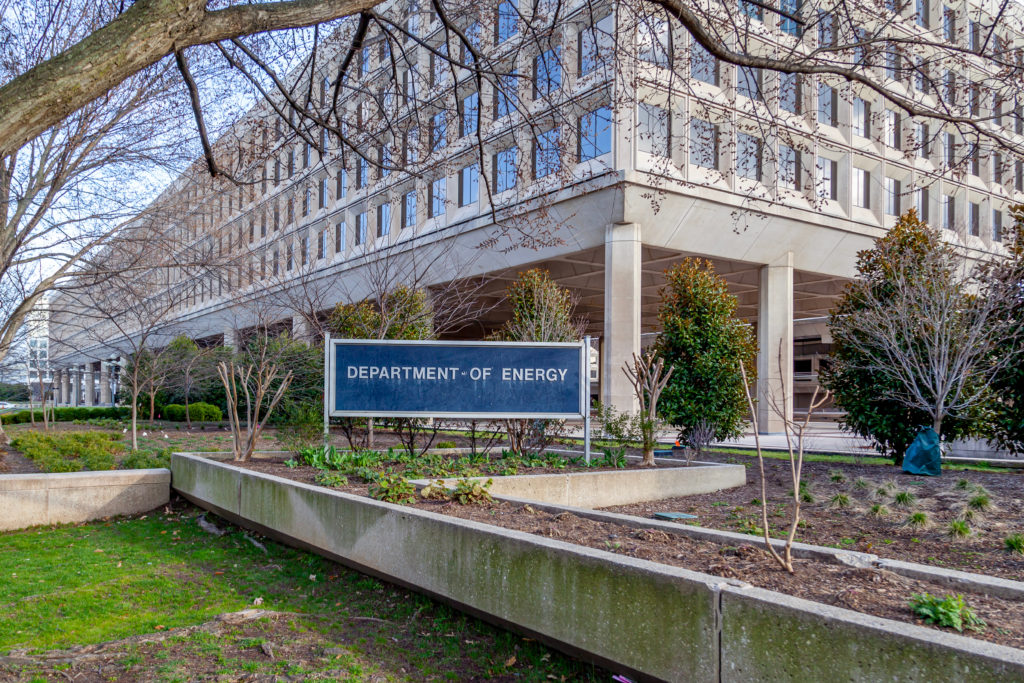
    US DOE Nuclear Innovation Campuses RFI: lifecycle and risk lens for engineers

    February 3, 2026|

    Reviewed by Tom Sullivan

    US DOE Nuclear Innovation Campuses RFI: lifecycle and risk lens for engineers

    First reported on MINING.com

    30 Second Briefing

    US Department of Energy has issued a Request for Information inviting US states to host Nuclear Lifecycle Innovation Campuses covering fuel fabrication, enrichment, used-fuel reprocessing and waste disposition across the full nuclear fuel cycle. Depending on regional capabilities, campuses could also integrate advanced reactor deployment, power generation, advanced manufacturing and co-located data centres, with states asked to specify priorities such as workforce development, infrastructure investment and economic diversification. Responses, including proposed funding structures, risk-sharing mechanisms and federal partnership models, are due by 1 April 2026.

    Technical Brief

    • Federal–State partnerships are explicitly framed as voluntary, affecting how liabilities and regulatory responsibilities may be allocated.
    • DOE is seeking “clear statements of interest”, implying an initial screening phase before any detailed siting or NEPA work.
    • Submissions must describe the scope of nuclear lifecycle activities a state is prepared to host, not just policy intent.
    • States are asked to specify preferred incentive types, including funding structures and explicit risk‑sharing approaches with DOE.
    • Workforce development is singled out as a potential primary objective, signalling emphasis on long‑term skills pipelines for nuclear operations.
    • Economic diversification and “technology leadership” are listed as distinct goals, encouraging proposals that integrate non‑power nuclear applications and advanced manufacturing.

    Our Take

    The Nuclear Lifecycle Innovation Campuses concept sits alongside the US government’s planned $12 billion critical minerals stockpile and the Commerce Department’s $1.6 billion CHIPS-related package for USA Rare Earth, signalling that DOE is being positioned as a technical anchor for both fuel-cycle and upstream materials security rather than just reactor R&D.

    With British Columbia highlighted for its 140‑day permitting timelines and C$3 million in new funding, Canadian hosts could leverage comparatively predictable approvals to attract parts of the Nuclear Innovation Campus ecosystem that are tightly linked to critical minerals processing and waste-handling pilot plants.

    Across our 113 Policy stories, critical minerals pieces increasingly pair US federal initiatives (like this DOE campus RFI) with cross-border supply strategies involving Canada, suggesting that prospective campus hosts able to demonstrate integrated North American supply chains may have an edge in the selection process.

    Geotechnical Software for Modern Teams

    Centralise site data, logs, and lab results with GEODB-io, CMRR-io, and HYDROGEO-io.

    No credit card required.

    • Save and export unlimited calculations
    • Advanced data visualisation
    • Generate professional PDF reports
    • Cloud storage for all your projects

    Prepared by collating external sources, AI-assisted tools, and Geomechanics.io’s proprietary mining database, then reviewed for technical accuracy & edited by our geotechnical team.

    Related Articles

    Gateway 3 delays and 5,000 empty homes: regulatory lessons for project teams
    Policy
    about 6 hours ago

    Gateway 3 delays and 5,000 empty homes: regulatory lessons for project teams

    Delays at the Building Safety Regulator’s Gateway 3 stage are linked by law firm Irwin Mitchell to 44 undecided schemes and 5,594 completed higher-risk residential units remaining unoccupied, with one case waiting 550 days against an eight‑week target. Of 158 Gateway 3 applications in 2023, 55 took more than three months for a decision, raising concerns over cashflow impacts on developers and handover timing for residents. The BSR disputes the interpretation, stating no new-build higher-risk building that passed Gateway 2 has yet applied for Gateway 3 and that current cases are mainly transitional legacy projects with significant safety issues.

    Passengers’ Council powers debate: implications for UK rail designers and asset teams
    Policy
    3 days ago

    Passengers’ Council powers debate: implications for UK rail designers and asset teams

    MPs on Parliament’s transport select committee are questioning whether the Railways Bill’s proposed Passengers’ Council will have any real enforcement powers to deliver a fully accessible national rail network. Concerns centre on the council’s ability to compel infrastructure managers and train operators to retrofit step-free access, tactile paving and compliant boarding interfaces across thousands of stations and platforms. For designers and asset owners, the outcome will influence how strongly accessibility standards are mandated in future station upgrades, platform works and rolling stock procurement.

    NI 43-101 and online disclosure: policy takeaways for project teams
    Policy
    3 days ago

    NI 43-101 and online disclosure: policy takeaways for project teams

    NI 43-101’s standardised technical reports and qualified person requirements stabilised disclosure after Bre-X, but Erik Groves, corporate strategy and in-house counsel at Morgan Companies, argues they now mask chronic diluters whose projects never advance despite repeated financings and high G&A. With Canadian National Policy 51-201 still warning against “sporadic” online rumour correction on chat rooms and bulletin boards, legal advice often keeps issuers off X, YouTube and Reddit while retail investors crowdsource geology and drill-interval analysis. Groves calls for a defined safe harbour allowing video documentation of fieldwork, plain-language geological reasoning and public misinformation correction, without pre-releasing material results or implying unsupported resources.

    Related Industries & Products

    Mining

    Geotechnical software solutions for mining operations including CMRR analysis, hydrogeological testing, and data management.

    Construction

    Quality control software for construction companies with material testing, batch tracking, and compliance management.

    QCDB-io

    Comprehensive quality control database for manufacturing, tunnelling, and civil construction with UCS testing, PSD analysis, and grout mix design management.