Geomechanics, Streamlined.
© 2026 Geomechanics.io. All rights reserved.
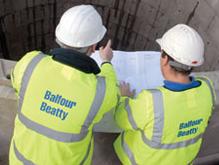
Balfour Beatty has restructured its UK operations into three divisions: defence, power and regional infrastructure under Nick Crossfield; energy and major projects led by Phil Clifton; and a dedicated transport business with a CEO still to be appointed. Grouping defence and power with regional infrastructure suggests a tighter focus on complex, multi-stakeholder schemes such as bases, substations and local networks, while the separate energy and major projects unit is likely to concentrate on large EPC-style works. The standalone transport division signals continued emphasis on rail, highways and aviation assets as distinct workload streams for designers and contractors.
HS&E test fraud at Whitewaters Training Ltd has led to co-director William White receiving a prison sentence of more than two years after a joint investigation by CITB and Essex Police. Two additional individuals received suspended sentences, and CITB has revoked all identified fraudulent HS&E test results issued through the centre. The case signals tighter scrutiny of test centres supplying CSCS card applicants, with contractors likely to face more rigorous verification of operatives’ safety credentials on major infrastructure projects.
Network Rail infrastructure condition and working practices in Wales and the West of England were found by the Office of Rail and Road (ORR) to be a primary cause of delays and cancellations, prompting targeted performance interventions. Following the ORR investigation, the region has recorded fewer cancellations and a higher proportion of trains arriving on time, with timetable adherence improving against previous years’ baselines. For engineers, the case reinforces the operational impact of asset reliability and maintenance regimes on route capacity and punctuality.
The UK Government has released a four‑year Cyber Security in the Energy Sector strategy to harden electricity, gas and downstream oil networks as they become more digital and decentralised. The plan targets operational technology such as SCADA and substation control systems, sets resilience expectations for network operators and generators, and aligns with Ofgem’s cyber resilience guidelines. For civil and energy engineers, this signals tighter requirements on cyber‑secure design of control rooms, grid‑connected assets and data interfaces on new low‑carbon and smart‑grid projects.
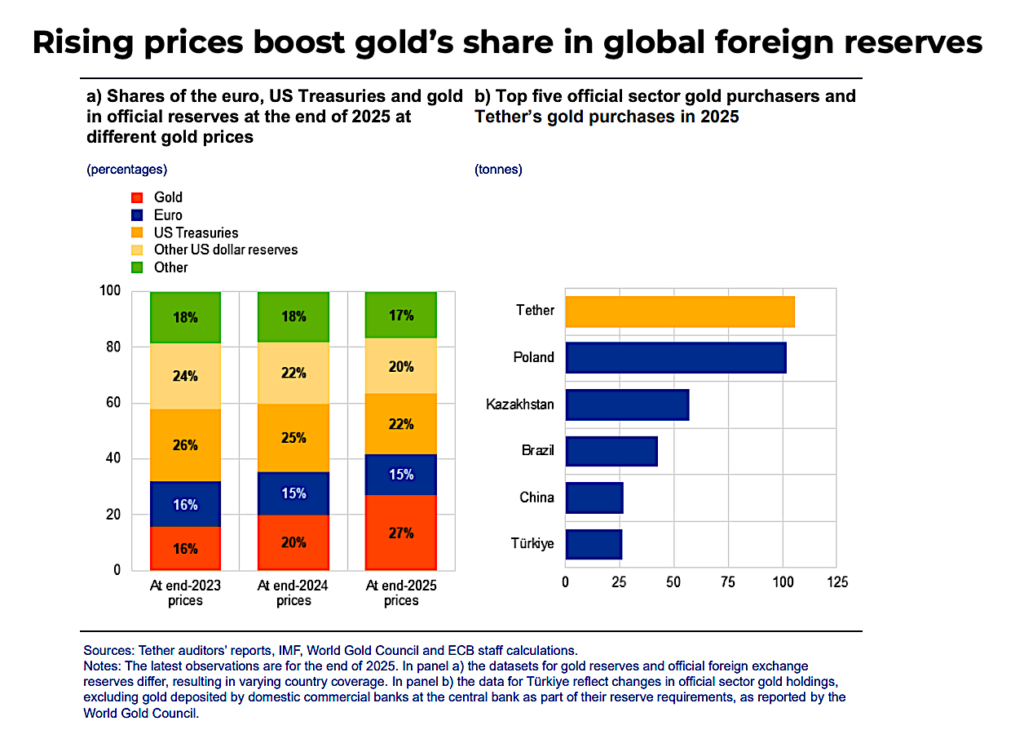
Gold has overtaken US Treasuries as the second-largest global reserve asset, with bullion rising to 27% of central bank reserves by value at end-2025 versus 22% for Treasuries, while dollar assets still dominate at 42%, the ECB reports. Central banks now hold over 36,000 tonnes of gold, near Bretton Woods-era levels, with 2025 net purchases of 850 tonnes driven by buyers including China, Poland, Turkey, India and notably Tether, which alone acquired more than 100 tonnes. The ECB also notes euro-denominated international debt issuance jumped 30% in 2025 to nearly €1 trillion.
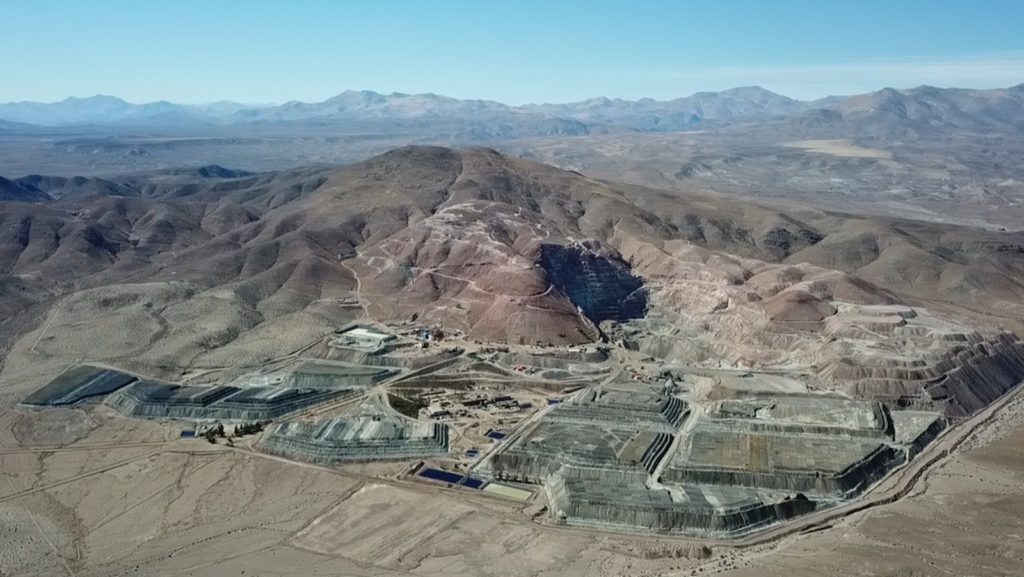
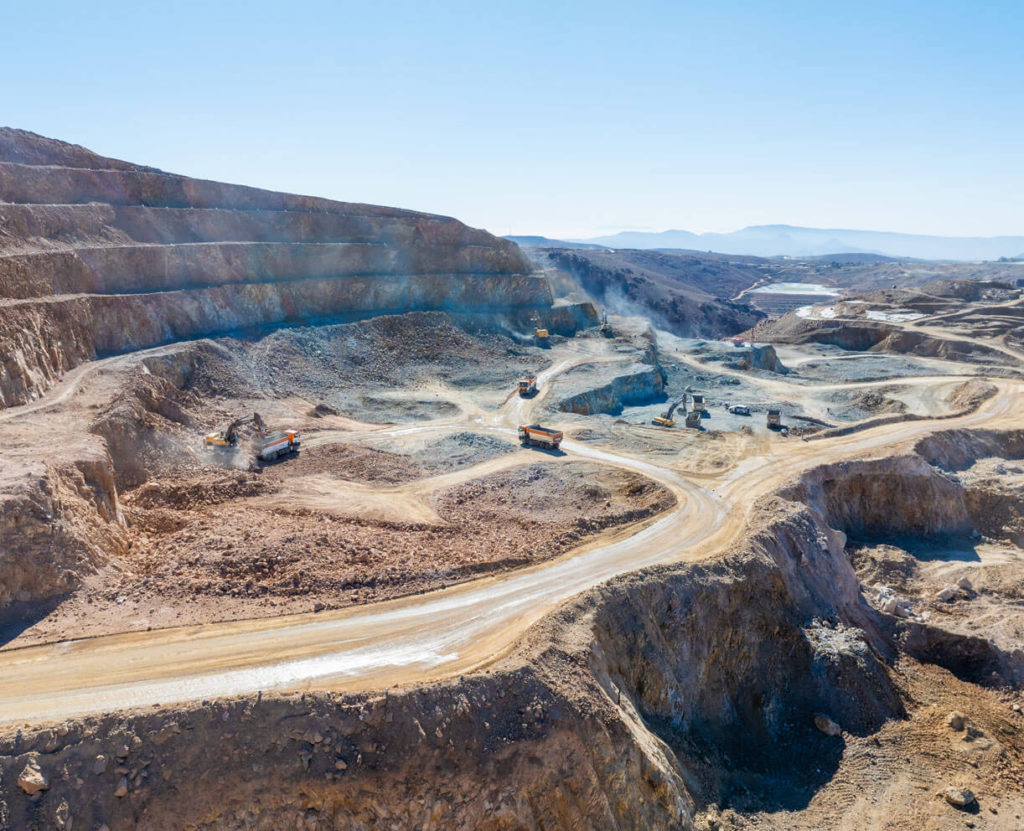
Tintina Mines has secured C$91 million in private placement funding, led by Sumitomo Corp. and the Gignac family via a new investment vehicle taking C$48 million of first‑tranche receipts and potentially 38% ownership after warrant exercise, with Franco‑Nevada contributing C$14 million. About C$55 million will advance the Domeyko Sulfuros copper‑gold porphyry in Chile’s Atacama Region to a final investment decision and C$36 million will buy out the remaining 26.25% project stake, implying a C$138 million pre‑money valuation. Domeyko’s PEA outlines a 25‑year open pit producing 37,000 t/y copper and 57,000 oz/y gold in concentrate from 100.8 Mt M&I at 0.35% Cu and 0.28 g/t Au, with initial capex of $1.28 billion and after‑tax NPV8 of $328 million.
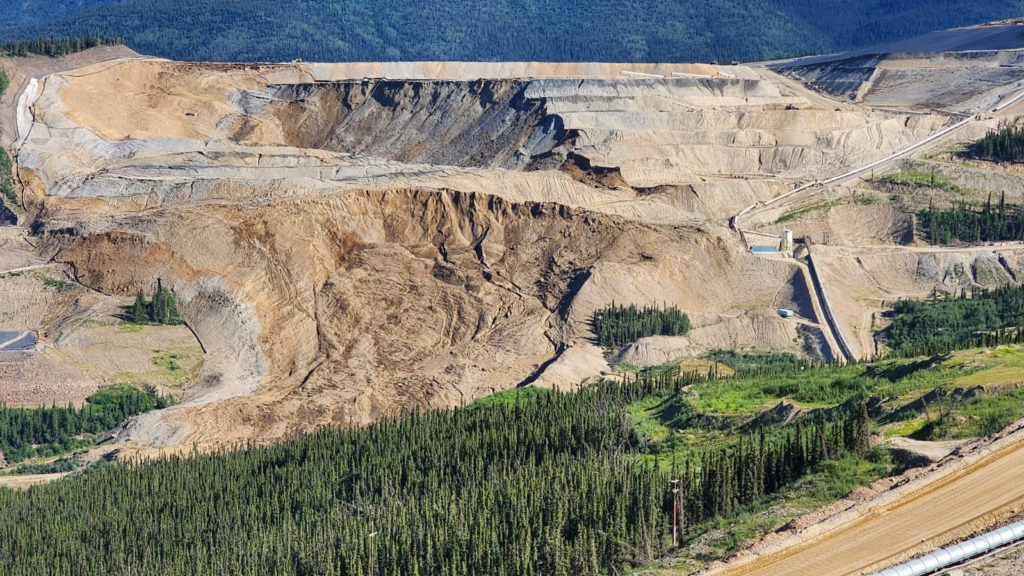
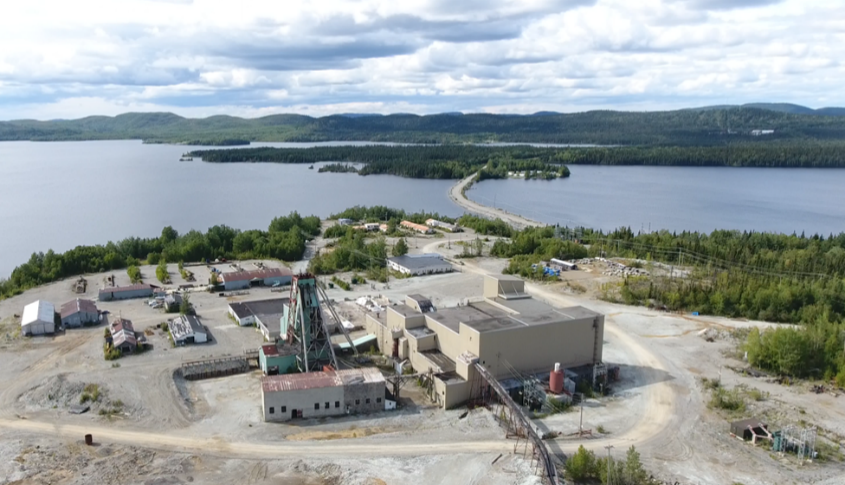
Boroo has entered a 90‑day exclusivity agreement with PwC to conduct due diligence on acquiring the landslide‑damaged Eagle gold mine in Yukon, where a June 2024 heap leach pad failure released millions of tonnes of ore and at least 280,000 m³ of cyanide-bearing solution. PwC previously valued Eagle’s assets at nearly C$825 million against about C$458 million in accident-related liabilities, while a 2023 mine plan outlined 124 million tonnes at 0.65 g/t Au (2.58 Moz contained) over a 12‑year life. Boroo brings heap leach experience from Lagunas Norte and Mongolian operations, backed by US$300 million in senior secured notes, but must still secure Yukon government and Na‑Cho Nyäk Dun approvals.
Faith-based investors led by the Sisters of St. Joseph of Peace are urging General Motors shareholders to approve a June 2 resolution demanding a detailed report on how GM identifies and manages Indigenous rights risks in its transition mineral supply chains, singling out the $625 million Thacker Pass (Peehee Mu’huh) lithium joint venture with Lithium Americas and its 20‑year exclusive EV battery supply deal. The proposal cites Human Rights Watch, ACLU and Amnesty findings that US federal consultation with Tribes at Thacker Pass lasted under a year, fell short of typical multi‑year mine permitting timelines and proceeded without free, prior and informed consent, with fencing allegedly restricting access to ancestral lands. For miners and project developers, the vote signals intensifying investor scrutiny of social licence, with Indigenous consent, consultation timelines and land access controls now framed as material legal, operational and financing risks.
Central Asia Metals is acquiring Cygnus Metals for about A$232 million ($166 million) via an all-share offer at 0.06 CAML shares per Cygnus share, a 60% premium to Cygnus’ last close, adding the Chibougamau copper-gold project in Québec and lithium ground in the James Bay district plus rare earth and base metal projects in Western Australia. Chibougamau carries measured and indicated resources of roughly 149,000 tonnes copper and 167,000 oz gold (plus 182,000 tonnes copper and 454,000 oz gold inferred) and a historical 900,000 t/y plant, with CAML planning an updated PEA and feasibility work. CAML, which currently produces 12,000–13,000 t/y copper cathode and 18,000–20,000 t/y zinc-in-concentrate plus 26,000–28,000 t/y lead-in-concentrate from Sasa (North Macedonia) and Kounrad (Kazakhstan), will seek a TSX or TSXV listing to support North American funding and visibility.
New drilling at Aya Gold & Silver’s Zgounder mine in Morocco returned bonanza underground intercept T28-26-1248 with 8 m at 2,176 g/t Ag from 8 m, including 4 m at 4,298 g/t, plus open-pit hole ZG-RC-26-946 with 6 m at 1,867 g/t from 96 m. Additional RC holes in the pit area cut up to 10 m at 739 g/t Ag from 129 m and 6 m at 1,160 g/t from 6 m, from a 116‑hole campaign that is one‑third of a 30,000 m 2026 programme. Zgounder, a 1.4 Mt/y silver‑only operation with 15.7 Mt at 145 g/t Ag reserves (73.4 Moz) and life to 2036, is extending mineralisation at depth and along the Western Fault ahead of further drilling from the 1,825 m exploration drift in H2 2026.
Glencore’s Cerrejón mine in La Guajira, one of the world’s largest open-pit coal operations, has halted mining, rail and port activities and declared force majeure after a community blockade cut fuel and coal movements on the railway to Puerto Bolívar from 23 May. Cerrejón, which produced 16.8 Mt in 2025 and has faced nearly 80 blockades this year (333 in 2024, plus nine terrorist attacks), has suspended most employment contracts while maintaining staff for maintenance and environmental controls. The dispute centres on constitutional rulings, water access, renewable energy projects and royalty distribution, signalling persistent social and regulatory risk for Colombian coal, whose national output fell to 53.9 Mt in 2025.
USA Rare Earth will invest $1.2 billion in a rare earth metals and NdFeB magnet plant at Bailey Industrial Park, Blacksburg, South Carolina, targeting 6,400 tpa of sintered NdFeB magnets and 5,000 tpa of strip-cast metal and alloy, with commissioning from 2028. Together with an expanded Stillwater, Oklahoma facility, US domestic capacity is expected to reach 10,000 tpa of NdFeB magnets and 10,000 tpa of heavy rare earth strip-cast metal and alloy, fed by the Round Top project in Texas and the proposed Serra Verde acquisition in Brazil. The vertically integrated mine-to-magnet chain faces regulatory scrutiny in Brazil, a contested $1.58 billion CHIPS-backed funding package, and a technology theft lawsuit from MP Materials.
Copper prices just below $14,000/ton in London, around $500 off January’s record, are drawing sharply higher forecasts from Goldman Sachs at $13,735/ton by year-end and Citigroup at $14,500/ton this month and $15,000 within a year. Goldman has cut its global mine supply outlook by 350,000 tons after major incidents at Grasberg (Indonesia) and Kamoa-Kakula (DRC), with both mines unlikely to reach full capacity before 2028. The bank now sees the ex-US copper deficit jumping to 640,000 tons, driven by stronger US imports, tight inventories and electrification demand, with Citi adding tariff risk on refined copper to the bullish case.
ARLYX Technologies has launched a fully electric, autonomous underground material-handling system combining a 5,000 kg-capacity utility vehicle with an AutoLatch module that can load, transport, and unload consumables during blasting periods while crews are evacuated. By shifting rock bolts, pipes, and concrete deliveries off production shifts and clearing ramp traffic, ARLYX claims mines can gain roughly one extra ore truckload per day, worth up to C$27 million annually, with a single teleoperator supervising up to ten vehicles. The LTE/5G/WiFi/radio-agnostic platform, developed and trialled in Quebec and now adding fire suppression, dust control, and ore-transport modules, also targets ventilation and maintenance cost reductions through zero diesel emissions and simplified mechanics.
Cowi has acquired Irish consultancy Punch Consulting Engineers, adding Punch’s 150+ staff and offices in Dublin, Cork, Limerick and Galway to its Northern Europe footprint. Punch brings a portfolio of Irish transport, marine and building projects, including bridge, port and multi-storey concrete and steel design, into Cowi’s existing strengths in tunnels, offshore wind and major highways. The deal signals more in-country design capacity for complex reinforced concrete, coastal and geotechnical works on upcoming Irish infrastructure programmes.
Midland Main Line capacity upgrades are enabling more freight paths even as full route electrification is paused by the UK government, with timetable changes and signalling improvements allowing additional intermodal and aggregates trains to run on key sections between London and the East Midlands. Targeted works include junction remodelling and longer passing loops to accommodate 750m freight trains alongside fast passenger services, reducing conflicts at pinch points. For geotechnical and civil teams, the focus is on incremental track, formation and structures interventions that deliver higher axle-load and path capacity without major new civil works.
Publication of the UK’s proposed seventh carbon budget on 2 June has been welcomed by the Institution of Civil Engineers as a sign that government is maintaining focus on the statutory 2050 net zero target. ICE is likely to press for clearer pathways on embodied carbon in concrete and steel, whole-life assessments for major schemes, and integration with the National Infrastructure Commission’s recommendations. Civil and geotechnical engineers should expect tighter carbon reporting requirements on large projects and stronger scrutiny of design choices affecting operational emissions.
HS2 Ltd has delayed the anticipated start of its £1.03bn Interim Maintenance Contracts procurement by more than four months, pushing back mobilisation for maintaining the partially built high-speed rail assets. The IMCs are expected to cover inspection, routine maintenance and defect rectification on completed civils, earthworks and structures along Phase One, bridging the gap before long-term operations and maintenance deals are let. The slippage introduces planning uncertainty for contractors gearing up specialist rail plant, maintenance depots and inspection teams for early-stage asset stewardship.
ME PolyFIT® composite feed head liners are extending wear life on a 34 ft (10.4 m) SAG mill at an open-pit copper-molybdenum mine in Britain, directly supporting higher mill uptime and reduced liner change frequency. The engineered liner system replaces conventional steel designs in the feed end, targeting high-impact zones where premature failure typically drives unplanned shutdowns. For mine maintenance and process teams, the case points to composite liner retrofits as a route to longer inspection intervals and more stable grinding performance without major mill modifications.
Tega Industries has completed its acquisition of Molycop, combining Tega’s mill liners and wear solutions with Molycop’s grinding media and rail consumables into a broader “critical to operate” portfolio for comminution circuits. The deal, executed with funds managed by affiliates of Apollo, creates a single supplier spanning SAG and ball mill liners, forged and cast grinding balls, and associated process consumables across copper, gold and iron ore operations. For plant engineers, the move signals tighter integration of liner–media selection, wear-life optimisation and throughput tuning under one global vendor.
De Beers’ Upstream Technology, created in 2024 by amalgamating several internal technical units, is positioning sensor technology as the core layer for its mine automation, digitalisation and new mine design workflows. The group is focusing on dense networks of field sensors feeding real-time data into control systems for drilling, blasting and materials handling, enabling tighter process control and earlier detection of equipment or ground instabilities. For geotechnical and mining engineers, the message is that sensor architecture and data quality now need to be treated as primary design parameters, not bolt‑on instrumentation.
PLS’ Pilgangoora P1000 expansion in Western Australia has pushed TOMRA sensor-based ore sorting from trial phase to fully integrated unit operation in day-to-day hard rock lithium processing, after several years of continuous running. The industrial-scale installation is now delivering consistent spodumene feed quality and demonstrating stable performance under variable ore conditions, giving Pilgangoora greater long-term resource flexibility. For other lithium pegmatite projects, the case validates sensor-based sorting as a viable front-end circuit option to debottleneck plants and upgrade marginal ore.
Metso is proceeding with phase two of its Lokomotion technology centre in Lahdesjärvi, Tampere, committing about €60 million to build a new crusher factory integrated into the existing R&D and manufacturing hub. The phased investment will expand capacity for Metso’s Lokotrack and stationary crushing solutions, consolidating prototype testing, series production and lifecycle services on a single site. For mining and aggregates clients, the enlarged facility should shorten lead times for large crushers and enable faster industrialisation of new crushing technologies.
Volvo Days 2026 in Eskilstuna is showcasing Volvo CE’s strategy for mining, with senior management outlining investment priorities in electric and autonomous haulage fleets and digital fleet management platforms. Demonstrations are expected to centre on battery-electric articulated haulers, trolley-assist concepts and connected machine monitoring, building on existing deployments in Scandinavian quarrying and underground operations. For mine operators, the focus is on lowering diesel consumption and emissions while integrating OEM telematics with site dispatch and maintenance systems to improve equipment availability and haul cycle control.