Geomechanics, Streamlined.
© 2026 Geomechanics.io. All rights reserved.
Minera Las Bambas SA, part of MMG, has ordered a major new Caterpillar fleet from Peruvian dealer Ferreyros, with scope to expand to 45 units, anchored by 27 Cat 798 ultra-class trucks rated at 400 t payload. Ferreyros is scheduled to deliver more than 20 machines in 2026, signalling a substantial ramp-up in high-capacity haulage at the Las Bambas copper operation in Apurímac. The deal points to continued preference for ultra-class diesel haulage over trolley or autonomous solutions at this high-altitude open pit.
ESG technology is reshaping Australian mine design and operations by embedding real-time environmental, social and governance data into planning, approvals and day‑to‑day control. Operators are deploying integrated ESG platforms that pull live inputs from dust and noise monitors, water‑quality sensors and energy‑metering systems to automate compliance reporting and adjust haulage, dewatering and ventilation schedules. For geotechs and mine planners, this means designs increasingly need to accommodate dense sensor networks, verifiable rehabilitation metrics and auditable ESG baselines from feasibility through closure.
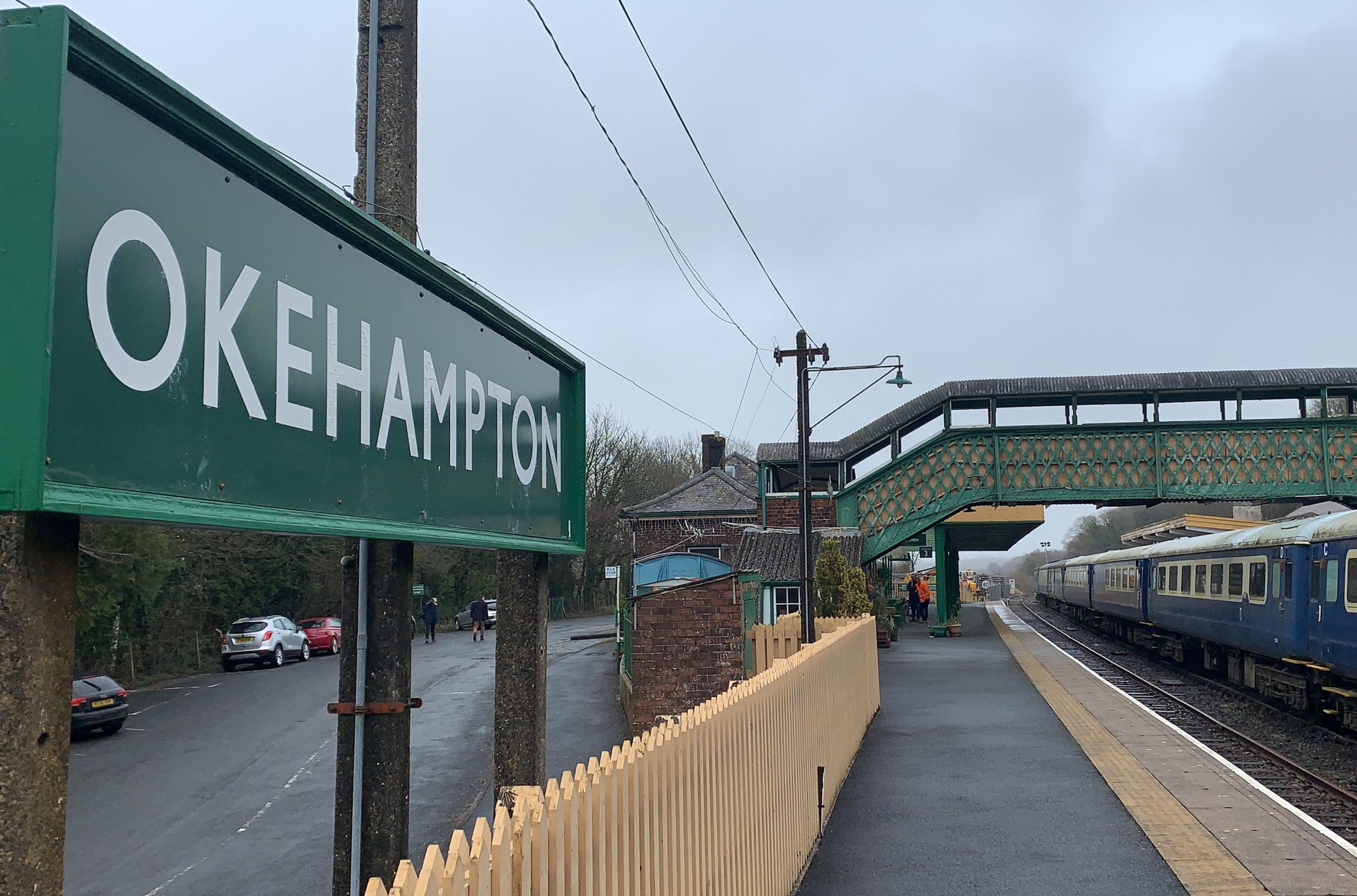
Cornwall Council has approved a feasibility study into reinstating a through rail link between Okehampton and Penzance, potentially creating an additional inland corridor to the existing Dawlish coastal route. Engineers will examine track capacity, alignment constraints on legacy formations, and options for upgrading structures, level crossings and signalling to modern standards. For civil and geotechnical teams, the work will focus on earthwork stability on steep Cornish and Devon cuttings, flood‑prone sections, and interfaces with existing main line operations.
Major UK contractors and consultants have reshuffled senior leadership in May 2026, with several firms creating new roles focused on complex infrastructure delivery and digital project controls. Key moves include board-level changes on multi‑billion‑pound rail and highway frameworks and new directors appointed to oversee NEC4 contract management and BIM‑enabled design for large bridges and tunnels. For geotechnical and civils teams, the changes signal fresh decision‑makers on ground risk allocation, value engineering of foundations and retaining structures, and adoption of data‑driven asset management.
Surging UK industrial energy prices are eroding manufacturers’ margins by consuming a larger share of operating budgets and constraining capital for plant upgrades. A new report urges factories to prioritise energy-efficient motors, variable-speed drives on pumps and fans, and improved process heat recovery to cut electricity and gas demand. For civil and building engineers designing or refurbishing manufacturing facilities, the message is to integrate high-efficiency services, sub-metering, and better building fabric performance early to protect long-term competitiveness.
WSP has secured supplier status on all three Flood Risk and Asset Management (FRAM) lots under the UK Government Commercial Agency’s Construction Professional Services 2 (CPS2) framework, covering strategic flood risk assessment, asset management and related design services. The “significant multi-year” framework will channel central government and agency commissions for flood modelling, defence appraisal and lifecycle planning of existing assets. For consultants and contractors, CPS2 FRAM awards signal sustained demand for integrated hydraulic modelling, geotechnical assessment of embankments and structures, and data-led asset condition monitoring.
Saudi Arabia’s Neom gigaproject, which bundles five megaprojects including the 170km-long linear city The Line, appears to have stalled completely, according to a public relations professional who previously represented the scheme. The reported pause raises fresh uncertainty over large-scale enabling works, including desert earthworks, coastal reclamation and deep foundation packages already tendered or partially mobilised. Contractors and consultants with exposure to Neom’s early-stage infrastructure may now face demobilisation, contract renegotiation and delayed cashflow on geotechnical investigations, transport corridors and utilities corridors planned for the site.
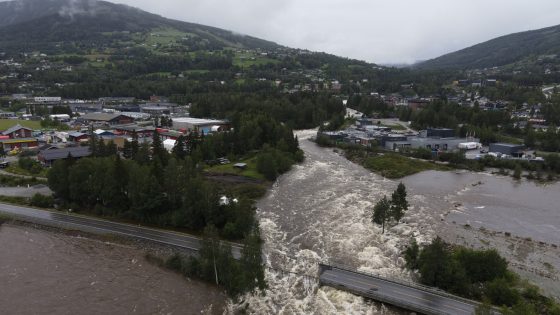
Sweco has secured a £11M framework agreement with the Norwegian Water Resources and Energy Directorate (NVE) to deliver consulting services for flood and erosion protection schemes across Norway. The multi-year framework will cover planning and design of river training works, bank stabilisation and flood defences, including hydraulic modelling and geotechnical assessments for vulnerable catchments. For UK and European consultants, the deal signals continued demand for specialist expertise in climate-resilient infrastructure, particularly in steep, glacially influenced valleys and high-flow Nordic river systems.
The process to fully review HS2 exposes systemic weaknesses in UK megaproject delivery, echoing historic issues on schemes such as Crossrail and the Channel Tunnel where scope creep, under-estimated ground risk and optimistic demand forecasts drove major cost overruns. Comparisons focus on early-stage geotechnical investigation density, contingency levels for complex tunnelling and viaduct works, and governance structures separating client, designer and delivery partners. For current and future high-speed rail and large civils projects, the message is tighter risk quantification, more conservative programme allowances and clearer accountability for interfaces and design changes.
AtkinsRéalis has secured a multi‑year professional services framework with EDF to support construction of the 3.2GW Sizewell C nuclear power station in Suffolk, continuing its role from the Hinkley Point C programme. The framework is expected to cover civil, structural and geotechnical design, digital engineering and site-based technical support across major assets such as the nuclear island, conventional island and marine works. For practitioners, the deal signals long‑term demand for nuclear-grade concrete, complex deep foundations and coastal protection design aligned with UK EPR requirements.
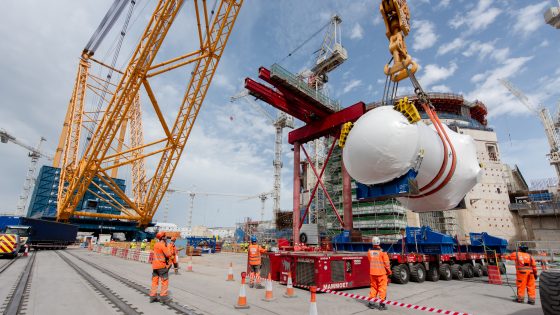
A 2‑day heavy-lift operation at Hinkley Point C has installed the second nuclear reactor using “Big Carl”, the world’s largest land-based crane. The lift involved precision placement of the reactor vessel into the reinforced concrete containment structure, integrating with pre-installed civil works and embedded systems. The operation confirms the site’s ability to execute ultra-heavy modular lifts, reducing on-site assembly time and driving tighter tolerances for future nuclear civil engineering packages.
Structured service level agreements (SLAs) from conveyor specialist Tru-Trac are shifting mine operators from reactive belt repairs to continuous performance optimisation on high‑tonnage lines. Instead of ad hoc call‑outs, Tru-Trac ties services such as belt tracking audits, idler and pulley inspections, and condition‑based replacement of critical components to defined uptime, spillage and mistracking thresholds. For geotechnical and plant engineers, this formalises conveyor availability as a design and operational parameter, directly affecting stockpile feed stability, crusher utilisation and overall materials handling throughput.
South Africa’s mining sector is being urged by Chris Campbell, CEO of Consulting Engineers South Africa (CESA), to move beyond the traditional pit-to-port model of exporting largely unprocessed ore towards domestic beneficiation and value-adding plants. Campbell calls for engineering-led investment in concentrators, smelters and refineries tied to existing iron ore, manganese, PGMs and battery mineral operations, supported by reliable 132–400 kV power, bulk water supply and upgraded rail sidings. The shift would require integrated mine-to-metals project planning, retooled EPCM contracts and stronger collaboration between miners, state utilities and local OEMs.
Sandvik and Rio Tinto are jointly developing integration of Sandvik i-series surface drill rigs with the Rio Tinto Autonomous Drilling System (Rio Tinto ADS™), initially targeting support drilling in open pits. The work couples Rio Tinto’s existing autonomous and remote drilling operations with Sandvik’s AutoMine® automation platform to create a common control and data interface. For mine operators, the move signals future options to standardise autonomous blasthole and support drilling fleets across mixed-vendor rigs, with potential reductions in manual exposure around highwall support and pre-split drilling.
Solvay has signed a Letter of Intent with Viridis Mining and Minerals to process Brazilian rare earth materials at its La Rochelle plant in France, targeting a strategic supply by 2028 to bolster non-Chinese feedstock. The agreement centres on Viridis’ ionic clay rare earth projects in Brazil, with Solvay providing separation and refining capacity at an established solvent-extraction and roasting facility. For project developers, the move signals continued demand for clay-hosted REE resources and reinforces the importance of downstream-compatible mineralogy and impurity control in new deposits.
Tailings retreatment of legacy tailings storage facilities is emerging as a major opportunity, with SLR Consulting’s Asset Transition and Closure lead Danie Otto pointing to rapid shifts in project scale, processing technology and regulatory expectations. Operators are reassessing old TSFs as potential ore sources, using modern reprocessing circuits and improved metal recovery techniques to extract residual value while reducing long-term geotechnical and water-related liabilities. The approach is reshaping closure planning, with TSF stability, residue re-deposition strategies and progressive rehabilitation now integrated into upfront project design.
Sandvik Rock Processing is promoting an engineered-to-order (ETO) model for crushing and screening circuits, with Vice-President Sales Area Africa Tarynn Yatras saying bespoke plant layouts are built around each site’s ore characteristics, throughput targets and footprint constraints. The ETO approach allows integration of complex equipment such as multi-deck screens, cone crushers and surge bins into brownfield comminution lines, rather than relying on catalogue configurations. For engineers, this means earlier geometallurgical input, tighter control of transfer chutes and bin capacities, and fewer bottlenecks at primary and secondary crushing stages.
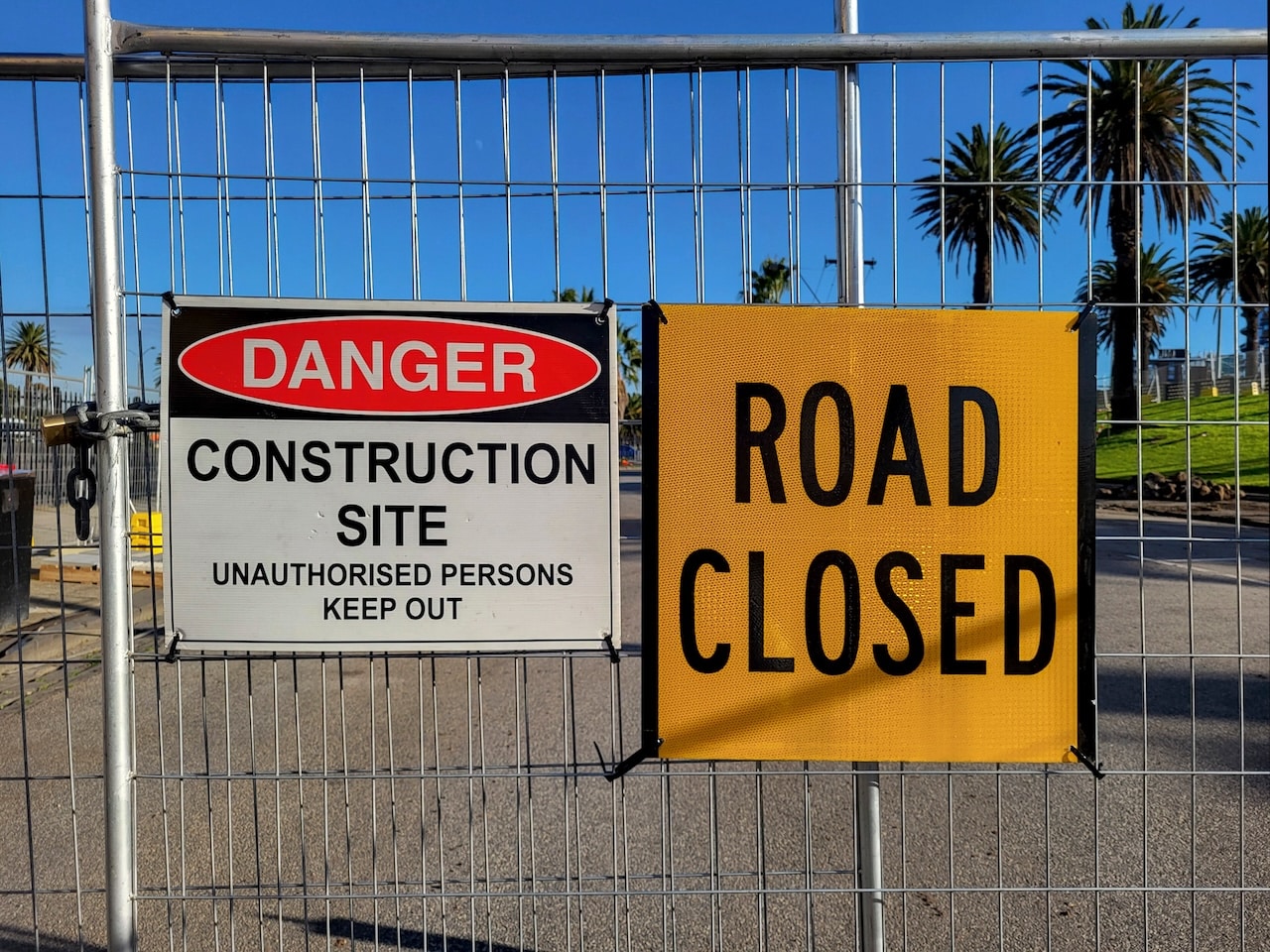
Victoria’s winter road programme begins with the removal of the Ferris Road level crossing in Melton, as part of a broader package targeting multiple at‑grade rail intersections. Works will continue at Coburns Road and Exford Road in Melton and at Maddox Road, focusing on grade separation to eliminate boom‑gate delays and improve rail–road interface performance. Contractors and designers can expect intensive night and possession works in wet-season conditions, with traffic staging and temporary pavement design critical to maintaining freight and commuter flows.
Foundations and Frontiers 2026 (FF26), the Australian Constructors Association’s flagship forum, has released a broad speaker line-up bringing together senior government officials, tier-one contractors and infrastructure clients to examine “pockets of potential” in Australia’s construction sector. ACA President Annabel Crookes frames the agenda around current pressures on major projects and productivity, signalling sessions on procurement reform, collaborative contracting models and pipeline certainty. For geotechnical and civil practitioners, the programme points to detailed discussion of delivery risk allocation, interfaces on large transport corridors and how contractors and designers can structure data and digital workflows for complex ground conditions.
New fixed safety cameras on the Mitchell Freeway at Karrinyup Road in Perth are now enforcing seatbelt use and mobile phone offences, using automated image analytics on vehicles travelling at full freeway speeds. The system joins existing fixed safety cameras on the Kwinana Freeway and Forrest Highway, extending continuous enforcement coverage across key north–south corridors linking Perth’s CBD and northern suburbs. For road designers and traffic engineers, the installation signals ongoing integration of non-intrusive, overhead enforcement hardware into high-speed urban freeway cross-sections without major geometric changes.
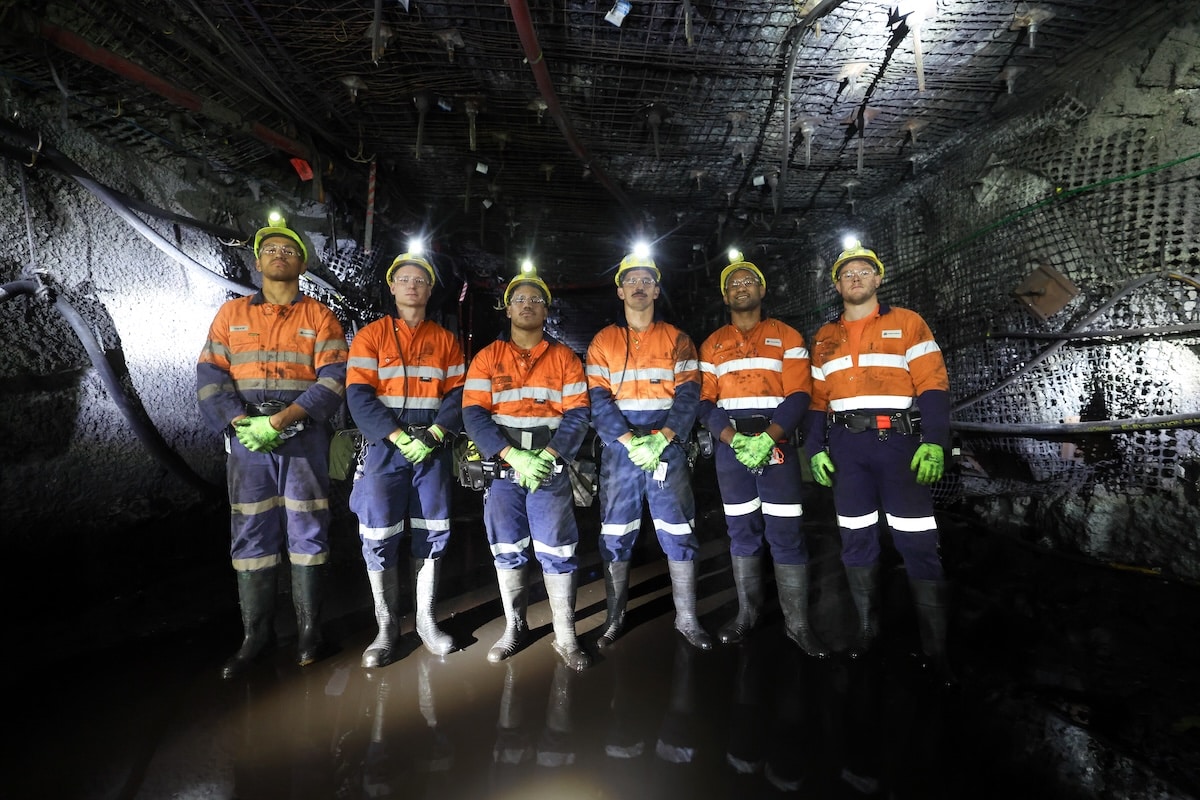
Players from NRL side The Dolphins have gone 200m underground at Anglo American’s Moranbah North longwall mine in Central Queensland for a first-hand look at steelmaking coal production. Six squad members toured the longwall face, shield supports and conveyor systems, observing methane management, strata control and dust suppression measures used in the gassy Bowen Basin operation. The visit forms part of Anglo American’s community and stakeholder engagement push, linking highwall-to-port coal supply chains with end users in stadium construction and infrastructure.
Coda Minerals has raised an oversubscribed $6.7 million placement, led by Cumulus Wealth and Leeuwin Wealth, to fast‑track technical work at its Elizabeth Creek copper–cobalt project in South Australia’s Olympic Copper Province ahead of a pre‑feasibility study. Funds will support metallurgical lock‑cycle testwork, hydrogeological investigations and approvals, targeting better definition of copper and cobalt recoveries and groundwater behaviour. The programme is aimed at de‑risking process design and water management assumptions before committing to larger‑scale engineering and capital decisions.
Greatland Resources has approved the final investment decision for its Havieron gold–copper project in Western Australia and secured a $500 million corporate debt facility underwritten by a Tier 1 syndicate including ANZ, ING, HSBC, NAB and Westpac. The package comprises a $250 million term loan and additional liquidity lines to fund mine development, underground infrastructure and associated processing upgrades at the newly acquired Telfer operation. For engineers and contractors, the decision signals imminent ramp-up of decline advance, stoping development and integration of Havieron ore into Telfer’s existing plant flowsheet.
The Northern Territory has declared Arafura Rare Earths’ $1.6 billion Nolans rare earths project its first “Significant Project” under the new Territory Coordinator Act, embedding it in the Territory’s critical minerals strategy. The status provides a whole‑of‑government coordination pathway to streamline complex approvals and interface risks while retaining normal environmental and regulatory assessment. For project engineers and contractors, this signals political backing for progressing mine, concentrator and downstream processing infrastructure near Alice Springs on an accelerated but scrutinised schedule.