Geomechanics, Streamlined.
© 2026 Geomechanics.io. All rights reserved.
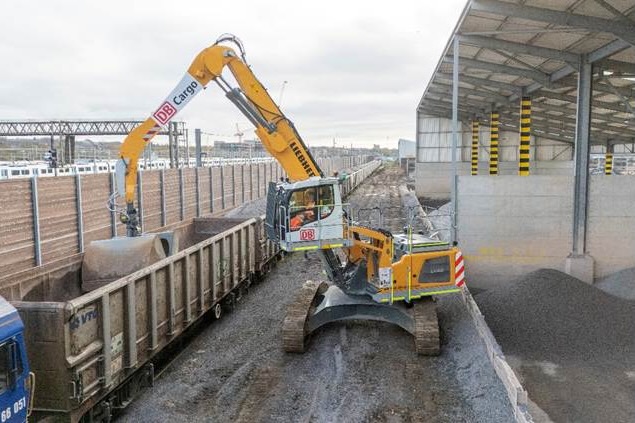
DB Cargo UK has invested £8.5m, financed via a Siemens Financial Services credit line, to purchase seven Liebherr LH 40 material handlers for its rail-served aggregate terminals. The diesel-electric LH 40 units will load construction aggregates onto freight trains, supporting higher throughputs and shifting material from road to rail. For civil and rail engineers, the move signals continued build-out of dedicated aggregate handling capacity to back large UK infrastructure and housing projects with lower-carbon logistics.
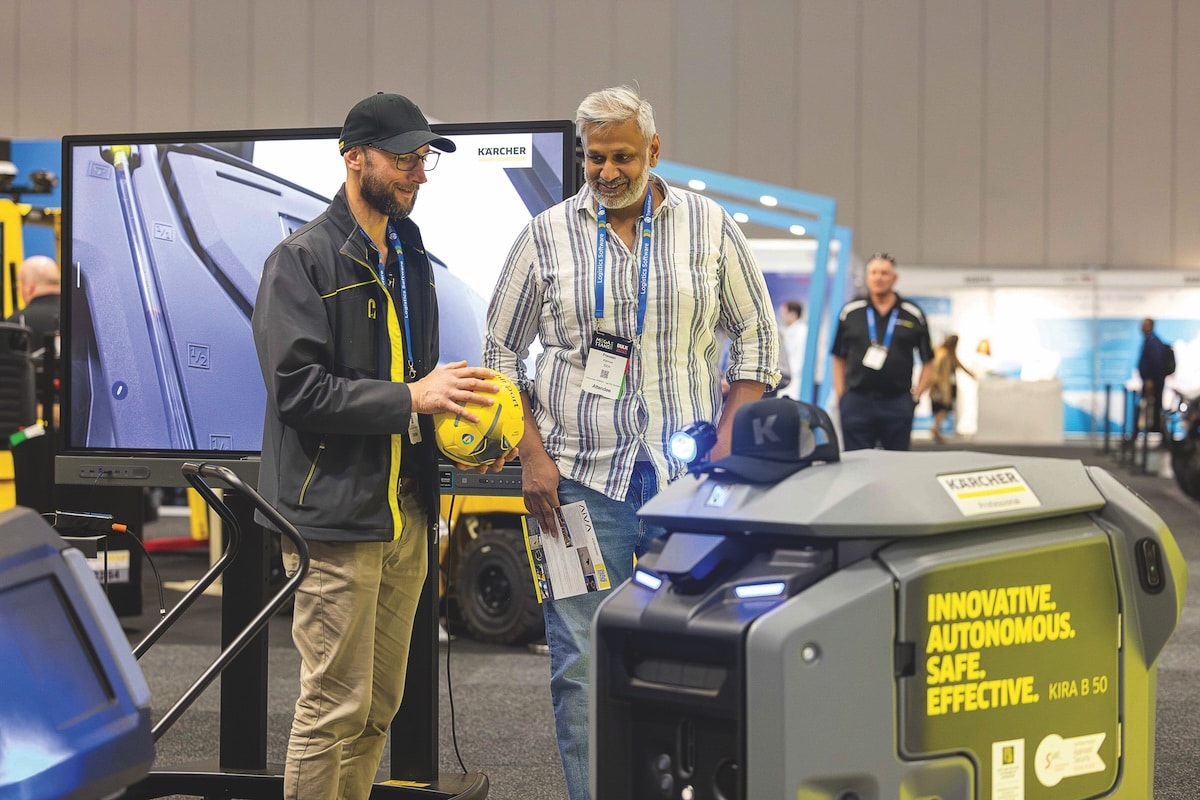
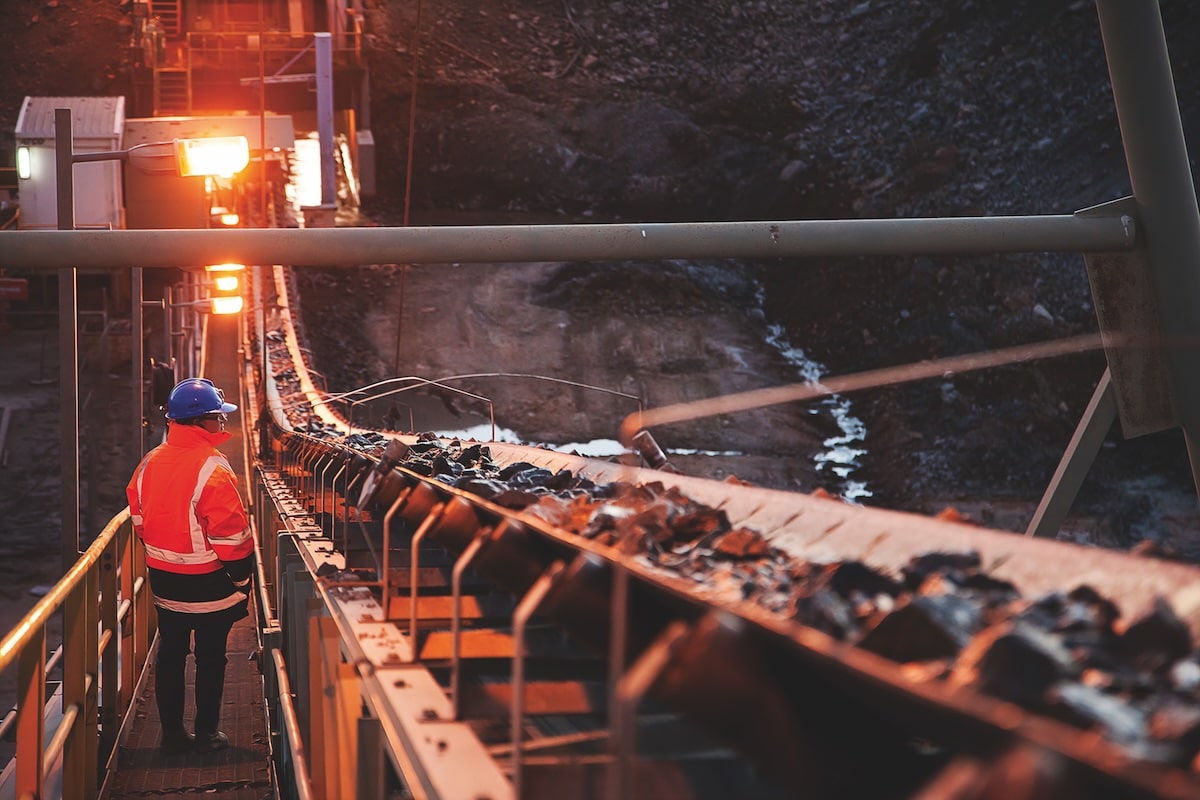
BULK2026 in Melbourne will focus on protecting productivity, safety and material integrity across the bulk handling chain, from flow control equipment to large-scale storage such as silos, stockpiles and export terminals. Technical sessions are expected to cover dust and spillage control, belt conveyor reliability, chute design, and condition monitoring for increasingly long, high-capacity conveyor systems. For mining engineers, the event signals growing emphasis on managing fire, explosion and structural risks in larger, more complex bulk handling plants rather than just maximising throughput.
Fresh international demand, tightening energy markets and rapid data centre expansion are giving Australia’s thermal and metallurgical coal sector renewed momentum, with India emerging as a key growth market. Energy security concerns in Asia are supporting long-term offtake for high‑CV thermal coal from Queensland and New South Wales, while steel demand keeps coking coal exports competitive against alternative suppliers. For mine planners and infrastructure owners, the signals point to sustained port throughput, rail capacity utilisation and potential brownfield mine life extensions rather than rapid phase‑out.
Aureka has defined multiple new high-priority gold exploration targets at its 100 per cent-owned Irvine project in Victoria’s Stawell Corridor after completing an airborne magnetic geophysical survey. The higher-resolution magnetic dataset sharpens imaging of subsurface structures, enabling more precise interpretation of the structural architecture that controls mineralisation along strike from the Stawell and Magdala gold systems. This will guide follow-up drilling and ground geophysics, concentrating spend on structurally focused targets rather than broad, reconnaissance-style drilling.
Queensland has launched Australia’s largest high‑resolution airborne gravity survey, a project of up to $4 million covering 40,000km north of Mount Isa to pinpoint new critical minerals targets. Flown in partnership with Geoscience Australia, the survey will capture detailed gravity data over the North-West Minerals Province, improving subsurface models beyond existing magnetics and radiometrics. For explorers, the dataset should sharpen drill targeting for commodities such as copper, rare earths and vanadium in structurally complex basement terranes.
BHP has committed $160 million to community infrastructure in Port Hedland, including an $80 million upgrade of Hedland Senior High School, a new aquatic centre and dedicated service worker accommodation. The package, announced by BHP Australia president Geraldine Slattery, is the company’s largest-ever community investment in Western Australia and targets long-term liveability in the iron ore hub. For mining project planners, the spend signals continued emphasis on social licence and workforce retention in a town already constrained by housing and services capacity.
Transport Scotland has issued a £1.94bn contract notice for a multi‑lot delivery framework to dual the five remaining single‑carriageway sections of the A9 between Perth and Inverness, completing the roughly £4bn corridor upgrade. The framework will cover design and construction of new dual carriageway, associated structures and junctions, and online/offline widening through constrained Highland terrain. Contractors will need to manage complex phasing, traffic management on a live trunk road, and geotechnical risks linked to variable glacial deposits and peat.
Yorkshire Water is setting up a £50M professional services framework to reinforce design and project delivery capacity for its expanding AMP8 capital programme. The framework will procure specialist resources such as civil and structural designers, project managers and cost consultants to support treatment works upgrades, network resilience schemes and major pipeline renewals across its 31,000km water and 52,000km wastewater networks. Consultants should expect multi-year call-off commissions focused on programme management, constructability, and delivery assurance rather than standalone design-only packages.
Five engineers have been shortlisted for the final of the Beyond Design Early Careers Bridges Challenge, run by New Civil Engineer with the Adept National Bridges Group and the Rochester Bridge Trust to promote innovative bridge solutions. The competition targets early-career professionals working on real-world bridge problems such as asset management, resilience and whole-life performance, rather than purely conceptual designs. For bridge owners and consultants, it signals a pipeline of young engineers being pushed to engage with durability, inspection and maintenance challenges under realistic client constraints.
Lynas Rare Earths has appointed chief operating officer Pol Le Roux as interim chief executive officer, effective when long‑serving CEO Amanda Lacaze retires later this month. Le Roux currently oversees Lynas’ processing operations in Malaysia and Western Australia, including plant performance, supply chain and major project delivery across its rare earths value chain. The leadership change comes as Lynas advances capacity expansions and process upgrades at its WA mining and concentration assets and downstream cracking and separation facilities in Kuantan.
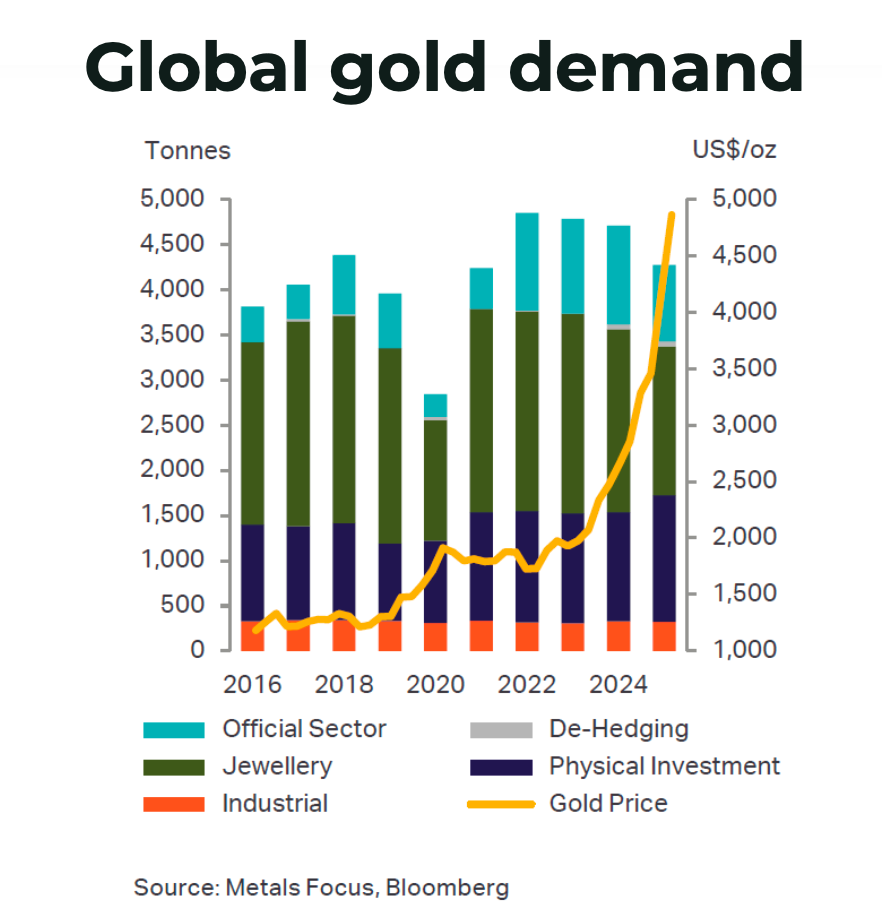
Gold prices are forecast by Metals Focus to average a record $4,920/oz in 2026, with total supply up 3.1% as mine production rises 2.4% to 3,907 tonnes and recycling grows 5.1%. Physical investment, which jumped 16% in 2025 and drove 803 tonnes of ETF inflows, is expected to overtake jewellery as the largest demand segment, while fabrication falls another 11% after a 19% drop to 1,646 tonnes last year. Central bank net purchases are seen staying high at 848 tonnes despite a 22% decline, reinforcing bullion’s role as a macro hedge.
Resource nationalism is shifting from tax and royalty changes to export bans, production quotas and processing mandates, with China’s October 2025 rare earth export controls framework and the DRC’s 2025 cobalt export ban-turned-quota regime exposing supply chains to abrupt political risk. Indonesia’s nickel export ban has pulled in billions of dollars of downstream smelting and refining, while Vietnam’s ban on raw rare earth exports and Chile’s state-led lithium model tighten state control over value addition. Gibson Dunn warns that stabilisation clauses, force majeure terms and bilateral investment treaties are being stress-tested, making contract design, ownership structures and processing locations as critical as ore grades for lithium and rare earth projects.
Canada has launched an industry-led Mining and Minerals Workforce Alliance, led by the Mining Industry Human Resources Council with Mining Association of Canada support, to tackle labour shortages across critical minerals, advanced manufacturing and major infrastructure projects. Backed by C$81 million over five years as one of six national workforce partnerships, the initiative targets a sector that contributed C$112 billion to GDP in 2024 and directly employs about 438,000 workers. Success hinges on converting employer–educator–Indigenous collaboration into concrete training, apprenticeship and recruitment pipelines for specialised trades, technical roles and remote operations.
Seabridge Gold’s C$8.8 billion KSM project in B.C.’s Golden Triangle remains unbuilt 12 years after federal and provincial environmental approvals, despite 2.29 billion tonnes of reserves grading 0.64 g/t gold and 0.14% copper, as a 12.5 km Mitchell Treaty Tunnel segment crosses Tudor Gold’s Treaty Creek mineral claims. The province has invested C$1.2 billion in early works at KSM and designated it a priority, while Tudor advances a PEA on the 912.3 million tonne Goldstorm deposit (0.85 g/t Au, 5.07 g/t Ag, 0.15% Cu). Parallel federal reforms, including proposed one-year review timelines and ministerial approvals for fish-bearing tailings impoundments and Navigable Waters permits, aim to cut years from major mine permitting but leave DRIPA-related Indigenous rights risks unresolved.
Ivanhoe Mines’ Kipushi operation in the DRC set a new monthly record in May with 25,677 tonnes of zinc concentrate, driven by 72,003 tonnes milled at 36.2% Zn feed grade and 93% recovery, putting year-to-date output at about 110,000 tonnes. At this run rate, Kipushi would rank as the world’s fourth-largest zinc producer in 2026, within guidance of 240,000–290,000 tonnes, while a second tailings storage facility is 90% complete with first deposition targeted for October 2026. The performance comes as LME zinc trades near $3,630/t, close to a four-year high.
Operations at Orla Mining’s Camino Rojo open-pit, heap-leach gold mine in Zacatecas are set to restart within hours after talks with Mexico’s Department of Federal Labour Conciliation and union leaders deemed this week’s production-blocking protest illegal. The stoppage began Monday over disputes on a worker productivity bonus and statutory profit-sharing, temporarily halting output at a site expected to produce 110,000–120,000 oz. of gold in 2026 after delivering 96,764 oz. in 2025. Orla, valued at about C$5.5 billion with shares rebounding 3.5% to C$16.09, is proceeding with its planned $18.5 billion merger with Equinox Gold.
Silver X Mining has acquired Barrick’s Lily 19 concession, giving it 100% ownership of the early-stage Ccasahuasi gold project in Peru for US$30,000 plus a net smelter return royalty with partial buyback. Ccasahuasi, located 1 km from the producing Tangana mine and within the 204.7 sq. km Nueva Recuperada land package, hosts an inferred 42,303 oz gold resource defined by just under 1,000 m of drilling over a 13.5 sq. km gold system. Limited drilling to date includes three holes with >26 m intercepts above 0.7 g/t Au and a 40 m-thick mineralised body interpreted to extend toward Tangana.
EnergyX and Wildcat Discovery Technologies plan a more than $230 million lithium iron phosphate (LFP) cathode active material plant in Hooks, Texas, co-located with EnergyX’s Project Lonestar lithium brine facility over 50,000 acres of Smackover formation mining rights. Phase 1 design capacity is about 15,000 tpa of LFP cathode material on a 330-acre TexAmericas Center site with rail access and existing utilities, targeting energy storage, EV, and defence platforms. EnergyX will supply discounted, price-banded lithium carbonate, while Wildcat brings a high-throughput cathode R&D platform and roadmap for higher-density, cobalt- and nickel-free chemistries.
Mining influencers on TikTok and other platforms are rapidly building audiences, with Colombian mining and metallurgy student “Paula Mineria” reaching 110,600 TikTok followers and 1.6 million likes through site-visit videos filmed at operations in Colombia, Japan, Chile, Panama, Canada and the US. Underground miner Cory Rockwell has amassed 117,100 followers and 5 million likes by posting detailed clips of scaling walls, refuge chambers and explosives rounds at sites including Barrick’s Turquoise Ridge and Coeur’s Kensington gold mine. Their content, often company-approved and safety-PPE compliant, is being used by operators and recruiters to counter negative perceptions and showcase modern, regulated mining work.
A New Civil Engineer webinar examines how the rapid spread of BIM, CDEs and asset management platforms on major infrastructure schemes is creating a looming “data handover gap” at project close-out. Speakers focus on integrating design, construction and O&M datasets into a single, validated asset information model that meets ISO 19650 requirements rather than leaving owners with fragmented PDFs, native models and sensor feeds. For geotechnical and civil teams, the discussion stresses early definition of data schemas for ground models, as-built records and inspection regimes to avoid costly rework at commissioning.
Europe’s energy transition is increasingly constrained by utilities gridlock, with overloaded 110kV–400kV transmission corridors and urban distribution networks delaying grid connections for large offshore wind farms and 100MW-scale electrolysers by up to a decade. Transmission system operators and DSOs are turning to underground 132kV cable routes in dense city centres, retrofitting existing 220kV lines with high-temperature low-sag conductors, and deploying digital substations with advanced protection relays to squeeze more capacity from legacy assets. For civil and geotechnical teams, this means more complex multi-utility tunnelling, deeper cable ducts in congested ground, and tighter outage windows driving offsite prefabrication.
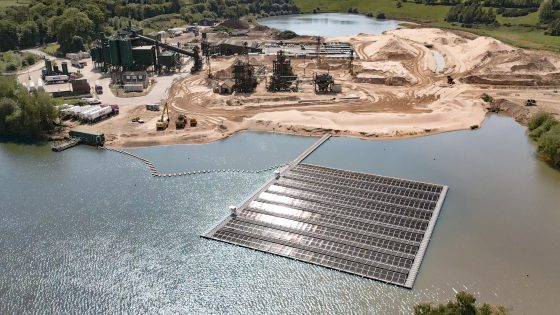
Nova has switched on a floating solar farm at a Cheshire silica sand quarry, delivering on-site power generation for one of the UK’s largest producers of high-quality industrial silica sand. Developed with environmental consultancy RSK, the array is mounted on a buoyant platform system on the quarry lake, preserving limited land area for extraction and processing infrastructure. The installation reduces grid dependence for energy-intensive washing and grading plant, and will require geotechnical and hydraulic checks on anchoring, bank stability and water-level variability over the quarry’s remaining life.
New guidance for UK local highway authorities sets out how to harden road networks against more frequent extreme rainfall, heatwaves and flooding linked to climate change. The document focuses on resilience planning for carriageways, embankments, cuttings and drainage assets, encouraging risk-based asset management, climate-adjusted design lives and targeted interventions on vulnerable links. Practitioners are steered towards integrating updated rainfall projections, surface water modelling and slope stability assessments into maintenance programmes and capital schemes.
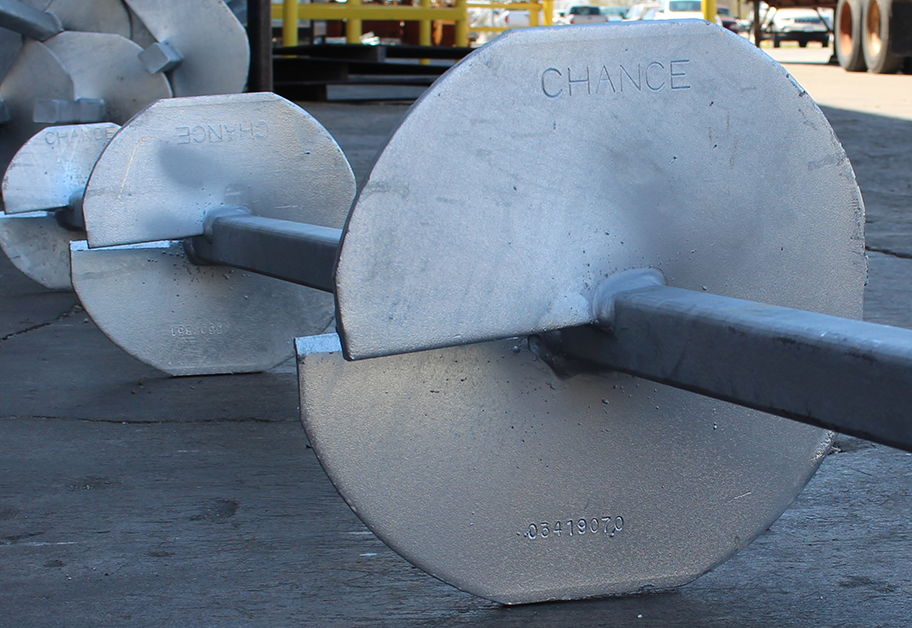
Inter‑helix spacing for helical piles and anchors is traced from early empirical rules of thumb (typically 3× helix diameter) to current design approaches based on cylindrical shear and individual bearing models. The review compares performance implications of close spacing (overlapping stress bulbs, higher installation torque, potential group behaviour) versus wider spacing (reduced interaction, deeper embedment, more steel), and links them to torque‑to‑capacity correlations. For practitioners, it clarifies when legacy spacing rules remain adequate and when soil type, load regime, and installation constraints justify project‑specific optimisation.