Geomechanics, Streamlined.
© 2026 Geomechanics.io. All rights reserved.
Carlyle has agreed to sell Flender, the Bocholt-headquartered global supplier of mechanical drive technology for conveyors, mills and hoists, to Triton Fund 6 advised by Triton Partners, with closing targeted for Q4 2026 subject to regulatory approvals. Flender’s portfolio spans gear units, couplings and condition monitoring systems widely used in high-torque mining applications, including overland conveyor drives and grinding mill gearboxes. The change of ownership signals continued private equity interest in critical drivetrain OEMs, with potential implications for service models and aftermarket support at large mine sites.
PT Freeport Indonesia’s Grasberg underground complex has received its 15th Caterpillar R2900 XE diesel-electric LHD from dealer Trakindo, consolidating one of the world’s largest fleets of Cat underground loaders at a single copper-gold operation. The 15 t-class R2900 XE couples a diesel engine to an electric drive train, cutting fuel burn and heat load versus conventional mechanical-drive R2900 units, which is critical for deep, high-production stopes. New deployments in the Democratic Republic of the Congo signal growing interest in diesel-electric loading for African hard-rock mines facing ventilation and power-cost constraints.
Kryton International will debut at EXPONOR in Chile this month, showcasing its Hard-Cem® integral hardening technology already deployed in British Columbia mining infrastructure. Hard-Cem is added directly to concrete to improve abrasion and erosion resistance in high-wear elements such as haul road slabs, ore passes and crusher foundations, aiming to extend service life without increasing cement content. For mine operators, the pitch centres on reduced shutdowns for resurfacing, lower lifecycle concrete volumes and more predictable performance in aggressive, high-impact environments.
BHP and the Global Centre for Maritime Decarbonisation have bunkered a B100 biodiesel blend, derived from used cooking oil and waste animal fats, into a BHP‑chartered bulk carrier on an existing iron ore route. The pilot will test combustion performance, fuel stability and engine compatibility of the multi‑feedstock fuel in a conventional marine diesel system without hardware modifications. Results will inform future large‑scale deployment of drop‑in biofuels across BHP’s dry bulk fleet and similar long‑haul iron ore supply chains.
Sandvik has secured a 45-unit underground fleet order from Chinese contractor JCHX Mining Management for deployment at MMG’s Khoemacau Copper Mine in Botswana, booked in Q2 2026. The package includes Toro LH621i loaders, Toro TH663i trucks and Sandvik DD422i development drills, giving JCHX a fully integrated load–haul–drill fleet on a single automation-ready platform. The deal signals continued investment in high-capacity, intelligent equipment at Khoemacau, with implications for fleet standardisation, digital maintenance planning and future autonomous operation.
Metso has launched three new primary crushers – the Primarok™ gyratory, Optirok™ jaw and Durarok™ sizer – targeting high-capacity, modern mining plants. The range combines large primary throughput with designs aimed at safer maintenance, such as improved access to wear parts and reduced need for manual intervention around the crushing chamber. For mine planners and plant engineers, the trio broadens options for matching crusher type to ore characteristics and downstream circuit design without changing supplier.
Weir has relocated its Perth Minerals Division operations to a new 14,500 sq.m purpose-built facility in Hazelmere, marking a major expansion of its Western Australia footprint. The larger site increases capacity to service and rebuild critical mining equipment such as pumps, crushers and slurry handling systems, enabling shorter overhaul and refurbishment cycles for iron ore and gold operations. Faster turnaround on heavy equipment maintenance is likely to reduce downtime risk for remote WA mines that rely on tight shutdown windows and high utilisation rates.
Cobre Las Cruces S.A.U. has completed its sale from First Quantum Minerals to Global Panduro, controlled by Resource Capital Funds, in a deal valued at up to US$190 million, clearing the way for the Polymetallurgical Refinery (PMR) project near Seville. The PMR is designed to process complex polymetallic ores on site rather than exporting concentrates, shifting the operation from conventional open-pit copper cathode production towards an integrated hydrometallurgical flowsheet. For engineers, the ownership change signals continuity for permitting, plant design and potential underground transition planning at this brownfield Iberian Pyrite Belt asset.
Volvo Autonomous Solutions and Boliden have completed an autonomous haulage project for tailings dam construction at the Garpenberg zinc mine in Sweden, the first deliverable under their 2023 memorandum of understanding. Volvo’s autonomous haul trucks operated on a defined haul road between the open pit and the tailings facility, integrating with existing conventional fleets and site traffic management. The trial provides data on cycle times, berm and ramp design, and interaction rules needed to scale autonomous haulage for future dam lifts and other overburden movements on Boliden sites.
Epiroc has secured an order from Heidelberg Materials to deploy its LinkOA autonomous haulage system on driverless haul trucks at an Australian quarry, extending the platform from large open-pit mines into the quarrying and aggregates sector. The project will adapt LinkOA’s mine-proven fleet management, collision avoidance and traffic control capabilities to shorter haul cycles, tighter geometries and mixed-traffic quarry conditions. For quarry operators, this signals accelerating interest in OEM-agnostic autonomy retrofits on existing haul fleets to cut operating costs and manage labour constraints.
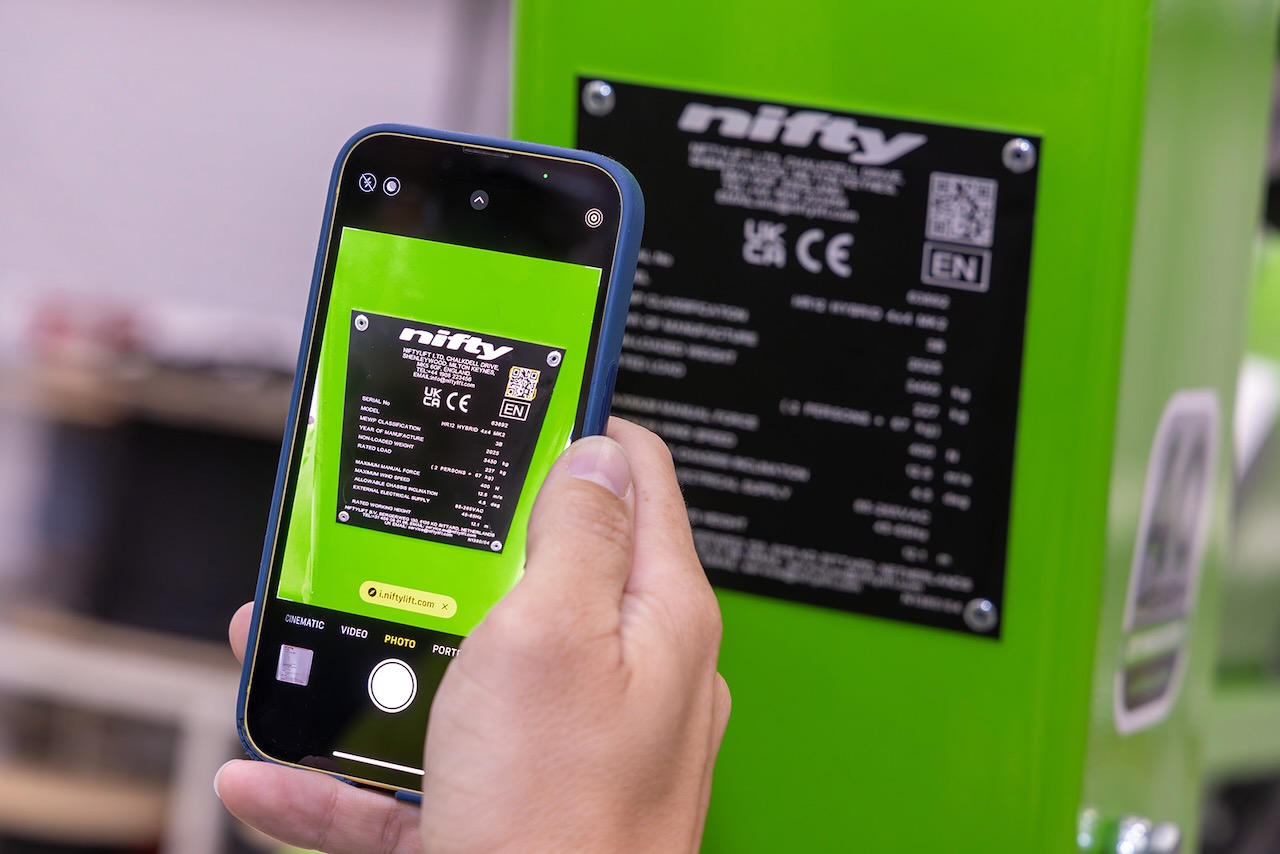
Niftylift has launched MyNifty, a machine-specific online support hub that consolidates manuals, technical documentation, error code lookup, cage overload override reset codes and NiftyPRO video guidance into a single portal. Operators, hire companies and service technicians can access a dedicated page for each model by scanning a QR code on the serial plate or entering the serial number via the Niftylift website, using any mobile device. Most machines in current service already carry QR-coded plates, while older units can be brought into the system through a serial-number QR search tool.
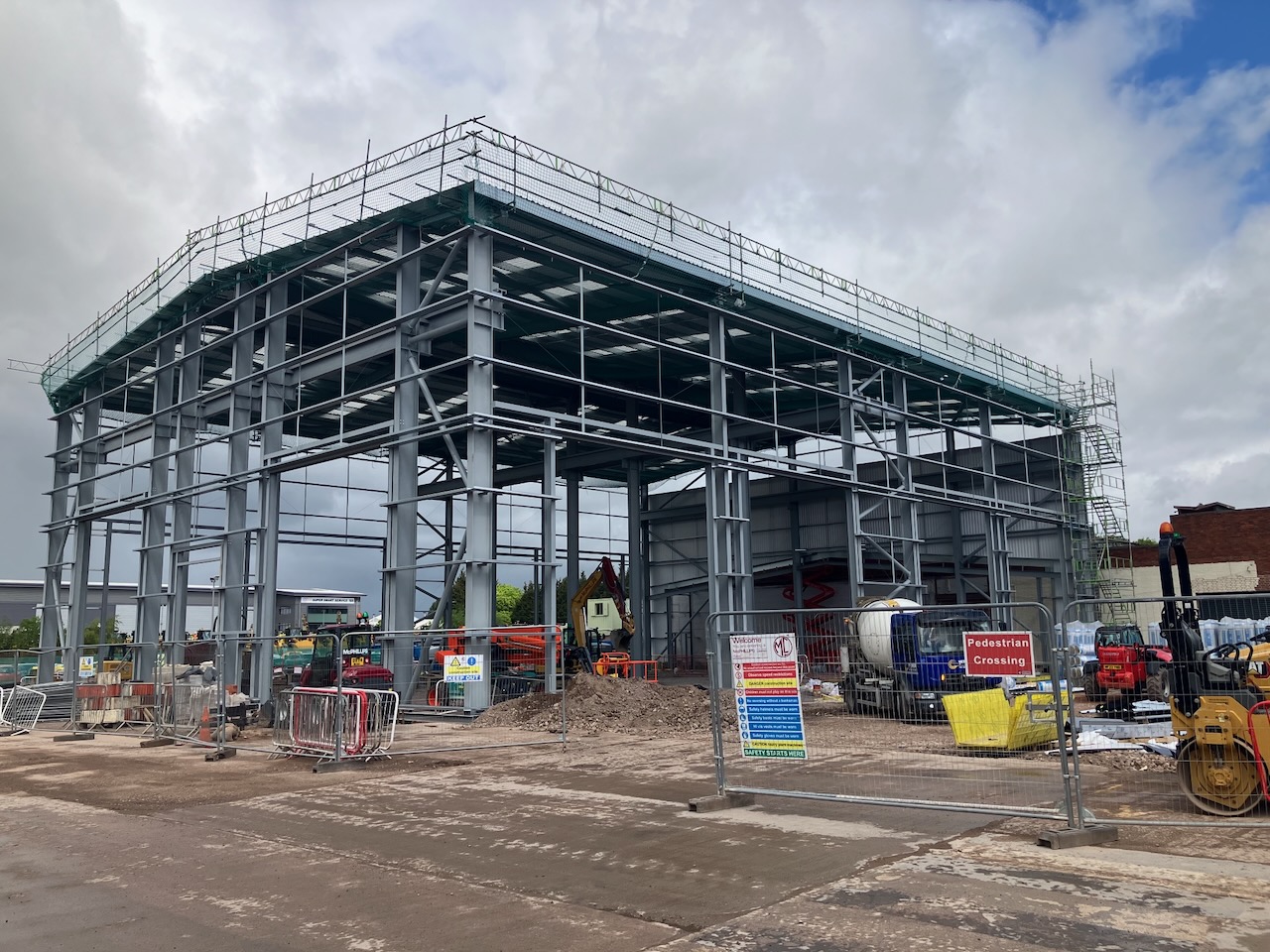
McPhillips is using a new Cat 308 mini excavator to construct a 1,230 m² Rebuild Centre of Excellence at Finning’s Cannock headquarters and has added three Cat 305s to its Shropshire fleet under a new partnership with Finning UK & Ireland. The 8‑tonne‑class 308 and 5‑tonne‑class 305 machines are being used for confined-area works on the workshop build, where lift-and-dig capability, low fuel burn and reduced noise are critical. McPhillips reports the 308’s reliability and precision are key to maintaining programme and safety in restricted zones.
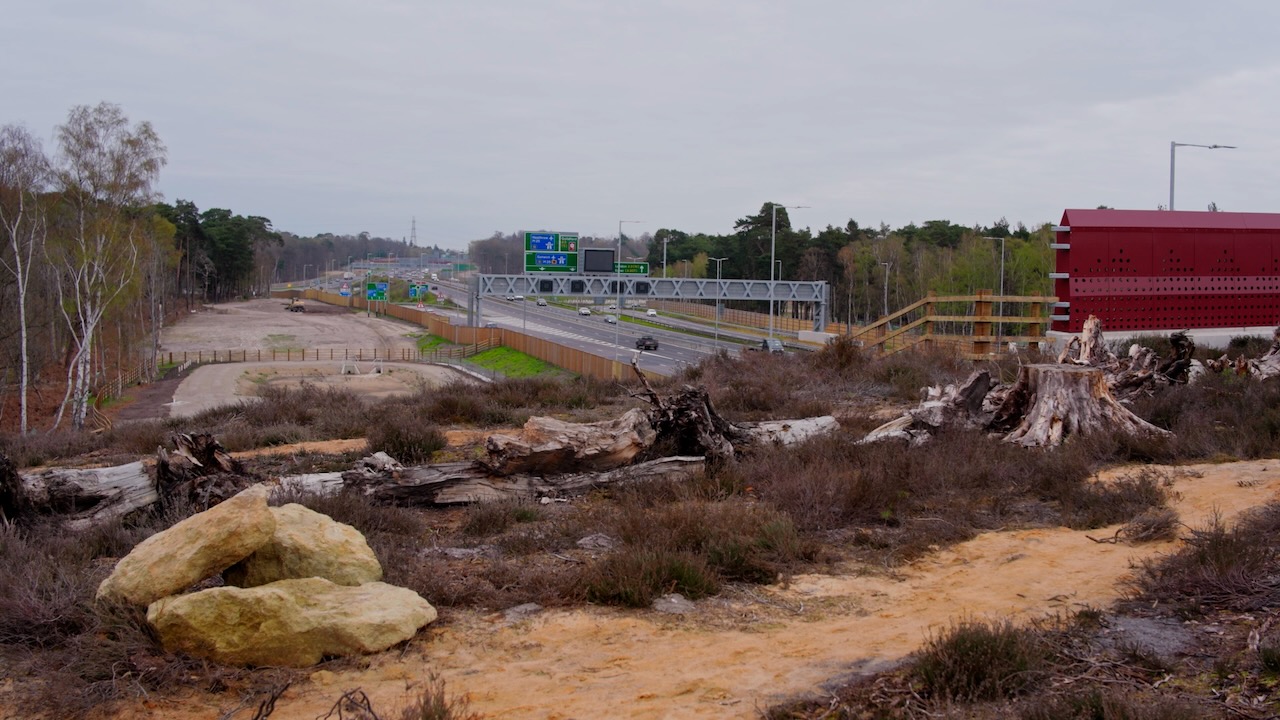
The Cockcrow Bridge, delivered by Balfour Beatty and AtkinsRéalis for National Highways, has opened as the UK’s first heathland green bridge, carrying restored lowland heath across the A3 between Ockham and Wisley Commons as part of the M25 junction 10/A3 Wisley Interchange upgrade. Around 10,000 m² of heathland turf has been translocated from nearby donor sites using specialist handling equipment, with the vegetation allowed to re‑establish gradually to support species including deer, badgers, voles and sand lizards. By reconnecting fragmented habitats in an area where heathland has declined by 85% over 200 years, the structure functions as both a multi‑user crossing and a critical ecological corridor.
AECOM has engineered the 2026 Serpentine Pavilion in London with LANZA atelier as a fully demountable hybrid prestressed masonry structure, using a slender internal steel subframe and threaded bars along the wall tops to carry roof loads and control deflection and dynamic response. To enable brick reuse without traditional mortar beds, the team relied on soft joints, wedges and shims to manage variable brick sizes and achieve uniform prestress without local damage. Full-scale physical testing was used to calibrate computational models and validate the composite action of the curved “crinkle-crankle” walls and piers.
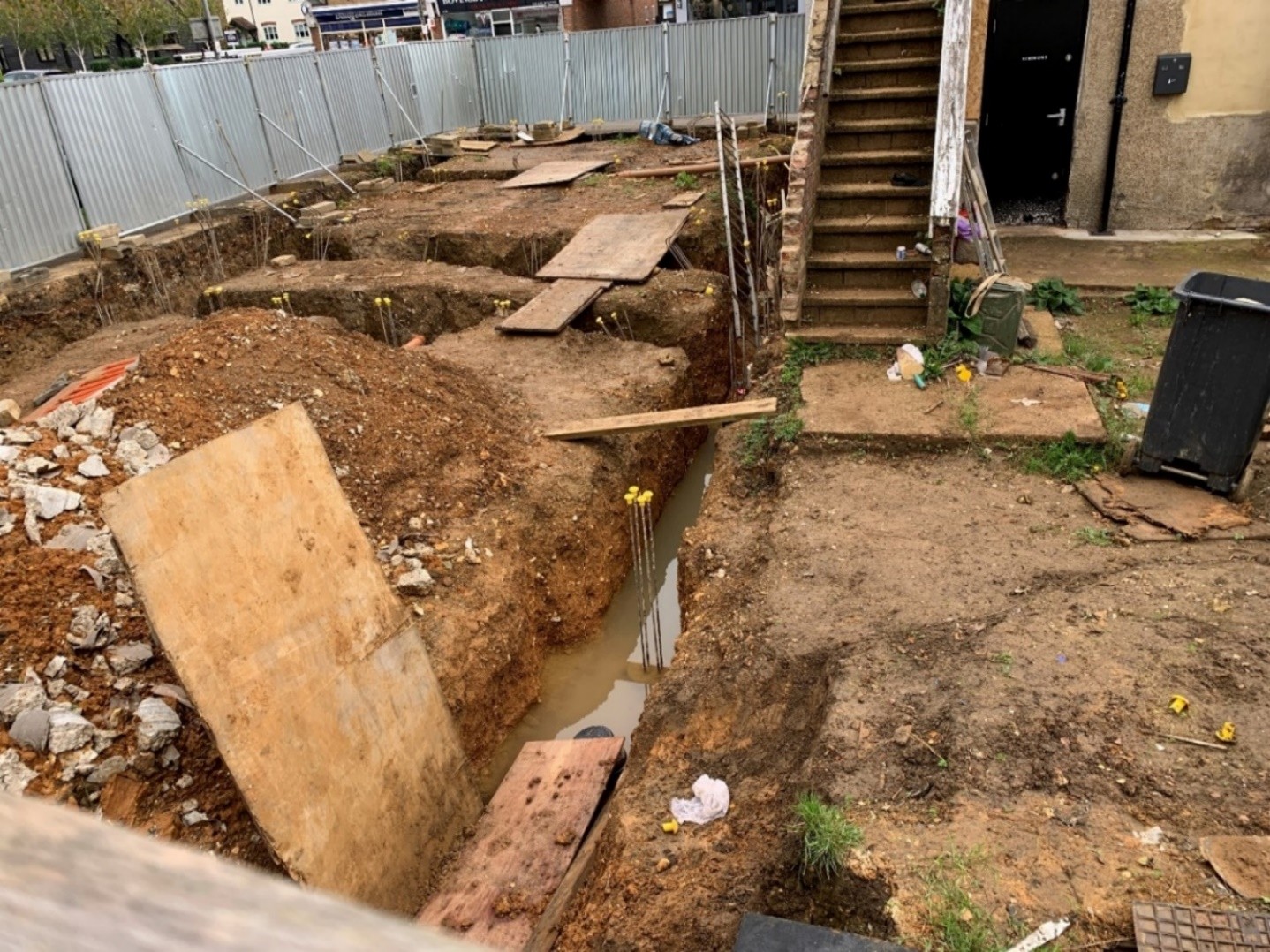
Alchemist DB Limited has been fined £20,000 plus £5,000 costs at Luton Magistrates Court after 35-year-old labourer Mykhalio Hustei died in October 2021, falling into a rainwater-filled foundation trench on a Bovington High Street flat development. An HSE investigation found criss-crossing excavation footings with no designated safe walkways, workers using unsecured, handrail-free boards and planks that bowed and became slippery in wet weather, and no dedicated site lighting. Only after enforcement did the firm install scaffold-framed walkways over exposed excavations, as required under CDM 2015 Regulation 22(2).
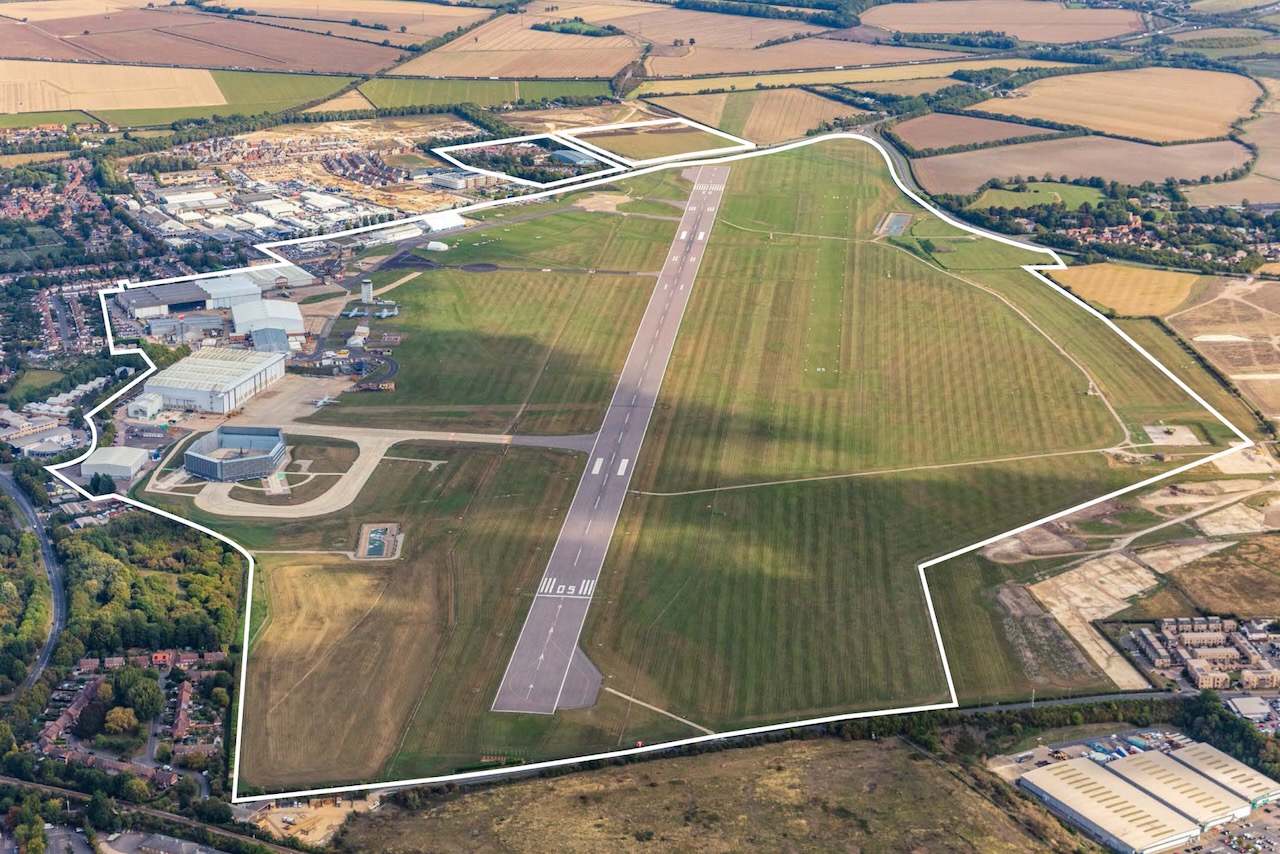
Homes England’s Cambridge Growth Company and The Hill Group have acquired the 700‑acre Cambridge East site, including Cambridge City Airport, to deliver more than 10,000 homes and at least 3 million sq ft of commercial space supporting around 9,000 jobs. Marshall Group will relocate airport operations by mid‑2029, clearing the way for a large mixed‑use urban extension with schools, healthcare facilities, extensive public green space and a potential regional construction training hub. The scheme is expected to be served by the proposed Cambridge East station, improving rail links to central Cambridge, London, Bedford and Oxford.
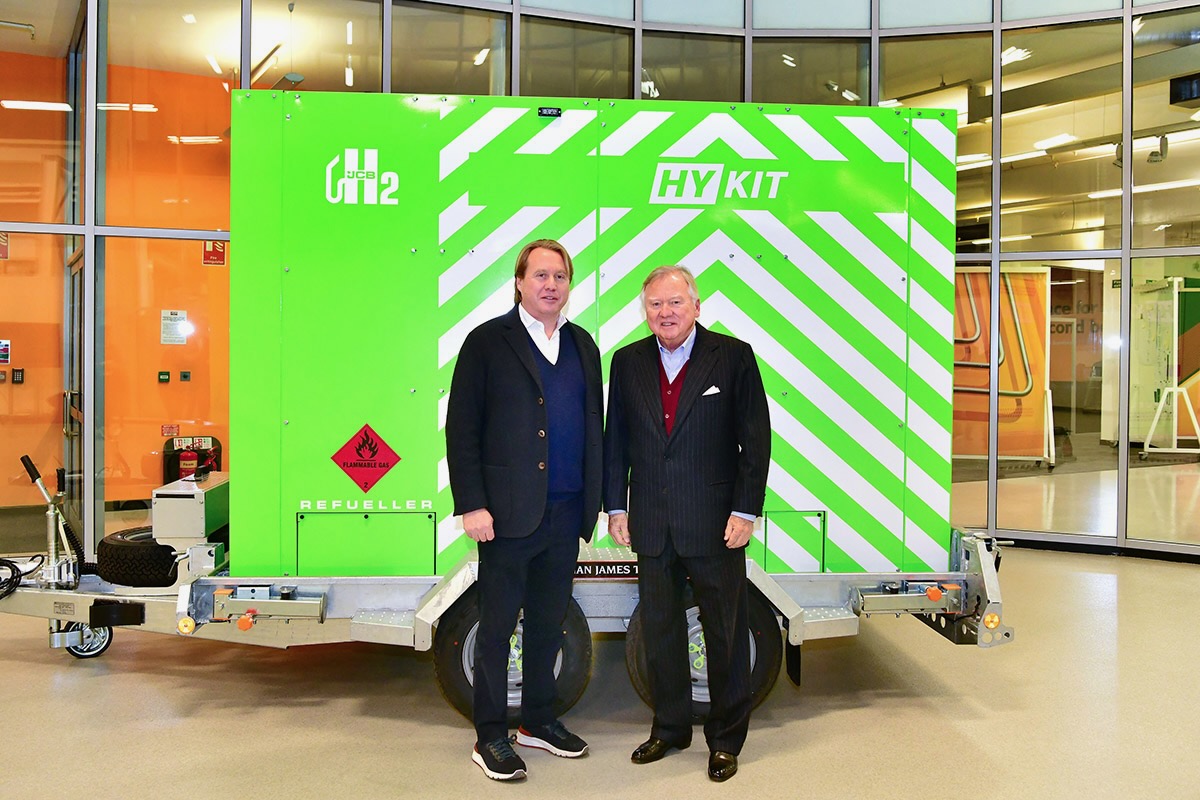
HyKit has launched its first mobile hydrogen refueller – a trailer‑mounted “hydrogen bowser” – aimed at supplying fuel to off‑grid construction sites and plant. Executive chair Jo Bamford outlines plans for a global hydrogen supply chain spanning production, compression and on‑site dispensing, targeting heavy equipment such as excavators, generators and site vehicles. For contractors, the concept removes dependence on fixed refuelling stations and opens a pathway to trial hydrogen plant on existing projects without major infrastructure works.
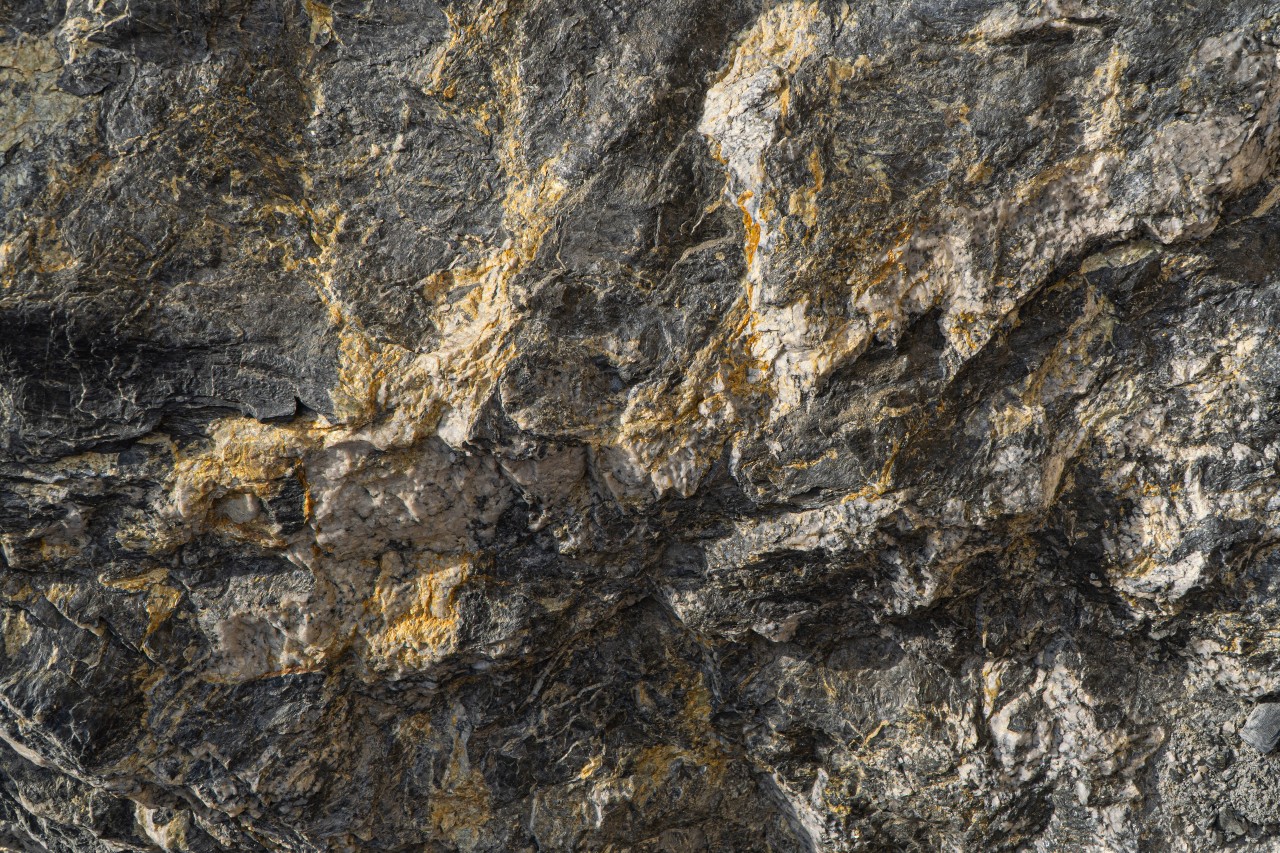
Alkane Resources has started diamond drilling at the historic Nagambie mine in Victoria under an earn-in agreement with Nagambie Resources, targeting expansion of the antimony–gold resource. The initial program covers mining licence MIN 5412 and exploration licence EL 5511, marking the first exploration phase that could lead to a formal joint venture. For geologists and mine planners, the work will refine antimony–gold grade distribution and geometry, informing potential underground designs and metallurgical testwork for complex Au–Sb mineralisation.
Medallion Metals has reported further high-grade intercepts at the Lounge Lizard deposit within its Forrestania gold project in Western Australia, including 11m at 6.94g/t gold from drilling beneath and adjacent to the historical open pit. The results extend mineralisation down-dip and along strike, reinforcing the potential to transition the pit to an underground operation and leverage existing surface disturbance. For mine planners and geotechs, the data support re‑evaluating pit wall designs, underground access geometry and cut-off grades for a possible restart scenario.
Saturn Metals has increased the Apollo Hill gold project mineral resource in Western Australia by 590,000 ounces to 2.83 million ounces, now reported as 174 million tonnes at 0.51g/t Au. The estimate is reported above a 0.15g/t cut-off, indicating a large, low-grade open-pit style inventory typical of bulk-tonnage WA gold systems. For mine planners and geotechs, the scale and grade profile point to high-volume, low-grade processing strategies and extensive pit slope optimisation work in weathered Archean host rocks.
Emerald Resources is backing the creation of Manda Resources, a new north Queensland explorer that will control a 1.33Moz gold resource and a consolidated package of gold–antimony assets. The vehicle will combine projects including Pacgold’s Alice River and other north Queensland tenements into a single portfolio targeting resource growth and new discoveries. For miners and contractors, the move signals potential future demand for drilling, resource definition, and mine studies focused on structurally controlled gold and associated antimony mineralisation in the region.
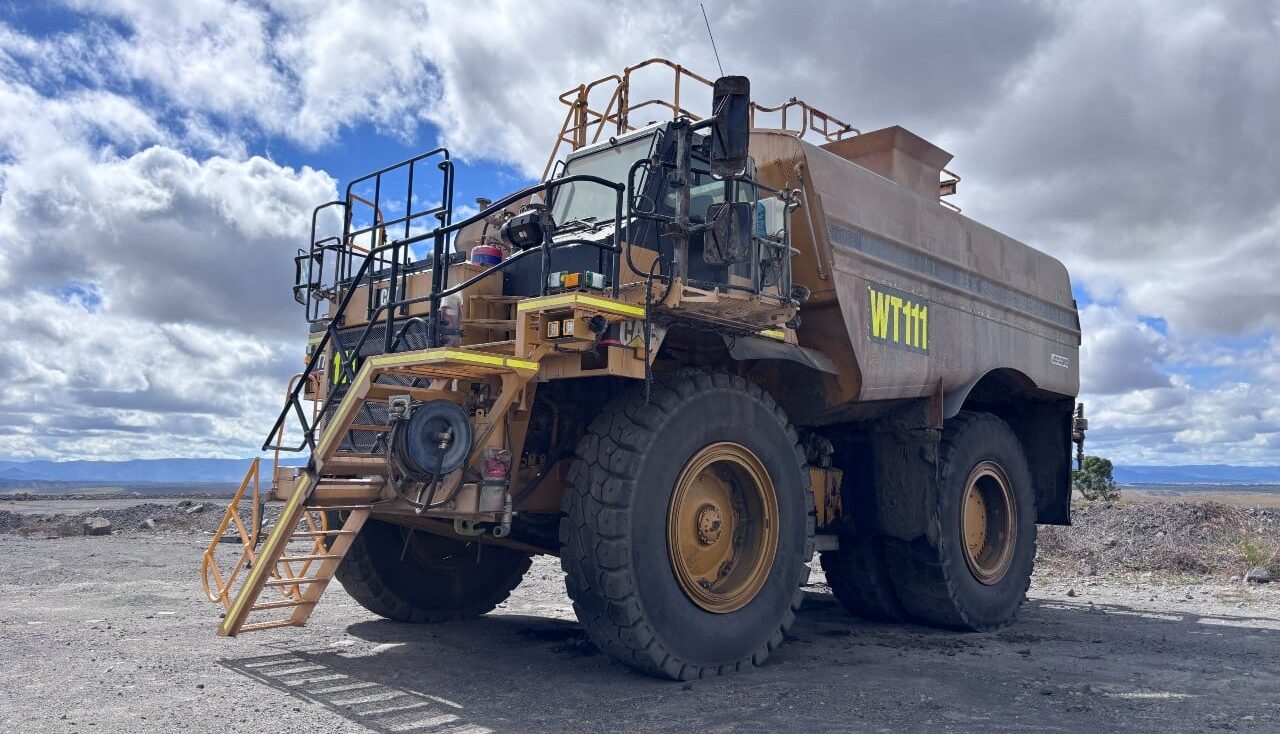
Slattery Auctions is staging a central Queensland major used mining equipment sale featuring heavy machinery assets suited to rebuild programmes, on-site maintenance workshops and access to Tier-1 parts suppliers. Key lots include large mobile plant such as a 2004 Cat 777D water truck, positioned for heavy component recovery rather than immediate deployment. The event offers mining and civil contractors a route to lower capex on haulage and support fleets by sourcing rebuildable units and OEM-grade components through a single auction process.
Tasmania’s government has released a safety and efficiency upgrade strategy for the Ridgley Highway, the key freight corridor linking Burnie to the Murchison Highway and serving mining, forestry and tourism traffic on the state’s northwest–west coast route. The plan targets a documented crash cluster along the corridor and will prioritise treatments such as intersection upgrades, shoulder widening and improved delineation on high‑risk curves. For civil and geotechnical designers, the works will likely involve pavement strengthening, drainage improvements and slope stability checks on constrained rural sections.
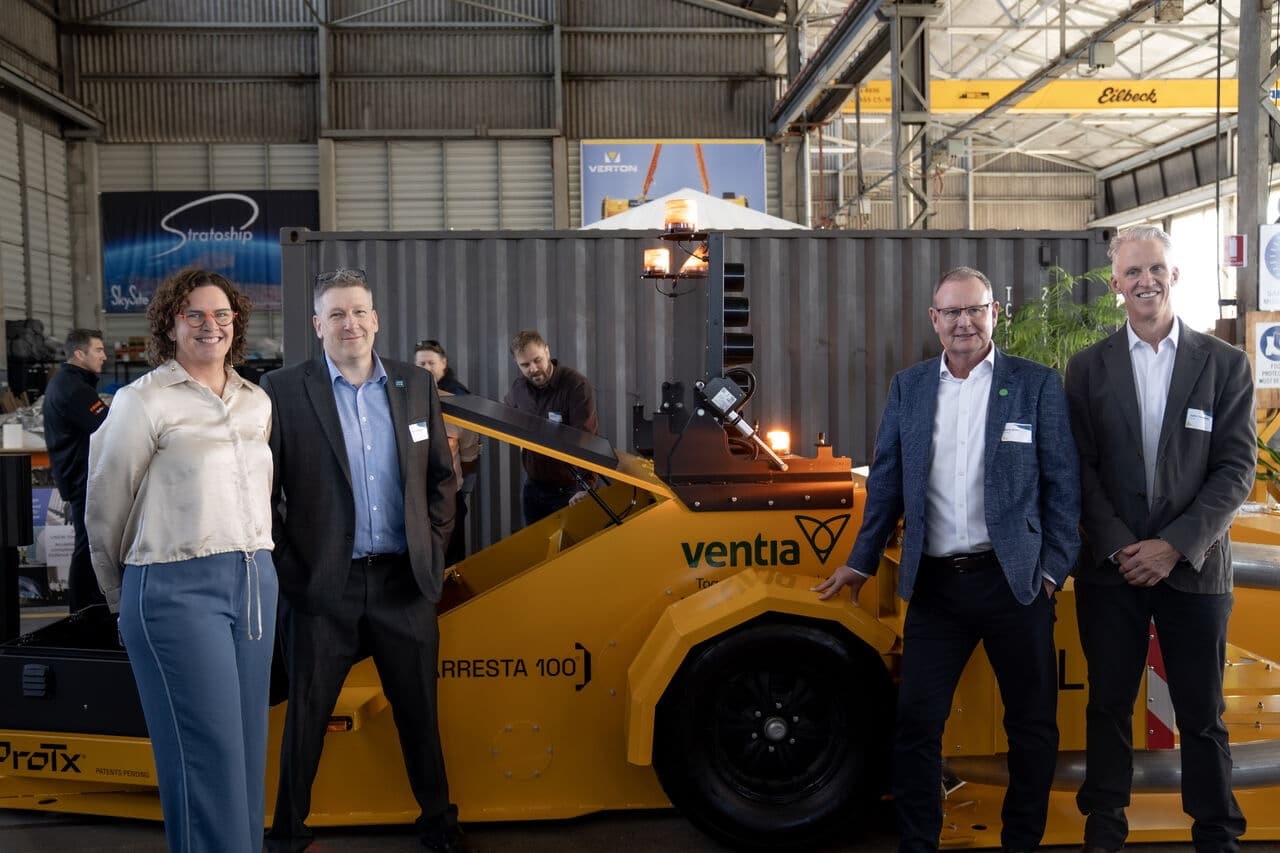
Queensland manufacturer ProTx has launched the Arresta 100, claimed as the first purpose-built vehicle arrestor specifically for temporary static roadworks, with a live demonstration at Brisbane’s Advanced Robotics Manufacturing Hub. The system is designed to rapidly slow or stop out-of-control or unauthorised vehicles entering work zones, providing a physical barrier where conventional cones and signage offer limited protection. For road and civil contractors, it signals emerging options for engineered temporary traffic control hardware beyond standard crash cushions and water-filled barriers.