Geomechanics, Streamlined.
© 2026 Geomechanics.io. All rights reserved.
Surveying and construction bodies have endorsed prime minister Andy Burnham’s plan to give technical education parity with A-levels and degrees, signalling stronger support for routes such as T Levels and higher technical qualifications. The reforms are expected to expand employer-designed curricula in areas like digital surveying, BIM coordination and offsite manufacturing, and to formalise apprenticeship pathways into chartered status. For geotechnical, civil and materials engineers, this points to a larger pipeline of site-ready technicians and technologists with stronger grounding in standards, instrumentation and data-centric construction methods.
VolkerFitzpatrick has started a major platform and track upgrade at London Charing Cross during a 22‑day blockade running from 26 July to 16 August, with Southern Renewals Enterprise and Network Rail teams working continuous shifts. The blockade enables intensive works that would be impossible in short possessions, including platform alterations, track renewals and associated signalling and overhead line adjustments within the constrained throat of the terminus. For geotechnical and civils teams, the key issues are staging heavy plant, managing construction loads and maintaining structural integrity around existing retaining walls and sub‑surface assets.
The Crown Estate has launched a fast-track tender to secure a new developer for the Morgan offshore wind project in the Irish Sea after the original consortium withdrew. Morgan is one of three Round 4 projects in the region and is expected to contribute several hundred megawatts of capacity, tying into existing Irish Sea grid corridors already constrained by multiple offshore connections. For civil and marine contractors, the retender compresses procurement timelines for foundation design, cable routing and port upgrade works, but preserves the underlying seabed lease.
Via East Midlands has let a seven-lot civil engineering supplies framework covering a broad range of highways and infrastructure materials for its local authority network. Five firms have secured places, giving councils a pre-procured route for items such as drainage components, aggregates, concrete products and road maintenance materials without running separate tenders. For contractors and suppliers, the framework signals medium‑term demand continuity across multiple workstreams, with scope to standardise specifications and pricing on routine civils works.
Case Construction Equipment has appointed Hamstead Plant as dealer for the English Midlands, covering Birmingham, Coventry, Dudley, Walsall, Wolverhampton and Worcester, leveraging the firm’s 100+ years of construction sector experience for earthmoving and materials-handling fleets. In Munster, Ireland, Case has added Samco Plant Sales, a 30-year-old distributor of Case agricultural machinery, extending support for mixed construction–agri operators standardising on Case platforms. The expanded network should tighten parts availability and service response for regional contractors, developers and site managers running Case excavators, loaders and compaction equipment.
Stark Building Materials UK has appointed Jan Green as chief commercial officer, bringing more than 12 years’ experience in building materials and distribution from senior commercial roles with major merchants. Green’s background centres on supplier relationship development, structured growth planning and commercial value optimisation for contractors and trade customers. Her remit will be critical for pricing strategy, supply-chain resilience and product mix decisions affecting UK civils, groundworks and structural materials procurement.
Pagabo has launched the third-generation Medium Works construction framework, a £1.5bn, UK-wide programme for projects up to £15m running from January 2027 to 2031 and managed on behalf of TEAL (The Education Alliance). Building on previous iterations that delivered £658m and more than 300 schemes, including the expansion of Nottingham College, the framework targets public-sector works such as education and civic buildings. The model matches projects to qualifying regional contractors by scale, value and complexity, aiming to strengthen local supply chains and improve procurement speed and cost certainty.
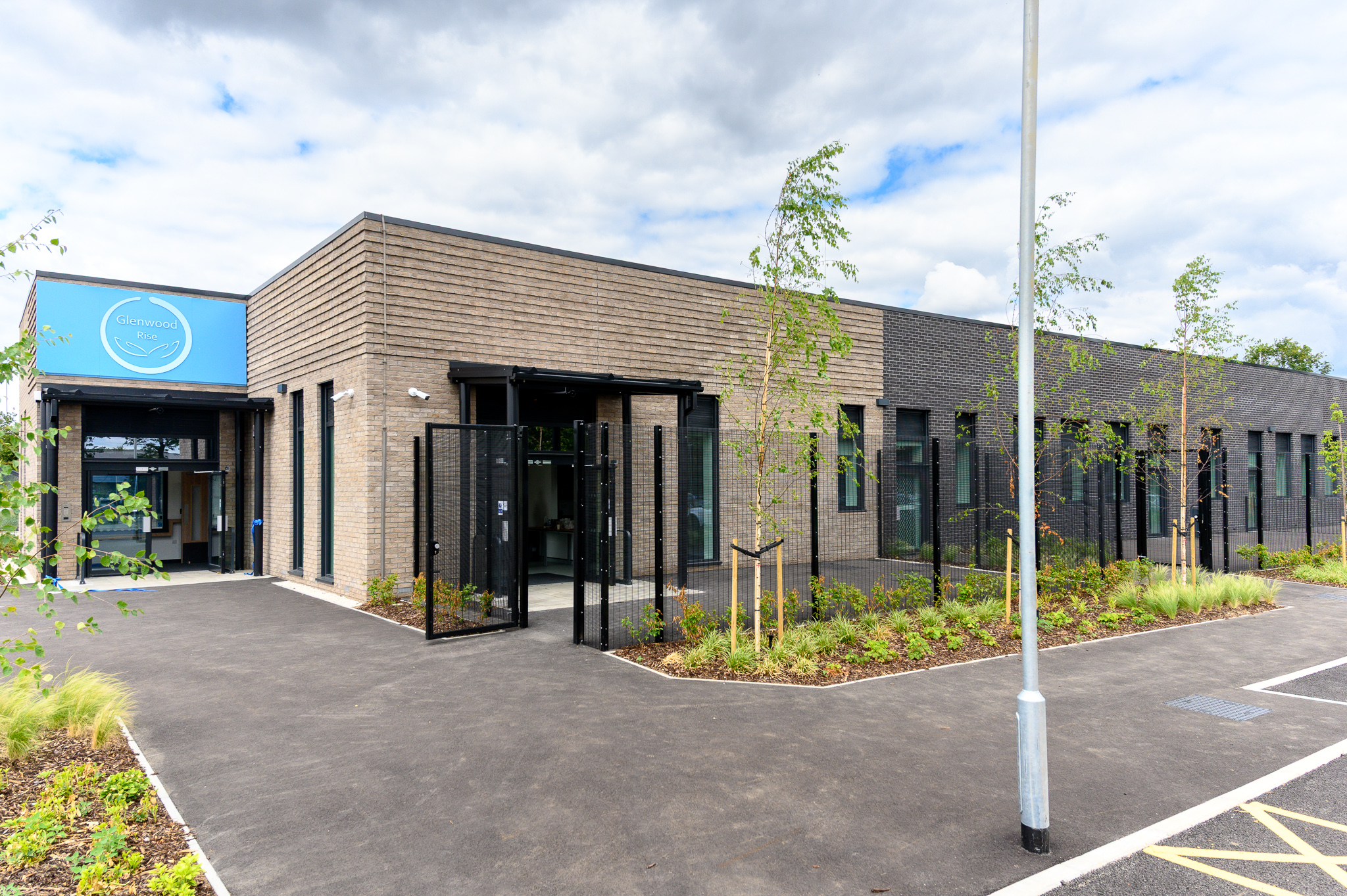
Morgan Sindall Construction has completed Glenwood Rise, a £6.6m SEND sixth form at Glenwood School in South Benfleet, providing capacity for 40 post-16 students with complex needs. The single-block facility uses a SIPS structural frame with brickwork façade to improve insulation and airtightness, and is designed to be net-zero carbon in operation via roof-mounted PV panels and air source heat pumps. The scheme adds five classrooms, sensory rooms, a catering training centre and a 109-space car park with seven EV chargers, three accessible bays and eight minibus spaces.
New home registrations in Great Britain fell 4% year-on-year in Q2 2026 to 29,162 units, with private sector registrations down 5% while affordable housing volumes were flat, according to the National House Building Council. The data point to a modest cooling in private speculative starts, which could slow demand for groundworks, infrastructure connections and materials supply chains over the next 12–18 months. Stable affordable registrations suggest public and housing association programmes may provide a steadier pipeline for civils, geotechnical and offsite manufacturers.
Fusion21’s latest social value data show 707 people secured employment through its construction and maintenance frameworks in 2025-26, up 44.9% from 488 the previous year, including 116 apprentices across construction, engineering, utilities, surveying and specialist trades. Local resident hires on framework projects rose from 96 to 264 (175% increase), while jobs for previously unemployed people jumped from 41 to 161 (292% rise). Roles created span bricklayers, traffic marshalls, site managers, electricians, quantity surveyors, scaffolders, lift engineer apprentices and trainee asbestos surveyors, strengthening site and technical capacity.
NOCN Group is launching a digital competence platform linked to its NOCN Skills Passport, giving employers a single desktop and mobile-accessible system to track workforce capability across regulated construction and infrastructure roles. The platform goes beyond conventional CSCS-style cards and qualification databases by evidencing Skills, Knowledge, Experience and Behaviours (SKEBs) for each individual, creating a secure, evolving digital professional identity. NOCN positions this as a practical tool for demonstrating competence under the Building Safety Act by consolidating currently fragmented training, certification and compliance records.
Making Tax Digital for Income Tax hits a key deadline on 7 August, when 864,000 self‑employed taxpayers must submit their first quarterly digital update instead of the traditional annual self‑assessment return. Construction subcontractors operating under CIS are heavily exposed, as many fall within scope and must now keep compatible digital records and use approved software rather than paper or basic spreadsheets. Non‑compliance from this quarter will start accruing penalty points, creating immediate administrative and cashflow risk for smaller site-based operators.
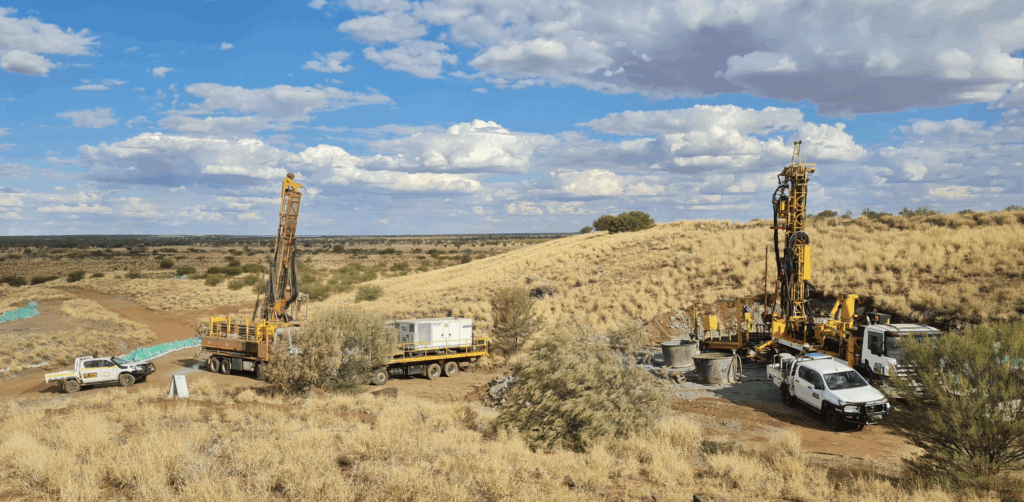
Liebherr-Australia has delivered a 600 t R 9600 ultra-class hydraulic excavator to Northern Star Resources’ Super Pit in Western Australia, adding to a fleet of 17 existing Liebherr units across the company’s operations. A second R 9600 is scheduled to arrive at the Super Pit in October, signalling a rapid scale-up of ultra-class loading capacity. For mine planners and maintenance teams, the twin 600 t excavators will drive higher truck fill factors and demand careful scheduling of component rebuilds and parts logistics.
Anglo American’s Quellaveco copper mine in Peru and its three managed Chilean operations – Los Bronces, El Soldado and the Chagres smelter – have been awarded The Copper Mark after independent verification against its responsible production criteria. The certification covers both open-pit mining and smelting activities, signalling that site-level environmental, social and governance controls have been audited rather than applied only at corporate level. For engineers and project teams, Copper Mark status may increasingly become a prerequisite in offtake contracts, financing mandates and permitting discussions for new copper capacity.
Iridium Communications has formed a strategic partnership with ORBCOMM-owned SKYWAVE to deliver global industrial IoT connectivity for heavy equipment OEMs, combining Iridium’s L-band satellite network for voice, data and PNT with SKYWAVE’s asset-tracking devices and platform. The collaboration targets mission-critical fleets such as mining haul trucks, dozers and drills operating beyond terrestrial coverage, enabling always-on telemetry, health monitoring and remote diagnostics. For engineers, this signals wider availability of factory-integrated satellite telematics, reducing reliance on site-built comms networks in remote pits and greenfield projects.
Razor Labs has launched DataMind AI™ 5.0, expanding its mining predictive maintenance platform from pure early fault detection to supporting full maintenance decision-making, including work-order prioritisation and resource planning. The system ingests high-frequency sensor streams from large mobile and fixed fleets, integrates with existing CMMS/ERP tools, and applies machine-learning models to estimate remaining useful life and failure probabilities for individual components. For reliability and maintenance engineers, the upgrade aims to shift from time-based to condition-based strategies, reduce unplanned downtime on critical assets, and optimise spares and labour scheduling.
£317M upgrade works on the M25’s Junction 10 in Surrey are now complete, with engineers widening the junction roundabout and adding a fourth lane on a key section of the A3 to increase capacity through one of the network’s busiest interchanges. The scheme, delivered for National Highways, also includes a new green bridge across the A3 to maintain ecological connectivity and non-motorised user routes over the widened carriageway. Construction required the first ever full weekend closures of the M25, signalling a precedent for future major interventions on the orbital.
Alemlube has launched the ADDA series of six direct drive air rewind hose reels for mine and construction sites, designed for handling oil, diesel fuel, grease, compressed air and water in fixed and mobile plant workshops. The direct drive air rewind mechanism removes chains and belts, reducing maintenance points and improving reliability in dirty, high-duty environments typical of heavy equipment servicing bays. For site engineers, the units offer more controlled hose management around refuelling, lubrication and wash-down areas, lowering trip risks and hose damage during high-throughput shifts.
Fortescue has committed about $200,000 over two years to a new partnership with Wirraka Maya Health Service Aboriginal Corporation in Port Hedland to expand culturally safe health and wellbeing support for Aboriginal men in the Pilbara. The funding will help design and run a dedicated men’s health programme tailored to local community needs, delivered through Wirraka Maya’s existing primary health infrastructure. For mining operators in the region, stronger on‑Country health services can reduce remote workforce health risks, support attendance, and improve long‑term community relations around major iron ore operations.
Gem Diamonds lifted average rough prices at its Letšeng mine to $1,395 per carat in H1 2026, as eight stones each selling for over $1 million generated $16.1 million despite a planned shift to lower‑grade ore in the Main Pipe. Standout recoveries included three diamonds above 100 carats and the 346.99‑carat Lesotho Jubilee, with a 52.24‑carat white stone achieving $32,908 per carat. Production will remain focused on the Main Pipe while the Satellite Pipe cutback is prepared, with margins hinging on continued premiums for large, high‑quality stones.
Evolution Mining will acquire Carnaby Resources in an all‑share deal valued at about A$213 million, giving it the Greater Duchess copper‑gold project 70 km south of Ernest Henry and a 61% premium for Carnaby shareholders at an implied 77.2¢ per share. By feeding Greater Duchess ore through spare mill capacity at Ernest Henry instead of paying Glencore tolls, Evolution targets an extra ~10,000 tonnes of copper per year with lower capital intensity than a standalone plant. The transaction, unanimously backed by Carnaby’s board, is slated to close by mid‑November pending shareholder, court and regulatory approvals.
Harena Rare Earths has secured up to $4.48 million from the US International Development Finance Corporation for pilot plant work, laboratory testing and environmental programmes at its Ampasindava ionic clay rare earth project on Madagascar’s northwest coast. The deposit hosts neodymium, praseodymium, dysprosium and terbium for permanent magnets, with planned output of about 4,000 tonnes per year of rare earth oxides, including 1,700 tonnes of NdPr and DyTb, targeting first production by mid‑2028 pending an exploitation permit. Harena is assessing processing in the US and Europe with MP Materials, USA Rare Earth and Solvay as potential refiners, against an estimated $150 million total development cost.
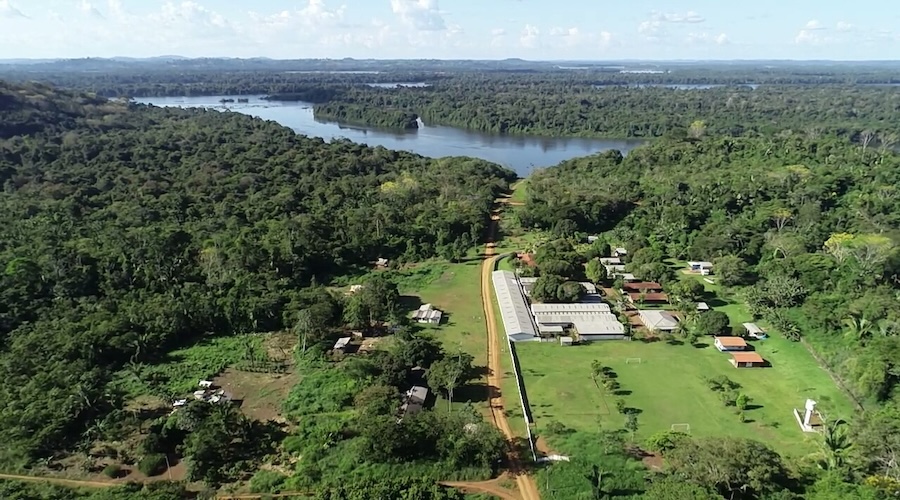
Brazil’s Federal Regional Court of the 1st Region has issued a final, unanimous ruling permanently dismissing a class action that sought to suspend the installation licence for Belo Sun Mining’s proposed $300 million Volta Grande open-pit gold project in Pará State. The court found the case duplicated an earlier action with the same claims and remedies, and the Federal Public Defender’s Office missed the appeal deadline, making the decision binding. The ruling removes a key legal barrier as Belo Sun pursues remaining environmental licensing for what it says could be Brazil’s largest open-pit gold mine.
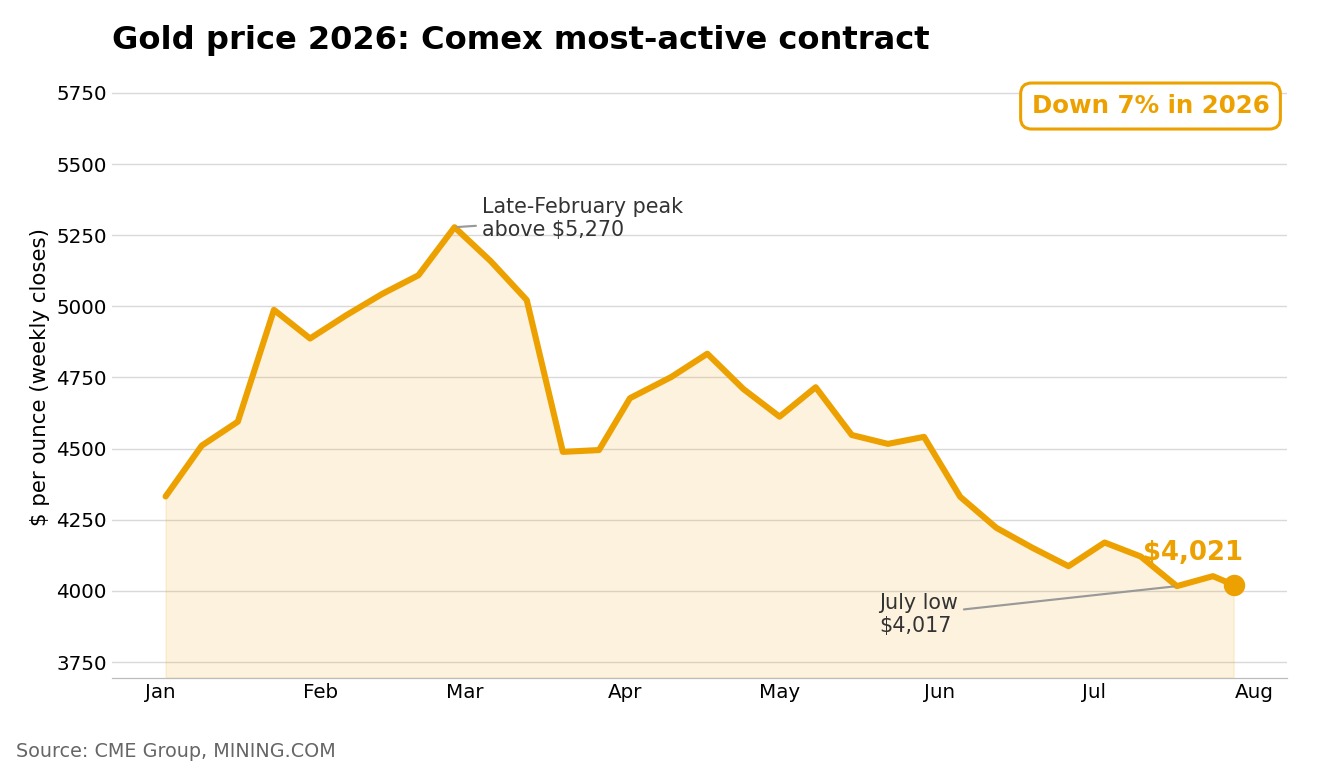
Gold slid to within $20 of the $4,000/oz mark on Tuesday, with Comex August futures at $4,021.20/oz and spot at $4,015.17/oz, as traders weighed a Federal Reserve decision with a roughly one‑in‑three chance of a 25 bp hike and a fading Iran war premium. Silver fell 2.7% on Comex to $57.14/oz, close to its 2026 low of $55.50, while gold‑focused equities extended heavy year‑to‑date losses, with Equinox Gold down 35%, Gold Fields and Alamos each 26%. Newmont, banking on a 5‑million‑ounce lift from Lihir, is still 8% lower in 2026, as the top 50 miners collectively erased $228 billion in Q2 market value.