Geomechanics, Streamlined.
© 2026 Geomechanics.io. All rights reserved.
Place-based infrastructure is being promoted as a way to design transport, flood defence and public realm schemes that respond to specific local social, economic and environmental conditions rather than standardised templates. Advocates argue that early engagement with communities, integration of green–blue infrastructure, and re-use of existing assets can reduce whole-life carbon and cost while improving resilience to climate-related stresses. For engineers, this approach shifts emphasis towards multidisciplinary planning, data-led understanding of local behaviours, and performance metrics that capture social value alongside traditional capacity and safety criteria.
Carbon capture is being deployed at cement plants to tackle process emissions that account for much of cement’s contribution to roughly 8% of global CO₂ output, targeting the calcination step where limestone is converted to clinker. Projects are trialling post‑combustion capture on kiln exhausts, oxy‑fuel combustion to produce CO₂‑rich flue gas, and integration with storage or utilisation routes such as mineralisation in aggregates. For designers and contractors, this enables lower‑embodied‑carbon concrete without major changes to mix design, but raises questions on plant energy demand, capture rates and long‑term storage liability.
Sir John Armitt is urging cross-party backing for long-term investment in England’s water infrastructure, warning that current reservoir and strategic storage capacity is inadequate for intensifying drought and extreme rainfall. He points to the need for new large-scale storage schemes, upgraded transfer networks between water resource zones, and resilience upgrades to treatment works to cope with more volatile inflows. For civil and geotechnical engineers, this signals sustained demand for major dam, embankment, pipeline and interconnector projects, plus associated environmental and planning work.
China’s first all-electric, bidirectional, cabless rigid mining truck, the AT-150, has entered autonomous operation at State Power Investment Corporation’s South coal mine, developed jointly with truck OEM Inner Mongolia North Hauler and AHS specialist EACON. The unmanned AT-150 removes the operator cab entirely and runs on a fully electric drivetrain, integrating OEM-agnostic autonomous haulage software for route planning, obstacle detection and fleet coordination. For mine planners, the bidirectional layout and cabless design allow shorter turning radii, narrower haul roads and potentially steeper ramp geometries, tightening geotechnical and traffic design envelopes.
Weir Global Product Manager – Pumps Asad Mohammed reports that rubber-lined centrifugal slurry pumps are increasingly outperforming metal-lined units, especially in duties with fine-particle slurries where elastomer liners show lower wear and longer service life. He notes that modern rubber compounds now tolerate higher operating pressures and more aggressive chemistries than earlier generations, expanding their use beyond traditional light-duty applications. Mohammed also points to growing demand for automation-ready pumps with integrated condition monitoring, enabling remote performance tracking and predictive maintenance in large mill circuits.
Tractafric Equipment Maroc has delivered a fleet of Cat 707 wide body trucks to Société de Travaux Agricoles Marocains (STAM), expanding the contractor’s heavy earthmoving capacity for large Moroccan infrastructure and mining projects. STAM, already active in irrigation, open pit mining, road construction, civil engineering and dam construction, is expected to deploy the 707 WBTs on high-volume haulage where conventional on-road dump trucks are less effective. The move signals continued investment in off-highway haulage capability in Morocco’s infrastructure and resource sectors.
Fortescue shipped a record 201.3 million tonnes of iron ore in FY26, breaking the 200Mt mark for the first time on the back of a 52.7Mt June quarter from its Pilbara operations. The miner framed this “operational excellence” as the production base for its Real Zero pathway, integrating green energy initiatives across Western Australian sites rather than relying solely on offsets. For engineers, the scale and consistency of >50Mt/quarter output signal continued demand for high-availability haulage, processing and port infrastructure while low‑carbon power systems are phased in.
Artificial intelligence, predictive maintenance and real-time process monitoring are being deployed across copper mines to lift throughput and recoveries from existing concentrators rather than relying solely on new greenfield projects. Vendors showcased tools such as advanced analytics platforms that stabilise SAG and ball mill circuits in real time, and sensor suites that track crusher and conveyor health to schedule maintenance before critical failures. For geometallurgists and plant engineers, the shift is towards data-driven control loops and condition-based maintenance to squeeze extra tonnes from current ore bodies.
Anglo American and Teck Resources have named the joint executive leadership team for Anglo Teck, the merged copper, coal and iron ore group created via a merger of equals announced in September 2025, with the structure to take effect once the deal closes between September 2026 and March 2027. The line-up will steer integration of Teck’s steelmaking coal and copper assets with Anglo’s Quellaveco, Minas-Rio and De Beers portfolio, rationalising overlapping corporate functions. For miners and contractors, the combined procurement, project pipeline and technical standards are likely to reshape tendering and supplier strategies across the Americas and Southern Africa.
Copper for September delivery on Comex jumped up to 2.9% to $6.4930/lb on Thursday, leaving prices about 2.5% below the early‑June record above $6.60/lb as tight physical supply outweighed a non‑unanimous US Fed decision to hold rates. LME copper rose 1.3% to $13,753/t, nearby contracts flipped into a $24/t backwardation and exchange stocks fell over 10,000 t this week to 262,300 t, while Codelco scrapped its 1.7 Mt five‑year output goal and guided 2026 production to ≤1.357 Mt amid Chile storm disruptions. Copper‑exposed miners rallied, with Teck and Anglo American up 6.1%, Glencore up 4.6% on a 15% first‑half copper output rise, and Rio Tinto posting its strongest first‑half earnings in four years on growing copper exposure.
Ecuador has classified illegal gold mining as a national security threat after gangs such as Los Lobos infiltrated the full value chain, blending illicit ore with legal production and exporting via Guayaquil and Puerto Bolívar. GI-TOC estimates illegal sites have surged from fewer than 60 before 2018 to more than 600 by 2024, with complaints rising 58% to 393 cases in 2025 and activity concentrated in Napo’s protected areas. The 2026–2029 plan includes tighter logistics controls, nationwide monitoring by 2027, and mineral traceability for all ore to ports and plants by 2028–2029.
Kinross Gold has lifted Lobo-Marte’s capex by 67% to US$1.8 billion, with a refreshed post-tax NPV of US$4.3 billion, driven by more than US$400 million of inflation, a US$100 million switch to new mining equipment, and a higher 19% contingency. The Chilean project is designed to mine 161 million tonnes of ore from sequential Marte and Lobo open pits, feeding a 35,000 t/d three-stage crushing and heap-leach plant, with 69% recovery, a 2:1 strip ratio, and processing and mining costs of US$12.30/t and US$3.25/t. Planned output averages 350,000 oz./y over 15 years at about US$1,000/oz. AISC, with a 26% IRR and 2.3-year payback at US$4,100/oz., while permitting is expected to run two to three years before a three-year build to first production in the early 2030s.
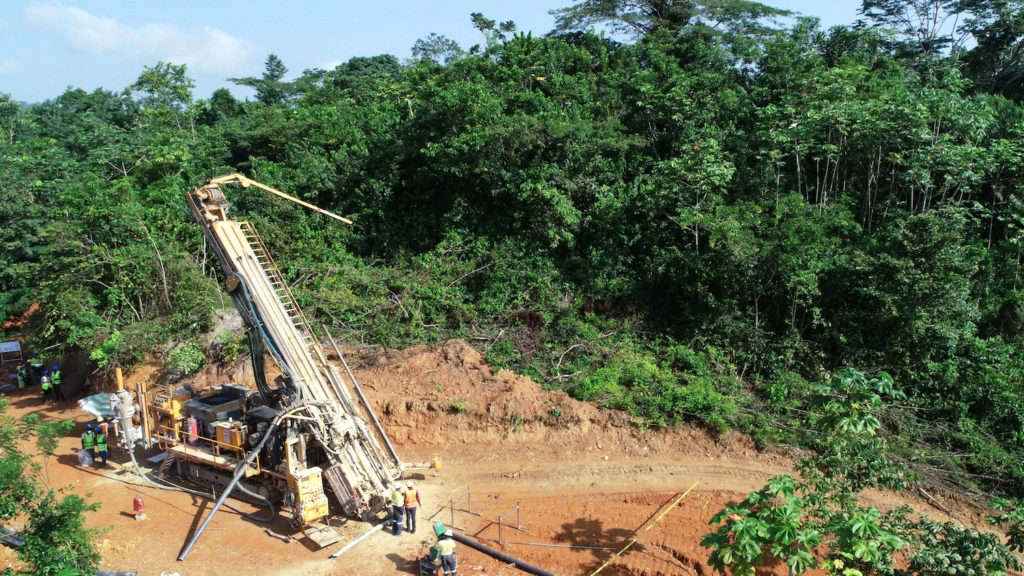
Newcore Gold has reported its strongest interval yet below the reserve pit at the Nyam deposit on the Enchi project in Ghana, with hole NBDD088 cutting 25.3 metres grading 3.67 g/t gold from 307.7 metres downhole and NBDD091 returning 18 metres at 1.26 g/t from 300 metres. The five new diamond holes, totalling 1,489 metres and drilled to vertical depths up to 275 metres, all intersected gold well above the current 0.64 g/t reserve grade that underpins a 5.5 Mt/y, 953,000 oz, 9.3‑year open-pit plan. With only 28,000 of 80,000 planned metres included in the March resource and current drilling still shallow relative to the >800‑metre depths at nearby Chirano, engineers can expect future pit-shell expansion, higher-grade feed and potential re-optimisation of the mine schedule and plant throughput assumptions.
Anglo American’s $53 billion all-share merger with Teck Resources will create Anglo Teck plc, led by current Anglo CEO Duncan Wanblad and headquartered in Vancouver, with Teck CEO Jonathan Price becoming deputy CEO and chief strategy officer. John Heasley is named CFO, Ruben Fernandes COO, and Nolitha Fakude will continue as chair of the South African management board, reporting to Wanblad. The combined group targets more than 70% portfolio exposure to copper, positioning it as a top-tier global copper producer, with final regulatory approvals expected between September 2026 and March 2027.
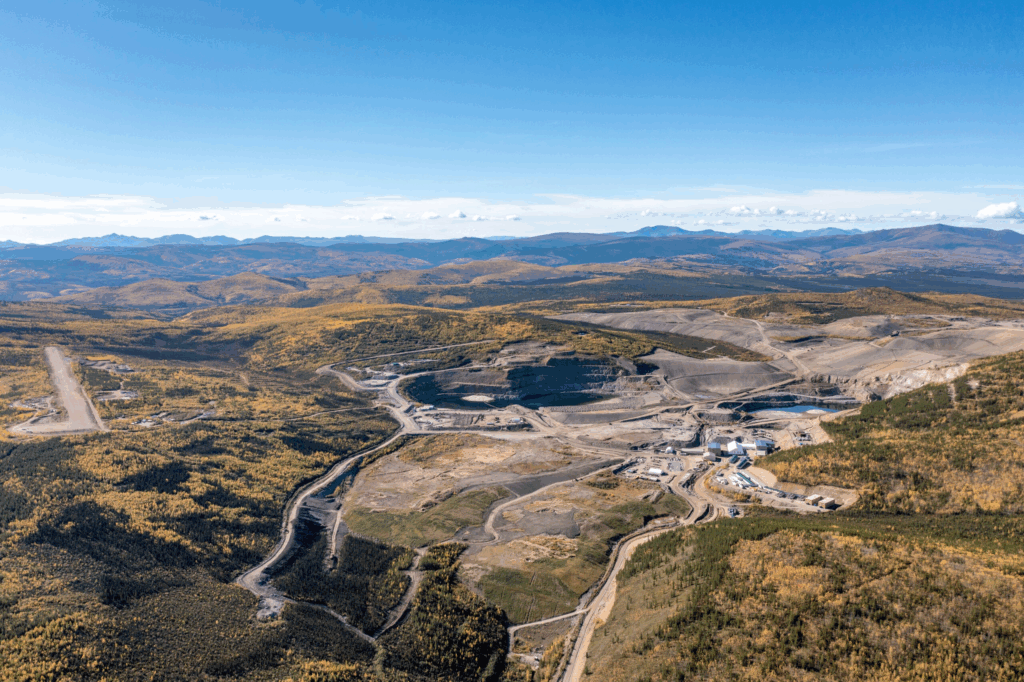
Resource update at Selkirk Copper Mines’ Minto project in Yukon outlines 47.8 million measured and indicated tonnes grading 0.89% copper, 0.34 g/t gold and 3.2 g/t silver, for 940 million lb. copper, 530,000 oz. gold and 4.8 million oz. silver, based on 428,388 metres of drilling in 1,956 holes. Contained measured and indicated copper has risen 181% versus 2025, albeit at lower grade as additional lower-grade tonnes are included, while inferred copper drops 48% to 281 million lb. at 0.76% Cu. The larger underground‑dominant resource, with about 45% open pit, is expected to underpin a Q3 feasibility study for a potential 2028 restart under Selkirk First Nation ownership.
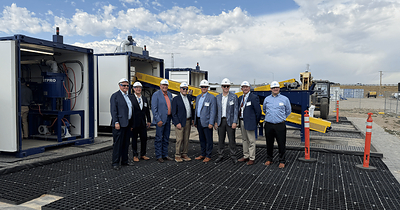
Perpetua Resources, the US Army and Idaho National Laboratory have opened a modular mineral pilot plant at INL Idaho Falls to process antimony samples from Perpetua’s Stibnite Gold project, the only identified domestic antimony reserve. The facility aims to demonstrate production of high‑quality antimony trisulphide suitable for more than 300 ammunition types and other specialised military and industrial uses, replacing imports from China and Russia. Designed as a “ground‑to‑round” testbed, the plant will also train a skilled workforce and could be adapted for other critical minerals processing.
IMC Rare Earths has begun trading on NYSE American under the ticker ‘IMC’ after a US$20 million IPO priced at US$5.00 per share to fund its Itarantim ionic adsorption clay project in Bahia and Minas Gerais, Brazil. Itarantim hosts an inferred mineral resource of about 1.1 billion tonnes, described as one of the largest high‑grade dysprosium and terbium deposits outside China and Myanmar, targeting magnet applications in AI, robotics, advanced electronics and defence. The listing signals a potential new non‑Chinese supply centre for heavy rare earths to the Americas and Europe.
Multotec will use Electra Mining Africa 2026 to show how small losses in hydrocyclone classification efficiency at the cut-point can translate into major revenue losses in mineral processing plants. The company plans to focus on the role of cyclones in grinding circuits, where misclassification sends fine particles back to the mill and allows coarse material to report to overflow, driving up energy consumption and reducing recovery. For plant engineers, the message is that cyclone performance monitoring and optimisation can deliver rapid, low-capex gains.
SK Godelius has partnered with Australian market growth firm A.I. LAMB to deploy its field‑proven conveyor intelligence platform across Australian mine sites, targeting large overland and in‑plant conveyor systems. The solution applies advanced analytics and machine learning to real‑time conveyor data to detect anomalies, predict failures and optimise belt loading and speed, aiming to cut unplanned downtime and maintenance interventions. The move extends SK Godelius’s international automation footprint into a market with some of the world’s longest, highest‑throughput bulk materials conveyors.
The Federal Government has reappointed Adam Copp as Chief Executive Officer of Infrastructure Australia for a further three-year term, extending his leadership beyond his initial appointment in July 2023. Copp, previously the organisation’s Chief Operating Officer and a senior executive across several internal roles, will continue overseeing national infrastructure audit, advisory and priority listing functions. The extension signals policy continuity for major transport, energy and social infrastructure assessments that depend on Infrastructure Australia’s cost–benefit analysis and long-term pipeline planning.
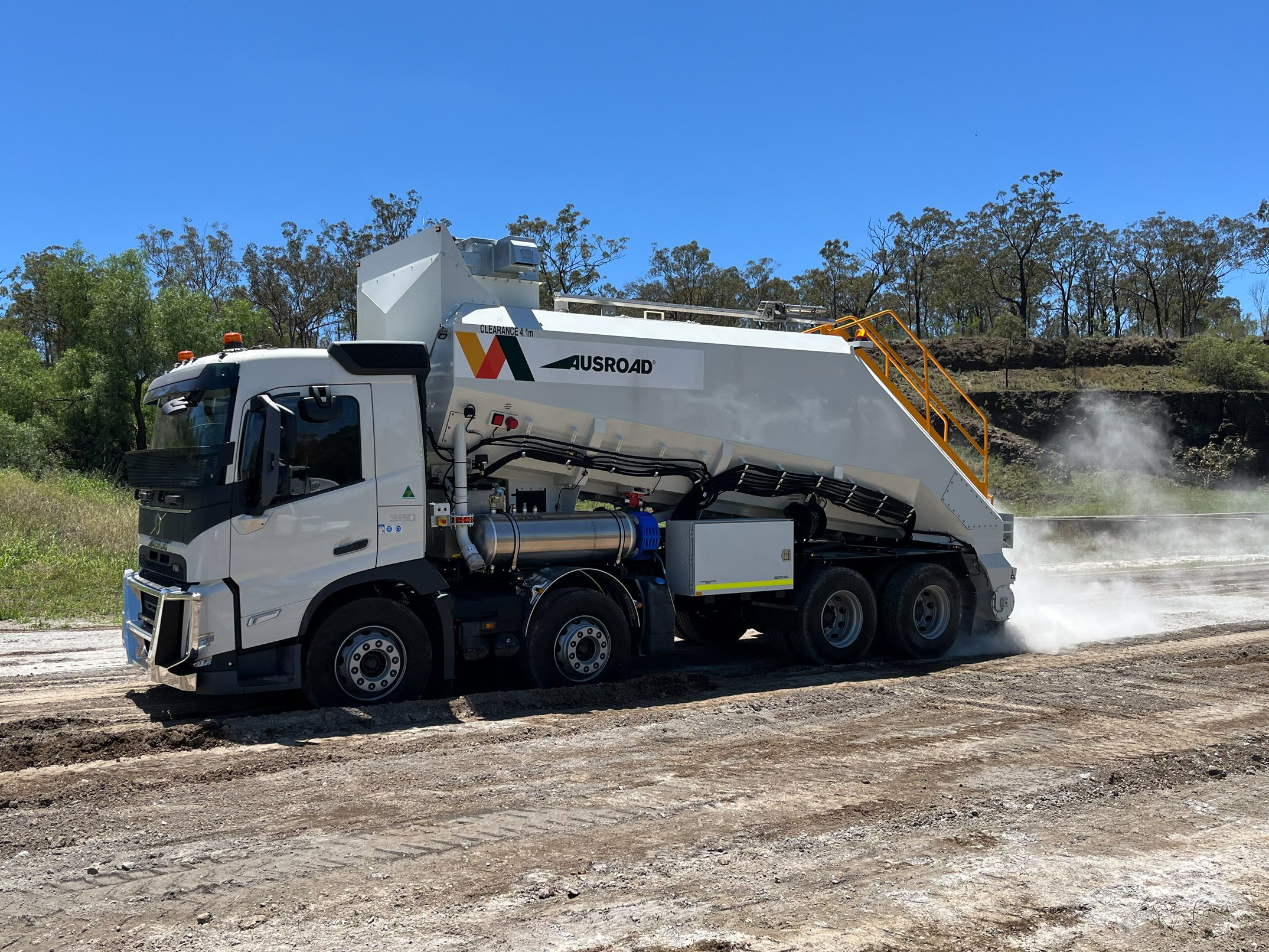
AUSROAD has launched a new purpose-built Powder Spreader for road stabilisation and ground improvement projects, designed to apply dry powdered binders such as lime and cement with tighter spread-rate control than conventional bulk tankers. The unit targets more uniform dosage across formation widths, improving consistency of subgrade strength and reducing over- or under-treatment on stabilised pavements. For contractors, the machine is aimed at higher application accuracy, faster cycle times and reduced operator exposure to airborne fine powders on Australian roadworks.
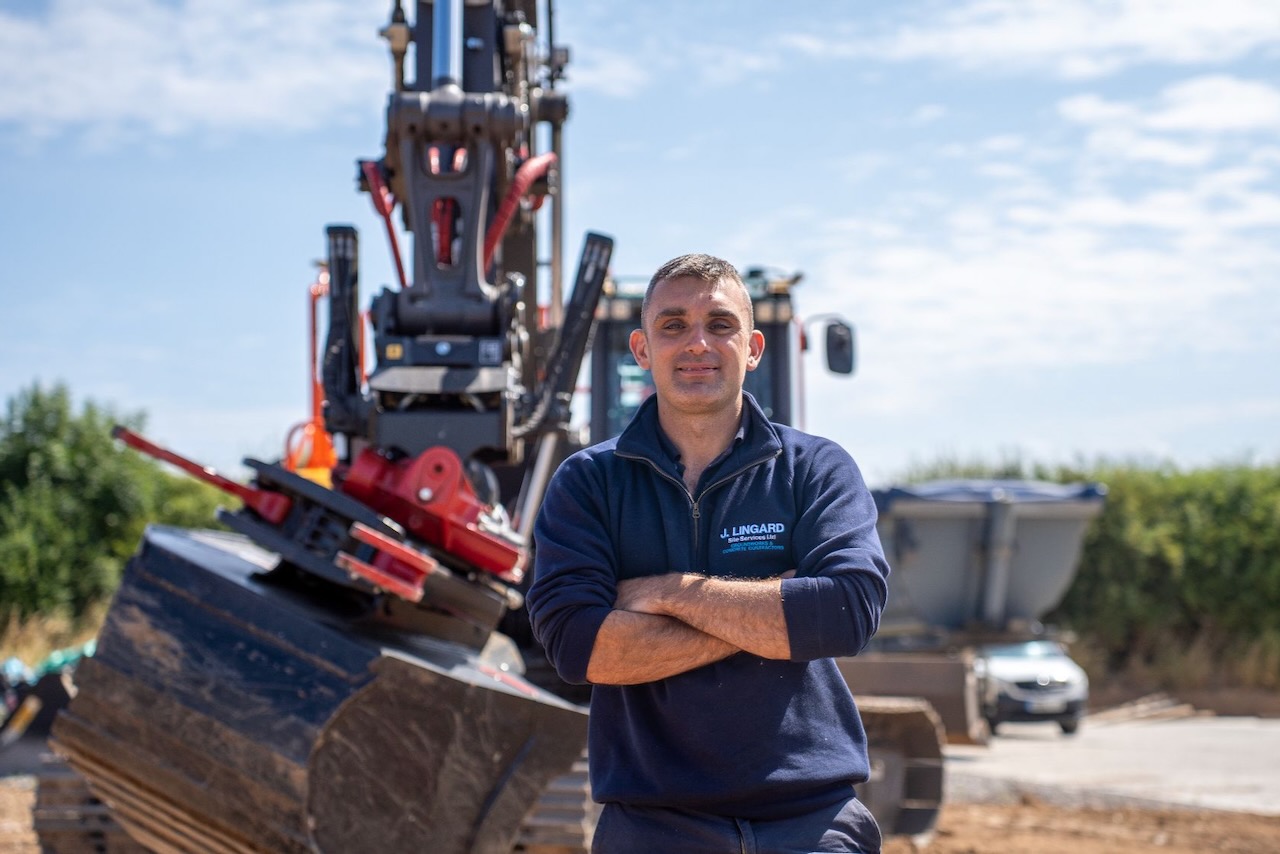
North Yorkshire contractor J Lingard has equipped a new 16‑tonne Volvo EC160E with a Rototilt RC5 tiltrotator and Leica machine-control system, supplied, installed and calibrated by SJ Pigg. The RC5, designed for 14–19 tonne excavators, handles breakout torques up to 200 kNm and offers 25% higher tilting torque than the R5, with pressure‑compensated hydraulics for precise grading, drainage and foundation work. QuickChange, SecureLock active safety, an RG800 gripper and blade control via RC joysticks cut manual coupling, machine repositioning, track wear and operator fatigue on confined sites.
Watkin Jones has secured six contracts worth about £60m in the quarter to 30 June, including five Refresh schemes covering 1,750 purpose-built student accommodation beds across four UK cities and a delivery partnership for Staycity Wilde Oxford. The Oxford aparthotel will provide 145 units, signalling continued demand for high-density, serviced accommodation in constrained urban centres. For contractors and consultants, the pipeline points to ongoing refurbishment and lifecycle upgrade work in PBSA assets alongside new-build hospitality schemes.
Installation of the penultimate beams on the Baker Viaduct over the River Calder has created the first physical rail connection for the Transpennine Route Upgrade across the river. The structure, delivered by BAM Nuttall and steel specialist Severfield, forms a key multi-span viaduct carrying new electrified railway over the Calder floodplain. For designers and contractors, the milestone confirms that main superstructure works are sufficiently advanced to lock in track alignment, overhead line equipment interfaces and future access for inspection and maintenance.