RWE–Network Rail wind deal: load, pricing and design notes for rail engineers
Reviewed by Joe Ashwell
First reported on New Civil Engineer
30 Second Briefing
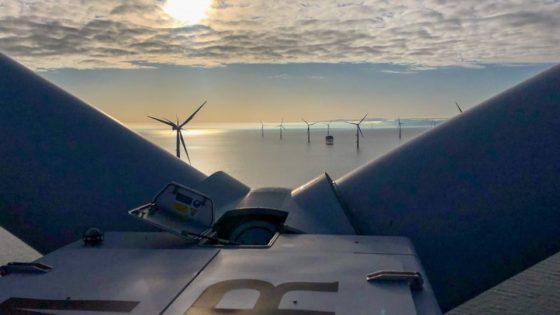
Network Rail has signed a power purchase agreement with RWE for 65% of its non-traction electricity demand to be supplied from an offshore wind farm in Wales, covering stations, depots, signalling and other fixed infrastructure. The deal ties a major rail infrastructure operator directly to a single large-scale renewable asset, giving more predictable long-term pricing and grid carbon intensity for operational facilities. For civil and rail engineers, this strengthens the case for further electrification of depots, plant and heating, with load profiles increasingly constrained by intermittent offshore wind supply.
Technical Brief
- Supply covers fixed infrastructure only, excluding any traction power feeds to overhead line or third rail.
- Non-traction loads include stations, depots, signalling centres and lineside equipment buildings across the national network.
- Agreement is structured as a power purchase contract rather than ownership or joint venture in generation assets.
- Grid interface remains via existing distribution and transmission connections; no dedicated private wire from the wind farm.
- For depot and station upgrades, electrical engineers must now consider offshore wind variability in load-scheduling and storage design.
Our Take
Network Rail appears frequently in our infrastructure database for asset renewals and signalling upgrades, but this Welsh offshore wind offtake marks one of its more material steps on the sustainability side, shifting decarbonisation focus from traction power to the sizeable non-traction load of stations, depots and signalling.
Taken alongside recent Network Rail works such as the £75.5M Easter renewals programme and the Transpennine Route Upgrade, locking in 65% low-carbon non-traction electricity suggests future major projects may increasingly be assessed not just on capex and disruption but also on embedded operational emissions over asset life.
Prepared by collating external sources, AI-assisted tools, and Geomechanics.io’s proprietary mining database, then reviewed for technical accuracy & edited by our geotechnical team.
Related Articles


Related Industries & Products
Construction
Quality control software for construction companies with material testing, batch tracking, and compliance management.
Mining
Geotechnical software solutions for mining operations including CMRR analysis, hydrogeological testing, and data management.
CMRR-io
Streamline coal mine roof stability assessments with our cloud-based CMRR software featuring automated calculations, multi-scenario analysis, and collaborative workflows.
HYDROGEO-io
Comprehensive hydrogeological testing platform for managing, analysing, and reporting on packer tests, lugeon values, and hydraulic conductivity assessments.
GEODB-io
Centralised geotechnical data management solution for storing, accessing, and analysing all your site investigation and material testing data.