Geomechanics, Streamlined.
© 2026 Geomechanics.io. All rights reserved.
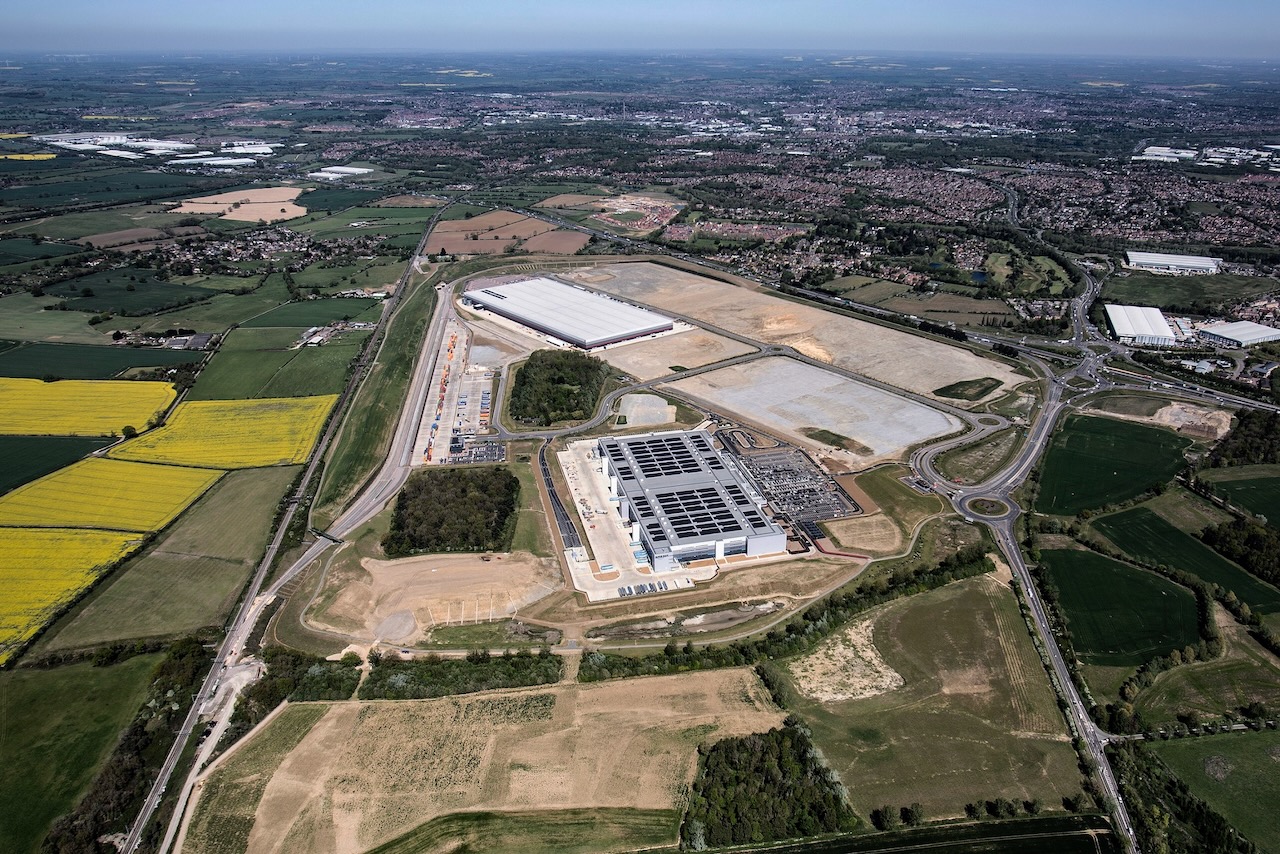
Winvic has completed five years of civils and infrastructure works at SEGRO Logistics Park Northampton, delivering a 2.6km Roade village bypass with bridge and roundabouts, major upgrades to M1 Junction 15 under complex traffic management, and extensive earthworks for the strategic rail freight interchange. The SRFI includes a 35-acre rail terminal, a 55,000m² intermodal and HGV slab, and a 170m tunnel shielding trains entering and leaving the terminal. Winvic also built a 2.3 million sq ft distribution centre and a 1.2 million sq ft BREEAM Excellent, EPC A, net-zero-in-construction facility, within a park masterplanned for up to 5 million sq ft and around 7,450 jobs.
Revenues at United Infrastructure for the year to 31 March rose 17.8% to £845.8m, with EBITDA on continuing operations up 49% to £102.2m and cash profits before tax increasing to £49.6m. The contractor reported a £24bn gross pipeline across 754 opportunities, a £4.6bn order book and £1.7bn of new contract wins in the year. CEO Neil Armstrong linked growth to demand for decarbonisation, resilience, digital connectivity and power, water and data centre infrastructure tied to the UK’s energy transition.
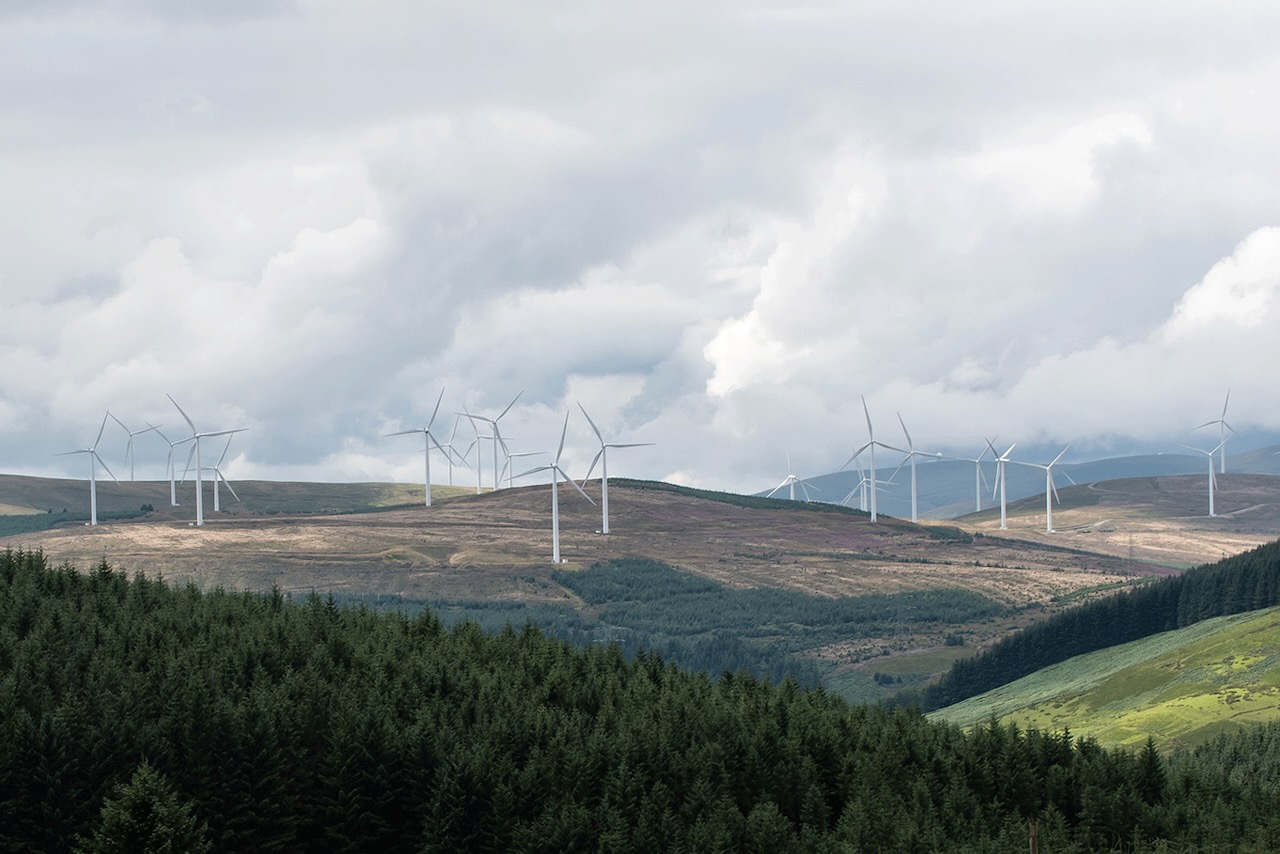
Natural Power has secured a new five-year operations and maintenance contract with ScottishPower Renewables covering four onshore windfarms in southern Scotland – Ewe Hill 1, Ewe Hill 2, Hagshaw Hill 2 and Wether Hill – alongside an extension at Black Law Windfarm. The work sits within ScottishPower Renewables’ latest O&M framework, a record £102.9m investment in the UK onshore wind supply chain. Natural Power is expanding engineering teams in Dumfries and Lanark, signalling sustained regional demand for turbine maintenance, balance-of-plant inspections and asset management expertise.
BAM reported first-half 2026 EBITDA up 36% to €240m, giving a 6.9% margin on a €12.6bn order book and guiding to full-year margins above 6.5% on stronger profitability across energy transition, Dutch residential and defence work. UK operations delivered revenue of €1,733m and EBITDA of €98m, up from €1,673m and €66m, supported by wins such as Wales High School, Royal School Wolverhampton, Huddersfield’s Our Cultural Heart Phase 2 and the Upper Thurne Pumping Stations project. A new plug-and-play compact substation, pending final certification, is expected to cut installation time by 75% and halve specialist labour needs, directly affecting grid-connection programmes.
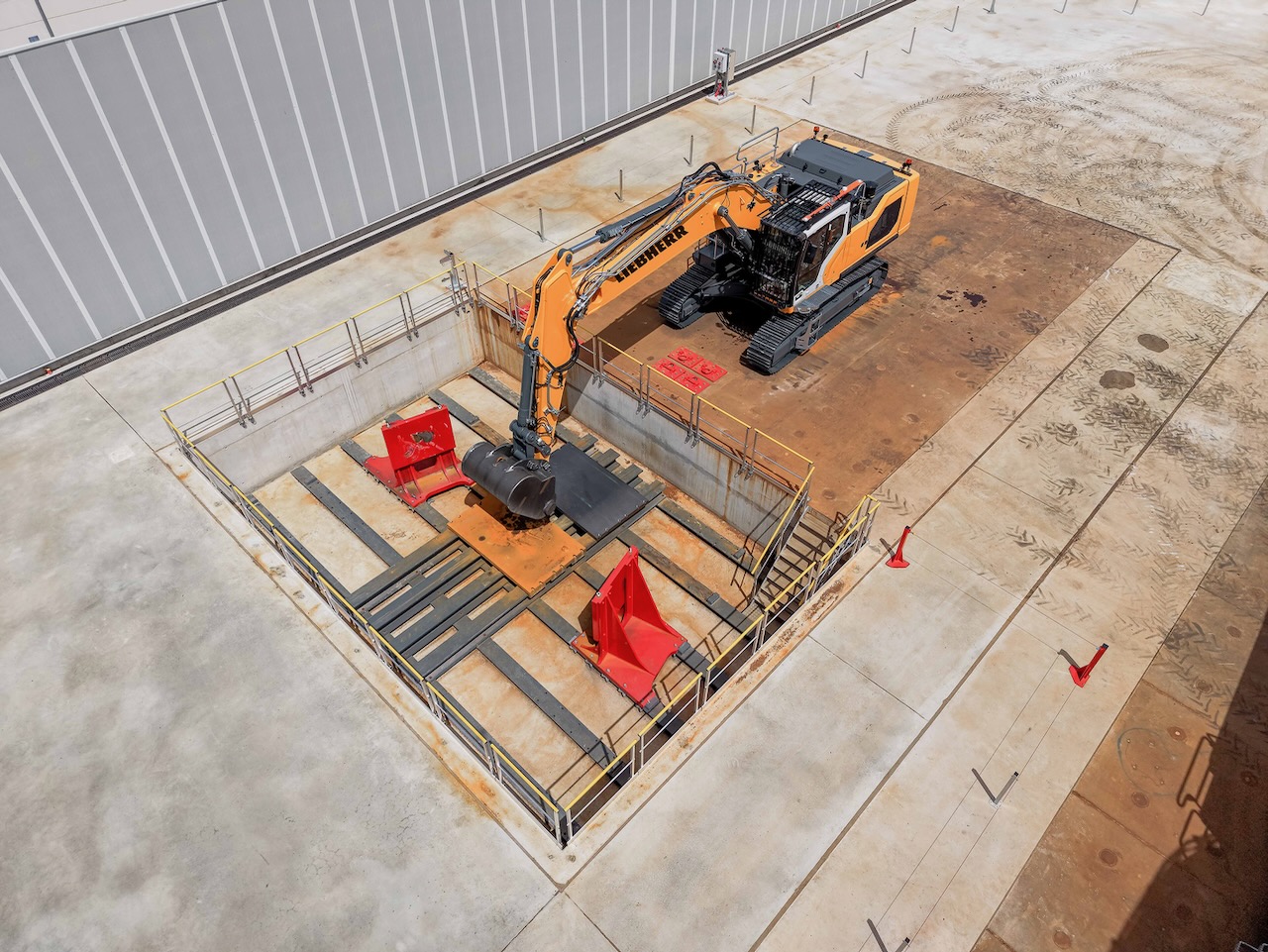
Liebherr France has invested €2.5m in a new accelerated test rig at its Colmar plant that can simulate crawler excavator working stresses at 17 times normal operating speed. The system subjects complete uppercarriage and undercarriage assemblies to cyclic loading to compress multi‑year fatigue, wear and structural integrity assessments into weeks rather than months. Data from the rig are also being used to develop and validate autonomous operation tools, including control algorithms and sensor packages, under repeatable high‑load duty cycles.
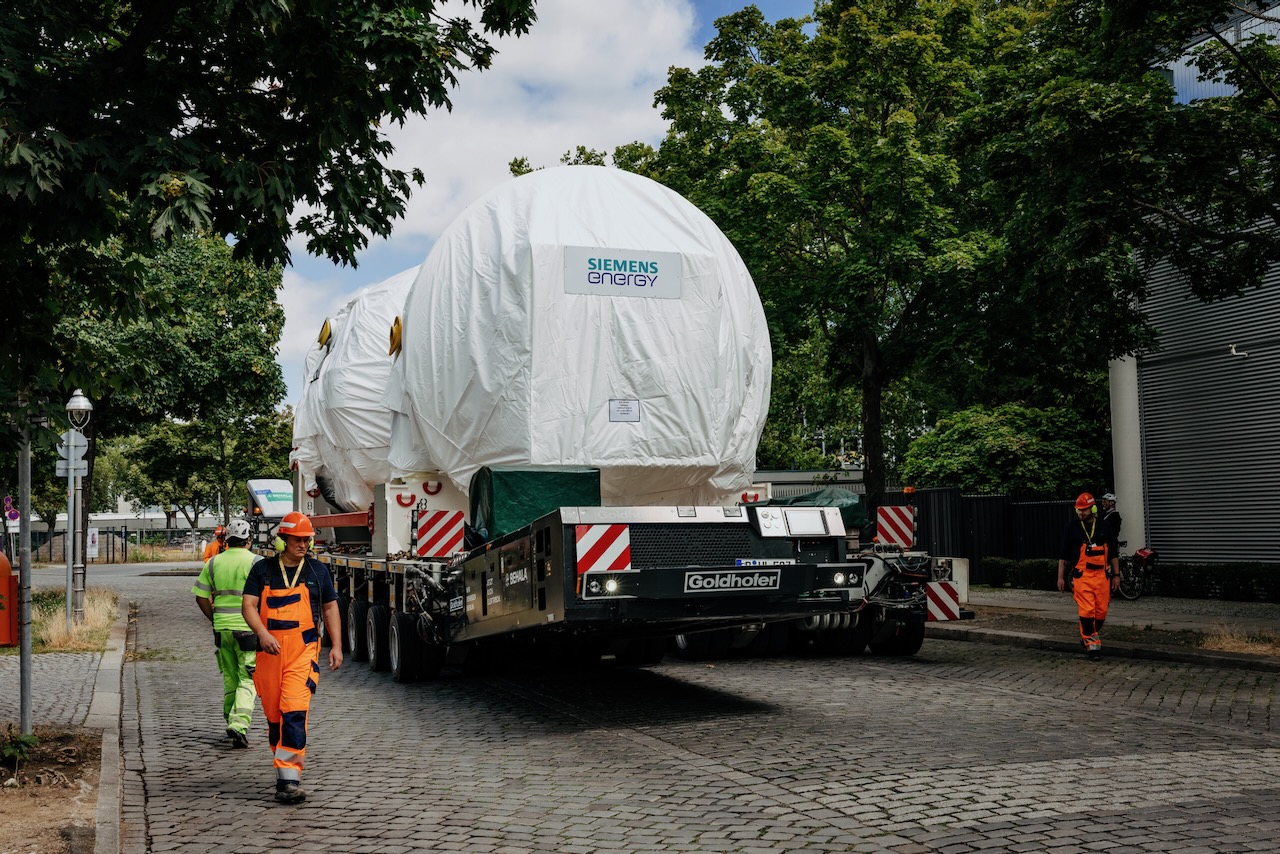
A Goldhofer fully electric E-PowerPack has moved a 430‑tonne Siemens Energy gas turbine at Berlin’s BEHALA RoRo terminal, marking a quiet, zero‑emissions first for heavy transport using this aviation-derived drive technology. The E-PowerPack powered modular trailers without diesel prime movers, eliminating local exhaust emissions inside the port area and reducing noise during night-time operations. For heavy haul and port engineers, the move provides an early full‑scale reference for battery-electric prime movers on multi-axle turbine transports in constrained terminal environments.
Pantoro Gold has restarted drilling at Lake Cowan in Western Australia’s Norseman project, launching the first systematic aircore programme on the salt lake since the early 1990s as part of a broader growth push across the high‑grade goldfield. The campaign, which began on 30 June, is targeting new near‑surface mineralisation beneath lake sediments to open additional mining fronts beyond existing Bullen and Scotia operations. For geologists and mine planners, the work could materially extend resource envelopes and influence future pit and underground designs across the Norseman tenements.
Australia’s coal industry contributed almost $165 billion to the national economy and supported about 750,000 direct and indirect jobs in the 2024/25 financial year, according to Coal Australia’s first Annual Coal Report prepared by Lawrence Consulting. The report provides a state‑by‑state and regional breakdown of coal’s economic footprint, covering national, state and local government areas and associated supply chains. For mine planners and contractors, the figures signal continued capital allocation to coal projects, sustaining demand for overburden removal, haulage fleets, CHPP upgrades and related geotechnical and civil works.
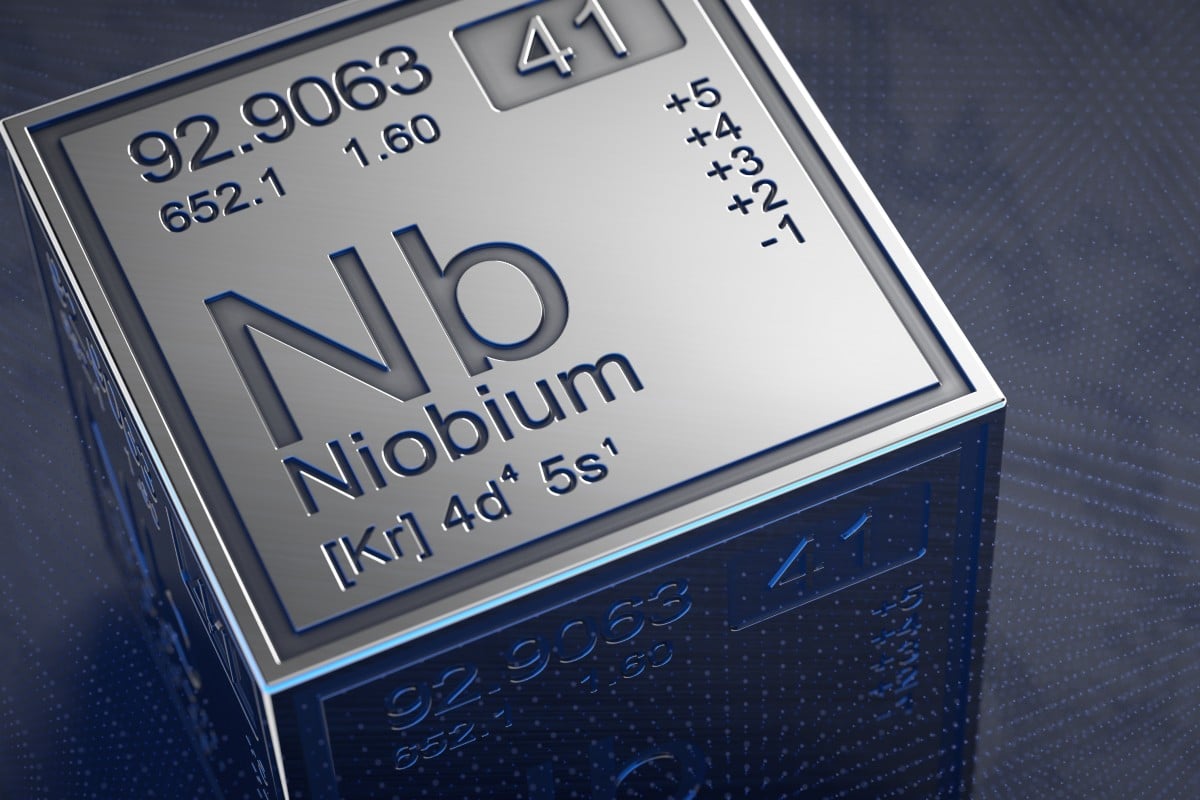
WA1 Resources has reported further high-grade infill drilling at the eastern zone of its Luni niobium project in Western Australia, including 7.3m at 2.9 per cent niobium pentoxide and 13m at 3.2 per cent. The results move the project closer to feasibility and strengthen the case for a standalone niobium operation with associated rare earths. For mine planners and metallurgists, the continuity of shallow, high-grade intersections supports potential for low-strip, open-pit designs and relatively simple concentrator flowsheets.
Queensland has launched a four-year, $146 million critical minerals plan, Delivering Queensland’s Critical Minerals Future 2026–30, targeting accelerated extraction, onshore processing and export of strategic resources such as vanadium, rare earths and high‑purity alumina. Funding will support enabling infrastructure, project approvals and downstream processing hubs in existing mining centres like Mount Isa and Townsville to position the state as a globally recognised supplier into secure, diversified supply chains. For miners and engineers, the package signals policy backing for new concentrators, refineries and associated transport and power upgrades.
Aeris Resources has advanced its copper growth strategy with the acquisition of Peel Mining and the start of early construction works on the Constellation Project within its Tritton Operations in New South Wales. Initial works cover key surface infrastructure for the planned underground copper development, including access, services and site preparation tied to the existing Tritton processing plant. The moves consolidate additional copper resources into a single operating hub, with implications for mine scheduling, shared tailings and haulage infrastructure, and long-term plant utilisation.
New £250M Cambridge South station recorded more than 110,000 passenger journeys in its first month after opening on 29 June, signalling strong early demand for the new rail link serving the Cambridge Biomedical Campus. The station, funded through a mix of Department for Transport, Cambridgeshire and Peterborough Combined Authority and private stakeholder contributions, is designed to relieve pressure on Cambridge and Cambridge North by adding extra stopping capacity on the West Anglia Main Line. Early usage figures will be critical for validating timetable planning, platform capacity assumptions and local transport modelling.
Andy Burnham’s proposed technical education reforms are framed as a cultural reset for UK infrastructure delivery, aiming to rebalance status between vocational and academic routes. The piece argues that long-life assets such as 120-year bridges, major tunnelling schemes and whole-life flood defences need technicians and engineers trained in systems thinking, digital tools (BIM, asset information models) and whole-life carbon assessment, not just narrow trade skills. For geotechnical and civil practitioners, the message is to engage directly with curriculum design, apprenticeships and professional accreditation to secure a resilient future skills pipeline.
Railveyor is pitching its electrically powered, low-profile rail‑conveyor haulage system as a way to unlock northern Ontario’s Ring of Fire, arguing that early-stage mine designs should avoid committing to high-capex, high-disturbance road or rail corridors. CEO Tas Mohamed says the automated, bidirectional trains can handle steep gradients and tight curves with minimal surface footprint, potentially reducing earthworks, water crossings and permafrost disturbance compared with conventional truck haulage. For project teams, the message is to integrate alternative haulage envelopes and power requirements into scoping studies rather than retrofitting later.
John Deere Electronics is releasing its field-tested Vision Processing Unit (VPU) to European OEMs and machine builders, enabling integration of ruggedised, vision-based autonomy hardware into next-generation mobile machinery. The VPU is designed to run high-compute computer vision and machine learning workloads for real-time perception and decision-making, such as object detection, obstacle avoidance and path planning around mining and construction equipment. For engineers, this offers an off‑the‑shelf, validated compute platform for autonomous or operator-assist systems without developing bespoke edge hardware.
Chilean copper mine Compañía Minera Lomas Bayas has deployed a Level 9 collision avoidance system on its tyre handlers that can autonomously stop the manipulator when a person enters a predefined danger zone. The system protects crews working in close proximity to suspended loads during transport, installation, removal and stockpiling of large mining tyres, where confined spaces and limited visibility create high crush and pinch risks. For mine operators, this signals growing interest in engineered controls on tyre handling, a task that remains a leading cause of serious maintenance incidents.
XCMG has started production at its first overseas new energy heavy equipment plant, with XC968-EV battery-electric wheel loaders rolling off the line at the newly inaugurated Indonesian New Energy Manufacturing Base in Weda Bay Industrial Park (IWIP). Coming just five days after LiuGong broke ground on a separate electric heavy equipment factory in Indonesia, the move signals rapid localisation of electric loader manufacturing close to major nickel and stainless-steel operations. For mine operators in Halmahera and wider Indonesia, local EV loader supply should shorten lead times and simplify support for large-scale electrification trials.
MAXAM Tire has added a 50/65R51 size to its MS501 MineXtra range, targeting large wheel loaders in severe L5 mining service where rock abrasion and cut resistance are critical. The new radial is engineered for “the industry’s toughest” loading conditions, extending the existing MS501 family for operations that run high-capacity loaders on aggressive faces and waste dumps. For mine operators, the larger 51-inch fitment offers another option to match tyre life and downtime to high-production loader fleets without changing machine class.
De Beers, once valued above $18 billion, is close to being sold by Anglo American to the Global Diamond Consortium for about $1 billion, with $750 million upfront, $250 million deferred and additional performance-linked payments. The GDC group, led by former De Beers CEO Gareth Penny and including the governments of Namibia and Angola, plans to inject roughly $500 million post-acquisition and refocus the business on mining and marketing mined diamonds. The deal hinges on negotiations with Botswana, which holds 15% of De Beers and 50% of Debswana and is pushing for increased control.
Denison Mines has started full construction of the C$700 million Phoenix in-situ recovery uranium project in northern Saskatchewan, installing the first perimeter freeze wall after completing more than 20% of civil works and nearly all ground preparation for the processing plant and wellfield. The Athabasca Basin’s first commercial ISR mine is targeting mid-2028 first production, peak output of about 9 million lb U3O8 per year over a 10-year mine plan, drawing on 56.7 million lb of proven and probable reserves grading 11.7% U3O8. Key infrastructure includes a new 138 kV SaskPower transmission line, on-site concrete batch plant, quarry, expanded 400-person camp and an airstrip under preparation, with engineering about 90% complete.
South32’s Hermosa zinc-silver project in southern Arizona has become the first US mine to complete the FAST‑41 permitting process, securing a federal record of decision in just over two years to authorise a high‑voltage transmission line, second access road, dry‑stack tailings facility and water discharge points across public land. The underground operation, designed for about 70 years of production from zinc, battery‑grade manganese and the Peak copper discovery, will disturb roughly 750 acres and target water use of ~0.5 gallons per pound of metal versus 7–30 gallons at many historical base metal mines. Construction costs have blown out beyond US$2 billion as installed steel prices rise to 2.5 times original estimates, but South32 is pushing ahead with a fully battery‑electric underground fleet, a remote operating centre in Nogales, and a plan to source at least 80% of its 800–900 roles locally, with first production aimed for early 2028.
Zijin Mining’s planned $4 billion cash acquisition of Allied Gold has lapsed after Chinese regulators failed to clear the deal by the 29 July deadline, leaving Zijin with a 9.2% equity stake via a C$295 million private placement at C$32.55 per share for 12.8 million new shares. Allied’s stock dropped about 18% in Toronto to C$24.27 and 16% in New York to $17.68, cutting its valuation to just over C$3 billion. The funding will support ramp-up of the Kurmuk mine in Ethiopia, expansion at Sadiola in Mali and increased output at Côte d’Ivoire operations totalling roughly 375,000 oz/y currently.
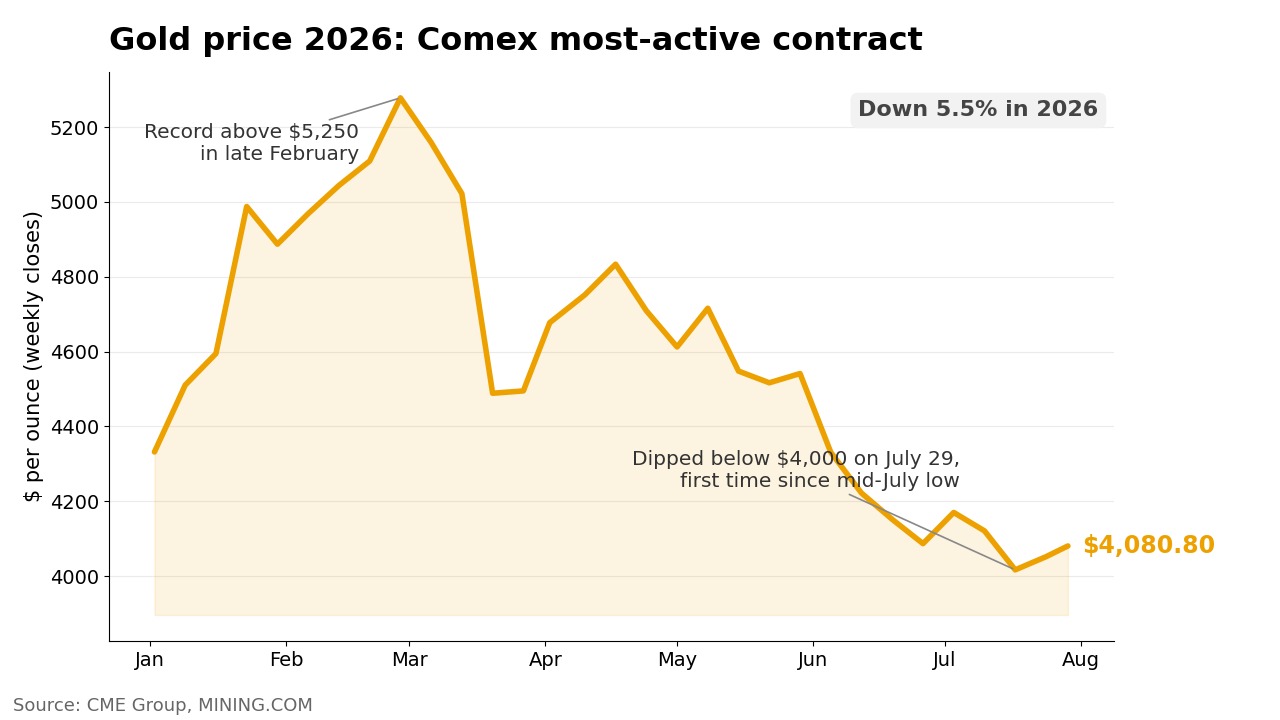
Gold rebounded from an intraday low of $3,993.80/oz to $4,080.80 on the Comex August contract after the Federal Reserve held rates at 3.5%–3.75% in a split 9–3 decision, despite swaps pricing a roughly 38% chance of a hike. Silver outperformed, with the September contract up 2.2% to $58.78/oz, though both metals remain far below their late-January peaks, pressuring margins and project economics for high-cost producers. Precious metals equities edged higher on the hold, but Allied Gold slumped 19% in Toronto after its C$5.5 billion takeover by Zijin Gold collapsed.
First Quantum Minerals is ramping up its Cobre Panama restart, commissioning the first of three milling circuits and producing 3,216 tonnes of copper concentrate from 2.1 million tonnes of stockpiled ore in Q2, while adding about 1,000 jobs to lift direct site employment to roughly 3,000. The mine’s 38‑million‑tonne stockpile holds an estimated 70,000 tonnes of recoverable copper, supporting 2026 guidance of 30,000–40,000 tonnes from stockpile processing and roughly 12 months of throughput at current rates. Formal negotiations with Panama are nearing, with options including a joint venture with a state-owned miner, a 60–65% First Quantum stake, or a lease-back model.