Raac crisis public inquiry call: structural safety lessons for engineers
Reviewed by Joe Ashwell
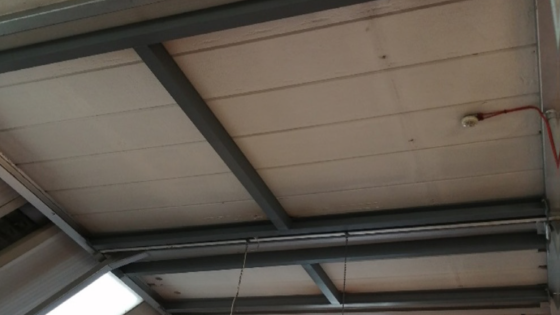
First reported on New Civil Engineer
30 Second Briefing
A parliamentary petition is demanding a full public inquiry into how national and local government managed the 2023 reinforced autoclaved aerated concrete (Raac) crisis in public buildings. The move follows widespread emergency closures and propping of schools and other structures where Raac roof and floor planks, typically installed from the 1950s to 1990s, were found at risk of sudden shear and bearing failure. An inquiry could scrutinise inspection regimes, structural assessment criteria and decision-making thresholds used to classify Raac elements as critical.
Technical Brief
- Failure mechanism involves low-density Raac planks with corroded reinforcement losing shear and bearing capacity.
- Typical Raac roof units comprise thin concrete toppings over aerated cores, creating weak interfaces at supports.
- Investigation relies on intrusive opening-up, core sampling, cover meter surveys and end-bearing inspections of planks.
- Structural assessment now often uses conservative residual strength assumptions and reduced partial factors for Raac elements.
- Monitoring regimes include frequent visual checks, deflection gauges and exclusion zones beneath suspect spans.
- Remediation options range from full plank replacement to steel grillage overcladding, or complete roof reconstruction.
- Safety protocols increasingly require Raac registers, mandatory structural engineer sign-off and documented temporary propping designs.
Prepared by collating external sources, AI-assisted tools, and Geomechanics.io’s proprietary mining database, then reviewed for technical accuracy & edited by our geotechnical team.
Related Articles


Related Industries & Products
Construction
Quality control software for construction companies with material testing, batch tracking, and compliance management.
Mining
Geotechnical software solutions for mining operations including CMRR analysis, hydrogeological testing, and data management.
QCDB-io
Comprehensive quality control database for manufacturing, tunnelling, and civil construction with UCS testing, PSD analysis, and grout mix design management.