Geomechanics.io

  • Free Tools
Sign UpLog In

Geomechanics.io

Geomechanics, Streamlined.

© 2026 Geomechanics.io. All rights reserved.

Geomechanics.io

CMRR-ioGEODB-ioHYDROGEO-ioQCDB-ioFree Tools & CalculatorsBlogLatest Industry News

Industries

MiningConstructionTunnelling

Company

Terms of UsePrivacy PolicyLinkedIn
    AllGeotechnicalMiningInfrastructureMaterialsHazardsEnvironmentalSoftwarePolicy
    Projects

    McLaughlin & Harvey’s Edinburgh Engineering Forum: design and delivery notes for project teams

    April 17, 2026|

    Reviewed by Tom Sullivan

    McLaughlin & Harvey’s Edinburgh Engineering Forum: design and delivery notes for project teams

    First reported on The Construction Index

    30 Second Briefing

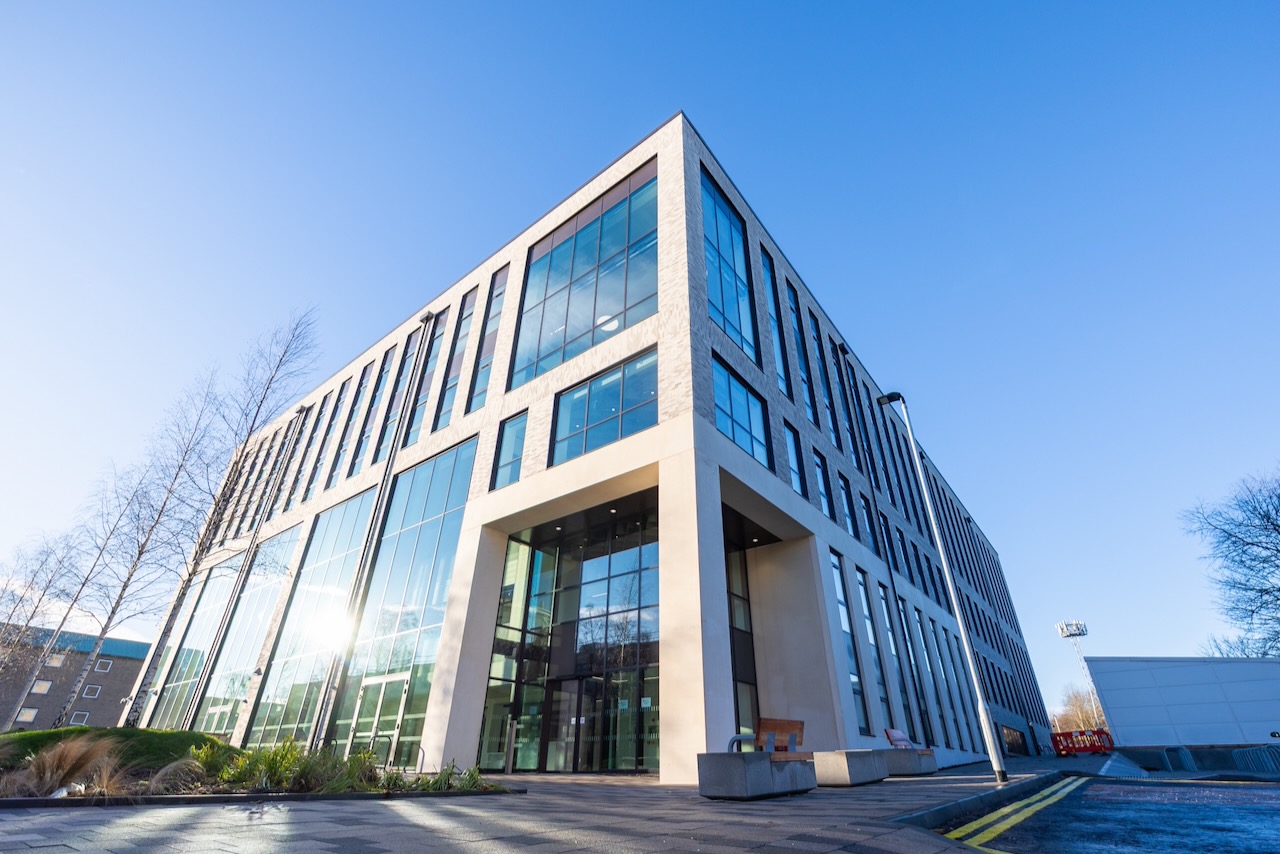
    McLaughlin & Harvey has completed the University of Edinburgh’s 6,500 m², five-storey steel-framed Engineering Forum building, delivered through the SCAPE Scotland Framework for the School of Engineering’s Institute for Energy Systems. The facility is designed as a “living lab” for renewable energy, power systems and electronics, directly supporting experiential teaching and active research. Construction was carried out within the live King’s Buildings Campus, adding to McLaughlin & Harvey’s recent projects there, including the Nucleus Building (opened 2022) and the Usher Institute (2024).

    Technical Brief

    • Steel-framed superstructure adopts a regular five-level grid, optimised for flexible lab and teaching layouts.
    • 6,500 m² gross floor area demands careful vertical circulation and services zoning to segregate research and teaching flows.
    • Delivered under the SCAPE Scotland Framework, implying standardised procurement, NEC-style contracts and framework-led supply chains.
    • Construction sequencing had to accommodate a live King’s Buildings Campus, constraining deliveries, noise and working hours.
    • Close collaboration with university stakeholders and design partners was required to manage interface risks with adjacent occupied buildings.
    • McLaughlin & Harvey’s prior campus projects (Nucleus, Usher Institute, Roslin Innovation Centre) provided site-specific logistics and ground-condition knowledge.
    • Repeated work for the same client on one estate suggests cumulative optimisation of temporary works, access routes and campus utilities tie-ins.
    • For similar university estates, framework delivery plus repeat contractor engagement can materially reduce campus disruption and programme risk.

    Our Take

    Across our Infrastructure coverage, McLaughlin & Harvey appears frequently in Scottish public-sector work, with this University of Edinburgh scheme sitting alongside the Port Ellen Ferry Terminal redevelopment for CMAL as part of a strong pipeline tied to Scottish Government-backed clients.

    The 6,500 m² Engineering Forum building reinforces McLaughlin & Harvey’s positioning in technically specialised facilities, complementing its large machine shop project for Sheffield Forgemasters, which signals capability for complex steel-framed and heavy-engineering environments.

    Delivering a seventh project for the University of Edinburgh suggests a framework-style relationship where repeat work at the King’s Buildings Campus can reduce procurement friction and learning-curve risk compared with one-off university projects seen elsewhere in our 815 Infrastructure stories.

    Geotechnical Software for Modern Teams

    Centralise site data, logs, and lab results with GEODB-io, CMRR-io, and HYDROGEO-io.

    No credit card required.

    • Save and export unlimited calculations
    • Advanced data visualisation
    • Generate professional PDF reports
    • Cloud storage for all your projects

    Prepared by collating external sources, AI-assisted tools, and Geomechanics.io’s proprietary mining database, then reviewed for technical accuracy & edited by our geotechnical team.

    Related Articles

    National Grid TBM under the Thames: tunnelling design and risk notes for engineers
    Infrastructure
    in 8 months

    National Grid TBM under the Thames: tunnelling design and risk notes for engineers

    A 271.5‑tonne Herrenknecht Mixshield TBM, Caroline, has started driving a 2.2km electricity cable tunnel with a 4m internal diameter beneath the River Thames in Essex for National Grid’s Grain to Tilbury project, delivered by the Ferrovial BEMO joint venture. The drive will pass through variable Thames estuary ground conditions between 35m‑deep launch and reception shafts of 15m and 12m diameter, with tunnelling continuing into 2026 and overall scheme completion targeted for 2029. The new tunnel will replace the 1969 Thames Cable Tunnel and carry new high‑voltage circuits between Grain and Tilbury substations.

    Panama Canal Mixshield undercrossing: design and tunnelling lessons for engineers
    Infrastructure
    in 8 months

    Panama Canal Mixshield undercrossing: design and tunnelling lessons for engineers

    A 13.46m diameter Herrenknecht Mixshield TBM has broken through into the future Balboa station on Panama Metro Line 3 after completing the first-ever TBM undercrossing of the Panama Canal at depths exceeding 60m below sea level. The 5,600kW, 26,616kNm machine, fitted with an accessible cutterhead and more than 4,500 sensors linked via the Herrenknecht.Connected platform, has achieved peak advance of 150 segment rings (about 300m) per month through mixed sandstone, tuff, breccias and basalt. Around 1.5km of the 4.5km twin-track tunnel remains to final breakthrough.

    Hudson Tunnel funding deadline: schedule and risk takeaways for project teams
    Infrastructure
    in 7 months

    Hudson Tunnel funding deadline: schedule and risk takeaways for project teams

    Federal funding for New York’s US$16bn Hudson Tunnel Project has been frozen, forcing the Gateway Development Commission to suspend works from 6 February after spending over US$1bn and employing about 1,000 site workers. A Manhattan federal judge has issued a temporary restraining order, giving the administration until 5 p.m. on 12 February to restore reimbursements or appeal, while contractors warn that demobilisation, resequencing and remobilisation will add cost and delay. Sites are now in “safe-pause” mode, with dewatering, ground support and environmental monitoring maintained, and assembly of two Herrenknecht TBMs in New Jersey likely to slip beyond the planned spring 2026 launch without funding certainty.

    Related Industries & Products

    Construction

    Quality control software for construction companies with material testing, batch tracking, and compliance management.

    Mining

    Geotechnical software solutions for mining operations including CMRR analysis, hydrogeological testing, and data management.

    QCDB-io

    Comprehensive quality control database for manufacturing, tunnelling, and civil construction with UCS testing, PSD analysis, and grout mix design management.