Geomechanics, Streamlined.
© 2026 Geomechanics.io. All rights reserved.
Meeka Metals has intersected visible gold about 300m below the current Turnberry underground resource in Western Australia’s Murchison region, signalling potential depth extensions to the orebody. Diamond hole 26TBRD010 hit visible gold at 632.8m down-hole within a broad shear zone containing chalcopyrite, pyrite, albite and magnetite, pointing to a sulphide-rich, structurally controlled system. Assays are pending, with results expected in September after detailed core logging, which will guide further deep drilling and resource modelling.
Beacon Minerals has more than tripled the Ore Reserve at its Iguana gold deposit in Western Australia to 11 million tonnes at 1.20g/t for 430,200oz, up from 132,200oz, supporting a nine-year mine life. The updated plan is forecast to generate $841 million in undiscounted pre-tax free cash flow, signalling a materially larger open-pit and/or underground schedule and longer commitment to associated waste dumps, tailings capacity and haulage infrastructure. Geotechnical and mine planning teams will need to revisit pit slopes, dewatering and fleet sizing to optimise the expanded reserve.
MGX Resources is deploying a $412.1 million cash and investment pool to fast‑track the Central Tanami gold project in the Northern Territory, focusing on accelerated drilling, site infrastructure upgrades and underground mine preparations. The 50 per cent‑owned Central Tanami Project Joint Venture is moving towards commencement of the Groundrush underground operation, shifting MGX’s portfolio away from iron ore. For engineers, the spend signals imminent demand for geotechnical design of underground stopes, ground support and dewatering, plus haul road and camp upgrades along the Tanami Road corridor.
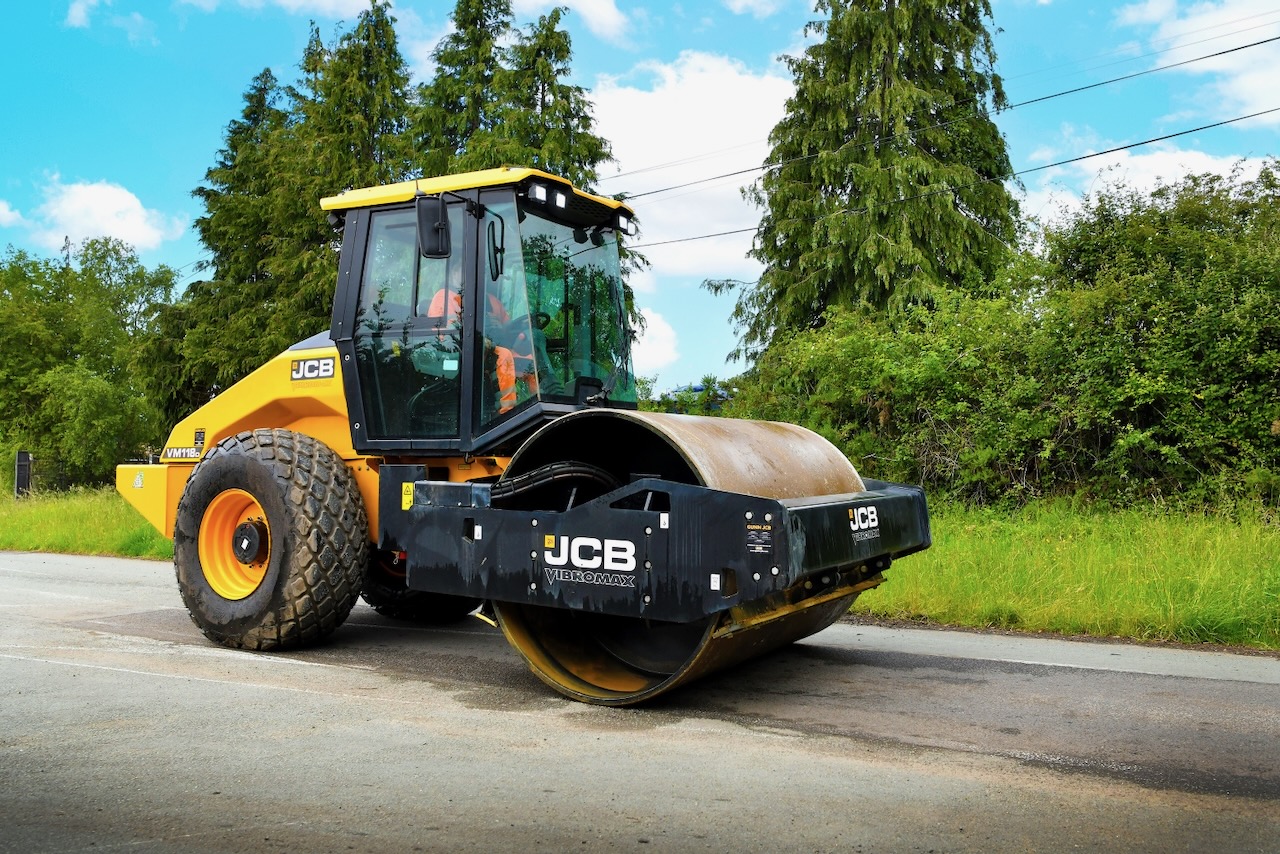
Ridgway Rentals has added three of JCB’s new VM118D single-drum soil compactors, plus 220X tracked excavators and articulated booms, to its 400-strong JCB fleet via Gunn JCB, with the units immediately deployed on quarrying, waste, infrastructure and housebuilding projects. The 10+ tonne VM118D uses a 55 kW JCB 430 EU Stage V diesel engine that uniquely meets the standard without DEF, cutting fluid logistics, system complexity and maintenance for site teams. Ridgway cites strong utilisation of JCB compaction rollers and flexible JCB Finance structures as key drivers for the latest investment.
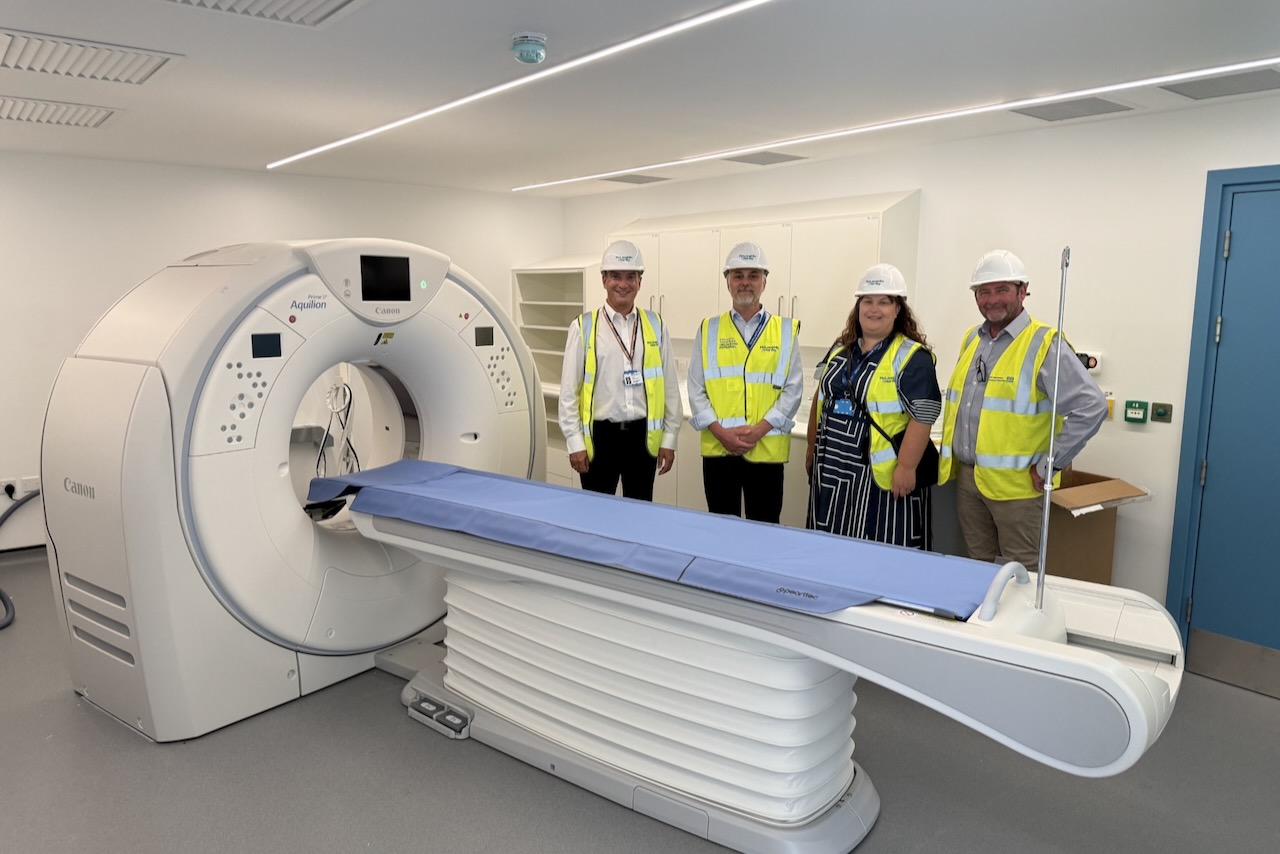
McLaughlin & Harvey has completed a new community diagnostic centre at Braintree Community Hospital for Mid and South Essex NHS Foundation Trust, designed to deliver around 75,000 additional diagnostic appointments in its first year. The facility will run seven days a week and support CT and MRI scans, ultrasound, phlebotomy, and heart and lung checks, with final fit-out and equipment installation due before first patients arrive in early September. Delivered through the Crown Commercial Services framework as part of a national, government-funded capacity programme, it signals continued demand for healthcare-focused building and MEP contractors.
HLM Architects has appointed Russell Geary as associate, emergency services lead, bringing over 10 years’ experience delivering classified, high-security police facilities for forces across England and Wales. Based in HLM’s Birmingham studio and registered with the ARB since 2011, Geary is known for trauma-informed custody and operational environments that balance secure containment with staff and detainee welfare. His role signals an expansion of HLM’s blue-light capability for complex, high-security public-sector projects across the UK, with emphasis on resilience and people-centred layouts.
Caddick Construction has appointed former Bowmer & Kirkland senior contracts manager Mark Lambkin as construction director for the East Midlands to expand its regional pipeline. Lambkin brings experience from high-rise residential schemes including Capital&Centric’s £60m Goods Yard build-to-rent project in Stoke-on-Trent and the £130m IQ Echo Street student accommodation tower in Manchester, covering full project lifecycles. A CIOB member familiar with Building Safety Act gateway approvals, he will work alongside recently appointed East Midlands regional managing director Paul Sykes to steer complex, compliance‑critical schemes.
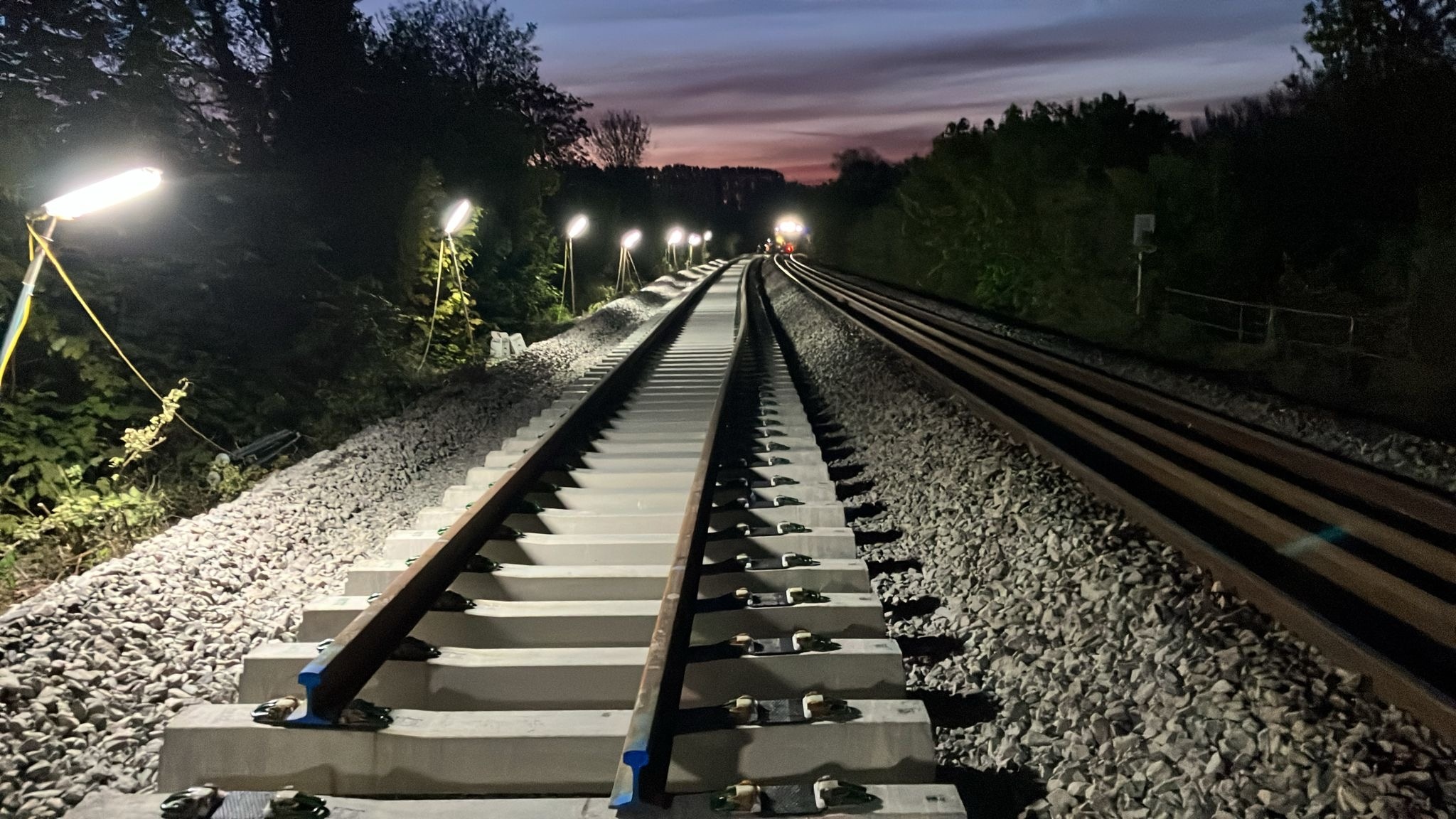
Network Rail has launched a £93m, multi-lot design-and-build framework for rock cutting remediation and associated geotechnical works across its Wales (£40.8m) and Western (£36.8m) regions. The three-year framework, extendable by up to two years, covers investigation, design, construction and handback for rock cut stabilisation, earthwork drainage upgrades and burrowing management on operational rail corridors. Contractors will act as Principal Contractor and, where required, Principal Designer, with separate appointments planned for each region but the option to bid for both.
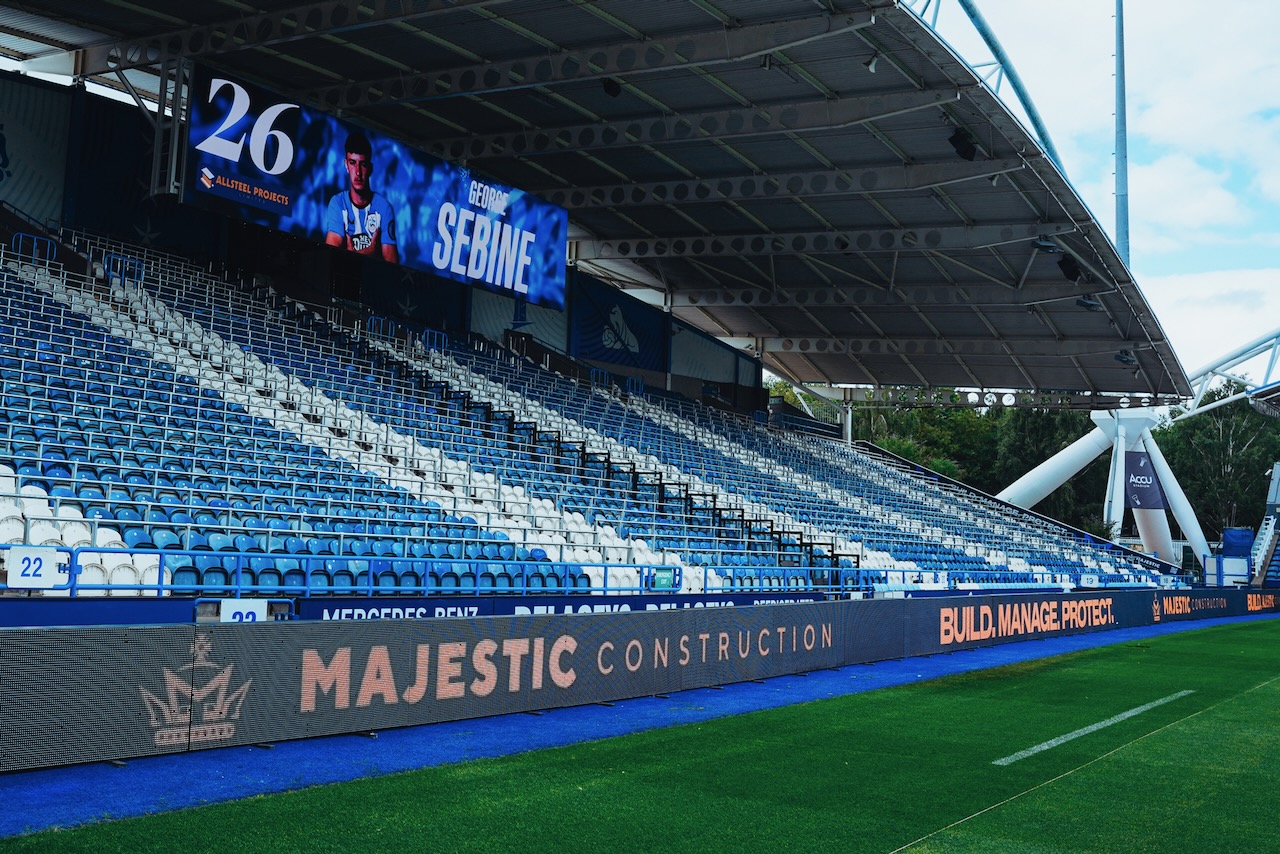
Majestic Construction has installed a new rail-seating safe standing system in the South Stand at Huddersfield Town’s Accu Stadium, using a single continuous rail barrier in front of existing seats with individually numbered standing positions to improve crowd control and reduce overcrowding risk. The contractor, now renewed as Huddersfield Town’s official construction partner under a new two-year agreement to at least the 2026/27 season, has previously delivered a new press area, additional directors’ seats, a large screen and fixed water stations. Huddersfield Town now joins six other EFL League One clubs adopting safe standing.
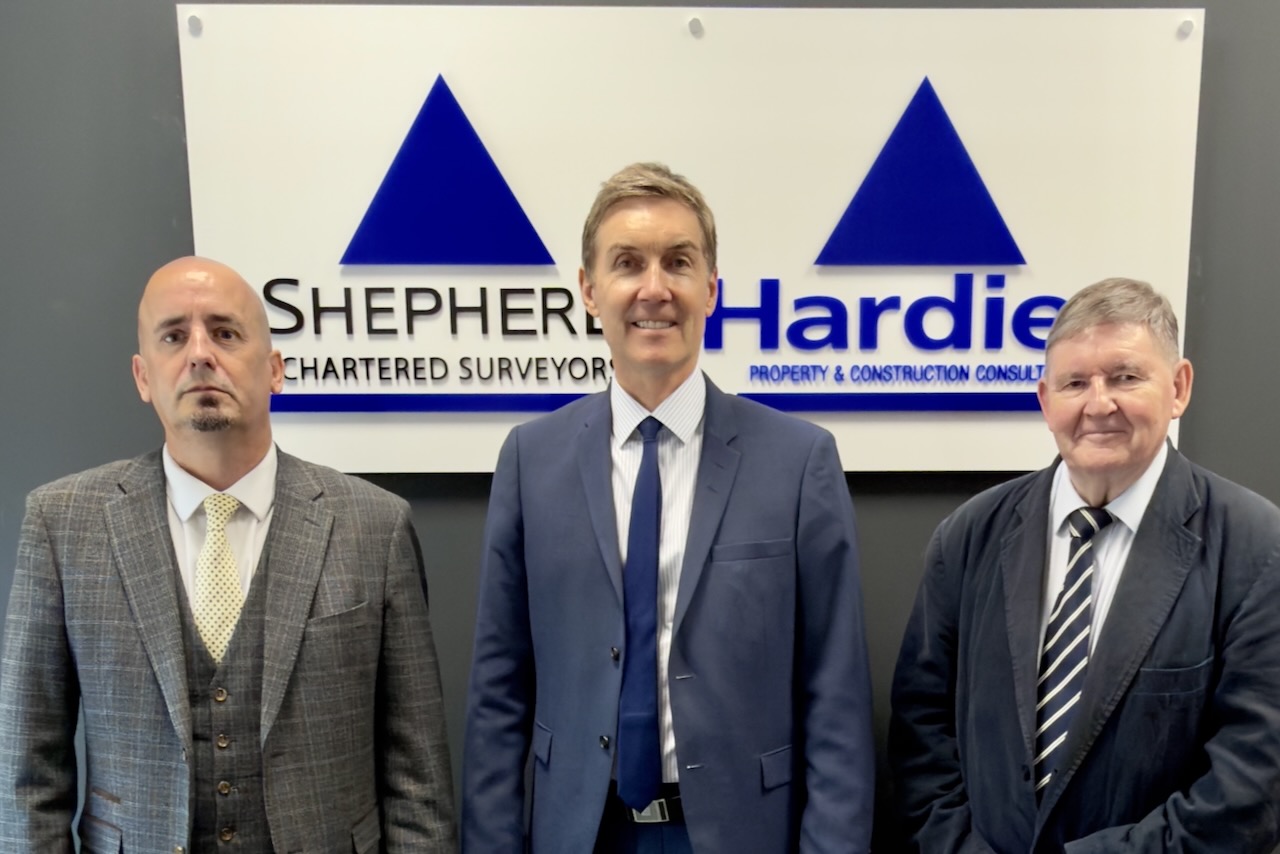
Hardies Chartered Surveyors has acquired Storrier & Donaldson Quantity Surveyors, bringing owner Robert Currie into Hardies’ Glasgow operation as a consultant partner alongside the Shepherd and Hardies team. Storrier & Donaldson adds more than 50 years of UK-wide cost management experience on hospital ward refurbishments, public libraries, golf courses, major capital frameworks and large commercial schemes, plus specialist work on historical and listed buildings. The deal materially strengthens Hardies’ quantity surveying capacity in Glasgow and the west of Scotland, particularly for complex, multi-funding conservation, refurbishment and new-build projects.
Blade Lifting and Logistics has placed a multi-unit order with Böcker UK for long, lightweight truck-mounted cranes, taking initial delivery of an AK 48 with a 3‑tonne capacity and 49‑metre boom. The AK 48 features a high-output hydraulic system enabling rapid self-assembly, hook speeds of up to 60 m/min and fast slewing/boom movements suited to tight urban and industrial sites. Further Böcker units are scheduled for delivery in 2026 and 2027, signalling a longer-term fleet shift towards compact, high-reach aluminium cranes for UK lifting projects.
Groundforce Shorco modular hydraulic props are being used by Lashi Contractors to support a 35m by 46m, up to 6m-deep basement excavation for a 61-apartment development for Callisto Homes in Chatham, formed within a secant-piled wall and concrete capping beam. To deal with the sloping site and stepped capping beam, Groundforce dispensed with a waling beam and instead cast corbels into the capping beam, installing six knee-braced MP50, MP150 and MP250 props, including 23m-long MP250s with 813mm-diameter tubes. With a Victorian property on shallow foundations immediately adjacent, three braces carry Senceive wireless load monitoring via 3G gateway, providing continuous load data and SMS alerts if preset thresholds are exceeded.
Drywall manufacturer Siniat has achieved a 5% reduction in carbon intensity across its plasterboard products following a £170m upgrade of its Bristol HQ production line (opened March 2025) and improvements at its Ferrybridge plant, enabling retirement of older, less energy‑efficient equipment. The programme forms part of parent company Etex’s target to cut Scope 1 and 2 emissions by 35% using higher recycled content, lower energy intensity per tonne and a zero‑waste‑to‑landfill approach. Verified Environmental Product Declarations now cover over 86% of Siniat products, giving designers and contractors project‑level carbon data aligned with UK Net Zero Carbon Building Standard reporting.
Dutch off-road tyre specialist Magna Tyres Group has appointed Arnold van Woerkum as CFO as it accelerates an international expansion strategy built around recent acquisitions such as Belgian distributor Forrez. The group forecasts annual turnover of about €275m in 2026 and is targeting €650m by 2029, signalling a substantial scale-up in supply capacity for OTR, construction and mining tyres. Van Woerkum, who joined in 2025 after more than a decade at Van Mossel Automotive Group, will tighten financial control and structure future M&A to support this growth.
AtkinsRéalis and Igloo Vision have delivered a 360° immersive visualisation facility at Sellafield’s RAICo1 centre in West Cumbria, accommodating around ten users and integrating remotely operated robotics with live data streaming to plan nuclear decommissioning. The system lets teams virtually walk restricted-area routes using real-time imagery from robotic platforms, with Sellafield estimating up to a 40% reduction in time spent in hazardous environments. Linked with the Immersion Room at Hinton House, Cheshire, the setup creates a connected ecosystem for simulation-based planning, training and rapid response to emerging site conditions.
Trifecta Fire Door Solutions has launched a UK Fire Door Companies Directory listing around 30 specialist firms for inspections, repairs, maintenance and installations, responding to increased inspection demand under the Fire Safety (England) Regulations 2022. The Wirral-based company has also introduced an inspection report conversion service that turns defect-heavy fire door reports into fully priced, prioritised schedules of remedial works to support budgeting and tendering. BM TRADA Q-Mark certified firms such as Norwich-based EAFDC are included, aiming to give duty holders a clearer route from inspection findings to completed compliance works.
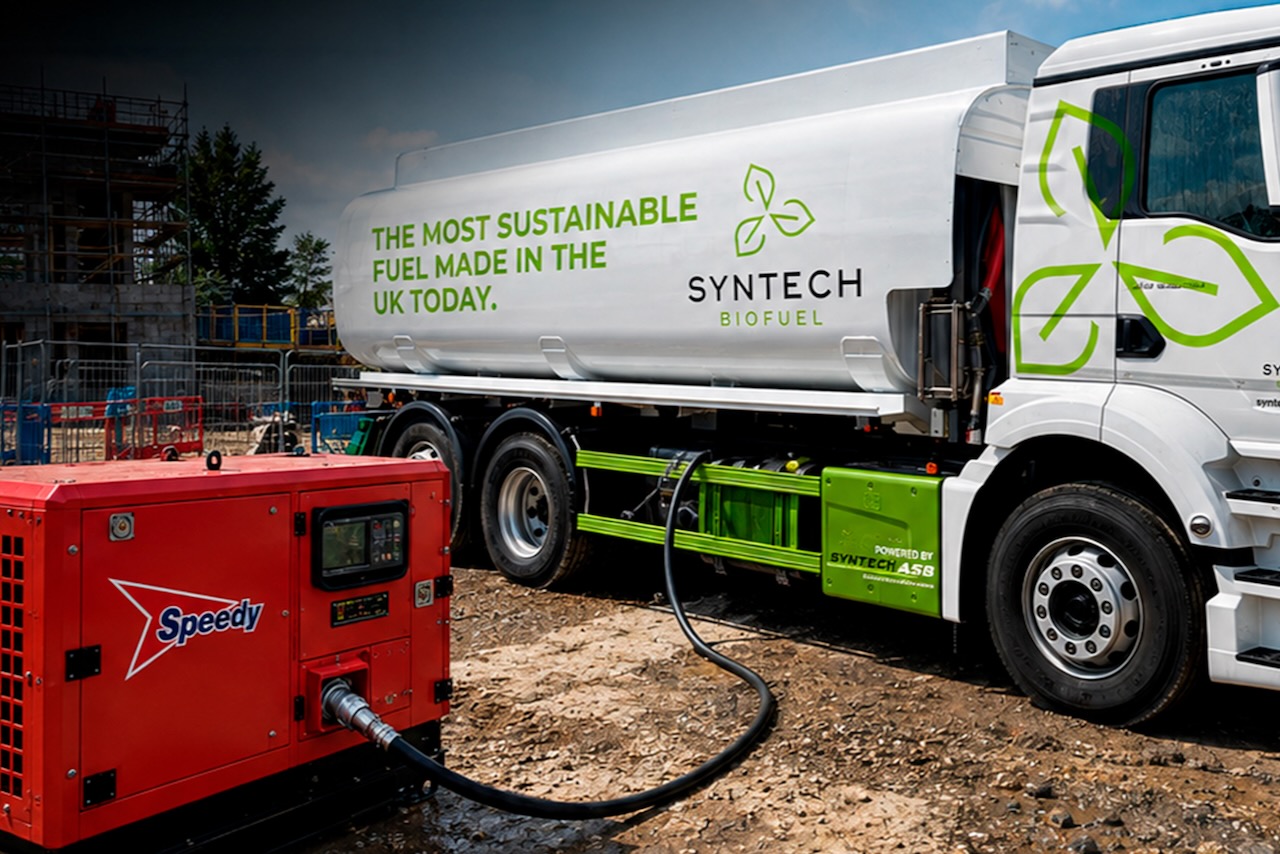
Speedy Hire has approved Syntech’s ASB B100, a UK‑sourced 100% waste vegetable oil biofuel, for use across its full equipment fleet, allowing contractors to run generators, compressors and site plant without hardware modification. The move qualifies users for full fuel duty relief while offering a direct drop‑in alternative to gas oil on temporary power and construction sites. For civil and infrastructure projects, this provides an immediate route to lower reported carbon emissions from non‑road mobile machinery without changing existing fuel storage or delivery systems.
NewSteel Mining and Chile’s Industrial and Mining Training Centre (CEIM) will convert a diesel Caterpillar 777D haul truck to battery-electric drive in a pilot project aimed at real-world mine deployment. The partnership will develop and integrate a full electric powertrain and battery system into the 90–100 t class truck while using the project as a training platform for mechanics, electricians and operators. For mines, the trial will provide data on duty cycles, energy consumption and maintenance needs for retrofitted large haulage fleets.
Devon MP Richard Foord is urging government funding for the “long-neglected” Exeter–London Waterloo rail line after successive summers of heatwaves forced closures by damaging the track bed. The route, a key secondary corridor to the South West alongside the Dawlish main line, has again seen rails and ballast affected by high rail temperatures exceeding design assumptions, prompting emergency speed restrictions and shutdowns. Engineers face growing pressure to upgrade formation, drainage and rail stress management to cope with more frequent extreme heat events.
Highland Council will tell members that none of the three remediation options identified in a structural report for Balnaan Bridge can be funded, ruling out works to reopen it to vehicular traffic. The bridge, currently restricted to pedestrians and cyclists, would require substantial strengthening and deck works to restore road loading, but estimated costs exceed available capital budgets. Engineers and transport planners now face longer diversion routes for local traffic and potential reclassification of the structure if no interim load-limited solution is pursued.
Fortescue is keeping an unnamed senior executive in role while law firm MinterEllison conducts an external investigation into sexual harassment and bullying allegations, as the miner also faces a June class action from JGA Saddler over workplace misconduct, harassment and sex discrimination. In its latest year Fortescue, with 16,154 employees, recorded 98 psychosocial breaches (down 20%), including 13 cases of inappropriate sexual contact, 10 of sexual harassment and one sexual assault, dismissing 11 workers for related code-of-conduct breaches. BHP reported terminating 109 employees for sexual harassment and 22 for racial harassment from 380 sexual harassment reports, while Rio Tinto logged 702 incidents to its employee care hub, indicating sustained legal and governance exposure on conduct across major Australian miners.
Europe’s push under the Critical Raw Materials Act to source 10% of strategic minerals domestically, process 40% and recycle 25% by 2030 is colliding with local resistance to projects such as Serbia’s Jadar lithium mine and Portugal’s Barroso development, where social licence rather than permitting speed is the binding constraint. Tobias Rossi argues that densely populated regions like Saxony lack Nevada-style buffers, making trust, long-term community engagement and credible environmental performance central to project viability. Recycling offers limited near-term relief, with the IEA expecting manufacturing scrap to dominate 2030 feedstock and high-profile recyclers Ascend Elements and Li-Cycle already in financial distress.
MMG has suspended operations at its Las Bambas open-pit copper mine in Peru after an accident during pump replacement at a clarification pond 9 km from the processing plant killed two workers and injured three, with Sunafil inspectors now investigating. The mine, owned by China Minmetals subsidiary MMG, produced 410,829 tonnes of copper in 2025—about 2% of global mined supply—and has faced more than 100 days of disruption in 2019 and a month-long shutdown in 2022 due to community blockades along its 450-km concentrate haul road. MMG plans a progressive restart from 21 August and has not revised 2026 production guidance, but any delay would tighten an already constrained South American concentrate market, where Lundin Mining has cut Chilean guidance by 10,000 tonnes on weather impacts.
A slope collapse at an open pit gold mine near Policarpa in Colombia’s Nariño department has killed 13 workers and injured seven, after a night-time landslide buried crews who were later recovered by firefighters and residents using excavators. Local authorities have not confirmed whether the operation had mining permits, despite witnesses saying around 50 people, mainly from the Quillacinga Indigenous group and including four victims from one family, regularly worked the site. The incident again exposes geotechnical and safety risks at Colombia’s largely unregulated artisanal and illegal gold mines, which involve an estimated 200,000–400,000 people.