Galiano assays at Asanko gold mine: resource and LOM plan notes for engineers
Reviewed by Joe Ashwell
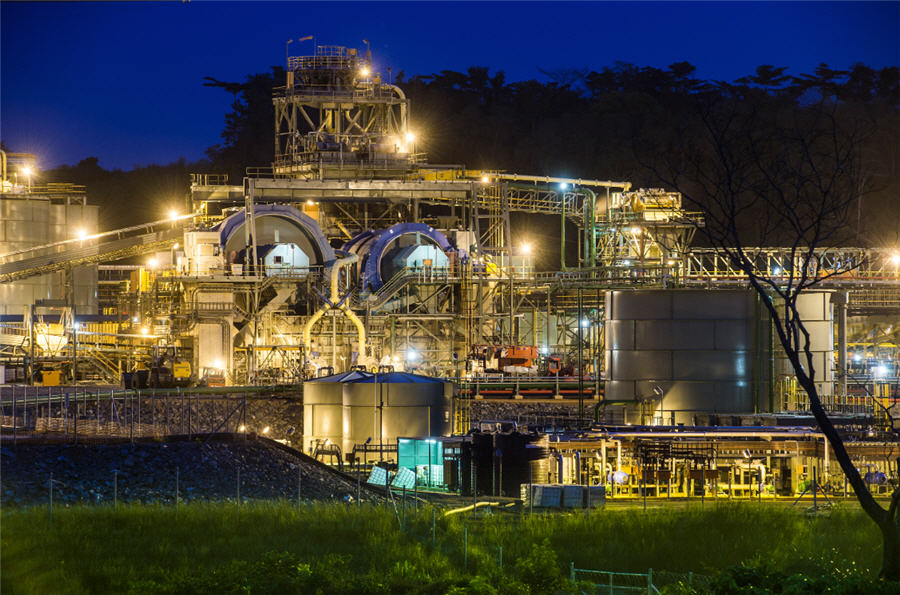
First reported on MINING.com
30 Second Briefing
New drilling at Galiano Gold’s 90%-owned Asanko mine in Ghana has extended the Abore underground mineralised footprint up to 180 metres below the current resource and defined a new 200-metre-long zone beneath the main pit. Key intercepts include 53 metres at 3.9 g/t from 179 metres (ABDD26-477), 32 metres at 4.7 g/t from 420 metres (ABDD26-459) and 6 metres at 8.4 g/t from 457 metres (ABDD26-456), within a 30,000-metre programme now about halfway complete. Results will feed a revised life-of-mine plan and 2027 resource update for Asanko, which produced 121,191 oz. in 2025 and is guided at 140,000–160,000 oz. for 2026.
Technical Brief
- ABDD26-478 returned 9 m at 4.1 g/t from 382 m and 17 m at 3.3 g/t from 480 m, indicating stacked underground lenses.
- Hole ABDD26-456 cut 6 m at 8.4 g/t from 457 m and 5 m at 4.8 g/t from 500 m, supporting high-grade shoot continuity at depth.
- ABDD26-447 intersected 11 m at 4.3 g/t from 301 m, adding mid-depth mineralisation between pit and deeper targets.
- January drilling included 15 m at 14.2 g/t from 231 m and 24 m at 4.7 g/t from 151 m, underpinning earlier high-grade underground potential.
- The main pit ore shoot has been extended about 50 m down plunge to the north, refining underground stope design envelopes.
- Asanko’s December 2025 resource stands at 80.4 Mt @ 1.33 g/t (3.44 Moz) M&I and 27.2 Mt @ 1.47 g/t (1.28 Moz) inferred, framing Abore’s incremental impact on mine planning.
Our Take
Galiano Gold’s 90% stake in Asanko, with Ghana holding the remaining 10%, mirrors the state-participation structures seen at other Ghanaian gold operations in our database and typically gives the government leverage over any shift from open-pit to underground mining at assets like Abore and Nkran.
The deeper, higher-grade intercepts at the Abore deposit (down to around 500 m) position Asanko more like the mature underground assets Gold Fields is trialling new technologies on in Peru and Western Australia, suggesting that similar fleet or digital upgrades could become relevant if Galiano formalises an underground phase.
Within our 1183 Mining stories, Ghana appears frequently in the context of large-scale contract mining at Tarkwa and Damang; if Asanko’s resource base continues to grow, Galiano may face the same contractor-capacity and cost-competition dynamics as Gold Fields and its local partners in the country.
Prepared by collating external sources, AI-assisted tools, and Geomechanics.io’s proprietary mining database, then reviewed for technical accuracy & edited by our geotechnical team.
Related Articles

Related Industries & Products
Mining
Geotechnical software solutions for mining operations including CMRR analysis, hydrogeological testing, and data management.
Tunnelling
Specialised solutions for tunnelling projects including grout mix design, hydrogeological analysis, and quality control.
CMRR-io
Streamline coal mine roof stability assessments with our cloud-based CMRR software featuring automated calculations, multi-scenario analysis, and collaborative workflows.
HYDROGEO-io
Comprehensive hydrogeological testing platform for managing, analysing, and reporting on packer tests, lugeon values, and hydraulic conductivity assessments.
GEODB-io
Centralised geotechnical data management solution for storing, accessing, and analysing all your site investigation and material testing data.