TMC–Allseas seabed nodule deal: system design and production notes for engineers
Reviewed by Joe Ashwell
First reported on MINING.com
30 Second Briefing
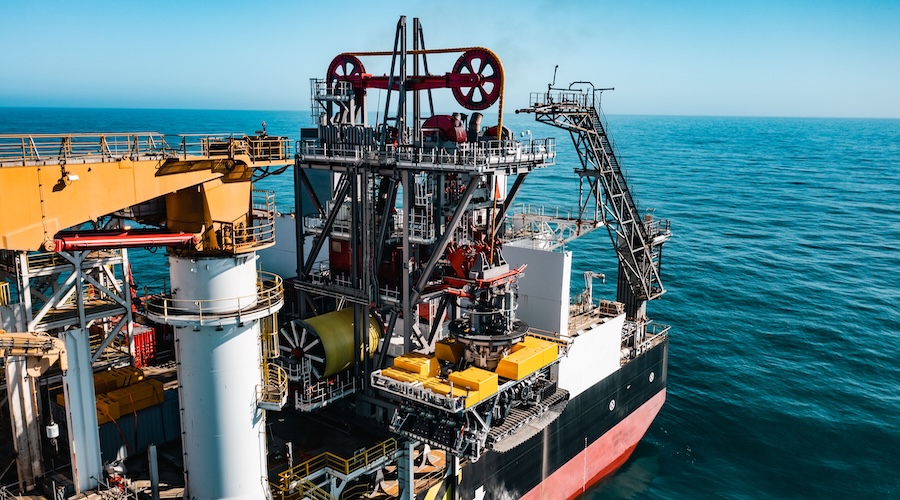
The Metals Company has signed a commercial deal with offshore contractor Allseas to design, commission and operate a deep-sea polymetallic nodule recovery system in the Clarion Clipperton Zone, targeting first offshore production by late 2027. The system is planned for 3 million wet tonnes per year using two collector vehicles working at depths greater than 4 km, linked via a riser pipe to the converted drillship Hidden Gem and an at-sea transfer vessel. NOAA has deemed TMC’s US deep-sea mining application fully compliant, opening the way to a potential final permit by early 2027.
Technical Brief
- Allseas’ scope covers procurement, integration and operation of collectors, launch-and-recovery gear, riser and umbilicals.
- Conceptual and basic engineering are already complete for riser system, umbilical, and launch-and-recovery systems.
- Subcontract tendering and vendor engagement are scheduled to start shortly, with awards targeted by Q3 2026.
- The system builds directly on Allseas’ 3,000‑tonne pilot nodule recovery test completed in 2022.
- Hidden Gem will act as the primary surface vessel, supported by a separate transfer vessel for at‑sea offloading.
- Nodules will be trans-shipped at sea to bulk carriers for direct delivery to onshore processing plants.
- Allseas will fund a “significant portion” of development capex, repaid later via production revenue sharing.
- NOAA’s “fully compliant” finding for TMC’s US application positions the CCZ project for a potential final permit decision by early 2027.
Our Take
TMC’s move from permitting milestones in the Clarion Clipperton Zone to a JV-scale system with Allseas comes just weeks after NOAA deemed its CCZ application compliant, signalling that regulatory de‑risking is now being rapidly converted into execution risk on the NORI Area D project.
In our database of Mining ‘Projects’ and ‘Contract Award’ pieces, very few battery‑metal stories involve 4 km water depths, so the Hidden Gem/collector spread will be a key reference point for future subsea equipment and subcontract awards targeted for 2026 in ultra‑deep environments.
Prepared by collating external sources, AI-assisted tools, and Geomechanics.io’s proprietary mining database, then reviewed for technical accuracy & edited by our geotechnical team.
Related Articles

Related Industries & Products
Mining
Geotechnical software solutions for mining operations including CMRR analysis, hydrogeological testing, and data management.
CMRR-io
Streamline coal mine roof stability assessments with our cloud-based CMRR software featuring automated calculations, multi-scenario analysis, and collaborative workflows.
HYDROGEO-io
Comprehensive hydrogeological testing platform for managing, analysing, and reporting on packer tests, lugeon values, and hydraulic conductivity assessments.
GEODB-io
Centralised geotechnical data management solution for storing, accessing, and analysing all your site investigation and material testing data.