Geomechanics.io

  • Free Tools
Sign UpLog In

Geomechanics.io

Geomechanics, Streamlined.

© 2026 Geomechanics.io. All rights reserved.

Geomechanics.io

CMRR-ioGEODB-ioHYDROGEO-ioQCDB-ioFree Tools & CalculatorsBlogLatest Industry News

Industries

MiningConstructionTunnelling

Company

Terms of UsePrivacy PolicyLinkedIn
    Projects
    Sustainability

    Rio Tinto–Jinbi solar PPA: grid integration lessons for Pilbara mine planners

    May 12, 2026|

    Reviewed by Joe Ashwell

    Rio Tinto–Jinbi solar PPA: grid integration lessons for Pilbara mine planners

    First reported on Australian Mining

    30 Second Briefing

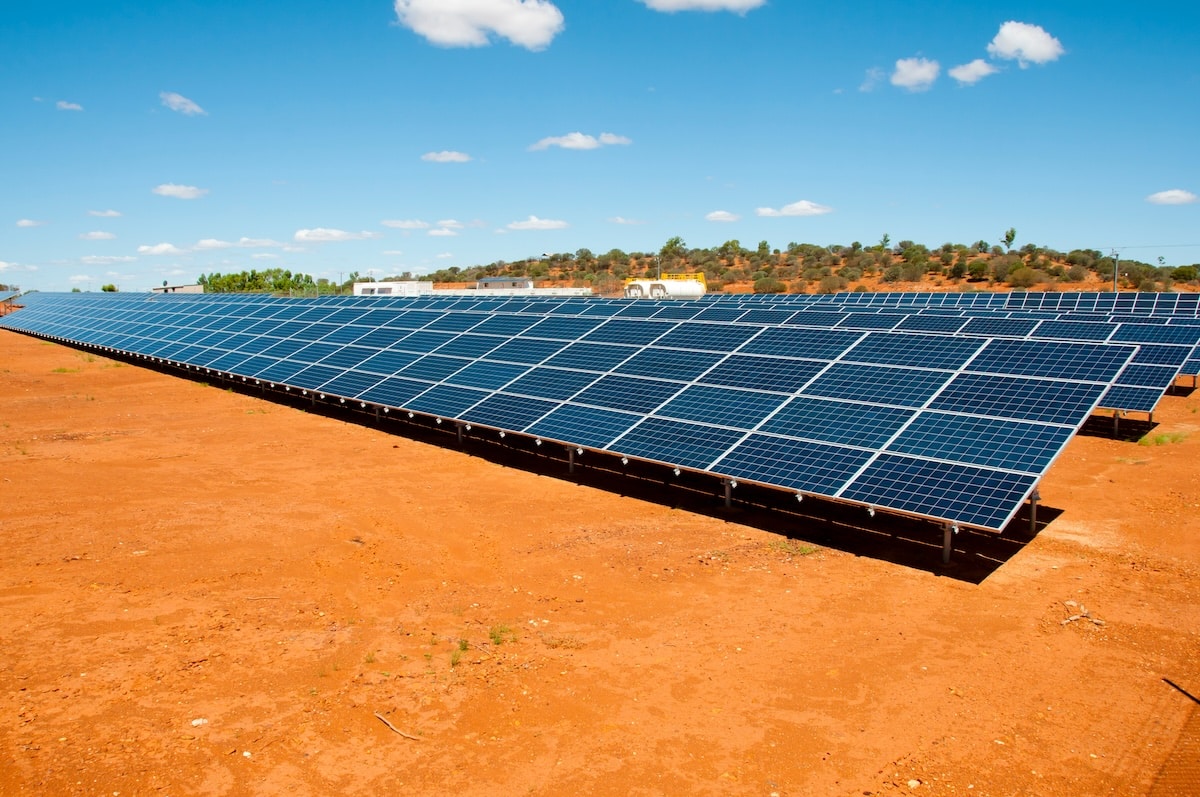
    Yindjibarndi Energy Corporation will start construction of the Jinbi solar project in Western Australia after securing a power purchase agreement with Rio Tinto to supply renewable electricity to its Pilbara iron ore operations. The Indigenous-led project will feed solar power into Rio’s existing network that supports mines, rail and port assets, reducing reliance on gas-fired generation and cutting Scope 2 emissions. For mine planners and asset managers, the deal signals further integration of large-scale renewables into remote, islanded mining grids in the Pilbara.

    Technical Brief

    • Similar Pilbara mining grids could adopt comparable long-tenor PPAs to underwrite remote renewable build-out.

    Our Take

    The Jinbi solar farm in Australia adds to a cluster of Rio Tinto sustainability‑tagged pieces in our database, signalling that decarbonising power supply for iron ore and other operations is becoming a core strategic lever rather than a side initiative.

    The related 11 May 2026 item on Yindjibarndi Energy Corporation’s financial close for Jinbi indicates this is structured as a long‑term independent power arrangement, which typically shifts capex and some operating risk off Rio Tinto’s balance sheet while locking in price visibility.

    Set against Rio Tinto’s 5–10 billion‑dollar global streamlining and efficiency drive reported on 6 May 2026, contracting power from Jinbi suggests renewables PPAs are being used not only for ESG optics but as part of a cost and portfolio optimisation strategy in Australia.

    Geotechnical Software for Modern Teams

    Centralise site data, logs, and lab results with GEODB-io, CMRR-io, and HYDROGEO-io.

    No credit card required.

    • Save and export unlimited calculations
    • Advanced data visualisation
    • Generate professional PDF reports
    • Cloud storage for all your projects

    Prepared by collating external sources, AI-assisted tools, and Geomechanics.io’s proprietary mining database, then reviewed for technical accuracy & edited by our geotechnical team.

    Related Articles
    Mining
    about 3 hours ago

    Zijin Longking battery electric mining trucks: haulage takeaways for mine planners

    Zijin Longking has dispatched the first production-line LK220E battery electric mining trucks from its Longyang City plant in Fujian Province, marking the start of series manufacture at the Longjing Smart Environmental Protection Industrial Park. At the same event on 9 May, the company signed a new contract for its larger LK350E battery electric truck, signalling customer commitment to higher-capacity BEV haulage. For mine planners and fleet engineers, this points to accelerating availability of Chinese-built battery trucks in the 220–350 t class for large open-pit operations.

    Mining
    about 4 hours ago

    Komatsu’s Mine 4D at Kevitsa: real-time fleet control insights for mine planners

    Komatsu’s Mine 4D technology is being deployed at Boliden’s Kevitsa open-pit nickel-copper operation in northern Finland to give dispatchers and supervisors real-time visibility of fleets working in temperatures down to –40°C. The integrated platform links high-precision GNSS machine guidance, fleet management and production reporting so operators can track shovel–truck interactions, ore–waste boundaries and cycle times across 24/7 shifts. For engineers, the key gains are tighter compliance to dig lines, reduced rehandle and faster response to equipment or road condition issues in one of Europe’s harshest mining climates.

    Mining
    about 6 hours ago

    De Beers’ record TRIFR 1.0 in 2025: safety lessons for mine and geotech teams

    De Beers has recorded the lowest safety incident rate in its 135-year history, reporting a total recordable injury frequency rate (TRIFR) of 1.0 for 2025 across its global mining operations, improving on the previous year’s record low. The company attributes the performance to a strong “ownership” culture, with shared responsibility for risk controls and intensive frontline engagement in incident reporting and corrective actions. For geotechnical and mining teams, the figures signal that structured behavioural programmes and line-led safety leadership can materially reduce TRIFR even in high-risk, deep-level and open-pit environments.

    Related Industries & Products

    Mining

    Geotechnical software solutions for mining operations including CMRR analysis, hydrogeological testing, and data management.

    Construction

    Quality control software for construction companies with material testing, batch tracking, and compliance management.

    CMRR-io

    Streamline coal mine roof stability assessments with our cloud-based CMRR software featuring automated calculations, multi-scenario analysis, and collaborative workflows.

    HYDROGEO-io

    Comprehensive hydrogeological testing platform for managing, analysing, and reporting on packer tests, lugeon values, and hydraulic conductivity assessments.

    GEODB-io

    Centralised geotechnical data management solution for storing, accessing, and analysing all your site investigation and material testing data.

    AllGeotechnicalInfrastructureHazardsEnvironmental