Geomechanics, Streamlined.
© 2026 Geomechanics.io. All rights reserved.
Smackover Lithium has signed a 10‑year offtake with LG Energy Solution to supply 8,000 tonnes per year of battery‑grade lithium carbonate from the South West Arkansas brine project, with product expected to comply with US “foreign entity of concern” rules. The deal gives LG a fully integrated US supply chain from extraction to cell production for EV and grid‑scale energy storage systems, aligned with federal pressure to expand domestic critical minerals output. Smackover, a Standard Lithium–Equinor partnership, now has two identical 8,000‑tpa, 10‑year contracts, the first with Trafigura.
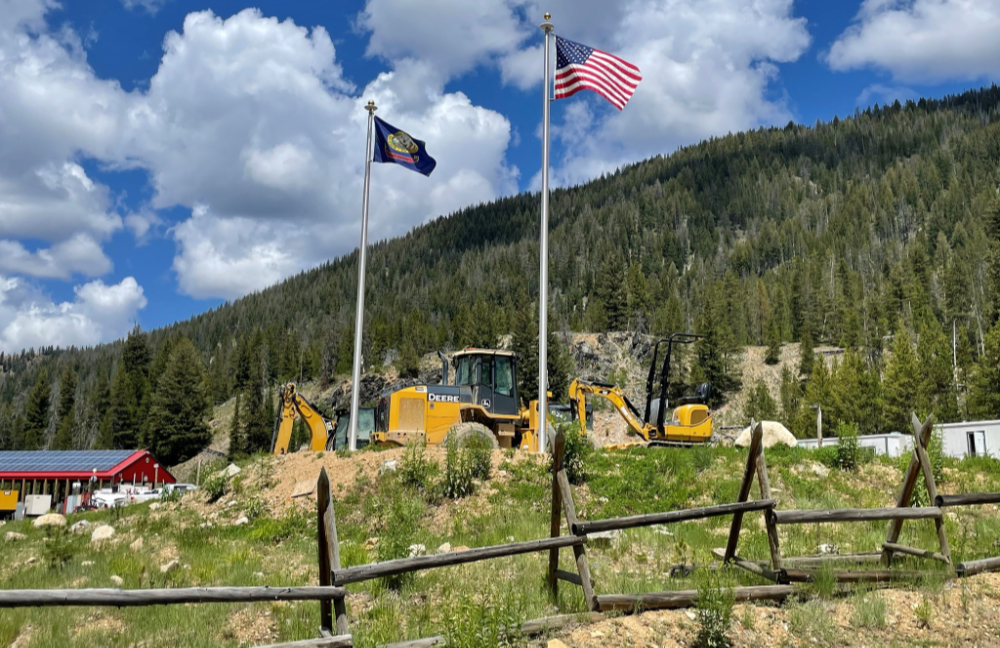
A US federal court has upheld key environmental approvals for Perpetua Resources’ US$1.3‑billion Stibnite gold‑antimony project in Idaho, allowing early works to continue while an appeal proceeds and a final investment decision is targeted for this year. Stibnite is designed to produce about 463,000 oz. of gold annually in its first four years and hosts 43.5 million indicated tonnes grading 1.07 g/t Au and 0.07% Sb, backed by a US$2.9‑billion EXIM loan and Department of Defense support for domestic antimony supply. Current activity includes fabrication of two autoclaves in Europe, completion of grading and utilities for the permanent camp, and a 10,000‑metre, four‑rig drill programme chasing additional gold‑antimony‑tungsten resources around Yellow Pine, Huckleberry and Hangar Flats.
Gold slipped 0.5% on Monday as renewed US–Iran strikes pushed US crude above $85 a barrel and lifted Treasury yields, with futures now pricing in over a 60% chance of a September rate hike after Fed Chairman Kevin Warsh vowed to fight inflation. Spot gold traded at $4,434.78 an ounce at 1:12 p.m. in New York, though prices remain about 10% higher for August, on track for the strongest monthly gain since January. Silver edged down 0.1% to $66.30, with platinum and palladium also weaker.
IperionX has secured a US Army SBIR Phase III contract allowing US defence agencies to place titanium orders up to a collective $99 million, with the first two task orders worth about $19.8 million. Funding will expand integrated titanium powder-to-finished-component production at its Virginia facility, adding continuous HSPT and dehydride furnace capacity and bringing titanium fastener finishing fully in-house. The programme targets industrial-scale manufacture of titanium track pins, bolts and fasteners, with inspection and acceptance planned at Detroit Arsenal and Aberdeen Proving Ground, and may extend to aerospace‑grade components.
Jennmar has signed a long-term agreement with Outokumpu to supply ground control products to the Kemi Mine, Finland’s largest underground operation and Europe’s only active chrome mine. The deal covers strata support hardware for deep underground workings, where high-stress conditions and long development drives demand robust rock reinforcement systems. For geotechnical and mining engineers, the partnership signals continued investment in engineered support solutions at Kemi, with implications for bolt types, support patterns, and compatibility with Scandinavian ground support standards.
Central Tanami Project Joint Venture has awarded Macmahon Underground a A$38 million contract to construct the Groundrush decline at the CTPJV gold mine site in the Northern Territory, Australia. The decline will provide new underground access beneath the existing Groundrush open pit, enabling future stoping and deeper resource development for JV owners Tanami Gold and MGX. For geotechnical and mine planners, the pact signals a shift from open pit to underground extraction, with associated requirements for decline ground support, ventilation and dewatering design.
CrossBoundary Energy has brought a solar PV and battery energy storage system into commercial operation at Kamoa Copper S.A., delivering 30 MW of baseload solar power to what is described as Africa’s largest copper mining complex in the Democratic Republic of the Congo. The facility supports the joint venture between Ivanhoe Mines, Zijin Mining Group and the DRC government, reducing reliance on grid and diesel generation. For mine operators, the project shows large-scale PV‑plus‑BESS can reliably supply continuous process loads at tier‑one copper operations.
Early works have begun on duplicating the Cairns Western Arterial Road between Lake Placid Road and the Captain Cook Highway in Queensland, a key north–south link for Cairns’ western suburbs. Current activities focus on relocating water and sewer mains between the Barron River and Caravonica State School, including trenching, underboring and minor earthworks to clear the future carriageway footprint. Utility shifts and early geotechnical earthworks will set corridor constraints for pavement design, drainage layouts and future bridge or culvert upgrades on this flood‑prone section.
Wildcat Resources is expanding drilling at its Tabba Tabba and Bolt Cutter Central lithium projects in Western Australia’s Pilbara after defining a stacked pegmatite system about 2.3km long by 0.8km wide at Bolt Cutter, with mineralisation open in most directions. Recent holes have intersected multiple spodumene-bearing pegmatites, supporting further resource definition and development studies across both projects. For geotechnical and mine planners, the scale and stacked geometry point to a potentially complex open-pit design with careful pit wall and groundwater management.
Macmahon has secured a $38 million contract from the Central Tanami Project Joint Venture, owned by MGX Resources and Tanami Gold, to construct an underground decline at the Groundrush Gold Deposit in the Northern Territory. The decline is planned to run 3.5km to a depth of about 350m, with a scheduled construction period of 14 months. Geotechnical and mine design teams will need to plan for long decline ventilation, ground support over a relatively shallow but extended access, and integration with future stoping layouts.
More than 500 mining technology and solutions providers will exhibit at IMARC 2026 in Sydney’s International Convention Centre from 27–29 October, with artificial intelligence, automation, data and productivity flagged as core themes. Organisers expect over 150 first-time exhibitors, signalling strong demand for tools such as autonomous haulage systems, AI-driven fleet optimisation and real-time orebody characterisation platforms. For mine operators, the event will be a concentrated test bed for integrating digital decision-support systems with existing plant control, short-interval control and remote operations centres.
Solstice Minerals has defined a broad, near-surface copper–gold zone at its Nanadie project in Western Australia, with recent reverse-circulation drilling returning a combined intercept of 172m at 0.69 per cent copper and 0.30g/t gold from 54m depth. The emerging higher-grade core sits within a rapidly expanding mineralised footprint, pointing to potential for a larger open-pit development scenario rather than a narrow underground target. For mine planners and geotechnical teams, the thick, continuous intercept at shallow depth suggests favourable stripping ratios and straightforward pit wall design if continuity is confirmed.
Antipa Minerals has extended gold–copper–lead–silver mineralisation over more than 1km of strike at the Tim’s Dome prospect in Western Australia, based on assays from five reverse circulation holes drilled above a large, untested airborne electromagnetic (AEM) conductor. The results form the third assay batch from the current RC programme and precede planned diamond drilling directly into the AEM target. For geologists and mine planners, the scale of the multi-commodity system plus the untested conductor point to significant upside for both resource definition and potential underground targets.
Victoria is injecting an extra $352 million into road maintenance to double the number of potholes repaired across the state’s sealed network through late 2026 and January, with works focused on key arterials such as the Geelong Ring Road, Western Highway, Calder Highway and Princes Highway. The program will prioritise resealing and heavy patching on high‑volume freight and commuter corridors, where AfPA guidance suggests at least 7 per cent of sealed roads should be resealed annually to maintain pavement condition.
Cat® Customer Value Agreements (CVAs) give road and civil contractors structured support to keep graders, pavers and compactors running, with planned maintenance, genuine parts supply and condition monitoring bundled into a single ownership package. CVAs can be tailored by hours, component scope and service level, from self-service kits with remote dealer oversight through to fully dealer-managed maintenance and repairs. For fleets where unplanned downtime rapidly escalates project costs and penalties, the model offers predictable lifecycle costs and clearer scheduling of workshop and field-service interventions.
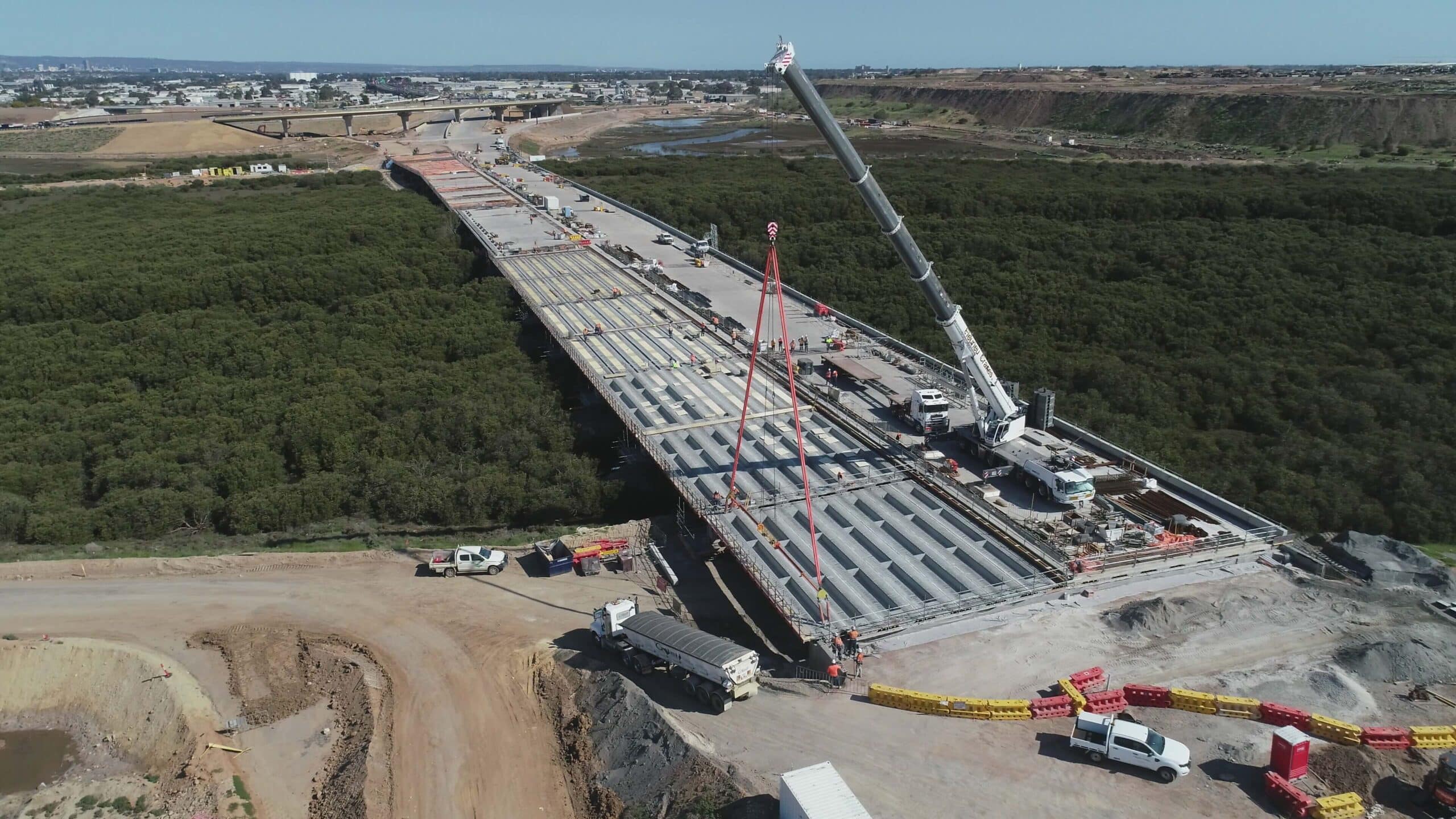
Bianco Precast, a National Precast association member, is supplying major elements for South Australia’s Torrens to Darlington project and other nationally significant road and bridge works, signalling growing precast capacity in the state. Backed by National Precast’s technical guidance and industry advocacy, the company has scaled into one of South Australia’s largest precast providers, delivering complex components under tight programme constraints. For civil contractors and designers, this points to stronger local supply options for large-volume precast bridge beams, barriers and structural elements on future infrastructure packages.
BME, an Omnia Holdings company, is using artificial intelligence to mine the large operational datasets generated across the blasting value chain to optimise decisions and quantify business value. Data streams from blast design, explosives loading, initiation timing and downstream fragmentation are being integrated to link specific blast parameters with shovel productivity, crusher throughput and energy use. For engineers, this points to tighter control of blast outcomes, more reliable blast-to-mill reconciliation, and the potential to standardise best-practice designs across multiple pits and operations.
InCapture and Yara Pilbara Fertilisers have signed a non-binding MoU to evaluate large-scale offshore carbon storage infrastructure for industrial emitters in Western Australia’s Pilbara region. The partners will study technical options for multi-user CO₂ transport and injection, along with regulatory approvals for offshore storage permits and long-term liability. Outcomes could shape future capture hubs for gas, fertiliser and mining operations in the Pilbara, influencing pipeline routing, injection well design and integration with existing process plants.
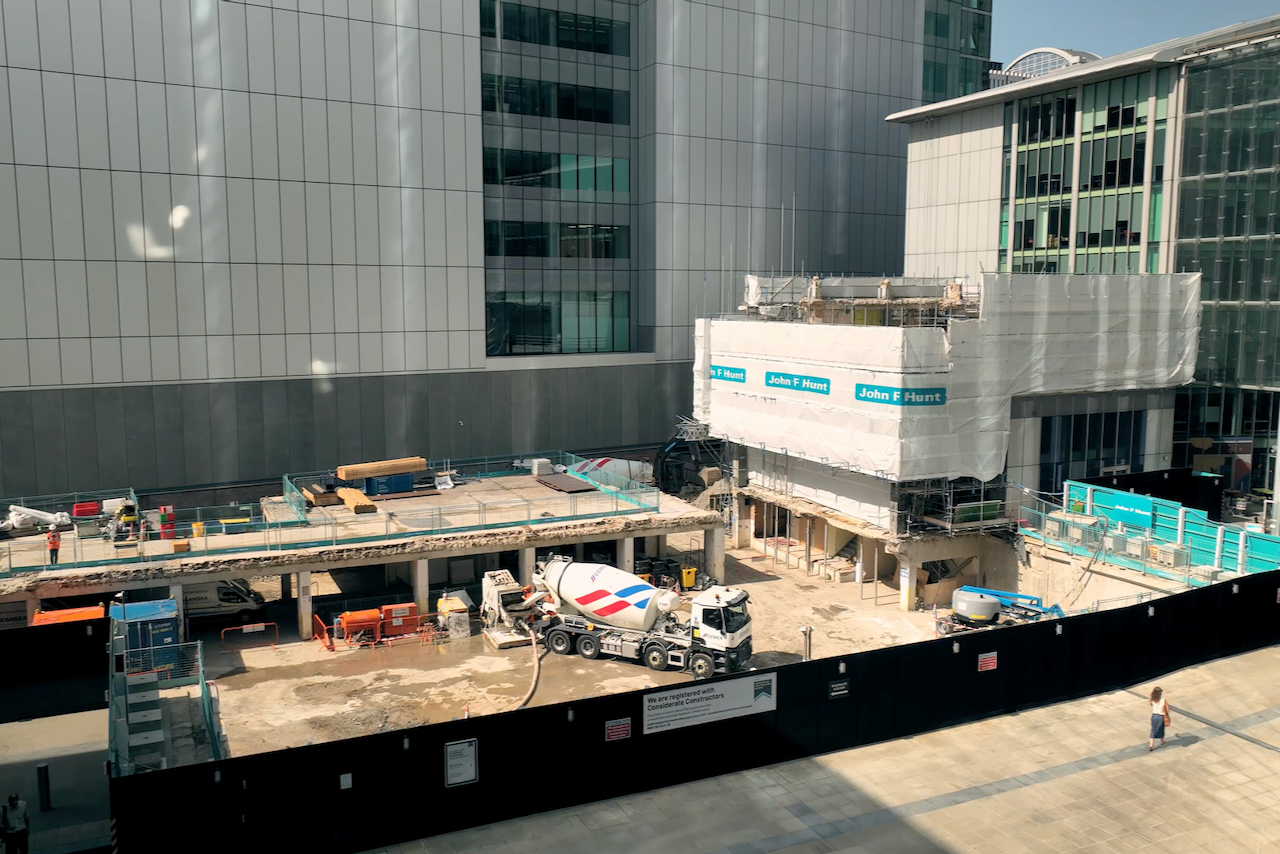
John F Hunt has completed demolition of the former 11-storey Tenter House and begun construction and piling for a new single-basement scheme at 45 Moorfields in the City of London for developer Freshwater, with Buro Four and Exigere on the project team. The works sit immediately adjacent to Moorgate Station and the Elizabeth line, in a transport hub handling over 50,000 passengers daily, tightening constraints on logistics, noise and vibration. Phase 1 piling and construction will run from March 2026 to January 2027, alongside phased public realm works including a new plaza and hard/soft landscaping for neighbouring owners Citypoint and Brookfield.
Wrexham University has appointed Wirral-headquartered Kimpton to maintain heating, air conditioning and ventilation systems across 20 buildings, including teaching and research blocks, sports and culture facilities, workshops, admin offices and the Erddig and John Neal student accommodation. The contracts, let through two competitive tenders, cover multiple dispersed sites at Northop, Plas Coch, Regent Street, St Asaph, Wrexham Village and Xplore Henbas Street. Kimpton, whose education clients already include Liverpool Hope University and the University of Chester, will work on live, occupied campuses to maintain efficient and reliable building services.
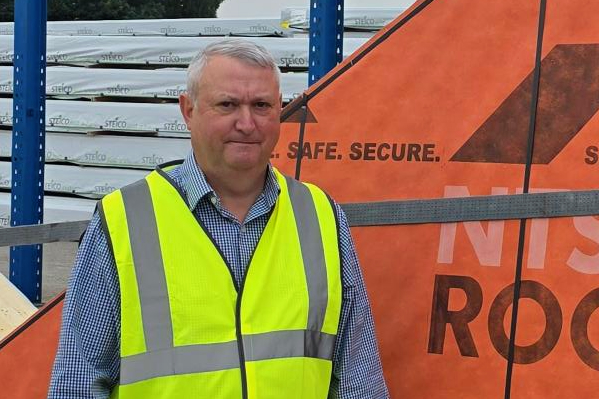
Premier Forest Products has promoted long-serving production manager Andrew Watters to production director at National Timber Systems, the timber engineering business it bought out of administration in December 2025. Watters, who led implementation of ISO 9001 and ISO 14001 factory production controls, will now oversee health and safety, production and operations across NTS sites in Newcastle, Catterick, Sheffield, Bristol and the timber engineering hub in Newport. The move signals a push for “right first time” manufacturing, tighter capacity management and stronger quality assurance for offsite timber components.
Rapid promotion at Cardiff-based Langstone Construction sees Ian Williams become construction director just five months after joining from Taylor Woodrow, BAM and Kier. Founder and MD Neil Philpott credits Williams’ management of multiple live schemes and client relationships across residential, education, health and commercial projects as key to the move. The 36-strong firm, operating from Cardiff Gate, is currently focused on housing association residential builds and care homes for private and local authority clients across South and West Wales and the South West of England.
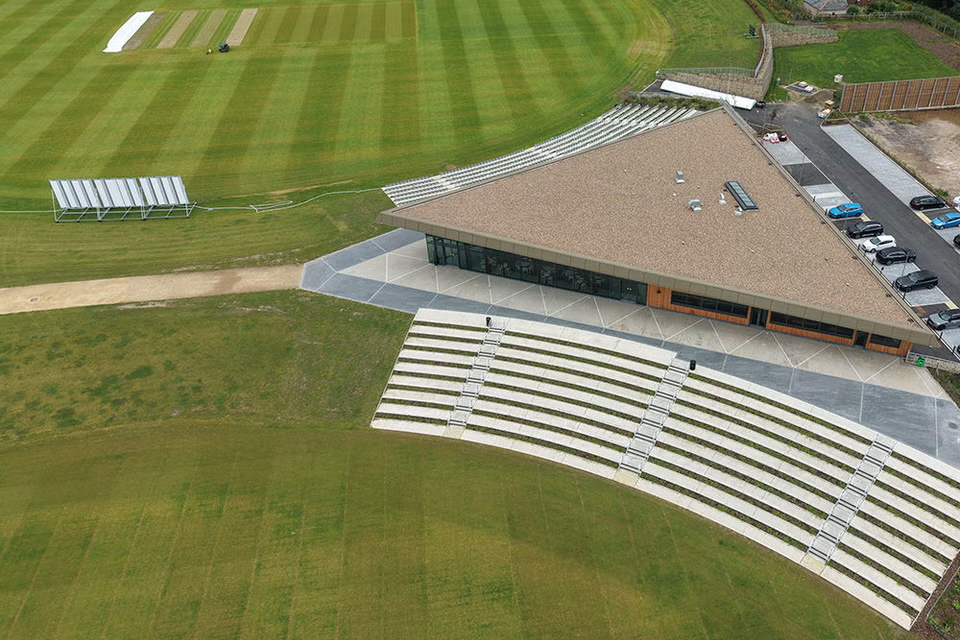
SikaShield reinforced bituminous membranes have been installed on Lancashire Cricket Club’s new AO Farington ground pavilion, whose triangular, cantilevered roof provides uninterrupted views over two full-size ovals and 36 pitches for up to 5,000 spectators. AMS Cladding used SikaRoof Primer-610 Spray with E74 PE SA 3 mm underlay, HB79 Tex 4 mm capsheet and E79 MG SA 4 mm in Safe2Torch zones to deliver flame-free waterproofing in a green belt setting. Thermal performance is boosted by Sikatherm EPS 200 031 RJ1 insulation, a SikaRoof EPS Filter Layer and a stone ballast finish.
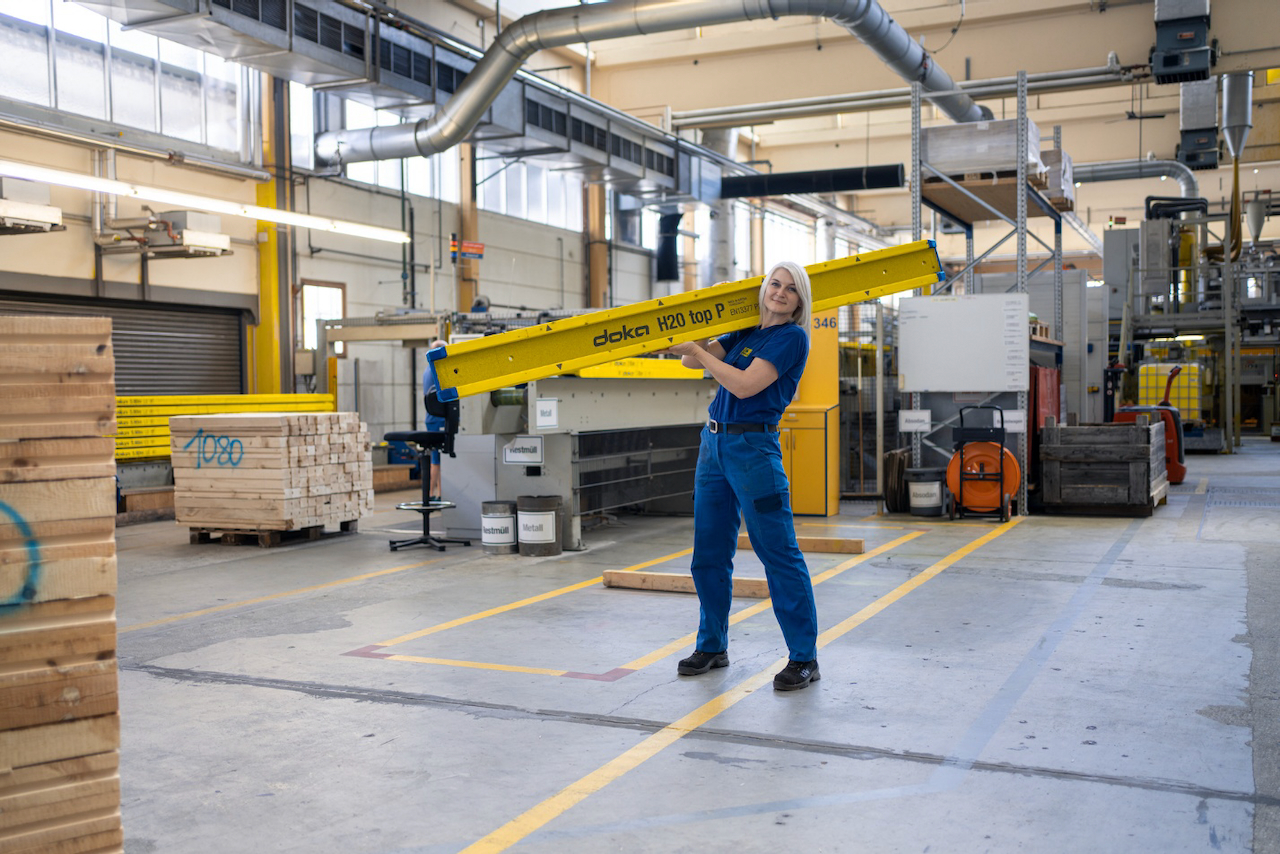
Doka has published product carbon footprints for more than 9,000 formwork and related products, giving contractors project-specific CO₂ data for lifecycle assessments and procurement decisions. The company, led on sustainability by Julia Weber, is targeting net zero by 2040 and has committed to cut Scope 1, 2 and 3 emissions by 42% by 2030, in line with the Science Based Targets initiative and the Paris Agreement 1.5°C pathway. For designers and temporary works engineers, the expanded dataset enables more accurate embodied carbon calculations at product and system level.