Hull Heat Network dig: coordinating archaeology and trench design for engineers
Reviewed by Joe Ashwell
First reported on New Civil Engineer
30 Second Briefing
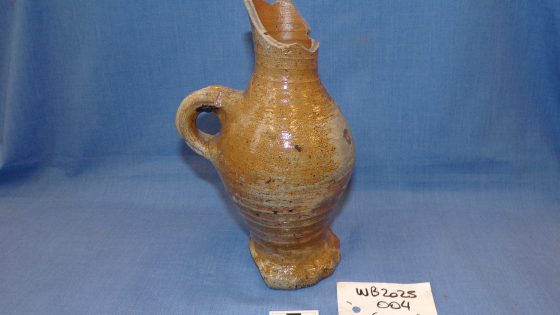
Excavation for the Hull Heat Network has exposed medieval remains dating back around 700 years, forcing design teams to coordinate trench routes and depths with on-site archaeologists. Trial pits and open-cut sections for district heating pipework in the city centre have revealed structural remains and artefacts that require recording and, in some cases, redesign of alignments. Contractors face programme and access constraints as archaeological works run in parallel with installing buried hot-water mains and associated chambers in narrow urban streets.
Technical Brief
- Any human burials encountered would invoke Ministry of Justice licensing and strict exhumation handling protocols.
- Work sequencing must allow archaeologists safe access in confined trenches, avoiding plant–personnel interface conflicts.
- Temporary works and shoring designs need flexibility for local widening or deepening where significant structures emerge.
- Risk assessments require live updating to reflect changing ground conditions as masonry, voids or soft backfill are exposed.
- Permit-to-dig and service-location procedures become more complex where historic foundations obscure utility survey signatures.
- Discovery of heritage assets can extend occupation of traffic-management setups, increasing exposure to roadworker safety risks.
Our Take
Hull is relatively under-represented in our 839 Infrastructure stories, so the Hull Heat Network project stands out as one of the few major urban utility digs in the region where archaeological risk is clearly materialising on site.
Discoveries dating back 700 years typically trigger closer coordination between project teams and heritage bodies; in other UK urban utility schemes this has led to revised method statements and tighter exclusion zones, which can affect programme and trench sequencing.
Because New Civil Engineer is also pushing digital handover themes in its recent webinar coverage, the Hull Heat Network finds itself in a cohort of projects where capturing archaeological and ground-condition data in common data environments is becoming as important as recording the installed heat network assets themselves.
Prepared by collating external sources, AI-assisted tools, and Geomechanics.io’s proprietary mining database, then reviewed for technical accuracy & edited by our geotechnical team.
Related Articles


Related Industries & Products
Construction
Quality control software for construction companies with material testing, batch tracking, and compliance management.
Mining
Geotechnical software solutions for mining operations including CMRR analysis, hydrogeological testing, and data management.
CMRR-io
Streamline coal mine roof stability assessments with our cloud-based CMRR software featuring automated calculations, multi-scenario analysis, and collaborative workflows.
HYDROGEO-io
Comprehensive hydrogeological testing platform for managing, analysing, and reporting on packer tests, lugeon values, and hydraulic conductivity assessments.
GEODB-io
Centralised geotechnical data management solution for storing, accessing, and analysing all your site investigation and material testing data.