Geomechanics.io

  • Free Tools
Sign UpLog In

Geomechanics.io

Geomechanics, Streamlined.

© 2026 Geomechanics.io. All rights reserved.

Geomechanics.io

CMRR-ioGEODB-ioHYDROGEO-ioQCDB-ioFree Tools & CalculatorsBlogLatest Industry News

Industries

MiningConstructionTunnelling

Company

Terms of UsePrivacy PolicyLinkedIn
    Projects
    Sustainability

    Rio’s $1.5B Quebec aluminium smelter expansion: design and emissions notes for engineers

    May 29, 2026|

    Reviewed by Tom Sullivan

    Rio’s $1.5B Quebec aluminium smelter expansion: design and emissions notes for engineers

    First reported on MINING.com

    30 Second Briefing

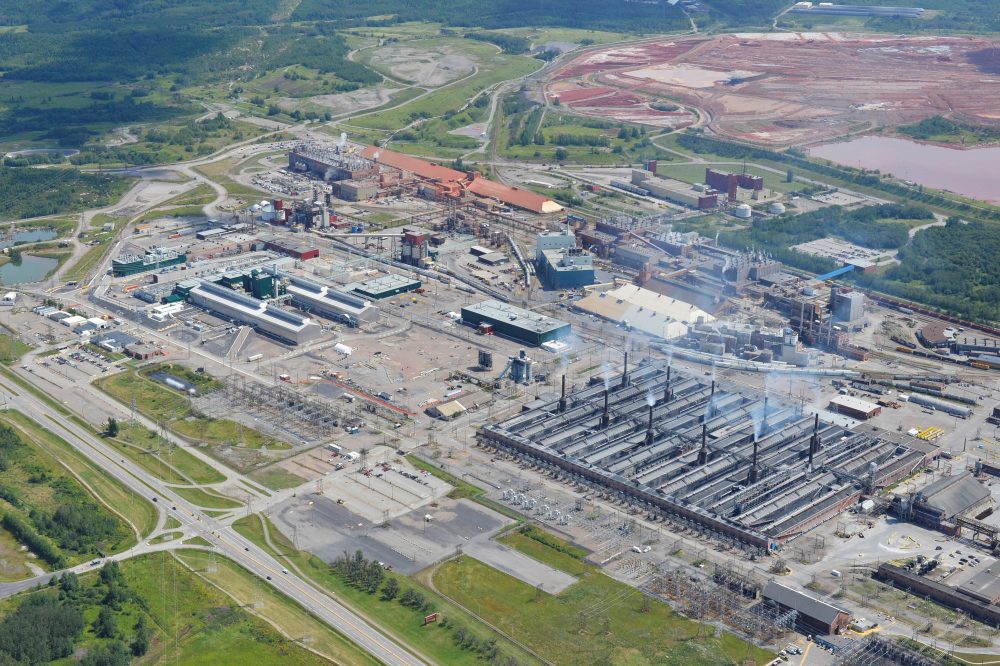
    Rio Tinto has begun a $1.5 billion expansion of its AP60 low‑carbon aluminium smelter at Arvida, Quebec, adding 96 new AP60 pots to lift capacity to about 220,000 tonnes per year, a 160,000‑tonne increase. Powered by hydroelectricity, the AP60 process emits about one‑seventh of the global industry average and is expected to cut Rio’s carbon emissions by roughly 290,000 tonnes per year as older Arvida potlines are phased out by next month. The project, backed by up to $113 million from Quebec, has created more than 1,500 construction jobs and will employ about 100 permanent staff, with a nearby recycling facility planned to integrate post‑consumer aluminium.

    Technical Brief

    • Expansion adds 96 new AP60 pots at Arvida, more than tripling primary aluminium output.
    • Quebec government support totals up to $113 million, reducing Rio Tinto’s upfront capital exposure.
    • About 1,500 construction jobs were generated at peak, indicating substantial site logistics and contractor coordination.
    • The expanded smelter will operate with about 100 permanent employees, reflecting high process automation levels.
    • New capacity is timed to offset gradual closure of legacy Arvida potlines, avoiding regional supply disruption.
    • A nearby recycling facility is planned to integrate post-consumer aluminium, tightening the local circular material loop.
    • AP60 technology at Arvida builds on a pilot plant operating since 2013, de-risking scale-up of process conditions.

    Our Take

    Among recent aluminium coverage, Quebec’s AP60 low‑carbon focus contrasts with US primary aluminium revival efforts in our database, where smelter viability is framed mainly around securing 500+ MW power contracts rather than process efficiency gains.

    For Rio Tinto, this Saguenay aluminium investment sits alongside large iron ore and copper positions highlighted in recent Pilbara and La Granja items, signalling that decarbonised aluminium is being advanced in parallel with, not instead of, its bulk and base metals portfolio.

    With Quebec and Ottawa support embedded in this AP60 expansion, the project underlines how Canadian jurisdictions are using public capital to anchor low‑carbon aluminium capacity at a time when US advocates warn that data centres are outbidding smelters for long‑term power in North America.

    Geotechnical Software for Modern Teams

    Centralise site data, logs, and lab results with GEODB-io, CMRR-io, and HYDROGEO-io.

    No credit card required.

    • Save and export unlimited calculations
    • Advanced data visualisation
    • Generate professional PDF reports
    • Cloud storage for all your projects

    Prepared by collating external sources, AI-assisted tools, and Geomechanics.io’s proprietary mining database, then reviewed for technical accuracy & edited by our geotechnical team.

    Related Articles

    Aluminium’s US comeback hinges on power: grid and smelter economics for engineers
    Materials
    about 4 hours ago

    Aluminium’s US comeback hinges on power: grid and smelter economics for engineers

    US efforts to revive primary aluminium hinge on securing long-term, industrial-scale power contracts of 500+ MW per smelter, with advocates warning that data centres and hyperscalers are outbidding producers for grid capacity. Imports of Canadian primary aluminium fell from 2,745 kt in 2024 to 1,950 kt in 2025 after Section 232 tariffs rose to 50%, even as Century Aluminum and Emirates Global Aluminium plan the first new US smelter since 1980 in Oklahoma, still stalled pending a power deal. Rio Tinto’s $1.5 billion AP60 low-carbon smelter expansion in Quebec and EU CBAM-driven demand are meanwhile pulling more Canadian hydropower-based metal towards Europe, risking longer-term diversion of supply away from the US.

    Edinburgh GCDE e‑waste process: hydrometallurgy takeaways for materials engineers
    Materials
    about 7 hours ago

    Edinburgh GCDE e‑waste process: hydrometallurgy takeaways for materials engineers

    Edinburgh’s Gold Copper Diamide Extraction (GCDE) process has been exclusively licensed to Lithium Universe, enabling low‑temperature hydrometallurgical recovery of gold and copper from e‑waste using small, reusable organic ligands instead of >1,200°C smelting or cyanide and mercury leaching. The diamide “molecular magnet” first targets gold, followed by a selective copper step, delivering high‑purity metals from printed circuit boards where gold and copper content can exceed US$48,000 per tonne at current prices. Lithium Universe will integrate GCDE into its Precious Metals Recycling Division and sub‑licence the technology globally.

    AML US$2m defence magnet contract: supply chain and design notes for engineers
    Materials
    10 days ago

    AML US$2m defence magnet contract: supply chain and design notes for engineers

    Advanced Magnet Lab has secured a US$2 million, two-year Defense Logistics Agency contract to qualify domestically produced high‑grade sintered NdFeB PM‑Wire magnets, including defence‑grade compositions such as N48SH and N35EH. The Florida firm will develop alloying, supply chain management and advanced manufacturing routes to scale permanent magnet production using its PM‑Wire process, which is designed to fit existing magnet‑making lines. AML is also progressing SmFeN, MnBi, anisotropic NdFeB and (Mischmetal‑Nd)FeB magnets, working with Phoenix Tailings, Ionic Rare Earths and Momentum to reduce critical rare earth content and improve material traceability.

    Related Industries & Products

    Construction

    Quality control software for construction companies with material testing, batch tracking, and compliance management.

    Mining

    Geotechnical software solutions for mining operations including CMRR analysis, hydrogeological testing, and data management.

    QCDB-io

    Comprehensive quality control database for manufacturing, tunnelling, and civil construction with UCS testing, PSD analysis, and grout mix design management.

    AllGeotechnicalInfrastructureHazardsEnvironmental