Geomechanics, Streamlined.
© 2026 Geomechanics.io. All rights reserved.
Graham has been appointed by Oxfordshire County Council to build the Clifton Hampden Bypass, the second of three contracts in the Didcot and surrounding areas major infrastructure scheme. The project delivers a new single carriageway between the A415 at Culham Science Centre and the B4015 Oxford Road, with segregated shared walking and cycling facilities and a new roundabout giving access to Culham Science Centre and Culham railway station. Additional new junctions on the eastern side and at the north-eastern tie-in to the existing A415 will re-route A415 through-traffic away from Clifton Hampden village and its primary school.
YPO and Pagabo have agreed a 10-year strategic delivery partnership, combining YPO’s £1.1bn public buying power with Pagabo’s digital procurement platforms to create new framework routes for construction, infrastructure and development. YPO will act as the centralised contracting authority under the Procurement Act regime, while Pagabo designs, delivers and manages the frameworks on behalf of public sector clients. The first frameworks will launch within weeks, signalling more standardised, data-driven routes to market for councils and other bodies commissioning capital projects.
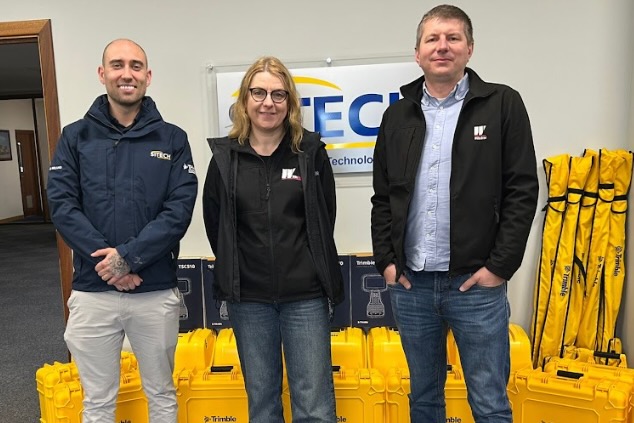
Wills Bros Civil Engineering has deployed 26 pieces of Trimble survey equipment from Sitech UK & Ireland on the £3.97bn A9 dualling scheme, starting on the Tay Crossing–Ballinluig section of the 83‑mile upgrade between single and dual carriageway. The package includes seven SPS930 robotic total stations, five R780 GNSS rovers, two R750 GNSS base stations with TDL450 repeaters, and 12 new TSC510 controllers running Siteworks software. Engineers expect improved positional accuracy and productivity across varied Highland terrain, supporting tight programme and budget constraints to 2035.
Ordnance Survey has launched OS Enhanced Land Cover (ELC) Beta, a national habitat-mapping dataset that fuses OS National Geographic Database topography, OS aerial imagery, OS Terrain 5 and third-party sources including Natural England’s Living England, the Rural Payments Agency’s Crop Map of England and UKHab classifications to support 10% Biodiversity Net Gain (BNG) assessments. The tool enables desktop and field workflows for ecologists and developers, with Wessex Water using it via Linckia’s ESRI-based Habitat Fabric platform to assess hundreds of sites in a single spatial view. Linckia reports a 40% cut in data processing costs versus previous methods, rising to 90% compared with processing raw imagery, with OS claiming time savings of days to weeks per development across 1.5 million homes in the pipeline.
Tilbury Douglas has deployed a humanoid robot on live construction sites to autonomously navigate works, capture 360-degree imagery and generate detailed progress reports. The system feeds structured data into health and safety monitoring and reporting workflows, with the contractor estimating average time savings of around 40 hours per month. Technical director Mark Buckle positions the robot as a response to skills shortages, using automation to take over repetitive site-walk and documentation tasks so engineers can focus on higher-value design and coordination work.
BHP has set a new nine‑month production record at its Pilbara iron ore operations, driven by strong performance across its Western Australia Iron Ore (WAIO) hubs and sustained throughput at Port Hedland. The company reported record volumes railed and shipped from key mines such as Jimblebar and Newman, supported by optimised scheduling on its heavy‑haul rail network and improved car dumper reliability at the export terminal. Higher Pilbara output tightens capacity utilisation across mine, rail and port infrastructure, reinforcing BHP’s focus on debottlenecking and incremental brownfield expansions rather than major greenfield projects.
Regis Resources has reported a 120 per cent increase in ore reserves, driving plans to expand production across its Western Australian gold operations. The company is focusing on brownfields growth at its Duketon and Tropicana assets, where existing processing plants and haulage infrastructure can be leveraged to lift mill throughput and extend mine life. For mine planners and geotechs, the larger reserve base supports longer pit pushbacks, revised strip ratios and potential re-optimisation of pit shells under higher-confidence resource models.
Industry groups led by the Minerals Council of Australia are pushing for a 25 per cent reduction in project approval red tape, arguing current federal and state processes can add years to mine development timelines. The MCA says duplicated environmental assessments and overlapping permitting for water, heritage and land access are inflating pre‑production costs and delaying investment decisions on new and expansion projects. For geotechnical and mining engineers, faster, more predictable approvals could materially affect feasibility study sequencing, contractor mobilisation windows and long‑lead equipment procurement.
BHP has secured a major iron ore supply agreement with a Chinese buyer after months of negotiations, providing long-term offtake certainty for its Pilbara operations such as the Jimblebar hub in Western Australia. The deal stabilises volumes into China at a time of volatile benchmark prices and shifting steel demand, giving BHP clearer planning horizons for mine scheduling, rail capacity and port throughput across its integrated supply chain. For contractors and suppliers, the agreement signals continued demand for sustaining capital in haul roads, processing plants and materials handling infrastructure tied to BHP’s iron ore assets.
Queensland has fast-tracked two unnamed major critical-mineral projects under its State Development Area and “coordinated project” pathways, signalling accelerated approvals for large-scale mines and associated processing plants. The move targets copper, nickel, cobalt and rare earths in the North West Minerals Province and central Queensland basins, where deposits typically sit at depths of several hundred metres and require significant tailings, water and power infrastructure. For geotechs and civil contractors, this points to near-term demand for pit slope design, haul road construction, tailings storage facilities and grid-scale transmission upgrades.
BHP now expects full-year copper output near the top of its 1.9–2.0 Mt guidance after record material mined and concentrator throughput at Escondida, where improved recoveries are offsetting lower grades and a permit application has been lodged for a new concentrator. Antamina guidance has been raised to 150–160 kt on better grades and efficiency, while ore complexity has cut Spence’s outlook to 210–220 kt, and Resolution in Arizona advances alongside a $500 million Rio Tinto drilling campaign. Iron ore remains the earnings anchor, with WAIO output up 2% to 197 Mt and full-year guidance steady at 258–269 Mt despite cyclone disruptions.
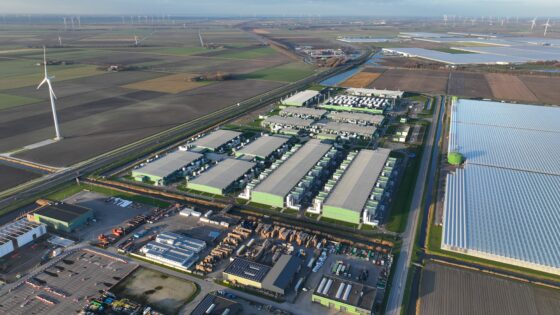
Enquiries from data centre developers for new gas grid connections have surged to 113 across 2024 and 2025, signalling a shift away from sole reliance on constrained electricity networks. Developers are reportedly seeking medium- and high-pressure connections to support on-site gas-fired generation for multi‑MW server farms, using gas engines or turbines to stabilise power supply and manage peak loads. For civil and energy engineers, this points to increased demand for pipeline capacity, pressure-reduction stations and grid reinforcement near major data centre clusters.
Boonray has signed a strategic cooperation agreement with PT Vale Indonesia Tbk after a successful trial of Boonray’s all‑electric mining truck fleet at Vale’s Indonesian operations. The deal, endorsed by Vale executives including Chief Strategy and Technology Officer Slamet Sugiharto and COO Abu Ashar, positions Boonray’s battery-electric haul trucks for wider deployment in the company’s open-pit mines. For mine planners and maintenance teams, the agreement signals upcoming changes in haul road design, power infrastructure, and fleet management to accommodate high‑capacity electric trucks and on-site charging.
Emerson has released DeltaV Live Enterprise View, a browser-based application that extends DeltaV™ distributed control system visualisation securely from the control room to any authorised device on the industrial edge. The software provides real-time operations intelligence to engineering, maintenance, reliability and management teams, integrating with Emerson’s wider edge ecosystem for process control and asset monitoring. For mines running dispersed processing plants and remote infrastructure, this enables site-wide situational awareness without duplicating SCADA screens or exposing core control networks.
Komatsu has commissioned its 1,000th autonomous ultra-class haul truck fitted with the FrontRunner Autonomous Haulage System, marking a major scale-up of driverless haulage fleets since its first commercial deployment in 2008. FrontRunner is now operating across multiple large open-pit mines, integrating with fleet management, high-precision GPS and obstacle detection to control truck speed, loading points and dump locations. For mine planners and geotechnical teams, the growing density of autonomous 220–400 t class trucks intensifies requirements for precisely designed haul road geometry, berms and traffic management to maintain system performance.
Hitachi Construction Machinery Co Ltd has launched the WIXIM brand to supply highly practical OEM excavators and loaders tailored to specific regional conditions and mining applications in emerging markets. WIXIM machines will be sold through Hitachi’s existing dealer and service network, using the company’s established parts logistics and maintenance infrastructure to keep lifecycle costs predictable for fleet owners. The move signals more segmented equipment offerings, with specifications and options likely tuned to local fuel quality, haul road conditions, and typical payload classes rather than global standard models.
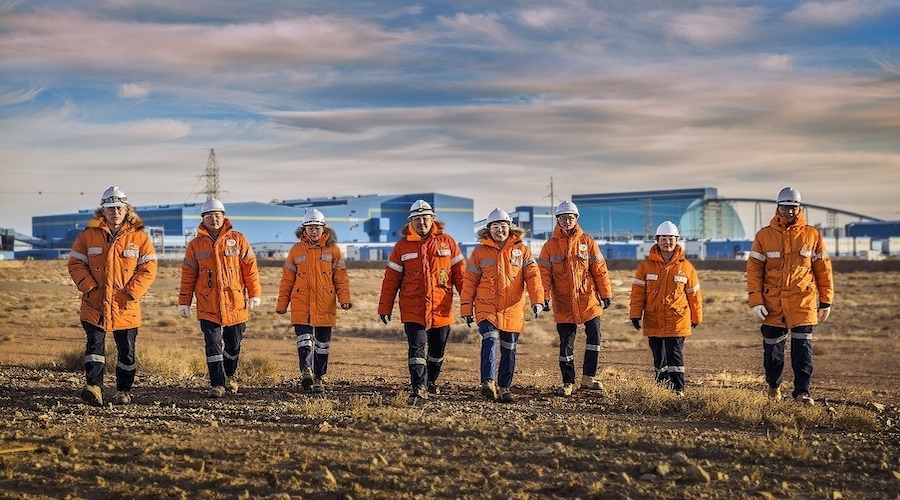
Rio Tinto’s Q1 copper output rose 9% year-on-year to 229,000 tonnes, driven by higher-than-expected underground throughput at the $18 billion Oyu Tolgoi mine, offsetting cyclone-hit iron ore shipments from the Pilbara, where sales reached 72.4 million tonnes against production of 78.8 million tonnes. Uncertainty over transferring the Shivee Tolgoi and Javkhlant licences from Entrée Resources has stalled parts of Oyu Tolgoi’s underground development since early 2025, even as Rio maintains full-year copper guidance of 800,000–870,000 tonnes and iron ore shipment guidance of 323–338 million tonnes. Middle East fuel supply risks loom over Rio’s annual consumption of 1.6 billion litres of diesel, while the company tests the market for about $10 billion of asset sales, including borates and titanium.
Oil markets are mispricing what Vitol CEO Russell Hardy calls the largest disruption of his nearly 40-year career, with the Iran war effectively closing the Strait of Hormuz, wiping out at least 1 billion barrels of crude and products and disrupting about 12 million barrels per day of production. Brent has retreated to around $95 per barrel after briefly nearing $120, yet Trafigura, Gunvor and Shore Capital warn inventories could be drained within weeks and a three‑month closure risks global recession. Energy Aspects estimates even a partial reopening could permanently remove some flows and strip 450 million barrels of refined fuels, tightening feedstock and sulphuric acid supply for metals processing well into the next decade.
Spanish Mountain Gold has agreed a US$55 million royalty financing with Wheaton Precious Metals, granting a 1.5% net smelter return on all gold and silver from the Spanish Mountain project in British Columbia’s Cariboo District. Payments are staged as US$22.5 million in the coming weeks, US$12.5 million after 60,000 metres of drilling, and US$20 million once key construction and operating approvals are secured. The funding is structured to carry the project through feasibility, targeted within 18 months, towards a potential construction decision in 2028.
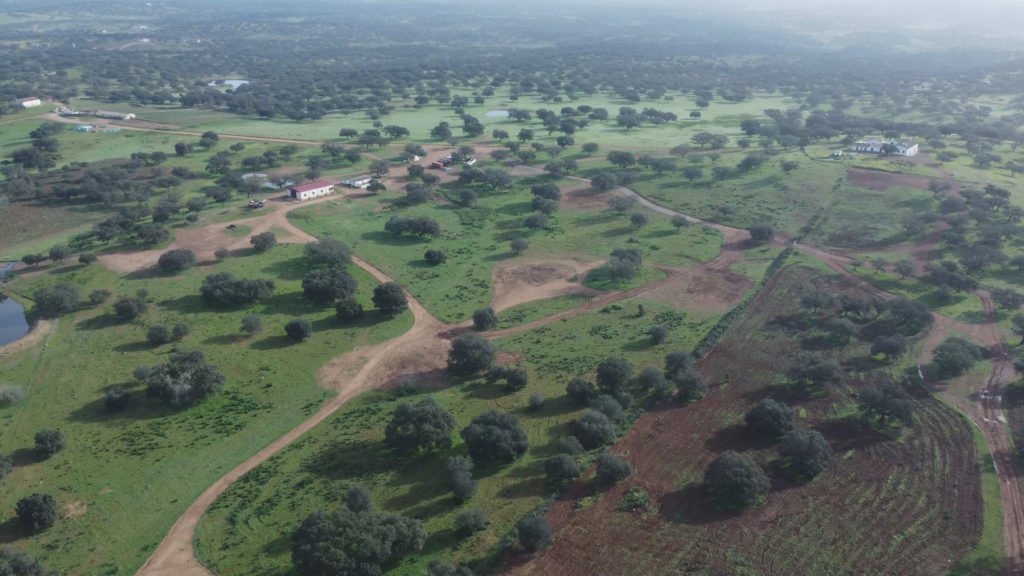
Denarius Metals has raised its unsolicited all‑share offer for Spain‑focused Emerita Resources to C$0.45 per share, a 50% increase on its 13 April bid and a 73% premium to Emerita’s pre‑bid price, valuing the target at about C$133.5 million. The move follows the resignation of Emerita founder‑CEO David Gower and chairman Larry Guy after Ontario Securities Commission allegations over diverted Brazil lithium claims and misleading disclosures on the Plaza Norte zinc project. Denarius is targeting synergies around Emerita’s Iberian Belt West deposit, which hosts 18.9 million indicated tonnes grading 2.8% Zn, 1.42% Pb and 0.5% Cu, alongside its Aguablanca, Lomero and Toral projects in the Iberian Pyrite Belt.
Gold prices fell over 1% to about $4,763/oz in spot trading, with US futures near $4,800, extending last week’s decline as traders reacted to mixed signals on US-Iran ceasefire talks and the near-two-month Middle East war. Closure of the Strait of Hormuz has disrupted energy flows, cut expectations of rapid monetary easing and driven bullion roughly 10% lower since late February, despite recent stabilisation as negotiations began. Market focus now turns to Federal Reserve chair nominee Kevin Warsh’s Senate hearing, with any hint of 2026 rate cuts seen as price-supportive.
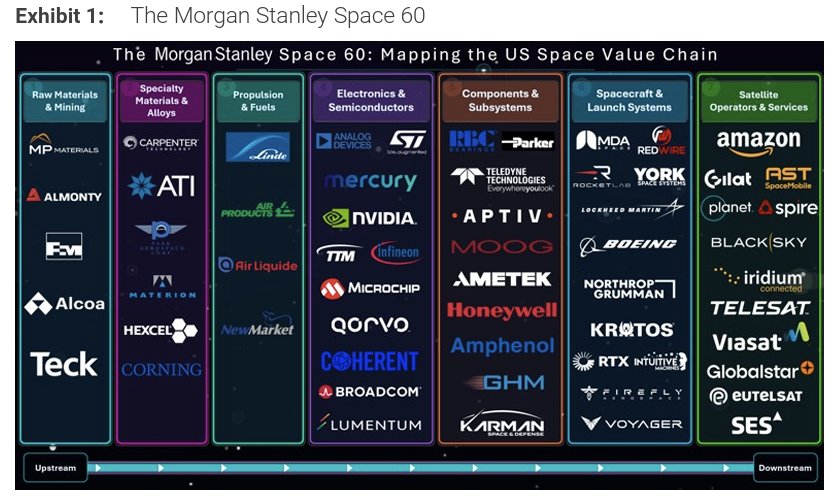
Morgan Stanley’s “Space 60” framework singles out five North America-linked miners—MP Materials, Almonty Industries, Freeport-McMoRan, Alcoa and Teck Resources—as core to the emerging space hardware supply chain ahead of a potential US$2 trillion SpaceX IPO. Freeport and Teck supply copper for high-performance rocket engine thermal systems, while Teck also produces gallium for radar, MP Materials is the only US rare earths producer for satellite and launch magnets, and Almonty provides non-Chinese tungsten for radiation shielding. Alcoa’s aluminium underpins primary rocket, satellite and spacecraft structures.
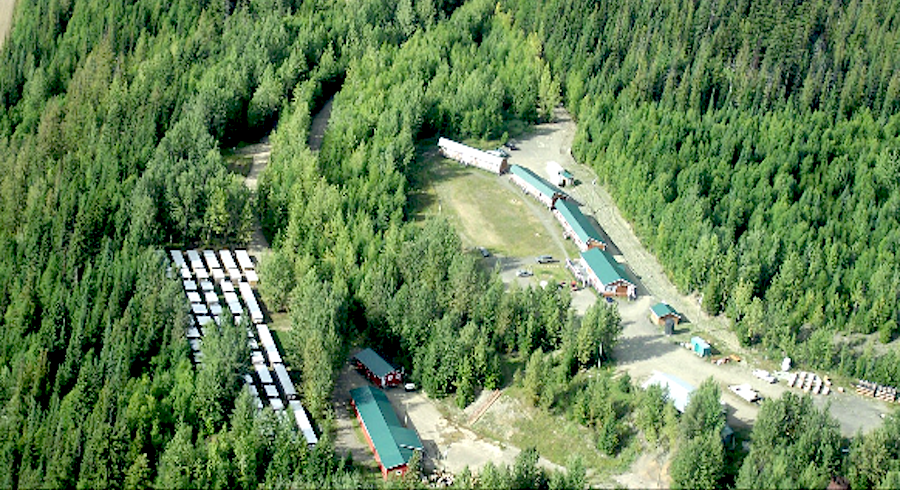
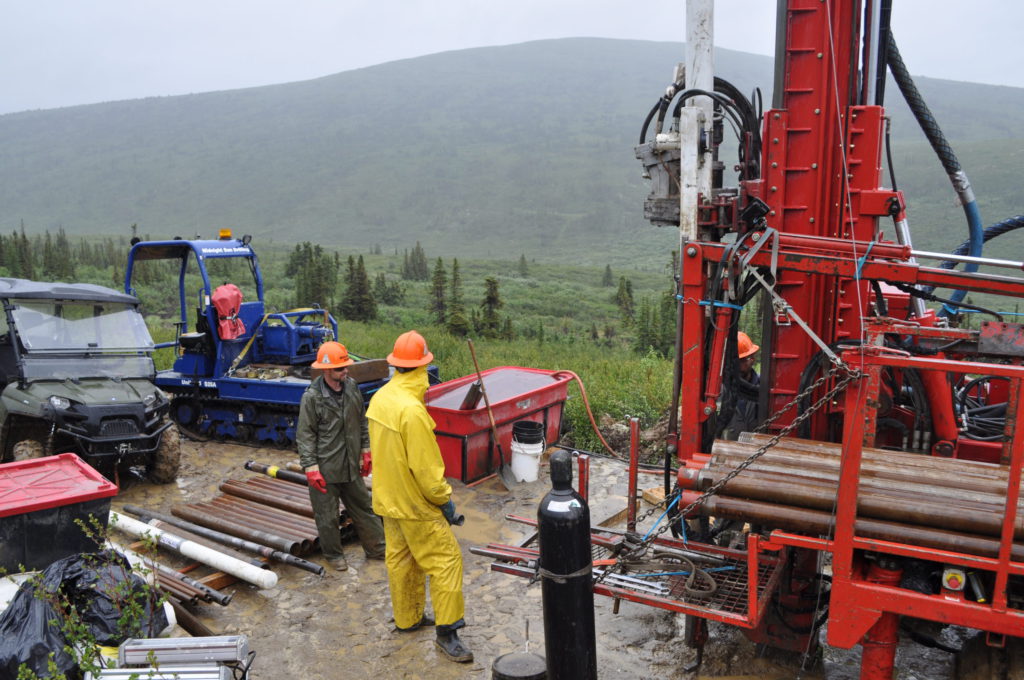
Drilling at BMC Minerals’ Kudz Ze Kayah project in Yukon has intersected thick, high-grade massive sulphides in the Krakatoa zone, with hole K26-560 cutting 25.1 metres at 180 g/t silver, 9.7% zinc, 1 g/t gold, 0.3% copper and 3.4% lead from 327.5 metres, confirming 2016 intercepts such as 20.8 metres at 218 g/t silver and 8.6% zinc. The project now has positive Yukon and federal decision documents, a 2023 feasibility study outlining a US$835 million pre-tax NPV (7%), 42% IRR, nine-year mine life and US$492 million pre-production capex, but faces continued opposition from Kaska Nation groups over caribou and environmental impacts as BMC targets a final investment decision in late 2027.
Liberty Star Minerals has staked 13 additional mineral exploration permits covering about 11 square miles in southeast Arizona, expanding its Hay Mountain Holdings footprint to roughly 45 square miles and making it the state’s largest mineral position not controlled by a major. The consolidated district-scale package in the Tombstone Mining District now includes Earp Ridge Mines, LLC and Red Rock Mines, LLC, covering copper, gold, molybdenum and other critical minerals identified by geologic mapping, rock sampling and induced polarisation surveys. Chairman Pete O’Heeron is targeting a “serious mining partner” to advance porphyry copper-style prospects in this prolific belt.