Geomechanics.io

  • Free Tools
Sign UpLog In
Built byBoxcut Studio

Geomechanics.io

Geomechanics, Streamlined.

© 2026 Geomechanics.io. All rights reserved.

Geomechanics.io

CMRR-ioGEODB-ioHYDROGEO-ioQCDB-ioFree Tools & CalculatorsBlogLatest Industry News

Industries

MiningConstructionTunnelling

Company

Terms of UsePrivacy PolicyLinkedIn
    Research
    Safety
    Sustainability

    Time for action on Australian expansive clays: design lessons for ground engineers

    December 10, 2025|

    Reviewed by Tom Sullivan

    Time for action on Australian expansive clays: design lessons for ground engineers

    First reported on Roads & Infrastructure (AU)

    30 Second Briefing

    New research on Australian expansive clays warns that more frequent intense rainfall and drought cycles are accelerating differential movement and cracking in lightweight buildings, pavements and transport corridors founded on shrink–swell soils. The work points to heave and settlement driven by deep moisture fluctuations, with particular concern for lightly loaded slabs, shallow footings and low-volume roads where historical climate data underestimates design suction changes. Engineers are urged to revisit site classification, footing depth, drainage and moisture barriers, and to integrate updated climate projections into geotechnical design for new and existing assets.

    Technical Brief

    • Safety emphasis is on preventing structural distress that can compromise egress routes and serviceability of community infrastructure.

    Our Take

    Within the 10 Geotechnical stories in our coverage, Australia appears frequently in pieces tagged Safety and Sustainability, signalling that regulators and asset owners there are increasingly tying geotechnical performance to broader ESG and resilience objectives.

    Because this article sits under Research rather than a specific project, it is likely to feed into guidance or standards that Roads & Infrastructure Magazine’s Australian audience can apply across multiple road and civil assets, rather than being confined to a single site case study.

    Across the 200 tag-matched pieces, Safety-focused geotechnical items from Australia often highlight lessons from near-misses and monitoring data, suggesting practitioners are moving from compliance-only approaches towards more data-driven risk management in design and maintenance.

    Geotechnical Software for Modern Teams

    Centralise site data, logs, and lab results with GEODB-io, CMRR-io, and HYDROGEO-io.

    No credit card required.

    • Save and export unlimited calculations
    • Advanced data visualisation
    • Generate professional PDF reports
    • Cloud storage for all your projects

    Prepared by collating external sources, AI-assisted tools, and Geomechanics.io’s proprietary mining database, then reviewed for technical accuracy & edited by our geotechnical team.

    Related Articles
    Growing foundations reuse: investigation, reliability and carbon lessons for engineers
    Geotechnical
    9 days ago

    Growing foundations reuse: investigation, reliability and carbon lessons for engineers

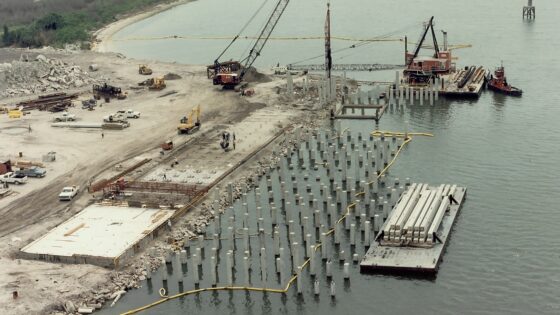
    Reuse of existing piled and raft foundations is accelerating on commercial property schemes as clients accept higher investigation spend in exchange for major embodied carbon and programme savings. Engineers are combining detailed pile integrity testing, targeted coring and advanced geotechnical back‑analysis with updated Eurocode‑based reliability methods to justify reusing legacy foundations originally designed for very different load cases. Planning and funding bodies are now more willing to accept partial reuse strategies, shifting project briefs away from default demolition and full replacement towards selective strengthening, load‑sharing and local pile augmentation.

    Chalk foundations in the UK: investigation and design lessons for engineers
    Geotechnical
    10 days ago

    Chalk foundations in the UK: investigation and design lessons for engineers

    Industry geotechnical specialists at the John Mitchell lecture warned that UK foundation design on chalk is still misjudging key behaviours such as solution features, variable weathering profiles and the risk of brittle collapse under cyclic loading. Speakers pointed to recent pile and shallow foundation projects where inadequate chalk characterisation, limited core recovery and over-reliance on generic SPT correlations led to unexpected settlements and construction delays. Attendees were urged to adopt more rigorous chalk-specific investigation, including targeted boreholes, high-quality sampling and site-specific load testing, before finalising foundation schemes.

    Network Rail £41M North West earthworks: design and risk notes for geotechnical teams
    Geotechnical
    10 days ago

    Network Rail £41M North West earthworks: design and risk notes for geotechnical teams

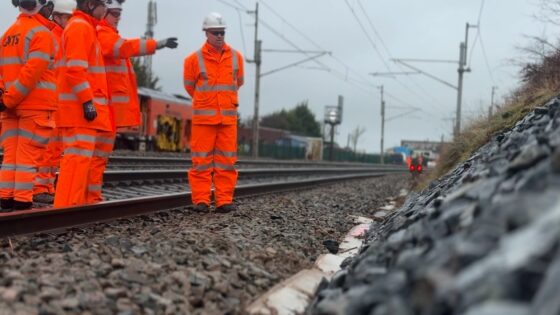
    Network Rail is delivering £41M of earthworks across key North West rail corridors to improve cuttings and embankments against winter rainfall, freeze–thaw and slope instability. Works are expected to include regrading and strengthening of existing earthwork assets, improved drainage systems and renewed trackside access to reduce washouts, slips and emergency speed restrictions. Geotechnical teams will need to manage construction around live traffic, legacy Victorian earth structures and variable ground conditions typical of the region’s glacial tills and weathered rock.

    Related Industries & Products

    Construction

    Quality control software for construction companies with material testing, batch tracking, and compliance management.

    Mining

    Geotechnical software solutions for mining operations including CMRR analysis, hydrogeological testing, and data management.

    CMRR-io

    Streamline coal mine roof stability assessments with our cloud-based CMRR software featuring automated calculations, multi-scenario analysis, and collaborative workflows.

    HYDROGEO-io

    Comprehensive hydrogeological testing platform for managing, analysing, and reporting on packer tests, lugeon values, and hydraulic conductivity assessments.

    GEODB-io

    Centralised geotechnical data management solution for storing, accessing, and analysing all your site investigation and material testing data.

    AllGeotechnicalInfrastructureHazardsEnvironmental