Geomechanics, Streamlined.
© 2026 Geomechanics.io. All rights reserved.
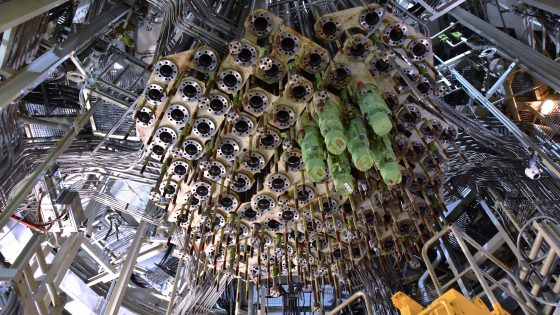
Further details on the Atomic Weapons Establishment’s Future Materials Campus confirm it as a core facility within a multi-year, multi‑billion‑pound infrastructure upgrade to support UK nuclear warhead research and lifecycle management. The FMC will concentrate advanced materials characterisation, high‑integrity manufacturing development and long‑term performance testing on a single secure site, reducing reliance on ageing dispersed laboratories. For civil and structural engineers, the scheme signals demand for heavily serviced, high‑specification laboratories and containment structures with stringent security, vibration control and resilience requirements.
A major gas leak in the Ladygrove area of Didcot, Oxfordshire forced suspension of GWR rail services between Reading and Swindon and long-distance trains routed through the corridor, as SGN engineers worked overnight to locate and make safe the affected main. Rail operations were halted while gas levels were monitored and exclusion zones maintained around the railway and nearby properties, with emergency access coordinated along the Didcot–Swindon line. The incident underlines the operational vulnerability of busy electrified main lines to third-party utility failures and the need for tightly managed rail–utility interfaces.
Komatsu has commissioned its 1,000th autonomous ultra-class haul truck using the FrontRunner Autonomous Haulage System (AHS), signalling a mature, large-scale deployment of driverless haulage fleets across multiple mines. FrontRunner integrates high-precision GPS, obstacle detection radar and LiDAR with central fleet management to control truck speed, dump-point approach and interaction with manned equipment on complex haul networks. For mine planners and geotechnical teams, the scale of AHS adoption is pushing tighter road geometry tolerances, more consistent ramp grades and berm standards, and stricter separation of autonomous and conventional traffic.
Ok Tedi Mining has commissioned two ArcSAR Neo slope stability monitoring radar systems from IDS GeoRadar at its Papua New Guinea copper-gold operation, becoming the first mine globally to deploy the new platform. The ArcSAR Neo units provide continuous, high-resolution displacement monitoring of pit walls, using arc-scanning radar and advanced processing to detect millimetre-scale movements in real time. For geotechnical teams, the dual-system deployment increases spatial coverage and redundancy for critical slope risk management in a high-rainfall, structurally complex open pit.
BME, an Omnia Holdings company, has developed a Portable Training Unit to give underground blasting and explosives operators realistic, hands-on training rather than relying solely on classroom instruction. The mobile platform is designed to simulate field procedures and equipment handling so mines can build operator competency, reduce misfires and handling errors, and better protect production assets. For geotechnical and production engineers, this points to closer integration of explosives training with ground control plans and asset integrity management.
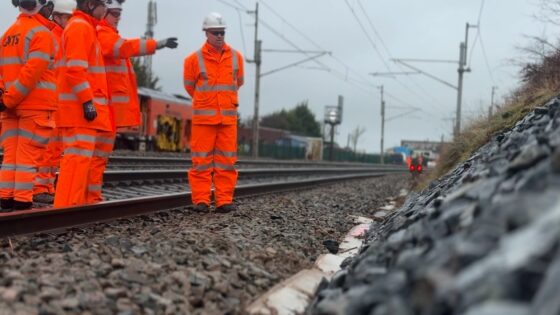
Network Rail is delivering £41M of earthworks across key North West rail corridors to improve cuttings and embankments against winter rainfall, freeze–thaw and slope instability. Works are expected to include regrading and strengthening of existing earthwork assets, improved drainage systems and renewed trackside access to reduce washouts, slips and emergency speed restrictions. Geotechnical teams will need to manage construction around live traffic, legacy Victorian earth structures and variable ground conditions typical of the region’s glacial tills and weathered rock.
Strike action by uranium enrichment workers at Urenco’s Capenhurst nuclear site in Cheshire has been called off after management tabled an improved pay offer. The Capenhurst facility, which handles enrichment and deconversion operations for nuclear fuel supply, had faced potential disruption that could have affected maintenance schedules on critical process plant and associated civil infrastructure. Resolution of the dispute stabilises workforce availability for ongoing asset integrity work, including inspection, containment upgrades and long-term decommissioning planning.
The Institution of Civil Engineers has launched a mobile careers app to help civil engineering and infrastructure students plan and track their route to professional qualification. The app provides structured guidance on ICE membership grades, IPD and CPD requirements, and routes to EngTech, IEng and CEng, alongside tools to log experience on site placements and design projects. For employers and mentors, it offers a standardised framework for monitoring graduate development against ICE competence statements.
Mental health in construction is being reframed as a shared duty across project teams, with particular concern for site-based staff working long shifts, irregular nights and high-pressure possession windows. Industry bodies such as the Institution of Civil Engineers and major contractors are expanding mental health first aider schemes, toolbox talks and confidential helplines alongside traditional safety briefings. For engineers, this means factoring psychological risk into CDM planning, site supervision and contract programming, not just physical hazards and productivity targets.
Trustee’s view on “Growing together” stresses that civil engineers and technicians must adapt their skills and professional standards to deliver resilient infrastructure under climate stress, ageing assets and tighter carbon targets. The piece focuses on supporting sustainable communities through better whole-life asset management, more collaborative project delivery and stronger links between design offices, site teams and local authorities. For practitioners, it signals continued emphasis on competence, ethics and ongoing training as core to managing risk and performance on complex infrastructure networks.
Carbon-focused procurement is emerging as a practical lever for low-carbon infrastructure, with clients increasingly writing embodied and whole-life carbon limits directly into tender documents alongside cost and programme. Contracting authorities are starting to require Environmental Product Declarations, PAS 2080-aligned carbon management plans and optioneering that compares low-clinker cements, recycled steel and alternative pavement designs on a carbon-per-functional-unit basis. For engineers and contractors, this shifts bid strategy towards quantifiable carbon performance, verifiable data and early supplier engagement rather than purely lowest capital cost.
Industry geotechnical specialists at the John Mitchell lecture warned that UK foundation design on chalk is still misjudging key behaviours such as solution features, variable weathering profiles and the risk of brittle collapse under cyclic loading. Speakers pointed to recent pile and shallow foundation projects where inadequate chalk characterisation, limited core recovery and over-reliance on generic SPT correlations led to unexpected settlements and construction delays. Attendees were urged to adopt more rigorous chalk-specific investigation, including targeted boreholes, high-quality sampling and site-specific load testing, before finalising foundation schemes.
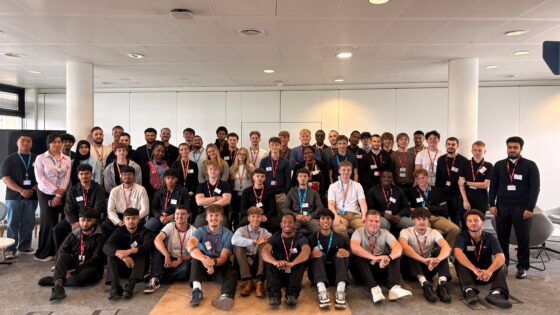
Hundreds of new apprentices have been recruited into UK infrastructure by firms including Thames Water, Amey and Spencer Group, signalling a push to rebuild site-based and technical capability. Intakes are focused on civil engineering, utilities and rail maintenance roles, feeding skills into long-term asset programmes such as water network upgrades and major highways frameworks. Contractors are likely to use the expanded apprentice cohorts to address ageing workforces and shortages in groundworks, structures and asset inspection competencies.
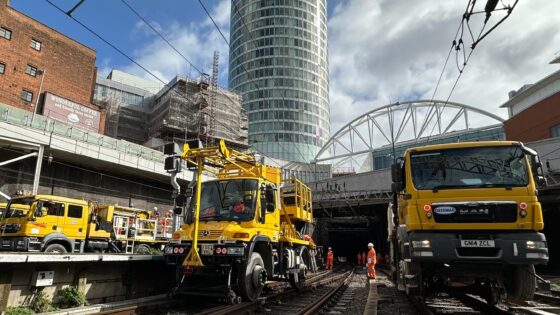
Network Rail will invest £13M over Christmas to replace 1960s overhead line equipment at Birmingham New Street station, targeting ageing gantries, contact wires and insulators that have become a major cause of unplanned power failures. Works will be concentrated in a tight blockade to minimise disruption on the West Coast Main Line, with staged isolations and temporary speed restrictions required as spans are rewired and new structures installed. For designers and contractors, the scheme signals continued priority for OLE resilience upgrades on intensively used, multi-track urban throats.
Balfour Beatty is advancing the £65M South East Pier Expansion (Sepex) at Edinburgh Airport, a landside–airside interface project expected to increase stand capacity and passenger processing space. The scheme will extend the existing pier structure to serve additional aircraft gates, requiring new foundations, service diversions and airfield pavement works within a live operational environment. For civil and geotechnical teams, key challenges will centre on phasing construction around runway and taxiway operations, managing ground risk adjacent to existing assets, and integrating new M&E and baggage systems into constrained terminal infrastructure.
Value for Bravo Mining’s Luanga polymetallic project in Pará has risen to a post-tax NPV of $1.45 billion at an 8% discount rate, with a 35% IRR and two-year payback, after a new prefeasibility study added a Barcarena Export Processing Zone smelter to a 9.6‑year, 8.7 Mtpa open-pit operation. Pre-production capital climbs to about $785 million, but ZPE fiscal benefits cut smelter capex by an estimated $90 million and operating costs by $41.20/t, while Jameson Cell flotation lifts concentrate grade from 80 g/t to about 100 g/t PGM+Au. Proven and probable reserves of 86.7 Mt support forecast annual payable output of roughly 393,800 oz PGM+Au and 9,800 t nickel, plus 878,000 t sulphuric acid over the mine life.
Meridian Mining’s updated feasibility study for the Cabaçal gold-copper project in Mato Grosso more than doubles after-tax NPV to US$2.09 billion, assuming US$3,570/oz gold, US$5.03/lb copper and US$50.17/oz silver, with an IRR of 108% and an 11‑month payback on US$322 million initial capex. The staged open-pit plan is based on 56.04 million tonnes of proven and probable reserves grading 0.61 g/t gold and 0.35% copper, ramping plant throughput from 1.93 Mt/y to 4.5 Mt/y via a US$56 million expansion. Meridian forecasts first‑five‑year output averaging 183,500 gold‑equivalent oz/y at US$715/oz AISC, with installation licence approval and project financing still pending.
I-80 Gold’s latest feasibility study for the Granite Creek underground mine in Nevada triples measured and indicated resources to 3.73 million tonnes at 7.17 g/t (859,500 oz.) and defines initial reserves of 2.2 million tonnes at 7.87 g/t (556,500 oz.), but lifts life-of-mine all-in sustaining costs 42% to $2,273/oz. Total capital and closure costs rise to $145 million, including $83 million sustaining and $49 million for refurbishing the Lone Tree plant, which is expected online in late 2027. The 8.5-year plan targets 75,000 oz./year from 2028–32, with Granite Creek ore feeding the refurbished Lone Tree autoclave and forecast net cash flow of $238 million over that five-year period.
Vale is acquiring a 30% stake in Ligga S.A. for about $190 million, securing exclusive offtake rights to 100% of sinter feed from the Ferro Sul mine in Brazil’s Carajás region. The deal underpins an expansion to quadruple Ligga’s output from roughly 2 Mtpa to 8 Mtpa by mid-2028, with ore railed 10 km to the Carajás Railroad and exported via the Ponta da Madeira Maritime Terminal. Vale says the move adds high-quality volumes to its 330 Mtpa Brazilian iron ore portfolio with low capital intensity by leveraging existing Northern System logistics.
Copper futures on Comex climbed 1.1% to $6.8370/lb (about $15,070/t), within 1% of their record settlement, as SHFE warehouse stocks fell 70% since June to 43,900 t and cash copper on the LME flipped into a $62/t backwardation, signalling acute near-term tightness. Cancelled LME warrants have risen to 122,150 t, leaving only 133,725 t available, while Comex now holds 696,204 t, about 69% of exchange-monitored copper, with New Orleans storage near full and another 100,000 t inbound. Supply risks remain elevated, with Grasberg and Kamoa-Kakula disruptions removing roughly 600,000 t from 2026 mine output and Sprott warning global production could contract for the first time since 2017.
Barrick Mining, Equinox Gold, Hudbay Minerals and Royal Gold feature among TD Cowen’s 24 “Canada Best Ideas” picks, with catalysts centred on production growth, asset deals and valuation gaps of about 20–25% versus peers and large-cap North American miners. TD Cowen projects Barrick’s 2027 output at 3.7 million oz. gold and 225,000 tonnes copper with about $8 billion free cash flow and an IPO of North American assets targeted for early 2027, while Equinox’s Orla Mining acquisition is expected to lift gold production 40% to 1.27 million oz. and EBITDA 62% to $3.48 billion. Hudbay’s Cactus and Copper World projects are forecast to push copper production to roughly 333,000 tonnes by 2036, and Royal Gold is guided to 6.1% volume growth in 2027 from streams at Kansanshi, Platreef, Robertson and Pueblo Viejo.
Blue Moon Metals’ Springer project in Nevada returned a 7 metre interval grading 1.28% WO₃ and 0.01% Mo from 160 metres in surface hole NM-13, plus 24.25 metres at 0.53% WO₃ and 0.12% Mo in NM-44, from a relogging and re-assay campaign now 64% through 18,000 metres of historical core. The 4,560-hectare skarn project, with a historical 355,000 tons at 0.537% WO₃ and a 1,200 long ton/day mill built by General Electric, is being evaluated for restart in Q4 2027. US BLM approval for 13 new drill pads enables a planned 67,000-metre diamond drilling programme on public land, materially expanding step-out and infill options.
Military Metals has secured a C$100,000 Mineral Resource Development Fund grant from the Nova Scotia Department of Natural Resources to support a seven-hole, 1,750 m diamond drilling programme at the past-producing West Gore antimony-gold project in the Meguma camp. Drilling will test down-plunge extensions below historical mine workings and the Brook Vein stope, following historical intercepts up to 10.6 g/t gold and 3.4% antimony over 7.1 m. West Gore previously produced an estimated 7,761 t of 46% Sb concentrate and 7,149 oz gold but has seen only minor work since the 1960s.
Mining companies in Burkina Faso and Mali have built “mini armies” and effectively turned mine sites into “mini states” as central governments and local militaries lose control of territory, says George McLeod of Critical Risk Team. Operations are being maintained by focusing narrowly on secure logistics corridors for inbound supplies and outbound concentrate, allowing projects to function in what he calls a “complete and total power vacuum”. McLeod also expects China’s dominance in rare earths refining to erode within about three years as Australia, the US and Brazil commission new processing capacity and substitution technologies reduce demand.