Geomechanics, Streamlined.
© 2026 Geomechanics.io. All rights reserved.
Tonly Heavy Industries has delivered a fleet of 75 t-class TLE120 battery electric wide-body dump trucks to the Baiyan open-pit mining area of Wengfu Phosphate Mine in Guizhou Province, China. The trucks will operate on short-haul, high-frequency phosphate ore routes at the boundary of Weng’an County and Fuquan City, where haul profiles and predictable duty cycles favour battery swapping and regenerative braking. For mine planners and haulage engineers, the deployment signals growing Chinese adoption of large battery-electric trucks in high-volume open-pit phosphate operations.
Jevons Robotics has launched the ARTEV1000 Pre-Split System, a battery-electric robotic platform that automates loading of packaged pre-split explosives on highwalls. The system shifts all explosive loading and deployment equipment handling to remote operation, removing personnel from the highwall face and eliminating manual lifting of explosive packages. For drill-and-blast engineers, this points to tighter control of pre-split geometry and reduced exposure during highwall conditioning, especially on benches where ground conditions or scale make conventional manual loading high risk.
Vögele, the paver specialist within the Wirtgen Group, is marking 190 years of continuous operation, tracing its evolution from early mechanical road-building equipment to today’s sensor-guided asphalt pavers and material feeders. Service Manager Chris Adams notes the brand’s impact in Australia and New Zealand, particularly with high-output highway pavers paired with AB 600 extending screeds for wide-lane construction and tight compaction control. The anniversary reinforces long-term OEM support for fleets relying on integrated levelling systems, grade sensors and telematics-based service across major road and airport projects.
Removal of the Webster Street level crossing in Dandenong marks Victoria’s 96th level crossing removal under the State Government’s 10‑year programme to improve rail–road interfaces across greater Melbourne. The project delivers a 450‑metre road underpass extending Cheltenham Road beneath the rail corridor, eliminating at‑grade conflict and allowing Webster Street to be closed at the former crossing. For designers and contractors, the scheme adds another cut‑and‑cover underpass to Melbourne’s portfolio, with ongoing implications for groundwater control, retaining structures and long‑term settlement performance along the corridor.
The upgraded Granite Creek Rest Area between Gin Gin and Benaraby on Queensland’s Bruce Highway has reopened, adding dedicated heavy vehicle parking and improved amenities for long-distance freight and light vehicle traffic. Works include reconfigured parking bays to separate trucks from cars, upgraded lighting and sightlines, and safer entry/exit tapers designed for highway speeds. For road designers and asset managers, the project signals continued incremental safety upgrades along this high‑volume freight corridor rather than major capacity expansion.
The National Transport Research Organisation is expanding technical partnerships across Pacific nations to embed best-practice design, asset management and materials research into local road and bridge networks. Programmes include joint pavement investigations, climate-resilience assessments for coastal and low-lying corridors, and training on performance-based specifications for asphalt and sprayed seals under cyclone, flooding and high-salinity conditions. For geotechnical and civil teams, this means greater access to shared datasets, design tools and failure case histories tailored to volcanic soils, steep terrain and remote island logistics.
Capricorn Metals has completed the Karlawinda expansion project in Western Australia on schedule, lifting the gold operation to its targeted steady-state throughput of 6.5 million tonnes per annum. Construction and installation of the upgraded processing infrastructure were executed over 12 months, followed by a two-week commissioning phase. Continuous ore processing has now commenced, signalling full utilisation of the expanded plant capacity and locking in higher mill throughput for the Karlawinda operation.
Brisbane will host the new Critical Metals for Critical Industries Cooperative Research Centre (CRC), based at the University of Queensland’s Brisbane City campus and initially targeting vanadium technologies. The CRC will link miners, processors, equipment suppliers, researchers and governments to fast‑track commercialisation of extraction, processing and downstream manufacturing technologies for critical metals supply chains. For geotechnical and mining engineers, this signals upcoming pilot‑scale projects, testwork and funding opportunities around vanadium deposits, tailings reprocessing and battery‑grade product specifications in Australia.
BHP and Amazon have launched a first-of-its-kind pilot linking copper from BHP’s Escondida mine in Chile to Amazon’s data centre and infrastructure demand via Environmental Attribute Certificates (EACs) tied to specific copper concentrate and cathode production. The trial will track and trade EACs that quantify lower greenhouse gas emissions across defined segments of Escondida’s supply chain, rather than relying solely on mine-level averages. For miners and downstream buyers, this tests a mechanism to monetise low-carbon copper at batch level and could influence contract structures, certification, and reporting requirements.
Adavale Resources has lifted total gold resources at its Parkes project in New South Wales from 115,000oz to 383,300oz in under 17 months through resource growth and strategic acquisitions centred on the London–Victoria deposit. The project remains at an early exploration stage, with multiple near-mine and regional targets still untested by systematic drilling, signalling substantial upside for further resource definition. For mine planners and geotechs, the rapid inventory increase materially changes potential project scale, pit shell scenarios and future drilling priorities.
Sandvik Australia, New Zealand and Papua New Guinea sales area vice president Craig Johnston says Australia’s highly competitive mining market is driving demand for proven underground loaders and drills backed by strong aftermarket support and expanding digital and automation platforms. Johnston points to mine-wide automation architectures, data-driven fleet optimisation and remote monitoring as priorities, with Sandvik integrating these across existing equipment fleets rather than only new capital projects. For geotechnical and operations teams, the message is tighter linkage between equipment health data, production KPIs and long-term asset planning.
Willmott Dixon has secured a £46m Department for Education contract to deliver a Sheppard Robson-designed, three-storey 9,252 m² rebuild of Bramhall High School in Stockport, including specialist provision for pupils with special educational needs. One existing single-storey block will be retained and remodelled, while six current blocks are to be demolished after decanting into the new structure, requiring careful phasing and temporary works on a live school site. Construction is due to start in October 2026, with the main building completing August 2028 and full site completion in September 2029.
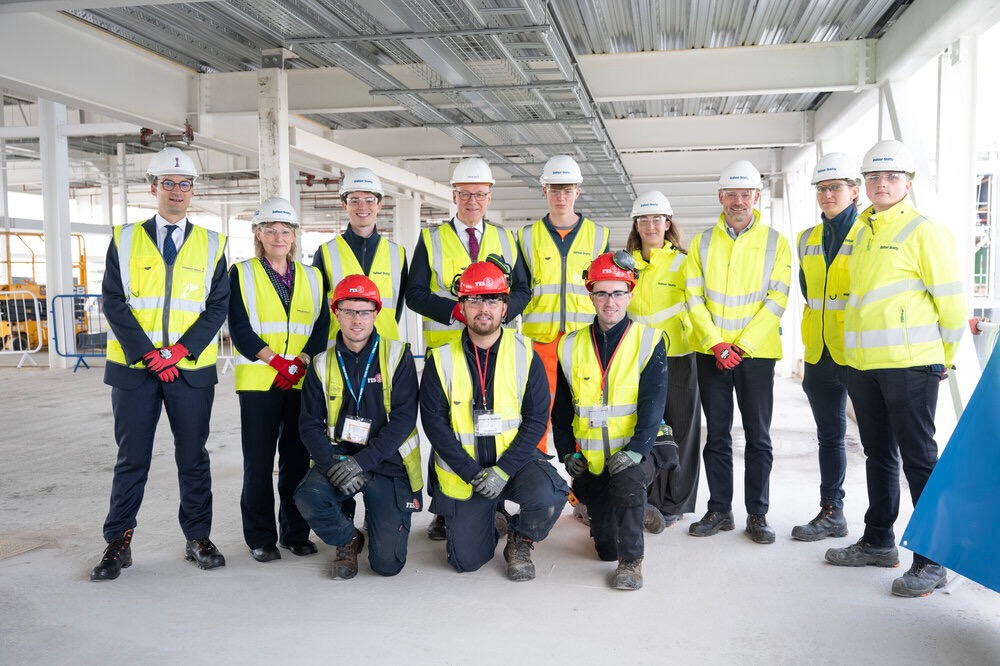
Balfour Beatty is delivering a £65m two-storey terminal expansion at Edinburgh Airport, adding eight new departure gates as the first phase of a £500m, five-year capital programme to increase passenger capacity. Recent works include installing eight link bridges in a live, fully operational airside environment, building on earlier upgrades such as the £8m Security Futures Project with new CT security screening, a baggage hall expansion and modernised fire station facilities. The scheme demands tight phasing, airside safety controls and minimal disruption to Scotland’s busiest airport.
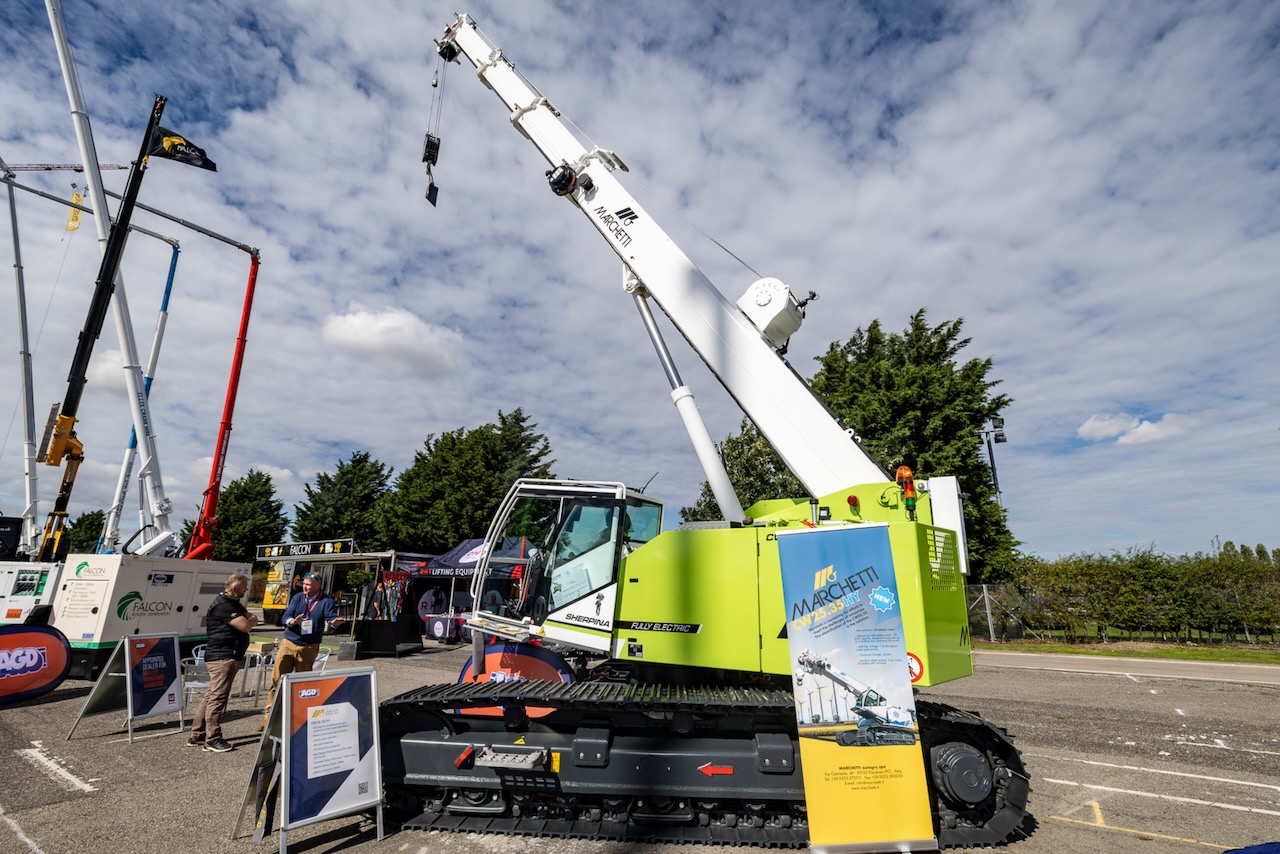
AGD Equipment has introduced the fully electric Marchetti CW23.35 HY compact crawler crane to the UK hire market, offering a 25‑tonne lifting capacity and up to 35m reach with fly‑jib. The machine operates pick‑and‑carry loads up to 17 tonnes, powered by a 210Ah battery and 110kW electric motor, and was first shown at Vertikal Days. With a transport width of 2.5m, it targets constrained urban or industrial sites where emissions limits, access restrictions and tight lifting radii drive crane selection.
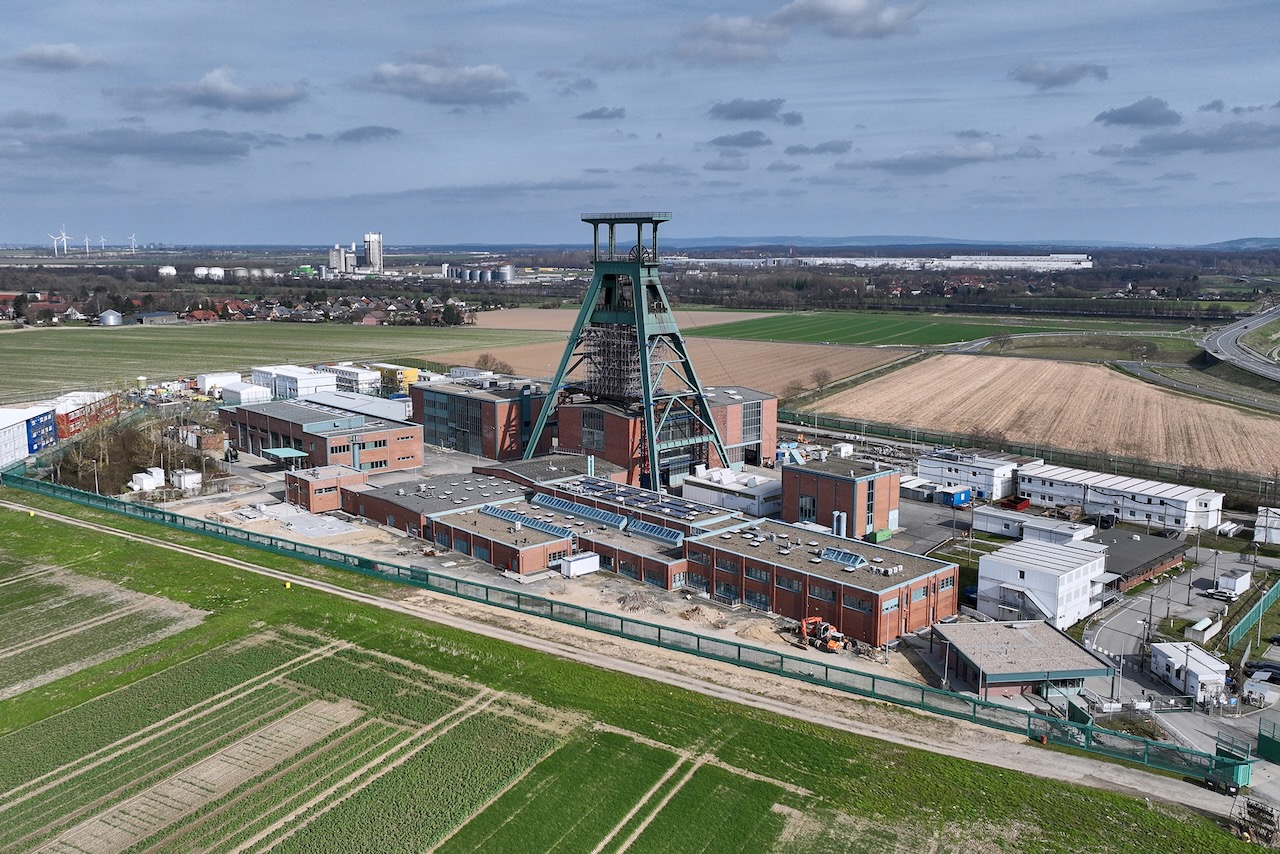
Jacobs has been appointed by Germany’s Bundesgesellschaft für Endlagerung (BGE) to provide project support for the Konrad Repository in Salzgitter, a low- and intermediate-level radioactive waste facility being developed within existing underground mining structures. The contract covers assessment of construction progress, validation of planning assumptions, schedule and cost plan reviews, and implementation of efficiency improvements under combined mining, nuclear and seismic regulatory constraints. Jacobs will align construction activities, timelines and cost structures with on-site conditions, drawing on experience from Sellafield and Belgian radioactive waste treatment and storage projects.
Liebherr is launching the 22‑tonne RE 22 M Litronic rail excavator at InnoTrans, combining a newly developed hydrostatic rail-wheel undercarriage with the 120 kW engine from the A 922 Rail and a standard 2,000 mm rear swing radius (2,110 mm with optional counterweight). The rail axle delivers 50 kN tractive force and, subject to national approvals, allows travel up to 40 km/h on rails and emergency towing up to 60 km/h, with the option to run on road tyres directly on the railhead to reduce track wear. A redesigned dual cab with the INTUSI adaptive operating concept removes the steering-column control panel, improving sightlines and ergonomics, while an optional centre-mounted two-point support system boosts lifting capacity without sacrificing compactness for tight rail possessions.
Scotland’s Trust Housing Association, which manages almost 4,000 homes nationwide, has appointed David Knight as chair following the departure of Dr Norval Bryson after a four-year term. Knight brings over 35 years’ senior experience in Scottish housebuilding, including managing director roles at Bryant Homes, Miller Homes and Avant Homes, and a previous chairmanship of Homes for Scotland. Having served as Trust’s vice-chair and convenor of the audit and performance committee since 2021, he is expected to steer delivery of the association’s “Ready, together” growth and modernisation strategy.
Algeco UK, part of Modulaire Group, has secured an EcoVadis Platinum rating, placing its modular building operations in the top 1% of companies assessed globally for sustainability performance. The business has introduced a Supply Chain Sustainability Handbook, SBTi-validated carbon reduction targets aligned with a net-zero pathway, and a UN Global Compact training programme to embed requirements across its supplier base. Recent projects include a permanent modular building for Gridserve’s A1 Stevenage EV charging station, signalling growing use of offsite solutions on high-traffic infrastructure sites.
A deepening shortage of engineering talent in the UK is forcing infrastructure employers to overhaul recruitment, with firms competing aggressively for chartered civil, geotechnical and structural engineers on major programmes such as HS2 and Lower Thames Crossing. Contractors and consultants are offering flexible working, fast‑tracked ICE/IStructE professional development and retention bonuses targeted at mid‑career staff with design-and-build experience on NEC4 contracts. The squeeze is delaying detailed design and site supervision capacity, pushing up salary benchmarks and increasing reliance on overseas hires and specialist agencies for critical roles.
Reuse of existing piled and raft foundations is accelerating on commercial property schemes as clients accept higher investigation spend in exchange for major embodied carbon and programme savings. Engineers are combining detailed pile integrity testing, targeted coring and advanced geotechnical back‑analysis with updated Eurocode‑based reliability methods to justify reusing legacy foundations originally designed for very different load cases. Planning and funding bodies are now more willing to accept partial reuse strategies, shifting project briefs away from default demolition and full replacement towards selective strengthening, load‑sharing and local pile augmentation.
Environmental charity the Environmental Law Foundation has warned it may launch a judicial review against the government’s new biodiversity net gain (BNG) regime, arguing that the statutory 10% uplift risks being treated as a de facto cap rather than a minimum. The challenge would focus on how planning authorities apply the Environment Act 2021 BNG provisions and Natural England’s statutory metric in development consents. For civil and geotechnical schemes, this could affect habitat creation areas, earthworks footprints and off-site BNG land agreements already being negotiated.
The North Sea Transition Taskforce now says the “window of opportunity” for an orderly energy transition in the UK Continental Shelf has “narrowed”, a year after first warning it was closing. The group is focused on coordinating offshore platform electrification, large-scale carbon capture and storage in depleted gas fields, and integration of new offshore wind capacity with existing oil and gas infrastructure. For civil and geotechnical engineers, this signals tighter timelines for repurposing ageing jackets, subsea pipelines and onshore terminals while maintaining structural integrity and regulatory compliance.
HS2 Ltd is seeking market input on a 10-year professional services partnering arrangement to support the remaining phases of the UK’s high-speed rail programme as it moves beyond major civils delivery. The proposed framework is expected to cover multidisciplinary design, systems integration and programme management for stations, rail systems and operational readiness, replacing the current civils-focused consultancy model. Consultants will need long-term capability in high-speed rail systems, digital design and assurance, and integration with existing classic rail infrastructure.
Medway Council has gone to tender for a new Highways Infrastructure Contract valued at £110M excluding VAT (£132M including VAT), covering maintenance and improvement of the local road network. The framework is expected to bundle routine carriageway and footway works, structures maintenance and associated drainage and traffic management into a single long-term package. Contractors will be assessing risk around inflation, materials pricing and resource availability over the contract term, with bid strategies likely to hinge on surfacing productivity, night‑time possession planning and drainage asset condition.