Gatwick Airport rail closures: sinkhole bridge failure lessons for engineers
Reviewed by Tom Sullivan
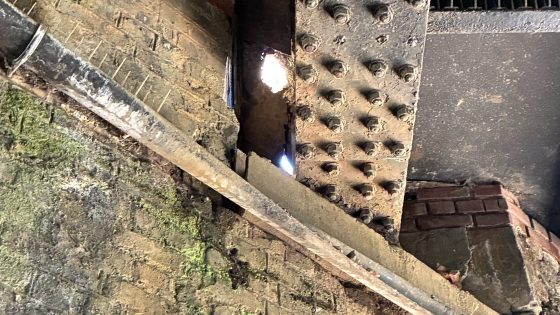
First reported on New Civil Engineer
30 Second Briefing
Sinkholes discovered by Network Rail engineers on a rail bridge outside Purley have forced the closure of all lines between Purley and East Croydon, severing direct rail links between central London and Gatwick Airport. The defect was identified during planned engineering works, prompting immediate suspension of services on this key section of the Brighton Main Line. Geotechnical teams now face urgent investigation of foundation conditions and void extent beneath the bridge, with stabilisation and monitoring requirements likely to dictate the duration of disruption.
Technical Brief
- Sinkholes forming on a bridge deck or approaches imply localised loss of bearing support to track structure.
- Likely investigation sequence: rapid visual inspection, track geometry checks, followed by targeted intrusive ground investigation and void probing.
- Geotechnical teams will need to confirm whether voiding is karstic, washout-related, or linked to ageing drainage infrastructure.
- Structural assessment must consider differential settlement at bearings, abutments and parapets, not just track formation.
- Interim remediation options include low-mobility grouting, pressure grouting beneath foundations, or localised slab replacement with improved sub-base.
- Continuous monitoring is expected via track geometry cars, settlement markers and possibly remote condition monitoring of bridge movements.
Our Take
Network Rail has featured repeatedly in recent Hazards coverage in our database, with incidents ranging from lineside fires in West Sussex to infrastructure condition concerns in Wales and the West of England, suggesting regulators and operators will scrutinise asset condition and inspection regimes more closely after the Gatwick-area sinkholes.
The Severn Tunnel upgrade and the planned £125M Southern Region traction power framework show Network Rail is already committing significant capital to resilience and modernisation, so unplanned failures near Gatwick Airport are likely to intensify pressure to prioritise geotechnical risk and legacy structures within that investment pipeline.
With 34 Hazards stories in our database and several involving Network Rail, the Gatwick bridge sinkholes reinforce a pattern where weathering, ageing assets and localised ground failures are becoming a recurrent operational risk on key UK rail corridors rather than isolated anomalies.
Prepared by collating external sources, AI-assisted tools, and Geomechanics.io’s proprietary mining database, then reviewed for technical accuracy & edited by our geotechnical team.
Related Articles
Related Industries & Products
Construction
Quality control software for construction companies with material testing, batch tracking, and compliance management.
Tunnelling
Specialised solutions for tunnelling projects including grout mix design, hydrogeological analysis, and quality control.
CMRR-io
Streamline coal mine roof stability assessments with our cloud-based CMRR software featuring automated calculations, multi-scenario analysis, and collaborative workflows.
HYDROGEO-io
Comprehensive hydrogeological testing platform for managing, analysing, and reporting on packer tests, lugeon values, and hydraulic conductivity assessments.
GEODB-io
Centralised geotechnical data management solution for storing, accessing, and analysing all your site investigation and material testing data.