Geomechanics, Streamlined.
© 2026 Geomechanics.io. All rights reserved.
Engineering New Zealand has been confirmed as an official Industry Partner for International No-Dig Auckland, the trenchless technology conference and exhibition running from 28–29 October 2026. The partnership links New Zealand’s peak engineering body more directly with no-dig methods for pipeline, cable and utility installation and rehabilitation, including HDD, microtunnelling and pipe bursting. For civil and geotechnical practitioners, this signals stronger institutional backing for trenchless design standards, asset management integration and training across water, transport and urban infrastructure projects.
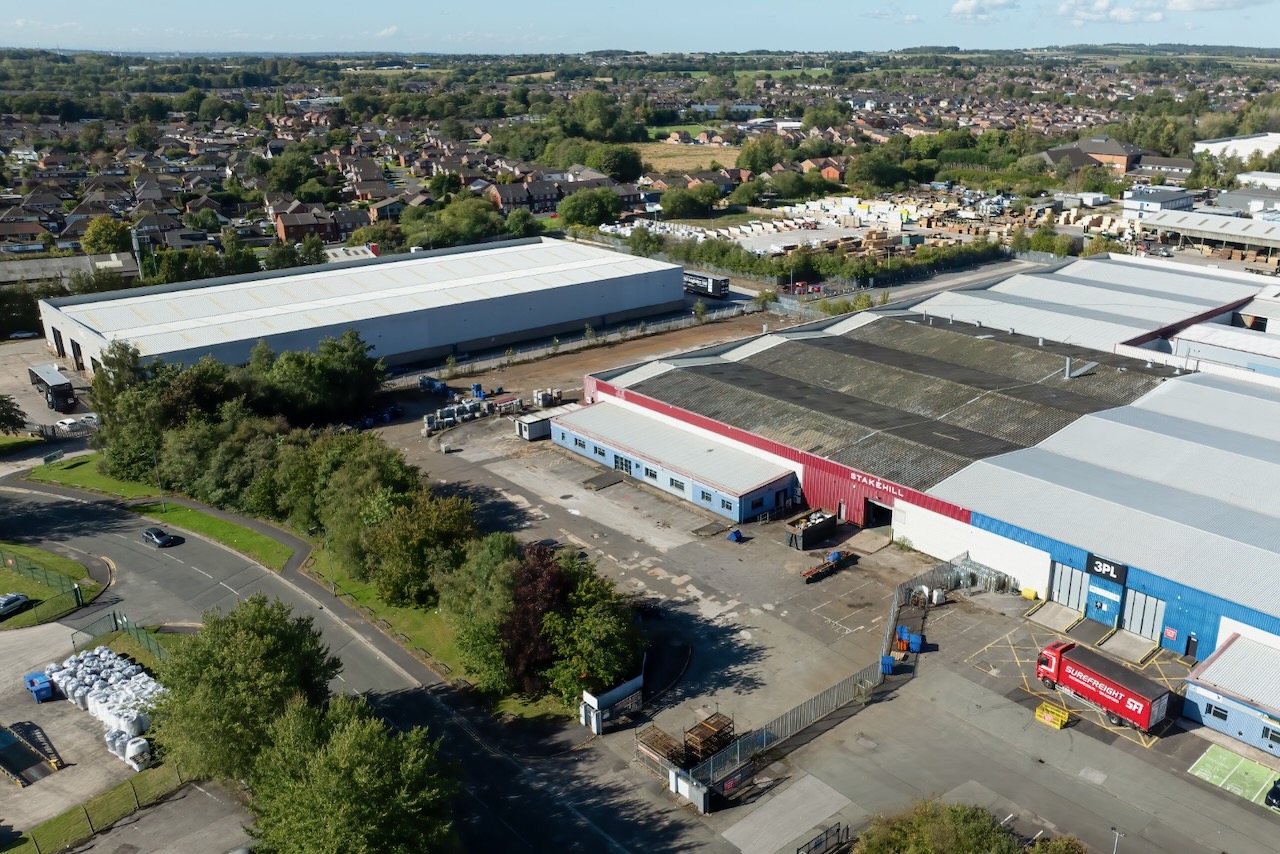
MGF is building a new production facility, O’Hara House, in Ashton‑in‑Makerfield, Wigan, targeting a 300% increase in manufacturing capacity for its excavation, structural support and lifting solutions by early 2027. The plant will introduce modern manufacturing techniques, tighter quality control and energy‑efficient operations, with layout and space use planned to cut long‑term environmental impacts. Expanded capacity and a larger local workforce are intended to support global demand while maintaining short lead times and consistent product performance on temporary works schemes.
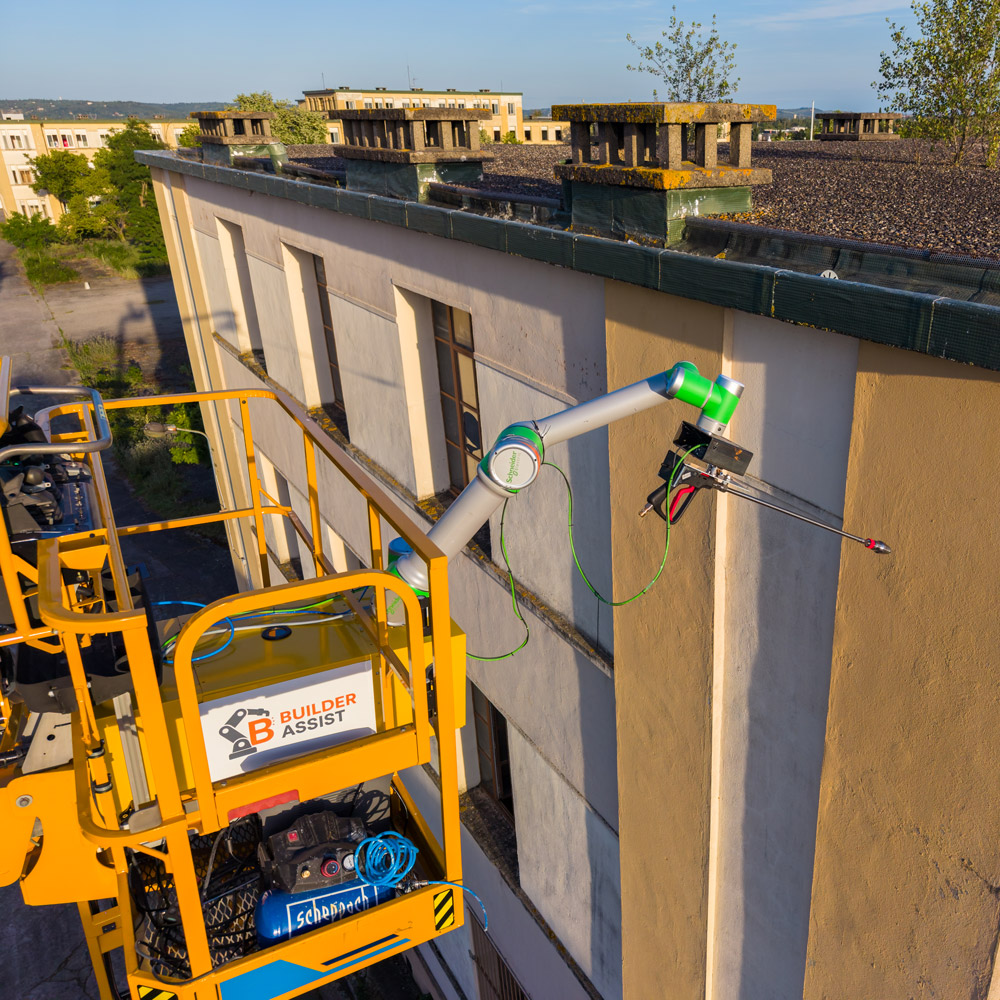
Haulotte is partnering with French startup Builder Assist to mount a robotic arm on its mobile elevating work platforms (MEWPs) for overhead drilling and automated painting and coating of façades in live site trials. The pilot fleet is being deployed on real jobs to quantify cycle times, positioning accuracy and operator exposure benefits when combining MEWPs with task‑specific robotics. The move builds on Haulotte’s 2020 collaboration with AMBPR on the Autonomous Mobile Blast Paint system for cleaning, blasting and painting large vertical surfaces in shipyards and heavy industrial environments.
The Crown Commercial Service has opened procurement for a new UK-wide construction and infrastructure framework with an estimated value of £120bn excluding VAT (£144bn including VAT), covering central government and wider public sector clients. The framework is expected to bundle major civil engineering, building and infrastructure works into long-term lots, giving tier 1 contractors and multidisciplinary design-and-build teams a single route to bid for highways, rail, flood defence and public building projects. For geotechnical and civil specialists, early positioning in consortia will be critical to secure pipeline visibility and influence specification choices.
HS2’s latest cost estimates have triggered renewed criticism from Plaid Cymru transport spokesperson Delyth Jewell, who says Welsh passengers are being treated as “second class citizens” because the scheme is classified as an “England and Wales” project despite no HS2 track being built in Wales. That designation means Wales receives no Barnett consequential funding, unlike Scotland and Northern Ireland, even as HS2’s budget has escalated far beyond its original multi‑tens‑of‑billions envelope. The dispute affects prospects for upgrading key Welsh routes such as the South Wales Main Line and North Wales Coast Line.
The UK government has created a national mass transit taskforce to recommend how light rail, tram and bus rapid transit schemes can be delivered more quickly and at lower cost. The group is expected to focus on standardising design elements such as vehicles, trackforms and power systems, and on streamlining business case and planning approval processes that currently add years to project timelines. For civil and geotechnical teams, the move signals potential for more repeatable designs, clearer funding pathways and earlier certainty on corridor selection and ground investigation scope.
Oldham Metropolitan Borough Council is preparing a £20M highways improvement framework for civil engineering construction works across north east Greater Manchester, signalling a multi-year pipeline for local contractors. The framework is expected to bundle carriageway resurfacing, junction upgrades and associated drainage and footway works into a single procurement route, reducing repeated tendering for schemes across the borough’s strategic and local road network. Consultants and contractors will need to align bids with council priorities on asset condition, congestion pinch points and maintenance of ageing urban infrastructure.
ABB has formed a strategic partnership with Point Laz to integrate the Lazaruss™ mine shaft monitoring system into ABB’s mine hoist portfolio, targeting safer and more reliable hoist inspection in deep underground shafts. The collaboration focuses on an integrated service offering that combines continuous shaft condition monitoring with hoist control and maintenance planning, moving inspections away from purely manual, periodic checks. For engineers, this signals growing scope to link hoist performance data with real-time shaft integrity information for earlier detection of lining, guide and conveyance issues.
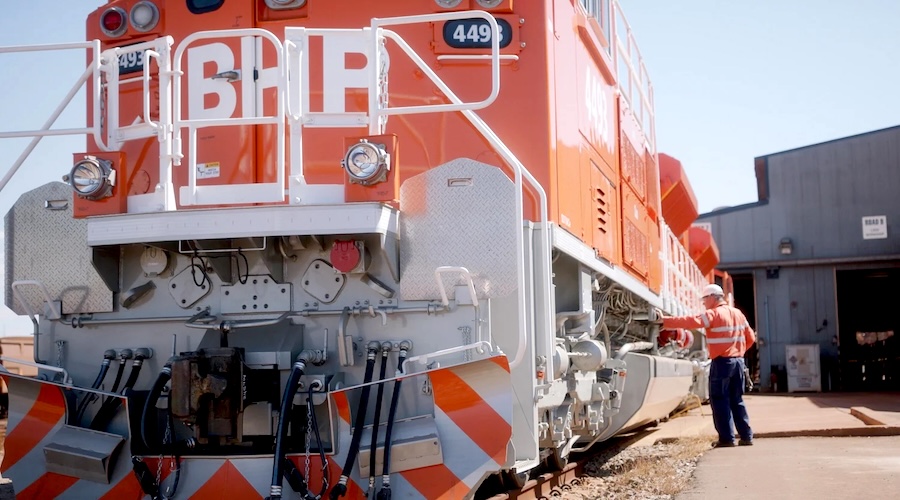
BHP has defended delaying major Pilbara decarbonisation projects, including a board-approved $400 million solar-and-battery installation at Jimblebar and a wider $1.3 billion renewable power plan linked to electric haul trucks and rail, citing the lack of commercially viable 240‑tonne battery-electric haul trucks at fleet scale. The miner says it has already cut Scope 1 and 2 emissions 36% from 2020 to June 2025, largely by sourcing 70% of its electricity from renewables, and is trialling two battery-electric trucks plus four battery-electric locomotives. This stance contrasts with Rio Tinto and Fortescue’s more aggressive electrification timelines, despite similar technical and cost constraints on heavy mobile equipment.
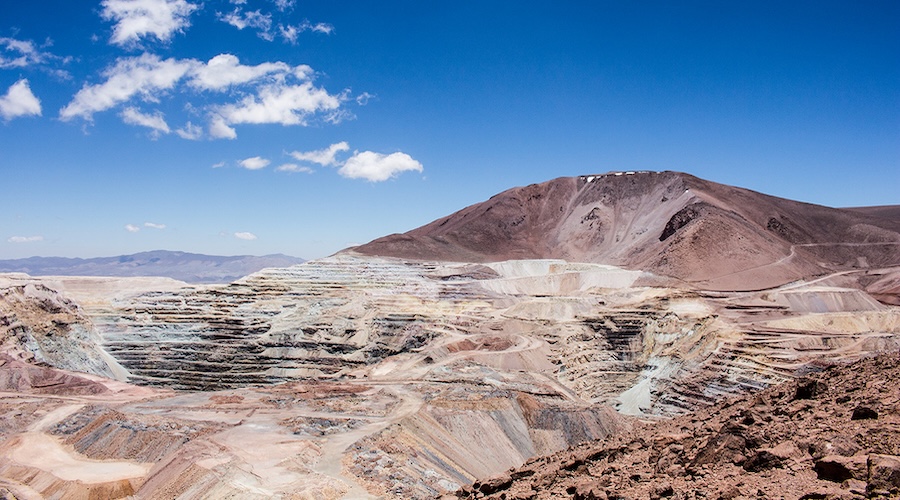
Kinross Gold will invest $3 billion to develop the Lobo Marte project in Chile’s Atacama region, a 22‑year, 2,312‑hectare operation at 4,200 metres elevation designed for about 35,000 tonnes per day of ore and 4.7 million recoverable ounces of gold at 1.29 g/t. Sequential open pits at Marte and Lobo will truck ore to a primary crusher and heap leach facility, supplied by existing Mantos de Oro wells and a new 220 kV transmission line tied to upgraded regional roads. Construction is slated for 2027–2030, with Kinross planning district integration with the nearby La Coipa mine and Chilean reforms proposing lower mining patent fees and streamlined permitting.
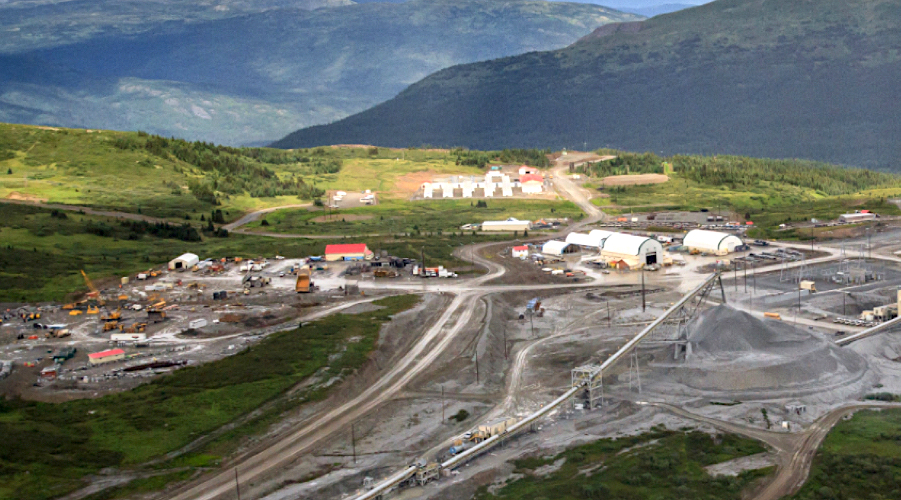
British Columbia and the Yukon risk ceding critical minerals investment to the US and Australia unless they speed mine builds, grid expansion and permitting, PwC Canada’s BC Mine 2025 report warns. Metallurgical coal’s share of BC mining revenue fell from just over 60% in 2023 to under 50% last year, while copper rose to 25%, as Ottawa prioritises Newmont’s Red Chris, LNG Canada Phase 2 and the North Coast Transmission Line. PwC flags northern transmission constraints and corridor-based planning in the Yukon and northwest BC as decisive for turning approvals into producing assets.
Vizsla Silver has secured a 173 million peso (≈$10 million) five-year working capital facility from Mexican state-backed lender FIFOMI for its Panuco silver-gold project in Sinaloa, priced at the TIIE rate plus a 4.6681% margin. Panuco hosts over 102 million oz silver and 829,000 oz gold in reserves, with a feasibility study projecting 17.4 million oz silver-equivalent output per year over 9.4 years, an after-tax NPV5 of $1.8 billion, 111% IRR and a seven-month payback. Shares rose 2.6%, valuing Vizsla at C$1.78 billion.
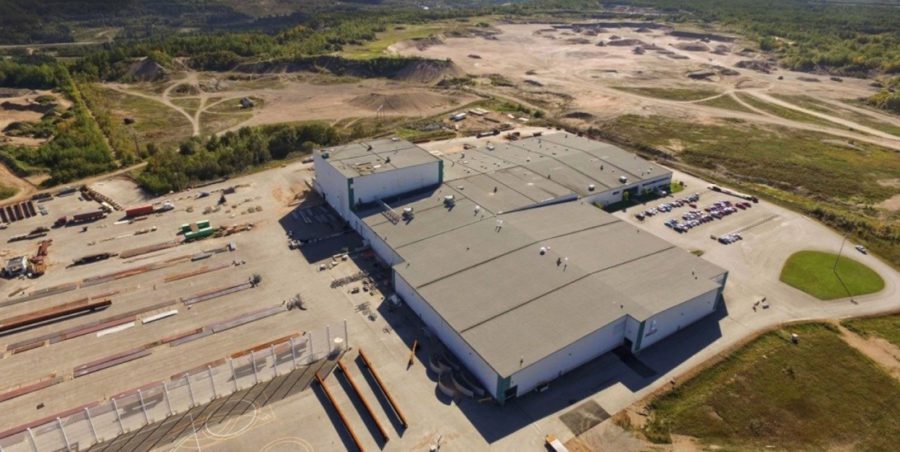
A resource update at First Phosphate’s Bégin-Lamarche project in northeastern Quebec has lifted indicated resources more than fourfold to 198.5 million pit-constrained tonnes at 6% P2O5, added 6.2 million measured tonnes at 7.7% P2O5, and cut inferred resources to 89.5 million tonnes at 6.16% P2O5 from 68,345 metres of drilling in 276 holes. Metallurgical tests show a 40.4% apatite concentrate, supporting plans for a 10,000‑tonne‑per‑year iron phosphate plant and a proposed phosphoric acid facility near the deep-water Port of Saguenay, 70 km away.
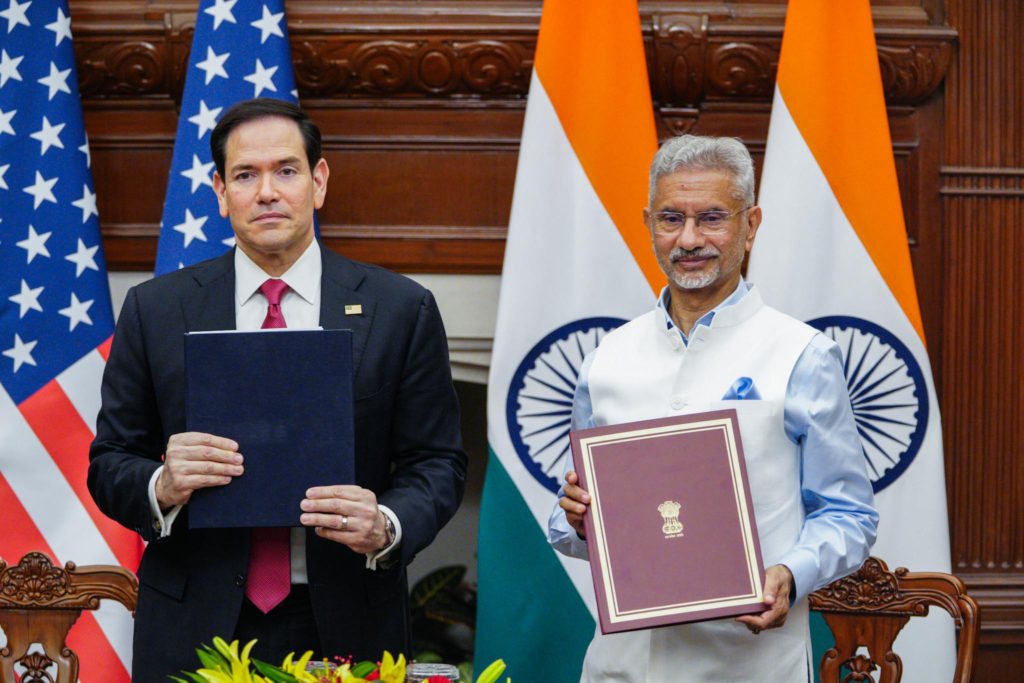
The US and India have signed a bilateral critical minerals framework, building on February’s launch of the Forum on Resource Geostrategic Engagement (FORGE) in Washington, to secure mining and processing supply chains against single-source monopolies and coercive market practices. India, which officially designates 30 critical minerals and holds an estimated 13 million tonnes of monazite, currently produces only copper, graphite, phosphorous and titanium at scale, signalling substantial greenfield and processing opportunities. Parallel Quad and prospective Russia pacts position India as a multi-aligned hub for rare earths and battery-metal projects.
ArcelorMittal Exploitation Minière Canada has been fined C$100 million, the largest penalty ever under Canada’s Fisheries Act, after pleading guilty to 100 counts for discharging low‑pH effluents and waters with elevated zinc, nickel and suspended solids from its Mont‑Wright and Fire Lake iron ore operations between 2014 and 2022. Nearly C$250,000 in investigation costs must also be repaid, and a detailed effluent and mine drainage management plan for both complexes is due to federal enforcement officers by mid‑February 2027. The company says it has since invested over C$400 million in permanent water control and treatment infrastructure.
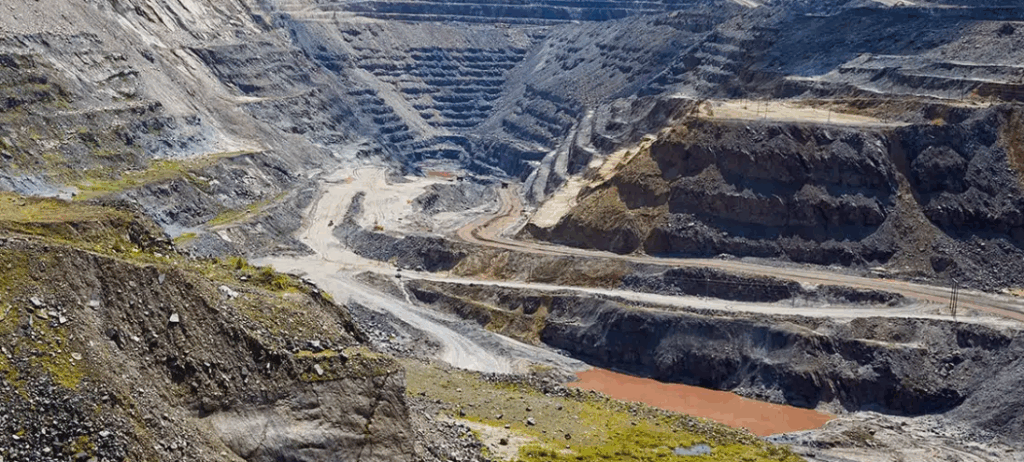
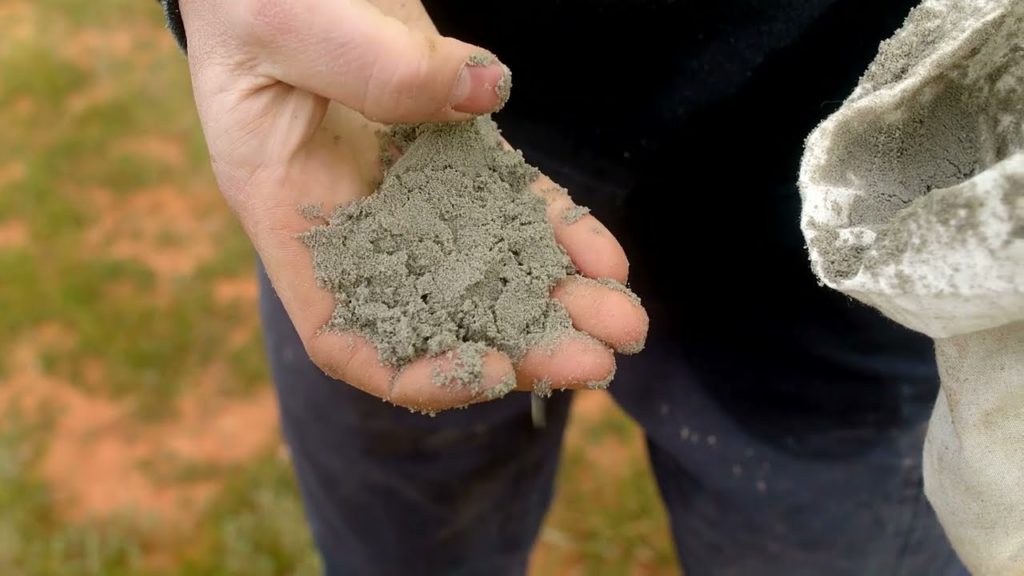
New South Wales has approved RZ Resources’ A$693 million Copi mineral sands mine, designed to produce up to 400,000 tonnes of critical mineral ore per year over an 18‑year life from a deposit 75 km northwest of Wentworth. The operation will supply titanium minerals (rutile, leucoxene, ilmenite), premium zircon and rare earths (monazite, xenotime), feeding RZ’s existing mineral separation plant on the Brisbane River, the only major facility of its type on Australia’s east coast. Backing from JX Advanced Metals, Marubeni and prospective US EXIM financing signals strong geopolitical interest in Copi’s role in Quad-aligned supply chains.
Arca Technologies has secured up to C$2 million from NRC IRAP’s Clean Tech initiative towards a C$7.4 million project to move its mineral activation and engineered carbonation processes from lab to field scale, targeting alkaline wastes such as mine tailings and steel slag. The company will design containerised, field‑deployable mineralisation units and prepare a first‑of‑kind industrial pilot, billed as the first field‑scale system to accelerate carbon mineralisation in mine waste. Commercial traction includes a 10‑year offtake with Microsoft for nearly 300,000 tonnes of CO₂ removal and an early pre‑purchase from Frontier.
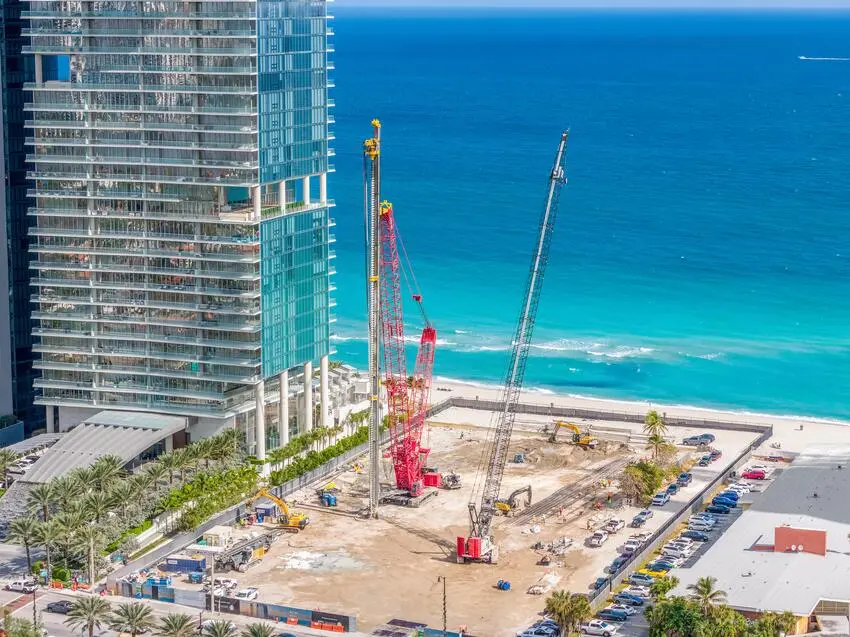
Recent high-rise construction in South Florida is driving demand for deep foundations in karstic limestone, with Keller using large-diameter drilled shafts and augered cast-in-place piles to control settlement in weak, highly variable strata. The DFI Deep Foundations Magazine feature by Michael Meneses, Will Burgos, and James Hussin details case histories where groundwater levels near sea level, aggressive chloride environments, and strict lateral deflection limits governed design. For practitioners, the projects emphasise rigorous geotechnical characterisation, corrosion protection strategies, and construction QA/QC to manage risk in coastal high-rise work.
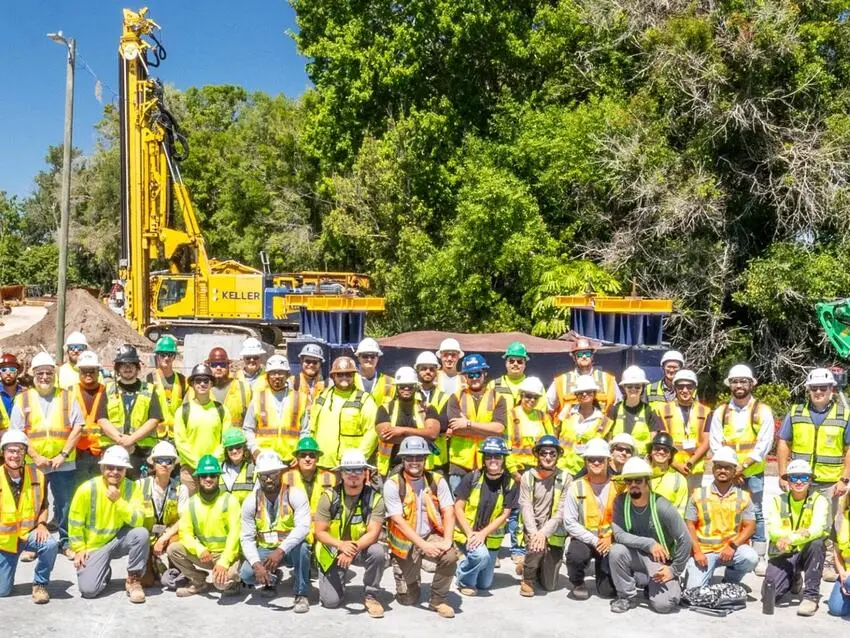
Keller North America has expanded its field engineer / project engineer development programme after a successful pilot, formalising a structured path from site-based roles into project management and technical leadership. The scheme combines intensive on-the-job training on ground improvement and deep foundation projects with rotations through estimating, design, and operations, exposing graduates to tools such as geotechnical instrumentation, grout mix design, and pile load testing. For contractors and clients, the move signals a pipeline of early-career engineers with stronger design–build integration skills and site-ready competence.
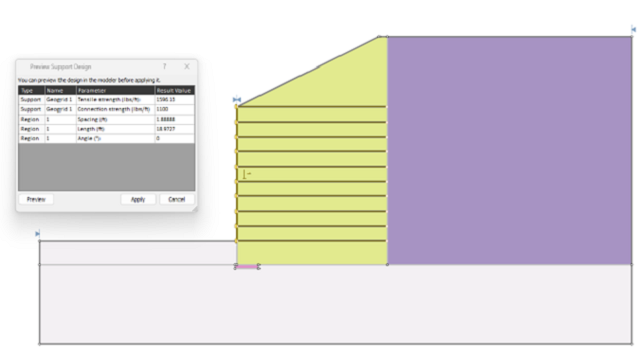
Rocscience has launched Support Designer in Slide2, allowing engineers to specify a target factor of safety for slope or excavation models and automatically compute required support parameters such as bolt length, spacing, and capacity. The tool works with limit equilibrium analyses, adjusting support patterns to meet user-defined FoS rather than relying on manual trial‑and‑error iterations. This shift to target‑driven design could tighten geotechnical optimisation workflows, particularly for complex reinforced slopes, retaining structures, and underground excavations.
Sandvik has launched AutoMine® Aura, a new underground mining automation platform described as the biggest upgrade to AutoMine® in over 20 years and engineered to provide full situational awareness across fleets. The system overhauls every layer of the existing AutoMine® stack, integrating data from multiple sensors and machines into a unified control environment to support autonomous loading, hauling and drilling. For mine operators, the platform signals a shift towards more tightly integrated, multi-equipment automation architectures that depend on robust underground communications and high-fidelity environmental modelling.
Metso is rolling out a next-generation single-pass process to convert spodumene concentrate directly into battery-grade lithium carbonate, targeting higher yield and lower operating costs than conventional multi-stage routes. The flowsheet is designed as a continuous, single-pass circuit rather than batch leaching and multiple crystallisation steps, cutting thermal and reagent demand and reducing waste streams. For lithium project developers, this offers a compact, integrated plant option that can simplify permitting, shrink footprint and potentially improve project economics for hard-rock spodumene deposits.
Mineral Resources has taken Final Investment Decision to expand the Mt Marion lithium operation at Karramindie, Western Australia, with joint venture partner Jiangxi Ganfeng Lithium, adding a new flotation plant and transitioning to include underground mining. The project will shift the site from a solely open-pit, DMS-focused operation towards higher-recovery concentrator flowsheets more typical of hard-rock spodumene plants. For geotechnical and mining teams, underground development will require new ground control regimes, revised dewatering strategies and re-optimised ore scheduling around the expanded processing capacity.
Sandvik’s 2024 acquisition of Universal Field Robots is extending its AutoMine® automation platform beyond underground loaders and trucks to include UFR’s diesel and battery-electric robotic carriers for tasks such as explosives loading, scaling and secondary break. Integration work is targeting AutoMine-compatible control of UFR machines via Sandvik’s existing automation infrastructure, including shared navigation, collision avoidance and traffic management. For mine operators, this points to a single automation layer coordinating production fleets and specialised robotic carriers in high-risk areas like drawpoints, crusher chambers and brow headings.