Geomechanics.io

  • Free Tools
Sign UpLog In

Geomechanics.io

Geomechanics, Streamlined.

© 2026 Geomechanics.io. All rights reserved.

Geomechanics.io

CMRR-ioGEODB-ioHYDROGEO-ioQCDB-ioFree Tools & CalculatorsBlogLatest Industry News

Industries

MiningConstructionTunnelling

Company

Terms of UsePrivacy PolicyLinkedIn
    Projects
    Contract Award

    Rio2’s first gold at Fenix mine: heap leach design and ramp-up notes for engineers

    January 27, 2026|

    Reviewed by Joe Ashwell

    Rio2’s first gold at Fenix mine: heap leach design and ramp-up notes for engineers

    First reported on MINING.com

    30 Second Briefing

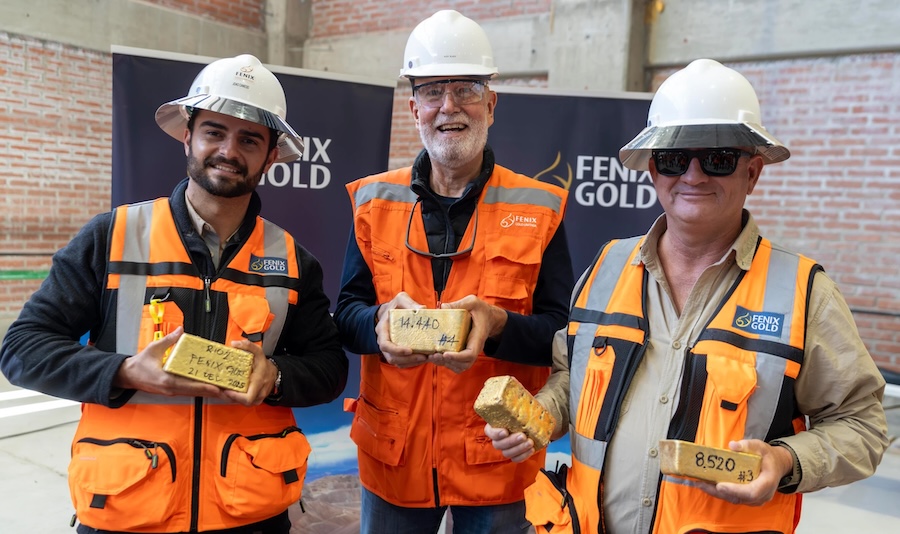
    Rio2 has poured first gold at its $235 million Fenix mine in Chile’s Atacama region, producing 897 oz on 23 January after a 358 oz commissioning pour in December, with both pours also yielding about 131 oz of silver. The run-of-mine heap leach operation, located on the Maricunga gold belt, avoids crushing and tailings infrastructure and is ramping toward 20,000 tonnes of ore per day, targeting 60,000–70,000 oz of gold in 2026. Construction created roughly 1,200 jobs, with about 550 permanent roles planned over the mine’s 17-year life.

    Technical Brief

    • Critical-path infrastructure for the US$235 million Fenix development was delivered on time and on budget.
    • Run-of-mine heap leach configuration removes the need for a crushing plant and conventional tailings storage.
    • Location on Chile’s Maricunga gold belt places Fenix within an established high-altitude mining district.
    • Construction phase, started roughly a year earlier, peaked at about 1,200 on-site jobs.
    • Operating phase is planned to sustain around 550 direct jobs over an anticipated 17-year mine life.
    • First official gold pour on 23 January followed a separate commissioning pour completed in December.
    • Both initial pours also produced approximately 131 ounces of silver as a by-product.
    • Fenix is positioned as Rio2’s cornerstone asset alongside integration of the Condestable copper mine acquisition in Peru.

    Our Take

    With the Fenix gold project in Chile now pouring first gold and Rio2 also moving to acquire a 99.1% interest in the Condestable copper mine in Peru (Dec 2025 piece), the company is building a multi-asset Latin American profile spanning both gold and copper rather than remaining a single-asset developer.

    A US$235 million project cost for Fenix and a 17‑year mine life put this asset in the mid-tier bracket in our database, which typically gives operators enough scale to support district-level exploration in belts like the Maricunga while still being financeable for smaller companies such as Rio2.

    The 550 permanent positions supported over the life of the Fenix gold mine are material for the Atacama region, and similar employment figures in other Latin American gold projects in our coverage have often translated into stronger local political backing during later expansion or permitting phases.

    Geotechnical Software for Modern Teams

    Centralise site data, logs, and lab results with GEODB-io, CMRR-io, and HYDROGEO-io.

    No credit card required.

    • Save and export unlimited calculations
    • Advanced data visualisation
    • Generate professional PDF reports
    • Cloud storage for all your projects

    Prepared by collating external sources, AI-assisted tools, and Geomechanics.io’s proprietary mining database, then reviewed for technical accuracy & edited by our geotechnical team.

    Related Articles

    Volvo’s right-sized rigid mining trucks: fleet and haul road insights for engineers
    Mining
    about 9 hours ago

    Volvo’s right-sized rigid mining trucks: fleet and haul road insights for engineers

    Volvo Construction Equipment is pushing to expand its share of the smaller rigid mining truck segment, challenging Caterpillar’s 777/775 and Komatsu’s HD785/HD685 with its rigid haulers built in Motherwell, Scotland. The “right-sized” Volvo units target mines where ultraclass trucks are impractical, focusing on optimised payload-to-weight ratios and shorter cycle times on tighter haul roads. For operators, the main implications are alternative fleet configurations in the 60–100 t class and potential lifecycle cost competition in brownfield pits constrained by ramp geometry and crusher layouts.

    Kazatomprom’s value-over-volume uranium strategy: key points for mine planners
    Mining
    about 9 hours ago

    Kazatomprom’s value-over-volume uranium strategy: key points for mine planners

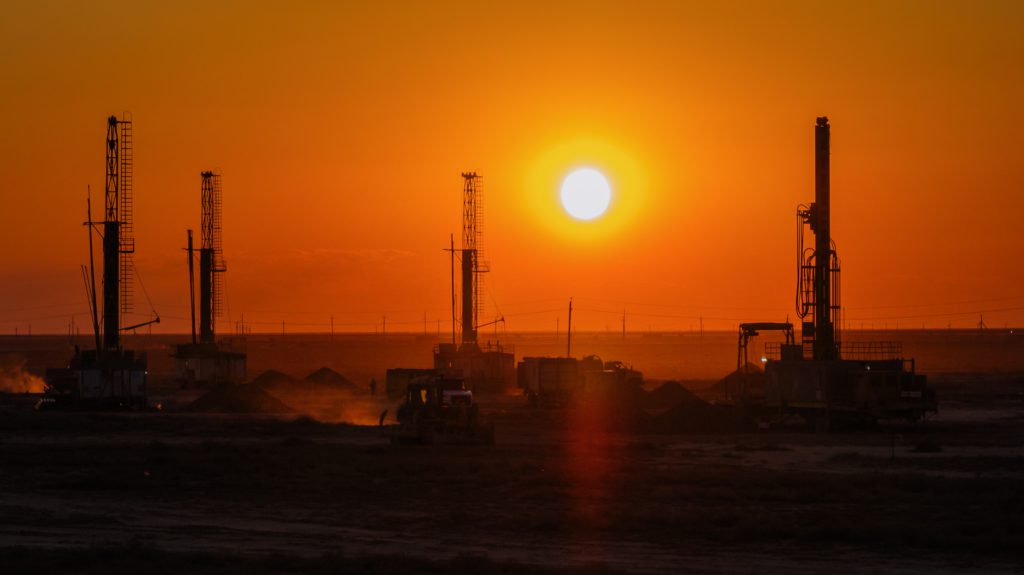
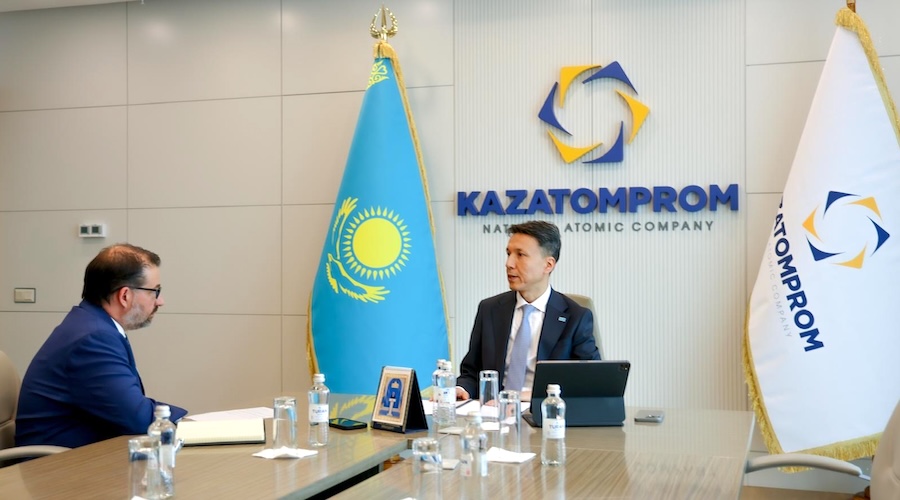
    Kazakhstan’s state-controlled Kazatomprom, which produces most of the country’s roughly 40% share of global uranium supply via low-cost in-situ recovery, is doubling down on its “value over volume” strategy, refusing to flood the market despite a sevenfold rise in its London-listed share price since 2018. CEO Meirzhan Yussupov says any move further down the fuel cycle, including ambitions for domestic enrichment, must clear strict payback, IRR and NPV hurdles and comply with non-proliferation constraints. He also positions Kazatomprom’s dual listing in London and on the common-law-governed Astana International Exchange as a proof point for Kazakhstan’s investor protections.

    Kazatomprom and uranium markets: supply, logistics and project signals for engineers
    Mining
    about 9 hours ago

    Kazatomprom and uranium markets: supply, logistics and project signals for engineers

    Kazatomprom CEO Meirzhan Yussupov says the company will maintain its “value over volume” strategy, limiting output growth to about 10% year-on-year rather than chasing market share, despite surging nuclear demand from China, India’s 100 GW-by-2047 SHANTI targets and AI-driven data centres. He confirms Kazakhstan already mines, processes and fabricates fuel assemblies for export to China, and is now evaluating an in-country conversion plant using newly acquired technology, with investment contingent on IRR, NPV and payback. Yussupov notes up to roughly 60–65% of Western deliveries have recently moved via the Trans-Caspian Middle Corridor, while transit through Russia to St Petersburg remains legally available as Kazakh uranium is not covered by Russian-origin bans.

    Related Industries & Products

    Mining

    Geotechnical software solutions for mining operations including CMRR analysis, hydrogeological testing, and data management.

    Construction

    Quality control software for construction companies with material testing, batch tracking, and compliance management.

    CMRR-io

    Streamline coal mine roof stability assessments with our cloud-based CMRR software featuring automated calculations, multi-scenario analysis, and collaborative workflows.

    HYDROGEO-io

    Comprehensive hydrogeological testing platform for managing, analysing, and reporting on packer tests, lugeon values, and hydraulic conductivity assessments.

    GEODB-io

    Centralised geotechnical data management solution for storing, accessing, and analysing all your site investigation and material testing data.

    AllGeotechnicalMiningInfrastructureMaterialsHazardsEnvironmentalSoftwarePolicy