Geomechanics, Streamlined.
© 2026 Geomechanics.io. All rights reserved.
Haultrax has doubled active site deployments of its mining fleet management system since unveiling a new commercial model, redesigned user interface and system enhancements at IMARC 2025, with further rollouts already scheduled. The updated FMS targets faster onboarding and lower upfront cost, aiming to displace spreadsheet- and radio-based dispatch with tablet-driven in-cab units and real-time haulage data. For mine operators, the rapid uptake signals growing appetite for lightweight FMS deployments that can be implemented without full OEM control system overhauls.
Epiroc has signed a global strategic partnership with SANY Group to jointly target mining and infrastructure projects by combining Epiroc’s hydraulic breakers and related rock excavation tools with SANY’s excavators and other heavy equipment. The agreement focuses on cross-brand product packages and coordinated sales in selected markets, positioning the pair to offer integrated fleets rather than standalone machines. For mine operators and contractors, this could simplify procurement, improve attachment–carrier compatibility, and support more standardised maintenance regimes across mixed equipment fleets.
Volvo Construction Equipment and Hitachi Energy have signed an MoU to jointly develop end-to-end electrified solutions for zero-emission quarrying and construction sites, combining battery-electric and hybrid machines with grid-connected and off-grid power systems. The partnership will integrate clean power supply, mobile charging infrastructure and site-level energy management to match high-load equipment cycles and variable grid capacity. For mine and quarry operators, this points to packaged designs where fleet electrification, substation design and microgrid control are engineered together rather than as separate procurements.
Tasmania’s Government has let a contract to dismantle and compact the early‑20th‑century Goods Shed at Macquarie Point to clear the site for a $1.13 billion multi‑purpose stadium in Hobart. The former rail and port freight hub will be packed down to formation level, providing a prepared platform for the stadium’s deep foundations, services corridors and future transport interfaces. Geotechnical teams will need to manage demolition spoil, variable fill and potential contamination typical of historic industrial waterfronts before main works can proceed.
The $164 million upgrade of the Jervis Bay Road–Princes Highway intersection on the NSW South Coast reaches a key milestone on 1 June, when a new flyover bridge opens to traffic. The grade-separated structure removes the existing at‑grade conflict at this main access point to Jervis Bay and nearby coastal communities, targeting current crash risks and peak‑holiday queuing. Remaining works will focus on final tie‑ins, local road adjustments and finishing drainage and pavement to fully integrate the new bridge into the highway network.
Arafura Rare Earths has secured $350 million in commitments via a two‑tranche institutional placement of about 1.3462 billion new fully paid ordinary shares, days after the final investment decision for its Nolans rare earths project in the Northern Territory. The raise lifts forecast cash to roughly $1.341 billion, strengthening funding for Nolans’ integrated rare earths mine and processing plant targeting neodymium‑praseodymium oxide. For mining contractors and process plant suppliers, the enlarged balance sheet signals imminent procurement and construction activity on a large greenfield rare earths operation.
Greatland Resources has secured both Western Australian and federal primary environmental approvals for its Havieron underground gold–copper project, clearing a key regulatory hurdle ahead of a planned final investment decision later in 2025. The permits cover mine development and associated surface infrastructure tied to the nearby Telfer processing hub, enabling Greatland to progress detailed engineering, financing and long-lead procurement. For geotechnical and mining teams, the decision signals that decline development, underground stoping design and integration with existing Telfer plant capacity can now move from concept to execution planning.
Completion of the $19.1 million East Kimberley Regional Airport runway extension in Kununurra increases freight capacity and improves access for FIFO workforces servicing nearby mining operations. Delivered through a funding partnership between the Federal Government, Western Australian Government and the Shire of Wyndham–East Kimberley, the longer runway can now accommodate larger jet aircraft and heavier payloads. For miners in the East Kimberley, this reduces logistics constraints on high-value, time‑sensitive cargo and offers more reliable all‑weather access to remote sites.
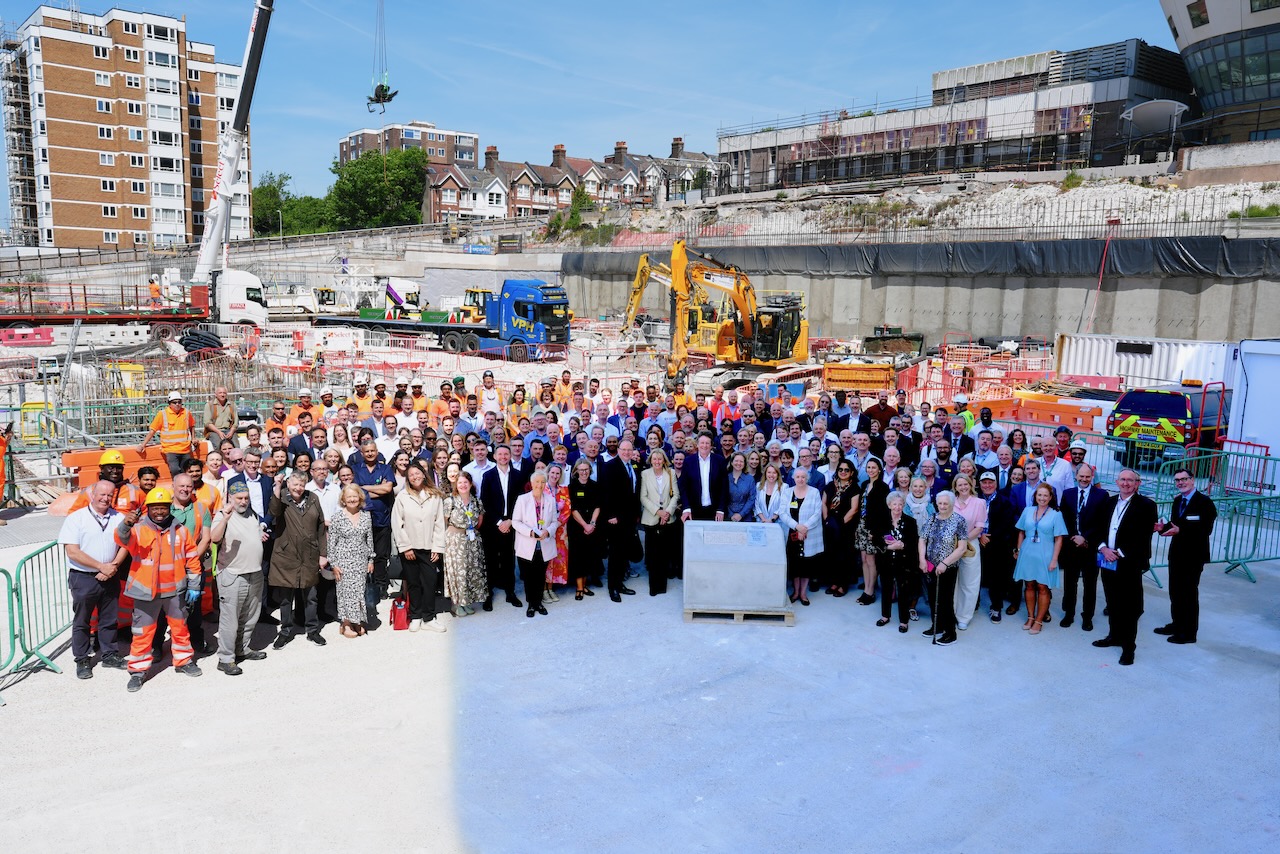
Laing O’Rourke has begun main construction of the Sussex Cancer Centre for University Hospitals Sussex NHS Trust on a site adjacent to the existing Louisa Martindale Building, which the contractor delivered in 2013. Designed in close collaboration with NHS clinicians and current patients, the building layout is being tailored around treatment flows and staff workflows rather than retrofitting services into a generic hospital shell. The completed facility will consolidate modern cancer treatments, advanced imaging and radiotherapy technology, and contemporary clinical practice into a single specialist centre.
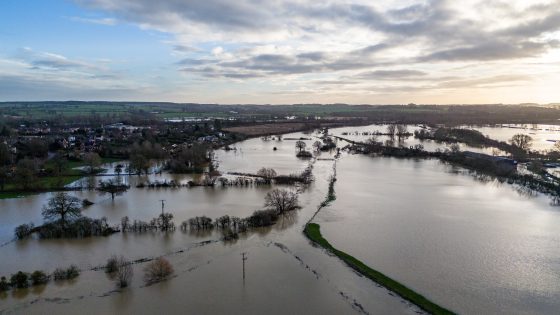
CIRIA has issued a Good practice guide for managing climate change and extreme weather in land development, the first UK guidance to directly link projected climate impacts with physical changes in geotechnical and geoenvironmental conditions across the full project life cycle. Trigger events cited include the 2022 heatwave, which generated 23,000 subsidence claims and an estimated £219m payout by ABI members, and Storm Babet’s 2023 bridge collapses. The two-part guide combines current climate–geo risk knowledge with a practical framework, diagrams, tools, and case studies to structure consistent assessment of shrink–swell, flooding, groundwater shifts, and landslides.
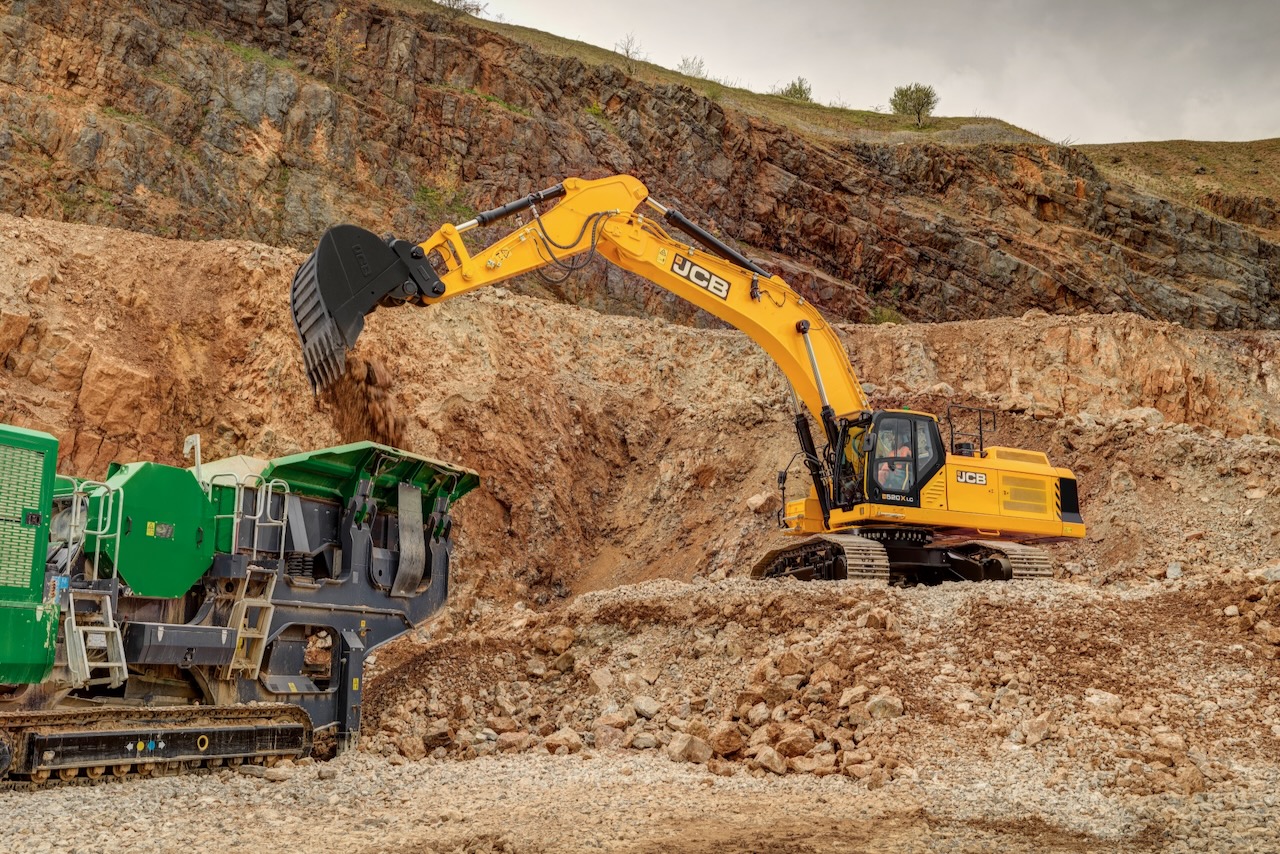
JCB will debut its largest X Series machine, the new 50‑tonne 520X crawler excavator, at Hillhead in June, alongside the 40‑tonne 420X, both aimed at mass excavation, aggregate extraction, demolition and crusher loading as an expansion of its Heavyline range. The stand will also feature the new VM138D single drum soil compactor and the 9T Dual Drive site dumper, which uses a rotatable seat and control console derived from JCB’s Dual Drive backhoe loader to maintain forward-facing operation. JCB will additionally preview the compact 715 articulated dump truck, offering a 12,750kg payload for off-road haul cycles.
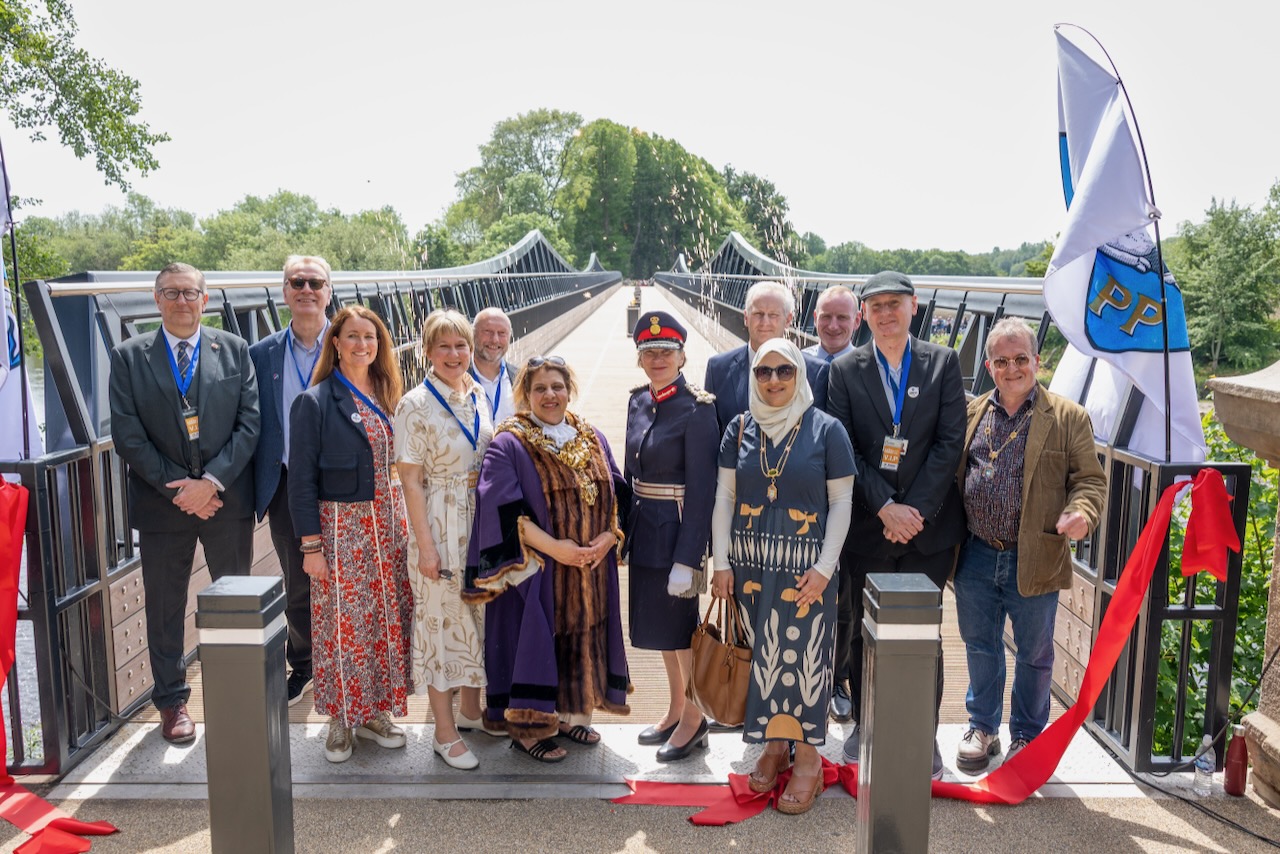
Preston Tram Bridge, a £8m, 130‑metre active‑travel crossing over the River Ribble built by Eric Wright Civil Engineering, has reopened seven years after the original structure was closed in 2019 for serious safety concerns. The new bridge reconnects walking and cycling routes between Preston and South Ribble, restoring a key commuter and leisure link that had been severed for nearly a decade. Local authorities and Active Travel England see the scheme as a flagship example of partnership delivery for urban active‑mode infrastructure.
Housing planning applications processed by TerraQuest reached their highest quarterly level since 2022 in Q1 2026, signalling a rebound in the UK residential pipeline that will feed demand for roads, utilities and groundworks. Over the same period, Real Estate:UK and CoStar Group reported a sharp slowdown in overseas investment into UK commercial property, pointing to weaker funding for new office, logistics and mixed-use schemes. Civil and geotechnical contractors may see more volume from housing-led schemes while facing tighter pipelines in commercial sectors.
BNP Paribas Asset Management has appointed McLaren Construction as lead contractor for the redevelopment of the former BBC Elstree site into the new Fairbanks Studios complex. Specialist firms Harrington Builders, Aarsleff, SCWS, Halsall and Northern Cladding have been engaged, signalling a package likely to combine heavy civils, deep foundations and large-span cladding systems typical of modern studio stages. The scheme will interest geotechnical and structural teams watching how a legacy broadcast site is reconfigured for high-spec film and TV production infrastructure.
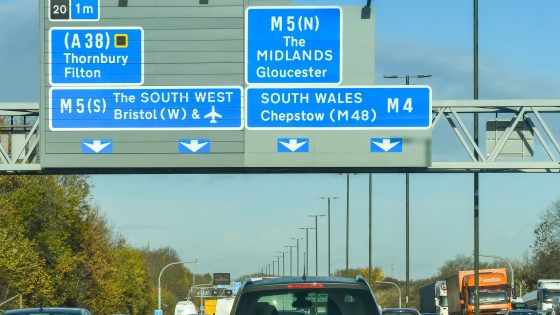
National Highways will spend more than £50M on the next phase of “essential” and “extensive” structural repairs to a major M5 road bridge in North Somerset, targeting long-term durability on this key strategic route. Works are expected to focus on concrete repair, waterproofing, bearing replacement and joint renewal to address ageing elements under high traffic and de-icing salt exposure. Contractors will need to manage complex staging and traffic management on a live motorway, with implications for night-time possessions, lane closures and construction sequencing.
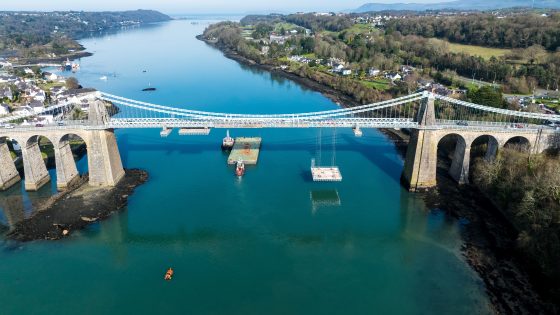
Final-phase repairs have started on the Grade I-listed Menai Suspension Bridge on the A55 Anglesey extension, two years before the 30-year PFI concession ends, using a “smart” traffic management solution to keep the crossing largely open. Engineers are sequencing deck and hanger works to avoid full closures, relying on real-time monitoring and short, off-peak lane restrictions instead of long-duration shutdowns. The approach reduces diversion of HGVs onto local roads and offers a template for maintaining ageing long-span suspension bridges with constrained redundancy.
The Climate Change Committee is for the first time proposing a national blueprint of climate adaptation targets to manage UK climate risks, moving beyond the current focus on net zero mitigation. Draft proposals point to sector‑specific metrics for infrastructure, such as maximum tolerable flood risk for critical assets, heat‑resilience standards for rail and highways, and performance thresholds for drainage and coastal defences under UKCP18 scenarios. Civil and geotechnical engineers should expect future investment cases and design codes to be benchmarked explicitly against these quantified adaptation targets.
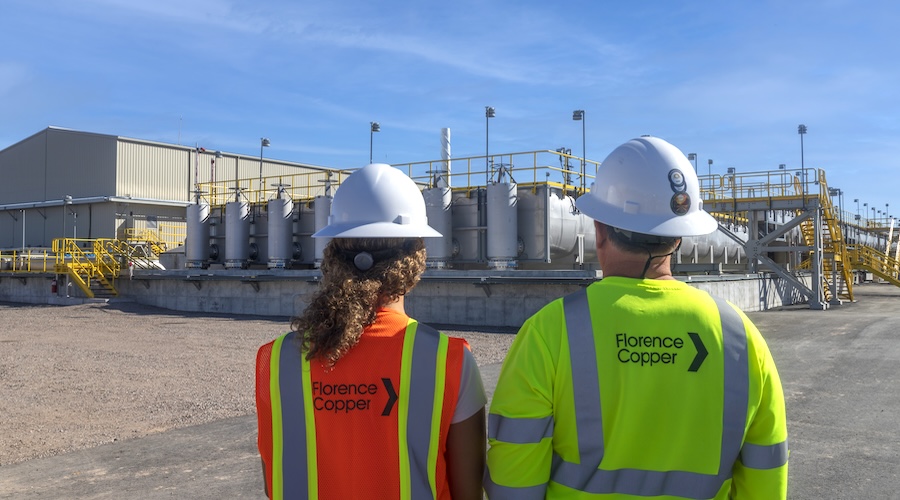
Taseko Mines plans to rebrand as Trekor Metals, with shareholders voting on 24 June in Vancouver, as it pivots to a North American copper platform built around the Gibraltar, Florence Copper and New Prosperity assets. Florence Copper in Arizona is ramping up after its SX/EW plant started in February, targeting 85 million lb/year over 22 years at forecast operating costs of US$1.11/lb, having produced 1.5 million lb of cathode in Q1 2026 with five drill rigs active. Gibraltar, now 100% owned, delivered 30 million lb of copper and 717,000 lb of molybdenum in Q1 at total costs of US$2.63/lb on 0.25% Cu grades.
Canadian company ARLYX Technologies has unveiled what it calls the first complete, fully electric autonomous material-handling system purpose-built for underground mines, developed over two years in Quebec and trialled under production conditions at a Tier 1 operation. The package integrates battery-electric haul units with autonomous navigation and loading, targeting fully driverless tramming and transfer between drawpoints, orepasses and crushers. A public technology demonstration is scheduled at the Mining Transformed event from 25–27 May 2026, giving operators a chance to assess retrofit potential and infrastructure requirements.
Technology trials in mining are being reframed from simple proof of concept (PoC) exercises – which only test whether a tool works technically, such as an AI drill-optimisation algorithm or a new fleet-management platform – to proof of value (PoV) programmes that quantify impacts on KPIs like cost per tonne, unplanned downtime, and recovery. PoV design typically hard-wires baselines, control groups, and production-scale timeframes into trials, rather than short, isolated pilots on a single loader or crusher line. For engineers, the shift means specifying measurable value hypotheses up front and integrating trials with existing dispatch, SCADA, and planning systems.
RadiXplore is using its Xplor platform to mine decades of underused historical exploration data, aiming to improve discovery rates as new greenfield finds become scarcer and drilling costs rise. Co-founders Russel Menezes and Teryne Young are applying machine learning and pattern-recognition workflows to legacy geochemical assays, drill logs and geophysical surveys to re‑rank targets without commissioning new campaigns. For geologists and explorers, the approach could shift budgets from broad regional drilling to data-driven infill and re-interpretation of existing tenements.
Mineral Resources and Jiangxi Ganfeng Lithium have approved a A$490 million brownfield expansion at the Mt Marion lithium operation in Western Australia, adding an underground mine and new flotation plant to increase recoveries and throughput. The final investment decision covers transitioning from a purely open-pit operation to a combined open-pit/underground layout, with flotation enabling higher-grade concentrate production from existing ore types. The partners expect the upgrade to materially extend Mt Marion’s mine life by decades, with implications for long-term tailings, water balance and underground geotechnical design.
NEXT Cooling South Africa has secured a contract to design and supply a four-cell fibre reinforced polyester (FRP) condenser cooling tower for a Tanzanian gold mine, forming part of a central refrigeration plant expansion led by BBE Group. The package includes all cooling tower internals, including process piping, high-surface-area fill and drift eliminators, indicating a fully engineered thermal and hydraulic solution rather than a shell-only supply. For mine operators, the FRP construction points to reduced corrosion risk and lower structural weight compared with conventional steel or concrete towers, easing installation and long-term maintenance.
Elizabeth Gaines will resign as executive director of Fortescue after 13 years with the iron ore major, including four years as chief executive officer. During her CEO tenure she oversaw the ramp-up of the 30–40Mtpa Eliwana mine and rail project in the Pilbara and advanced the 22Mtpa Iron Bridge magnetite project towards production. Her departure signals further leadership transition as Fortescue pursues its green hydrogen and decarbonisation strategy alongside its core hematite export business.