Geomechanics, Streamlined.
© 2026 Geomechanics.io. All rights reserved.
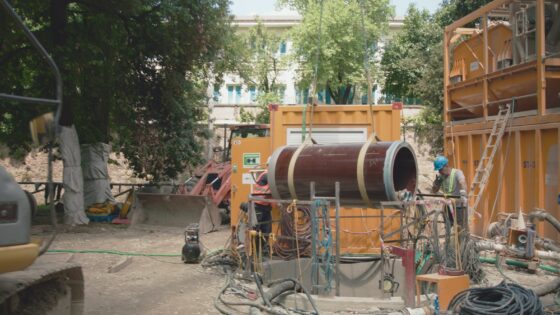
Trenchless tunnelling schemes in Germany and Italy are using microtunnelling to install new utility and wastewater pipelines under urban areas while avoiding open-cut excavation and major traffic disruption. The projects deploy remotely steered, pipe-jacked microtunnel boring machines launched from small shafts to thread beneath existing roads and buried services, maintaining cover and line within tight tolerances. For geotechnical and civil teams, the work reinforces microtunnelling as a practical option where shallow cover, dense service corridors and strict surface access constraints rule out conventional trenching.
Geopolitical and economic uncertainty is pushing 61% of construction businesses to increase their commitment to innovation, according to Ayming’s International Innovation Barometer 2027. The survey points to firms prioritising digital tools, new construction materials and process optimisation to manage cost volatility and supply chain disruption. For civil and infrastructure engineers, this signals stronger client appetite for technologies such as BIM-based design coordination, offsite fabrication and alternative material specifications to de-risk programme and budget.
Delivering a 505km high-voltage “electricity superhighway” between Scotland and England is exposing complex consenting, land access and interface issues across multiple local authorities and environmentally sensitive corridors. Engineers are having to integrate new high-capacity transmission circuits with existing substations and overhead line routes while maintaining system security, often relying on long HDD river crossings, constrained construction compounds and tight outage windows. The project is setting practical benchmarks for routing, stakeholder management and constructability on future UK grid reinforcements needed for large-scale offshore wind and other renewables.
Barhale has secured a £14.6M contract from Anglian Water to build a twin pumped rising main at Alconbury Weald, Cambridgeshire, increasing wastewater network capacity for planned large-scale development on the former airfield site. The scheme will require parallel pressure pipelines, new pumping infrastructure and tie-ins to the existing foul network, with construction likely to involve trenching through mixed glacial and alluvial deposits and careful management of groundwater and settlement risk. For geotechnical and civils teams, key issues will include pipeline alignment optimisation, surge control, and long-term access for maintenance.
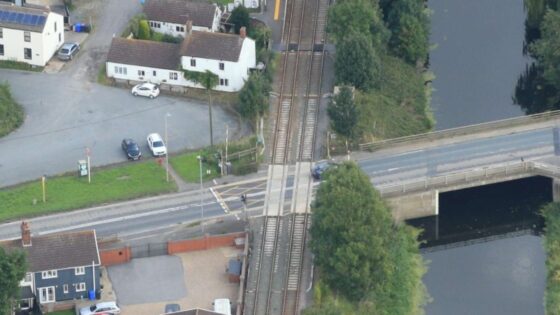
Network Rail will invest £1.4M to renew over 730m of track between Hubbert’s Bridge and Swineshead on the Boston–Sleaford line in Lincolnshire, targeting a known maintenance pinch point. Works will involve lifting and replacing rail, sleepers and ballast on this rural two-track section, where drainage and formation condition have previously constrained line speed and imposed temporary speed restrictions. Contractors will need to manage possessions on a mixed-traffic route carrying passenger services and agricultural freight, with careful staging to minimise disruption during the renewal.
Via East Midlands, the highways arm of Nottinghamshire County Council, is launching early market engagement for a proposed £5M highways maintenance and civil engineering framework covering local roads and associated assets. The framework is expected to bundle routine carriageway and footway works, minor structures, drainage and associated civils into a multi-year arrangement, giving SMEs and regional contractors clearer visibility of work pipelines. Contractors should prepare capability evidence on reactive and planned maintenance, traffic management on constrained local networks, and delivery of small to medium civils packages under framework call-offs.
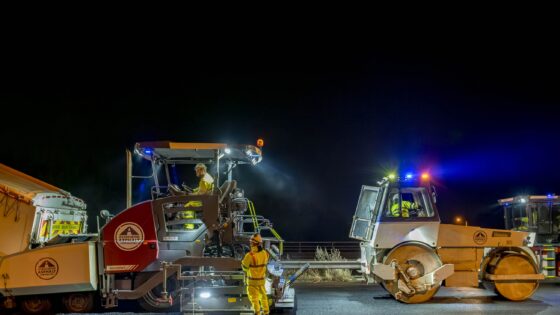
Associated Asphalt has completed a major maintenance programme on the M40, resurfacing and repairing approximately 75km of carriageway on one of the UK’s key north–south motorway links. Works are understood to have focused on high-stress sections, including lane 1 heavy goods vehicle tracks and junction merge/diverge areas, using modern asphalt surfacing systems to improve skid resistance and durability. For geotechnical and pavement engineers, the scale of intervention on a live motorway highlights ongoing asset management demands on ageing flexible pavements under rising traffic and axle loads.
Two low‑carbon heat network schemes spanning seven London boroughs have secured a combined £53.1M in government funding to expand district-scale, pipe‑fed heating infrastructure. The awards back large‑diameter buried distribution mains, central energy centres and building‑level heat interface units designed to displace individual gas boilers in dense urban housing and mixed‑use stock. For civil and geotechnical teams, the projects signal substantial trenching, utility coordination and shaft works in constrained streets, with long linear workfronts and tight programmes across multiple local authorities.
Southern Water is rolling out a distributed fibre‑optic leak‑detection system from UK firm Lightsonic on trunk mains across the south of England to cut losses as drought risk and network age increase. The technology uses continuous fibre along the pipeline to sense acoustic and temperature changes in real time, allowing operators to pinpoint leaks to within metres and respond before major bursts develop. For civil and water engineers, this signals growing deployment of long‑range, permanently installed monitoring rather than spot surveys on critical transmission assets.
Rainbow Rare Earths has secured an offtake and processing memorandum with Neo Performance Materials covering 40% of Phalaborwa’s separated NdPr oxide and 65% of its mixed SEG+ heavy rare earth carbonate, enabling a prefeasibility study in Q4 and pushing the definitive feasibility study to the first half of 2027. Neo will supply solvent extraction design and technical support, with test work on phosphogypsum-derived feed under way in Estonia and an integrated pilot planned in Johannesburg, de-risking the complex separation of dysprosium, terbium and yttrium. The $326 million project would recover magnet rare earths from legacy fertiliser gypsum stacks, potentially feeding Neo’s Estonian separation and sintered magnet plant and offering a non-Chinese supply route linked to European capacity.
Rio Tinto plans a major expansion of its metals trading arm into third‑party material and derivatives, leveraging spare alumina and copper capacity rather than limiting activity to its own output. The move, led by chief commercial officer Bold Baatar, targets markets where existing assets give an edge, including alumina imbalances between regions and unused smelting capacity at the Kennecott copper operations in North America, and may extend to copper cathode and sulphuric acid. The commercial team of about 20 traders is set to grow, and Rio is in talks with Vitol on a freight and logistics joint venture.
Glencore will begin trading on the Australian Securities Exchange on 14 October under ticker GLC via CHESS Depositary Interests, each representing one ordinary share, without issuing new equity or raising capital. The Swiss miner is targeting access to Australia’s A$4.4 trillion pension market to fund copper growth and potential acquisitions, after previously exploring a New York listing and a coal spin-off. UK and South African shareholders can convert existing holdings into ASX-listed CDIs from 24 September, with Computershare managing the Australian register.
OceanaGold is weighing a 50% expansion of its Waihi plant to 1.2 Mt/y after Wharekirauponga drilling returned standout intercepts including 6.3 m at 97.2 g/t Au from 481.5 m in the East Graben vein and 8.5 m at 41.5 g/t from 399 m. The move would enable concurrent feed from Martha Underground and Wharekirauponga post‑2032, building on a 2024 plan outlining 1.6 Moz over 15 years and an initial 4.1 Mt reserve at 9.2 g/t. Underground development is advancing, with the Waihi North decline now 350 m, first vent shaft under construction, staged commissioning of a new water treatment plant, and early works on a new tailings storage facility due in Q4.
Kinross Gold has cut its 2026–27 production outlook by about 8% to 1.84–1.86 million attributable gold-equivalent oz. a year and raised 2024 AISC guidance to $1,850–$1,900/oz after winter storms, copper-rich sulphide ore and poor recoveries at La Coipa in Chile, plus weaker mining rates, grades and recoveries at Round Mountain Phase S in Nevada. The company is stockpiling high-copper material, studying a new flotation circuit for deeper sulphide mineralisation that may overlie a copper porphyry system, and using a smaller shovel at Round Mountain to cut dilution. Despite the operational hit and a Q3 output cut to about 425,000 oz., Kinross has lifted its 2026 shareholder return target to 50% of free cash flow and has already returned about $800 million this year, mainly via $655 million in buybacks.
Gold prices slipped to a one-week low as spot gold fell 0.4% to $4,271.16/oz in New York and December futures eased 0.3% to $4,306 amid a stronger US dollar and expectations of more hawkish US Federal Reserve rate moves. The dollar hit a two-month high and US 10-year Treasury yields hovered near a 20-year peak, sharply raising the opportunity cost of holding non-yielding bullion. Oil gained about 1% on stalled US–Iran talks over the war, while spot silver dropped 1.8% to $63.29/oz, platinum 0.2% to $1,746.44, and palladium rose 0.5% to $1,266.40.
Sandvik Australia has launched its 2026–2028 Innovate Reconciliation Action Plan, marking a decade of formal reconciliation work and setting a minimum target of 3.5% Aboriginal and Torres Strait Islander representation in its workforce. The two-year RAP also commits to increased First Nations supplier participation in Sandvik’s mining equipment and services supply chain and to structured cultural capability training across its Australian operations. For mine owners and contractors, the plan signals growing expectations for Indigenous employment and procurement benchmarks in OEM tendering and project partnerships.
Accenture has launched Accenture Construct, a global business combining its capital projects advisory, engineering, project delivery and technology services to support large, complex infrastructure and mining developments. The unit consolidates a capital projects practice that has grown fourfold in three years, targeting fragmented delivery across EPCM contracts, multi-vendor digital systems and dispersed project controls. For mine owners, the move signals more integrated support for mega-project planning, schedule and cost control, and data-driven optimisation across the full asset lifecycle.
Roads & Traffic AU 2026 will convene in Sydney’s International Convention Centre on 14–15 October, bringing together government, engineers, contractors and technology suppliers to tackle Australia’s next wave of road and transport investment. The conference program is split into seven technical tracks, each focused on a specific pressure point such as project delivery, procurement, traffic management, digital systems, and asset operations. For practitioners, the event signals where agencies and Tier 1s are likely to steer specifications, procurement models and technology adoption over the next programme cycle.
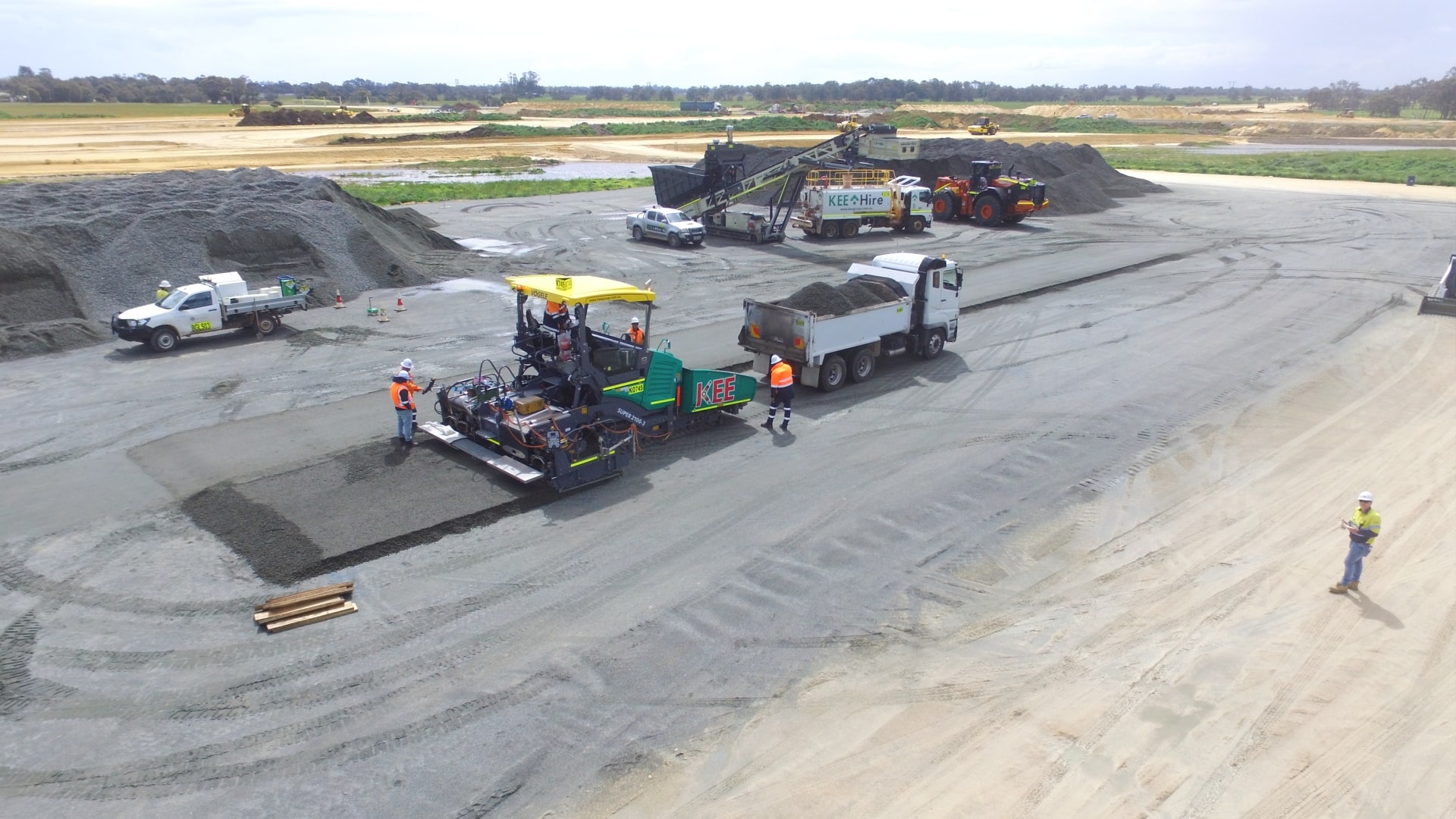
STRABAG Australia has agreed to acquire KEE Surfacing from the KEE Group, combining STRABAG’s global road construction, materials production and asphalt technology capability with KEE’s established Western Australian surfacing operations. The deal strengthens STRABAG’s position in the Australian transport infrastructure market, particularly in asphalt laying, spray sealing and associated plant operations on state and national road corridors. For contractors and suppliers, the move signals potential consolidation of asphalt supply chains and surfacing expertise across major projects in Western Australia and, longer term, other Australian states.
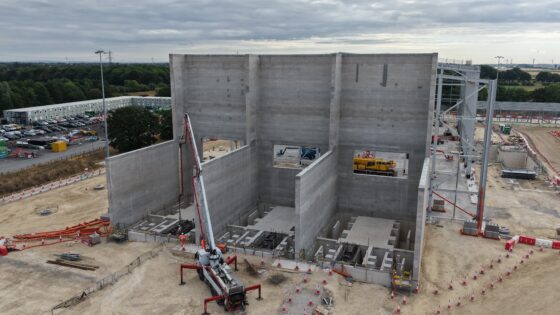
Steel erection has finished on the Next National Supercomputer facility in Edinburgh, with Robertson Construction Central East placing the final beam on a building described as roughly supermarket-scale for the University of Edinburgh’s EPCC. Funded by UK Research and Innovation, the data centre is scheduled to host the UK’s next national supercomputer by early 2028, serving both academic and industrial users. Structural completion now shifts focus to high-spec M&E, cooling, power distribution and vibration control fit-out critical for dense compute loads.
Civil engineering and plant hire contractor John McGeady has bought its 4.3-acre HQ at 1071 South Street, Glasgow, using a £1.5m Bank of Scotland loan, securing a central base for its 56-strong plant fleet and operations across Glasgow, Dumfries and Galloway and wider Scotland. Turnover has climbed from about £900,000 in 2018 to over £20m, with revenues forecast around £30m this year, as typical project values have risen from £150,000 to up to £4m. Headcount has grown from 35 to about 60, with plans to reach 100 within three to five years and potential investment in expanded offices, a recycling facility and a training centre.
Watkin Jones has completed the £200m Tai Afon build-to-rent scheme on the former Brains Brewery site in Cardiff, delivering 718 units in two phases (402 homes in phase one and 316 apartments in the final phase) masterplanned by Rightacres and forward funded for L&G. The scheme, described as Wales’ most significant BTR development, comprises studios plus one, two and three-bedroom apartments adjacent to Cardiff Central Station and within walking distance of the city centre and Principality Stadium. Completion of Tai Afon finalises the first phase of the Central Quay regeneration, contributing to L&G’s £1bn total investment in Cardiff and its £4bn BTR deployment across 12 UK cities.
WindowMaster and Fieger have agreed a façade partnership that combines EN 12101-2 tested smoke extraction and natural/hybrid ventilation into a single, integrated louvre-window system planned from the first design meeting. The deal gives WindowMaster exclusive sales rights for Fieger louvre solutions in the UK, Ireland, Nordics, Baltic states and North America, with non-exclusive rights in Germany, Switzerland and France, targeting major façade markets. For high-rises, multi-storey stairwells, atriums and public buildings, one façade opening now provides both everyday comfort ventilation and automatic smoke and heat exhaust linked to detectors and fire panels.
Anglian Water’s @one Alliance has awarded Barhale a £14.8m contract to build a 7.5km twin wastewater pipeline, with 400mm, 315mm and 250mm diameters, to serve the 6,200-home Alconbury Weald development and 190,000 sq m of employment space in Cambridgeshire. The line, mainly open-cut around the eastern side of Huntingdon and discharging 144 l/s to Huntingdon Water Recycling Centre, avoids the town centre and crosses mostly agricultural land. Ten HDD drives include 355m-long 630mm sleeves under the East Coast Main Line and 292m-long 400mm sleeves beneath the River Great Ouse, with completion targeted for November 2027.