Geomechanics, Streamlined.
© 2026 Geomechanics.io. All rights reserved.
Voltempo has installed a six-bay, 1MW HyperCharger hub at Welch’s Transport’s Duxford HQ, adding to a similar six-bay, 1MW depot in Bedford under the Innovate UK-backed eFreight 2030 programme, with spare capacity opened to third-party fleets via the DepotCharge model. Welch’s now operates 19-tonne and 42-tonne Renault Trucks E-Tech electric HGVs plus a DAF electric tractor, with three 28-tonne E-Techs on order and a target for 12% of its fleet to be electric by January 2027. The eFreight 2030 consortium will deploy 88 electric HGVs and 36 charging sites, including 25 megawatt-scale hubs, as part of the UK Government’s ZEHID real-world trial.
Accenture has launched Accenture Construct, a global owner-side capital projects business led by CEO Adam J. Shaw, uniting more than 5,000 practitioners across the Americas, EMEA and APAC and integrating specialist acquisitions such as Anser Advisory (US), Soben (UK), BOSLAN and Alfa Consulting (Spain). Targeting AI data centres, energy transition assets and long-life infrastructure like airports, rail and power grids, the unit addresses a $260bn market forecast to reach $348bn by 2030. The offer centres on a single project data foundation to give owners one accountable partner and a unified operational view across fragmented delivery teams.
Geoscience Australia has released the Green Iron StoryMap, an interactive tool within the Digital Atlas of Australia that layers iron ore deposits, renewable energy zones, existing rail and port corridors, and water resources to map green iron potential. Users can interrogate spatial data on proximity of high‑grade ore bodies to wind and solar resources, transmission lines and gas pipelines, helping screen locations for hydrogen‑based direct reduction or electrified pelletising. For miners and infrastructure planners, it offers a first‑pass, national‑scale view of where integrated green iron hubs could be technically viable.
Auric Mining has reported strong new drilling results at the Munda gold project near Widgiemooltha, WA, as it works towards restarting open-pit mining in 2027. Broad-spaced reverse circulation drilling is testing resource extensions beyond the current pit shell, while closer-spaced grade-control holes are refining ore boundaries within the planned open pit. Additional sterilisation drilling is being completed in proposed infrastructure corridors, with outcomes likely to influence final pit design, haul road alignment and plant or waste-dump siting.
AIC Mines is moving to acquire the Mt Cuthbert copper project in north-west Queensland via a $120 million deal to purchase 100 per cent of Materra Metals. The transaction comprises $100 million in AIC shares and a $20 million cash component, giving AIC a second operating hub alongside its Eloise copper mine, 60km away. The close proximity of Eloise and Mt Cuthbert suggests potential for shared processing, consolidated infrastructure and regional optimisation of underground and open-pit copper operations.
Core Lithium has restarted mining and processing at its Finniss lithium operation in the Northern Territory, reporting $17.8 million in revenue for the 12 months to 30 June as it transitions out of care and maintenance. The company now targets steady-state production by 2028, backed by a materially stronger cash position after a difficult price environment for spodumene concentrate. For mine planners and process engineers, the restart signals renewed demand for contractor services, drilling, and plant optimisation as Finniss ramps back towards nameplate throughput.
Global Lithium Resources has accepted a $333 million all-cash takeover by Titan Australia Mining via a binding scheme implementation deed, with shareholders to receive $1.15 per share. The offer implies a material premium to Global Lithium’s pre-deal trading price and secures 100 per cent ownership for Titan. For lithium project developers and offtakers, the deal signals continued consolidation in Australian hard-rock lithium assets and a preference for cash-backed transactions over scrip in current market conditions.
Major construction has begun on Stage Two of Melbourne’s Yan Yean Road Upgrade, adding an extra lane in each direction between Kurrak Road and Bridge Inn Road to cater for around 24,000 daily motorists. The works include upgraded signalised intersections and a segregated walking and cycling path along the corridor, targeting smoother traffic flow and reduced conflict points. For designers and contractors, key tasks will centre on pavement widening, intersection reconfiguration and active transport integration within a constrained peri-urban road reserve.
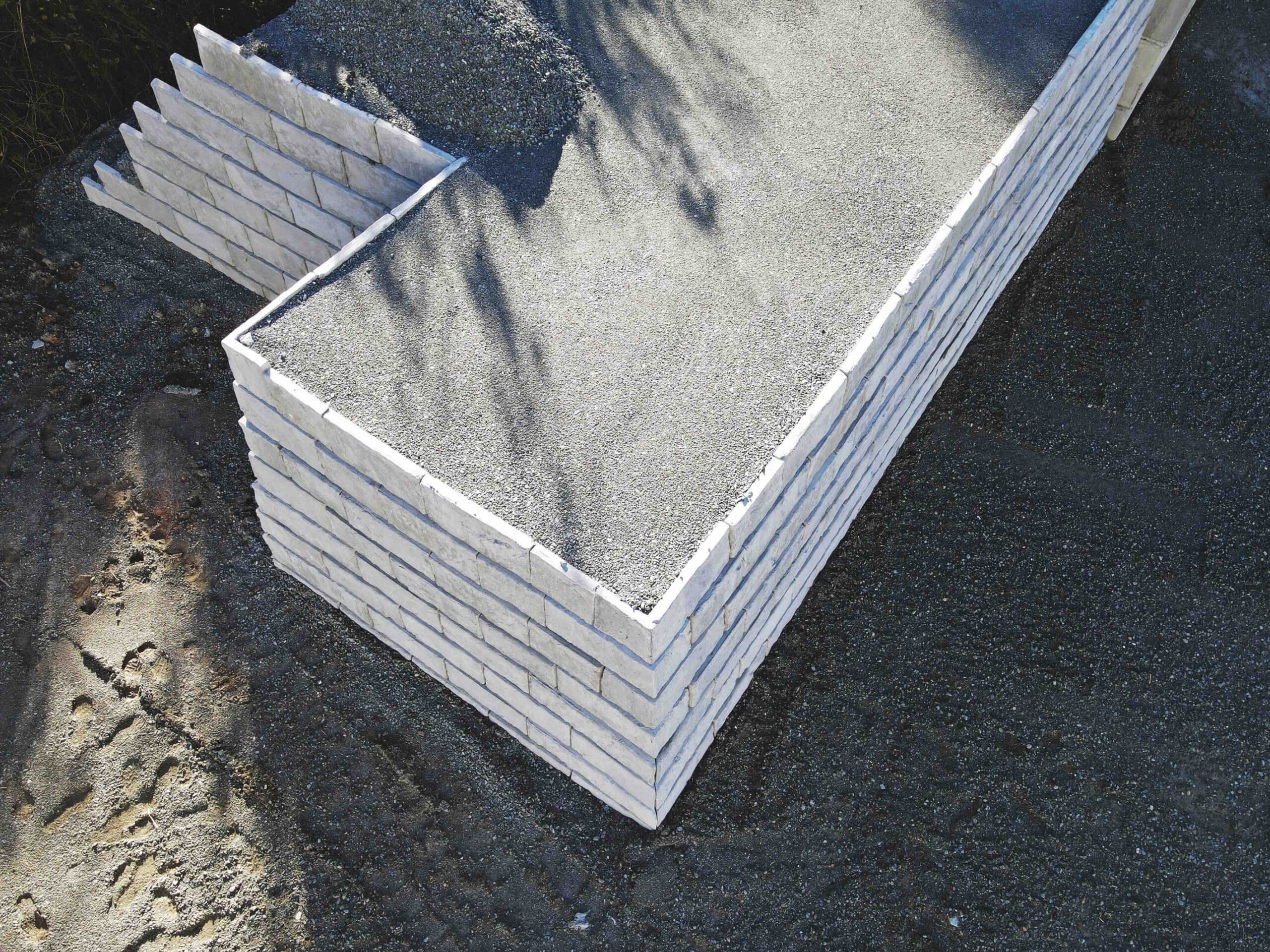
Geoquest Australia has launched TerraStack, a modular precast concrete retaining wall system engineered for Australian and New Zealand conditions and already applied on major transport projects including Cross River Rail, West Gate Tunnel and Sydney Gateway. The system uses stacked, interlocking units to form gravity or reinforced soil walls, enabling rapid installation with standard lifting equipment and minimising on-site formwork. For designers and contractors, TerraStack offers a repeatable solution for cuttings, bridge abutments and approach embankments where tight footprints and staged construction are critical.
Grid connection delays of up to 10 years are deterring investment in UK infrastructure, according to a new report by Centrica and climate think tank Ceres. The report warns that major low‑carbon schemes, including large-scale renewables and grid‑scale battery storage, are being forced into long connection queues despite available capital and consented sites. For civil and energy engineers, the key risk is stranded or re‑phased projects where grid access, not design or finance, becomes the critical path constraint.
Improved public–private collaboration, “smarter” financial risk sharing and better asset data are being urged by a new Lloyds Banking Group report to upgrade the UK’s ageing, climate-exposed infrastructure. The report calls for clearer allocation of construction, demand and climate risks between government, institutional investors and asset owners, moving beyond traditional PFI-style models. For engineers, this points to stronger requirements for whole-life performance data, climate stress testing of assets and more transparent condition information to unlock private capital for renewals and resilience upgrades.
Wolfram Bergbau und Hütten AG marks 50 years of operation as Europe’s only fully integrated tungsten producer, running mining, refining and recycling from a single chain centred on its Austrian Alps deposit. The company’s model couples primary ore extraction with secondary raw materials, using in-house recycling of hardmetal scrap and tungsten-containing residues to buffer supply risk. For mine planners and metallurgists, Wolfram’s history illustrates how regional processing capacity and closed-loop scrap flows can stabilise a critical metal traditionally dominated by Chinese concentrate and APT exports.
Barrick’s North American business has selected Avathon’s Physical AI Autonomy Platform as a strategic layer to connect data, operational knowledge and AI models across its mining value chain. The deployment will span exploration, mine planning, safety, production, processing and maintenance, creating a single environment for ingesting sensor data, operational KPIs and engineering rules. For mine operators and engineers, this signals a push towards integrated decision support, where planning, plant control and asset health monitoring are driven from one AI-enabled operational backbone rather than siloed systems.
US Export-Import Bank is preparing up to $7 billion in financing for Argentine critical minerals and energy projects, enabling operators to fund US-sourced equipment for lithium, copper, rare earths and shale oil and gas over the next two years. The package would build on more than $1 billion in US critical minerals commitments to Latin America since January 2025 and sits alongside Argentina’s RIGI regime, which grants tax, customs and FX stability for projects above $200 million. Key beneficiaries could include Rio Tinto’s $2.5 billion Rincón lithium project, BHP’s advancing copper developments and Chevron’s shale operations, with Argentina targeting 580,000 t/y lithium and 1.64 Mt/y copper exports by 2036.
Highlander Silver has mandated Natixis CIB to arrange a fully underwritten US$330 million, seven‑year senior secured debt package, including a US$100 million cost‑overrun provision, to fund construction of the fully permitted Corani silver‑lead‑zinc project in Peru’s Puno region. Corani hosts 138.6 million tonnes of proven and probable reserves grading 51.3 g/t silver, 0.9% lead and 0.55% zinc (229 million oz silver, 2.7 billion lb lead, 1.7 billion lb zinc), with the 2019 feasibility outlining a 15‑year mine averaging 9.6 million oz silver per year at US$4.55/oz AISC. With about US$100 million cash on hand, expected Mercedes mine cash flow of roughly US$100 million in 2027–28, and the Natixis facility projected to cover ~72% of the ~US$460–500 million capex, BMO and Scotiabank see Corani nearing fully funded status, targeting construction start in H1 2027 and first production by end‑2029.
Former Gold Fields CEO Chris Griffith has joined a new private equity team aiming to raise $1 billion for African critical minerals projects, targeting commodities such as cobalt, copper, lithium, nickel and rare earths. He is working with former Goldman Sachs banker Colin Coleman and ex-Ashanti Goldfields chair Sam Jonah, with fundraising still at an early stage and structured as a dedicated Africa-focused vehicle. The move follows Griffith’s exit from Gold Fields after the failed $6.7 billion Yamana bid and a subsequent two-year spell leading Vedanta’s base metals division.
SuperCritical Materials Corp. has partnered with the University of Michigan to mechanically validate its uranium‑from‑seawater adsorbent for industrial‑scale offshore deployment, using hydrodynamic testing in the Aaron Friedman Marine Hydrodynamics Laboratory’s wave and current tanks. The programme will characterise the adsorbent under packing, deployment, ocean exposure and retrieval stresses, optimise packing configurations, and build and test prototypes for repeated deployment–recovery cycles. Findings will feed into a future feasibility study and nearshore pilot designs, targeting integration of seawater‑derived uranium into the US nuclear‑fuel supply chain.
Higher pre-production capital of US$1.43 billion, up 15% year-on-year, is weighing on Ivanhoe Electric’s Santa Cruz copper project even as the updated PFS lifts NPV to US$1.5 billion and extends mine life to 24 years with average output of about 74,700 tonnes of copper per year for the first 15 years. The redesign swaps a roadheader access for a Robbins Crossover TBM and a new access tunnel to reduce groundwater risk, pushing first cathode to 2029 and trimming IRR to 19% with a 4.8-year payback at US$4.75/lb copper. Shares fell 4.2% to US$10.27 as management advances EXIM Bank due diligence for up to US$1.1 billion in debt, with life-of-mine cash costs projected at US$1.47/lb and AISC at US$2.28/lb.
NexGold Mining has reported further high-grade intercepts at the Goldlund deposit in northwestern Ontario, with hole GL-26-034 cutting 13 m at 2.84 g/t gold from 205 m depth, including 8 m at 9.76 g/t and 7 m at 14.07 g/t, within quartz stockwork veining in sub-vertical granodiorite sills. Additional holes include GL-26-033 with 42.8 m at 0.84 g/t from 245.7 m and GL-26-039A with 17.1 m at 1.51 g/t from about 219 m, part of a 35,000 m programme that is 91% complete. The drilling targets Zone 4 infill and depth extensions to refine the geological model and future resource updates for the 16.2 Mt, 1.19 g/t probable reserve within the Goliath gold complex, which carries a 2023 PFS post-tax NPV of $336 million and 25.4% IRR.
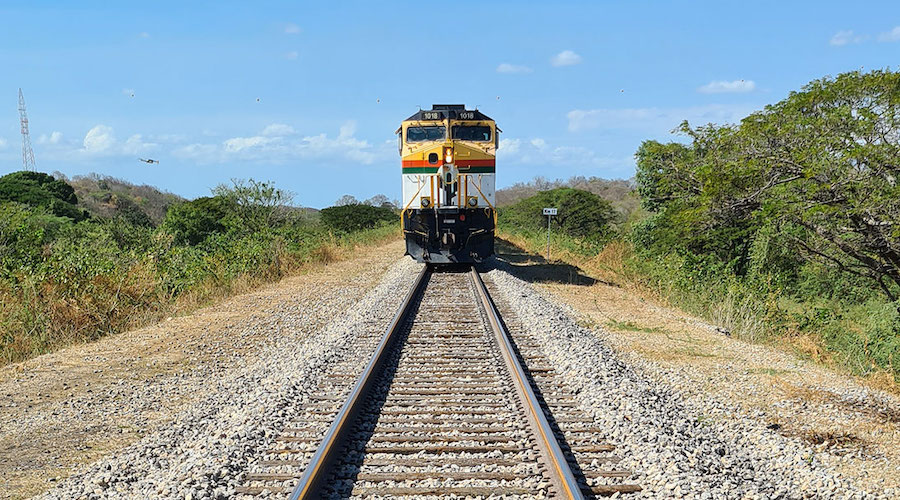
Glencore has halted rail operations at its Cerrejón coal mine in Colombia after explosives hit its 150 km railway near Uribia, La Guajira, damaging a train in the sixth attack on the corridor this year. The mine itself, one of the world’s largest open pits with 2025 output of 16.8 million tonnes, continues operating while the National Army secures the line and engineers await access for damage assessment. Prolonged repairs could again choke inbound supplies and coal exports via Puerto Bolívar, exposing the operation’s heavy reliance on a single transport corridor.
High-grade rare earth intercepts at Rare Earths Americas’ 100%-owned Homer project in Brazil’s Goiás Alkaline province include multiple near-surface intervals above 2,000 ppm TREO over >10 m within clay-hosted soil and saprolite profiles. A fully funded US$5 million, 15,000 m reverse circulation and diamond drilling programme, now running four rigs, has already drilled 6,500 m and confirmed mineralisation across ~2.15 km², less than 7% of the 35 km² ring-shaped magnetic anomaly. Assays show heavy rare earth enrichment with HREO >30% of TREO, NdPr >25%, Dy+Tb >2%, plus niobium, tantalum and notable scandium requiring metallurgical evaluation.
Tungsten West has signed an eight-year binding offtake agreement with US-based Elmet Technologies for 1,000 tonnes per annum of contained WO₃ from the Hemerdon tungsten-tin mine in Devon, valued at over £1.4 billion at current prices. The contract secures a long-term mine-to-market route into US and UK tungsten processing and manufacturing supply chains, alongside the UK National Wealth Fund’s investment of up to £71 million and its exclusive talks to procure up to 50% of Hemerdon’s annual tungsten output. For operators and project financiers, this combination of state backing and locked-in offtake materially de-risks Hemerdon’s restart and expansion plans.
BHP has suspended all operational activities at the Escondida copper mine in Chile’s Antofagasta region after a worker was killed during maintenance involving a front-end loader, with Chile’s Sernageomin deploying a regional investigation team to site. The fatality comes as BHP, which holds a 57.5% stake in Escondida alongside Rio Tinto’s 30%, is in contract negotiations with mine workers, with a vote due by the end of September. Any prolonged shutdown or subsequent strike could materially disrupt output at the world’s largest copper mine.
BHP and Amazon have launched an “industry-first” pilot to trade credits linked to lower greenhouse gas emissions from copper concentrate and cathodes produced at Escondida, the world’s largest copper mine in Chile. Escondida already sources 100% of its electricity from renewable power contracts and uses desalinated water for processing, reducing Scope 2 emissions intensity relative to conventional operations. The pilot will test traceable, emissions-differentiated copper units in Amazon’s supply chain, signalling potential future premiums and contract structures for low‑carbon copper in OEM and data centre procurement.