Geomechanics.io

  • Free Tools
Sign UpLog In

    Geomechanics.io

    Geomechanics, Streamlined.

    © 2026 Geomechanics.io. All rights reserved.

    Geomechanics.io

    CMRR-ioGEODB-ioHYDROGEO-ioQCDB-ioFree Tools & CalculatorsBlogLatest Industry News

    Industries

    MiningConstructionTunnelling

    Company

    Terms of UsePrivacy PolicyLinkedIn
    Projects
    Standard/Guideline
    Safety

    China’s critical metal security law: key implications for project teams

    June 18, 2026|

    Reviewed by Tom Sullivan

    China’s critical metal security law: key implications for project teams

    First reported on MINING.com

    30 Second Briefing

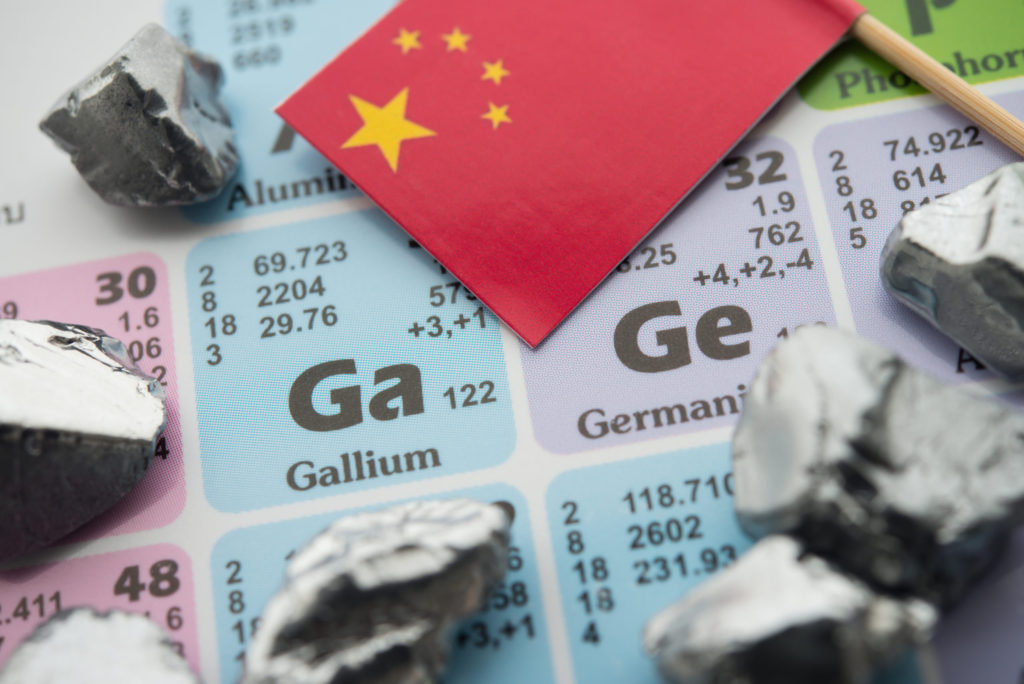
    China’s new Mineral Resources Law, in force this week, introduces explicit provisions for import–export controls and “countermeasures” against activities deemed to threaten its mineral resource security and supply chain stability, according to Ministry of Natural Resources official Yan Bo. The overhaul, the first major rewrite since 1986, lets Beijing define and update a list of “strategic minerals”, refine a state reserve system by product, capacity and origin, and requisition resources or directly organise mining during crises. Analysts at BMO and Rare Earth Exchanges say this effectively hardwires China’s dominance in rare earths and other critical minerals into a legal tool for long-term geopolitical competition.

    Technical Brief

    • New provisions explicitly cover “import and export management” plus undefined “countermeasures” for mineral security threats.
    • Ministry of Natural Resources official Yan Bo confirmed the countermeasure clauses via state-run Global Times.
    • BMO’s Helen Amos characterises the revision as the most comprehensive mining-law overhaul since 1986.
    • Strategic mineral reserve refinement is structured by product type, production capacity and geographic origin.
    • Law enables a state-defined, updateable “strategic minerals” list based on economic importance, scarcity and import reliance.
    • State powers now include direct organisation of mining and requisitioning of resources during unspecified “crises”.
    • Rare Earth Exchanges describes the framework as a vertically integrated “strategic mineral command structure” for prolonged competition.

    Geotechnical Software for Modern Teams

    Centralise site data, logs, and lab results with GEODB-io, CMRR-io, and HYDROGEO-io.

    No credit card required.

    • Save and export unlimited calculations
    • Advanced data visualisation
    • Generate professional PDF reports
    • Cloud storage for all your projects

    Prepared by collating external sources, AI-assisted tools, and Geomechanics.io’s proprietary mining database, then reviewed for technical accuracy & edited by our geotechnical team.

    Related Articles

    G7 critical minerals pact: project finance and offtake signals for Australian miners
    Policy
    about 3 hours ago

    G7 critical minerals pact: project finance and offtake signals for Australian miners

    A renewed G7 agreement to coordinate critical minerals supply chains, including aligned stockpiling and joint investment screening, is set to open additional export and project financing avenues for Australian producers of lithium, nickel, rare earths and other battery metals. The pact aims to reduce dependence on dominant suppliers such as China by supporting alternative processing and refining capacity in trusted jurisdictions, with Australia positioned as a key upstream source. For miners, the move signals stronger offtake certainty and potential backing for new concentrators, refineries and midstream facilities.

    Allseas deep-sea mining dispute: UNCLOS compliance lens for project teams
    Policy
    about 3 hours ago

    Allseas deep-sea mining dispute: UNCLOS compliance lens for project teams

    Plans by Allseas to operate deep-sea polymetallic nodule collectors for The Metals Company (TMC) in the Pacific, targeting 3 million wet tonnes per year from over 4,000 m water depth, are alleged to “directly” violate the UN Convention on the Law of the Sea in a Greenpeace-commissioned legal opinion by Professor André Nollkaemper. The analysis argues that TMC’s reliance on a unilateral US permit bypasses the International Seabed Authority, which holds exclusive regulatory competence over the Area. Greenpeace Netherlands and five other NGOs have sent an urgent letter pressing the Dutch government to intervene against the planned commercial system.

    King’s Birthday Honours: infrastructure policy and standards takeaways for engineers
    Policy
    1 day ago

    King’s Birthday Honours: infrastructure policy and standards takeaways for engineers

    Senior figures from UK civil engineering, infrastructure, construction, water, energy and transport have received King’s Birthday Honours, signalling government recognition of major project delivery and sector leadership. Recipients include leaders involved in complex rail and highway upgrades, strategic water resilience schemes and grid-scale energy infrastructure, where long-term asset performance and whole-life cost management are central. The awards are likely to strengthen the voice of practising engineers in policy discussions on net zero, infrastructure funding and climate adaptation standards.

    Related Industries & Products

    Mining

    Geotechnical software solutions for mining operations including CMRR analysis, hydrogeological testing, and data management.

    CMRR-io

    Streamline coal mine roof stability assessments with our cloud-based CMRR software featuring automated calculations, multi-scenario analysis, and collaborative workflows.

    HYDROGEO-io

    Comprehensive hydrogeological testing platform for managing, analysing, and reporting on packer tests, lugeon values, and hydraulic conductivity assessments.

    GEODB-io

    Centralised geotechnical data management solution for storing, accessing, and analysing all your site investigation and material testing data.

    AllGeotechnicalMiningInfrastructureMaterialsHazardsEnvironmentalSoftwarePolicy