Allseas deep-sea mining dispute: UNCLOS compliance lens for project teams
Reviewed by Tom Sullivan
First reported on MINING.com
30 Second Briefing
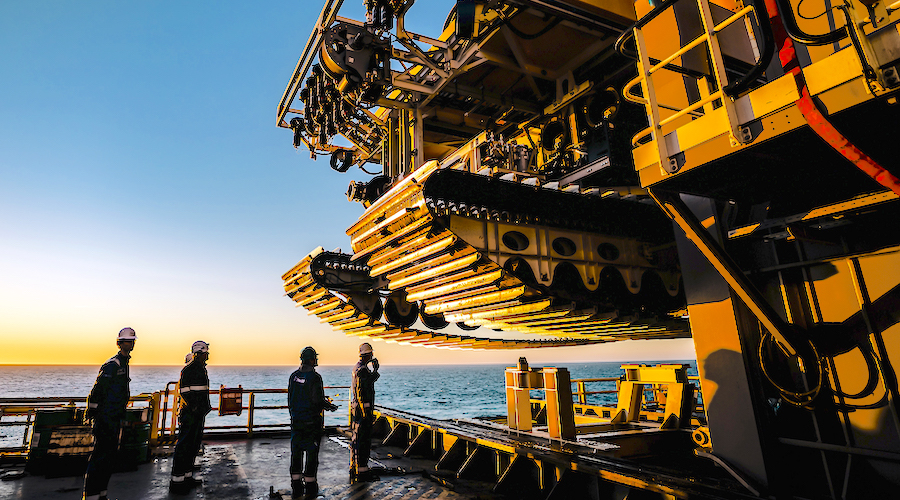
Plans by Allseas to operate deep-sea polymetallic nodule collectors for The Metals Company (TMC) in the Pacific, targeting 3 million wet tonnes per year from over 4,000 m water depth, are alleged to “directly” violate the UN Convention on the Law of the Sea in a Greenpeace-commissioned legal opinion by Professor André Nollkaemper. The analysis argues that TMC’s reliance on a unilateral US permit bypasses the International Seabed Authority, which holds exclusive regulatory competence over the Area. Greenpeace Netherlands and five other NGOs have sent an urgent letter pressing the Dutch government to intervene against the planned commercial system.
Technical Brief
- Planned system uses two seabed collector vehicles operating at >4,000 m water depth.
- Annual design capacity is specified as 3 million wet tonnes of polymetallic nodules.
- Allseas–TMC arrangement is framed as the world’s first commercial deep-sea nodule recovery system.
- International Seabed Authority is identified as holding sole regulatory competence over mining in “the Area”.
- Legal opinion asserts Dutch government is “legally bound to intervene” against ongoing corporate non-compliance.
- TMC obtained a unilateral US permit, explicitly positioned as bypassing ISA’s yet-to-be-finalised mining code.
- Greenpeace Netherlands and five other NGOs sent an urgent intervention letter to the Dutch government.
- For offshore contractors, case underlines that safety and environmental governance must align with UNCLOS and ISA oversight, not only national permits.
Our Take
The Allseas–TMC nodule system flagged here is the same Clarion-Clipperton project described in our May 2026 items, where it is framed as the first commercial-scale polymetallic nodule collection system, so any finding of non-compliance with UN law could ripple directly into that commercialisation timeline.
The juxtaposition of deep-sea critical minerals and Hudbay’s Copper Mountain Mine expansion in the USA underscores a strategic choice for copper and battery metals supply: seabed projects promising multi-million-tonne wet nodule capacity versus long-life brownfield expansions extending conventional mine life beyond 2040.
Prepared by collating external sources, AI-assisted tools, and Geomechanics.io’s proprietary mining database, then reviewed for technical accuracy & edited by our geotechnical team.
Related Articles


Related Industries & Products
Mining
Geotechnical software solutions for mining operations including CMRR analysis, hydrogeological testing, and data management.
CMRR-io
Streamline coal mine roof stability assessments with our cloud-based CMRR software featuring automated calculations, multi-scenario analysis, and collaborative workflows.
HYDROGEO-io
Comprehensive hydrogeological testing platform for managing, analysing, and reporting on packer tests, lugeon values, and hydraulic conductivity assessments.
GEODB-io
Centralised geotechnical data management solution for storing, accessing, and analysing all your site investigation and material testing data.