Geomechanics, Streamlined.
© 2026 Geomechanics.io. All rights reserved.
Sellafield Ltd has held a major supply‑chain event in west Cumbria to brief SMEs on upcoming packages in the next phase of its multi‑decade nuclear decommissioning programme, covering civil works, specialist demolition and waste‑handling infrastructure. Attendees were given early visibility of future frameworks and call‑off contracts around legacy pond and silo remediation, concrete containment structures and upgraded site utilities. The push signals opportunities for smaller contractors with nuclear‑ready quality systems, radiological safety competence and experience in complex reinforced concrete and heavy‑lift operations.
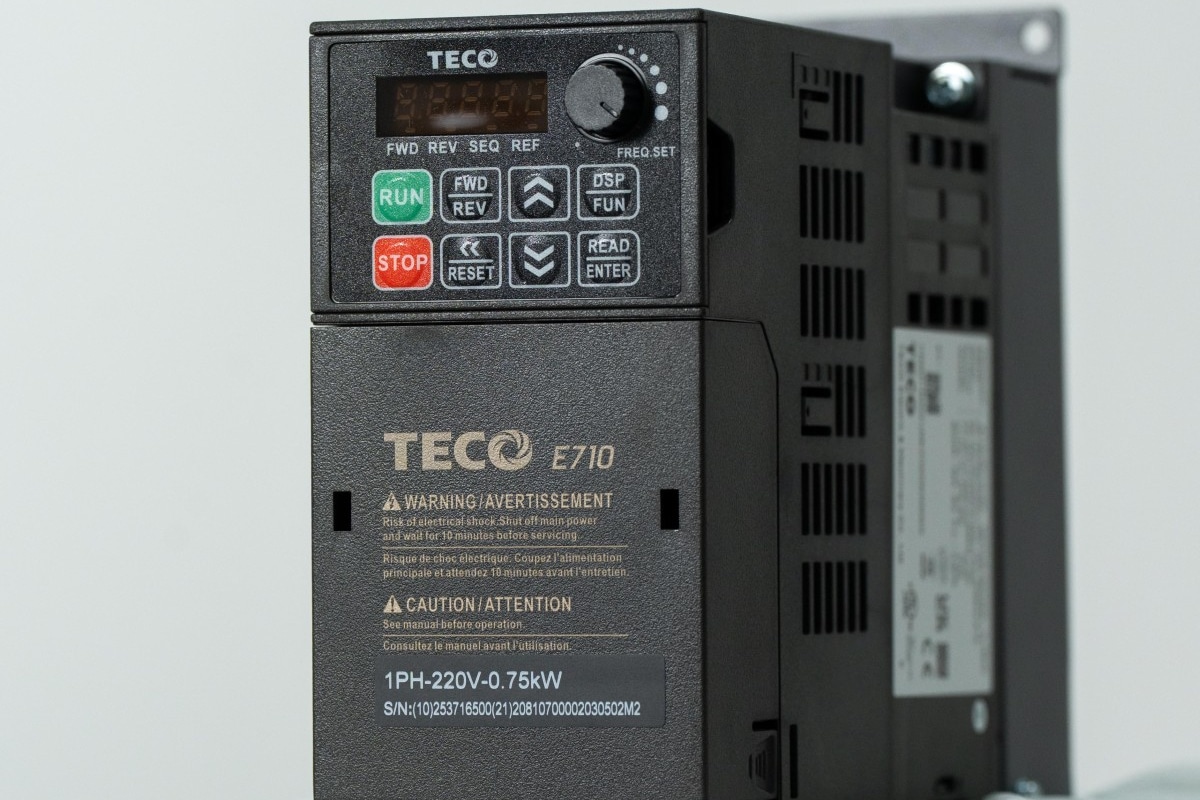
TECO’s new E710 Next Gen Compact Current Vector Control Variable Speed Drive adds built‑in predictive maintenance to mining auxiliary drives by continuously monitoring internal components from commissioning and issuing advance failure warnings. The unit delivers full rated output up to 50°C and 150% torque at 0.5Hz in Sensorless Vector mode, targeting demanding conveyor, pump and fan duties. A plug‑in Copy Module can transfer complete parameter sets between drives on site, cutting commissioning and replacement time for maintenance teams.
Nederman Mikropul is supplying advanced wet scrubbers and gas absorbers for mining and minerals processing plants, designed for >99 per cent collection efficiency on sub-micron dust while simultaneously treating hazardous process gases from crushing and related operations. The systems combine particulate scrubbing and gas absorption in a single unit, targeting fine aerosols and corrosive or toxic species that are difficult to capture with dry filters alone. For plant designers and operators, this enables tighter control of stack emissions and easier compliance with stringent site-specific air quality limits.
Queensland has approved a 21‑year extension of Stanwell’s Meandu thermal coal mine, enabling access to about 200 million tonnes of additional coal reserves. The project secures ongoing supply to the adjacent Tarong and Tarong North coal‑fired power stations, which together generate roughly 20 per cent of Queensland’s electricity. For mine planners and geotechnical teams, the decision signals two more decades of pit development, overburden management and slope stability work in the South Burnett coalfield.
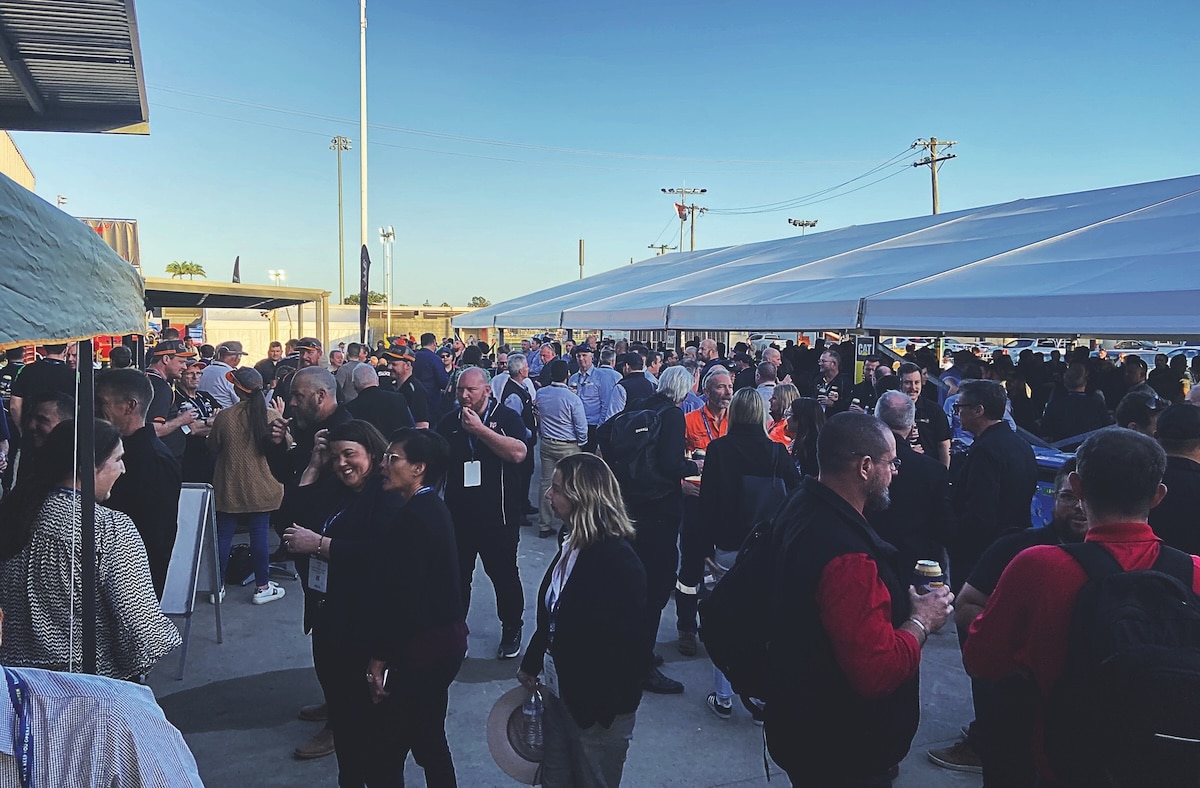
QME 2026 will return to the Mackay Showgrounds as Australia’s largest regional mining gathering, combining a full-scale equipment and technology exhibition with structured networking and deal-making. Organisers are positioning the event less as a static display of trucks, drills and processing kit and more as a hub for supplier–operator collaboration, with dedicated business development sessions and evening networking drinks. For contractors, OEMs and mine operators, the emphasis on in-person relationship building signals continued value in regional trade shows alongside remote procurement and digital vendor engagement.
Victoria has created a Mineral Sands Agricultural Land Restoration Working Group to bring together mineral sands operators, farmers, researchers and government agencies to advise on critical minerals development in farming regions. The group will focus on rehabilitation and soil restoration standards for projects such as VHM’s Goschen mineral sands development in north-west Victoria, one of Australia’s largest rare earth and zircon deposits. Outcomes are expected to influence mine planning, topsoil handling, backfilling strategies and post-mining land capability assessments across the state’s agricultural basins.
Belgian investigators have formally placed Trafigura-owned Nyrstar NV under suspicion of forgery, use of false annual accounts and misuse of corporate assets, escalating a long-running criminal probe into its controversial restructuring and asset transfer to Trafigura. The Antwerp investigating judge has notified Nyrstar, which says it has no access to the criminal file but continues to cooperate, while any charging decision rests with judicial authorities at a later stage. Separately, Belgium’s FSMA fined Nyrstar €80,000 in 2025 for breaching market-abuse and disclosure rules on its pre-restructuring liquidity disclosures.
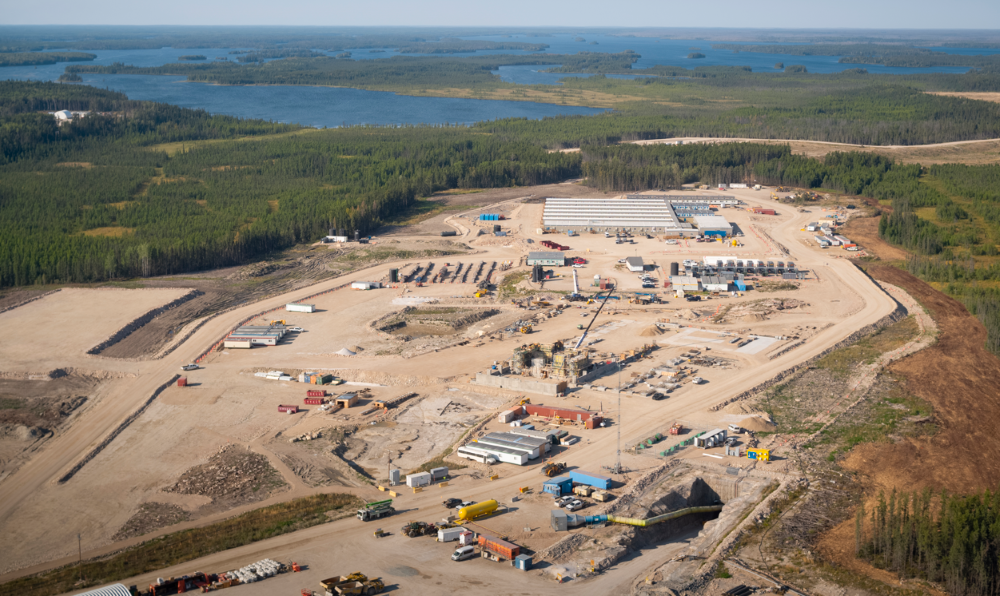
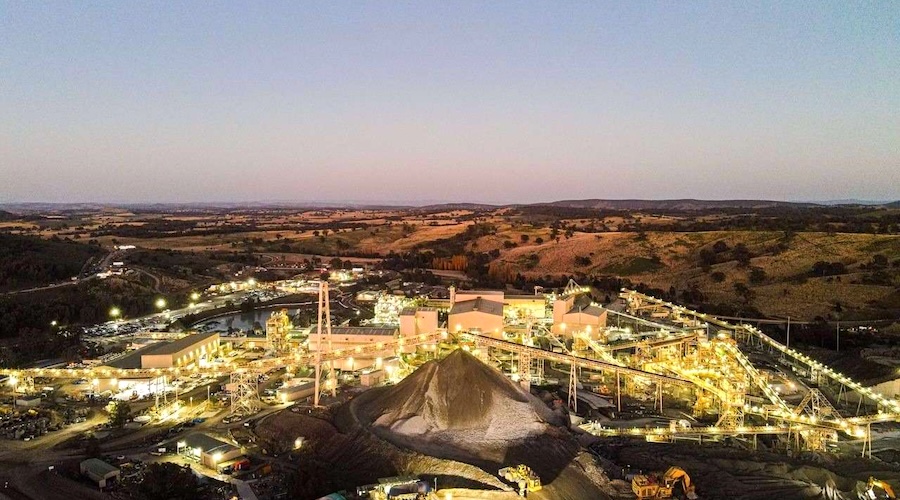
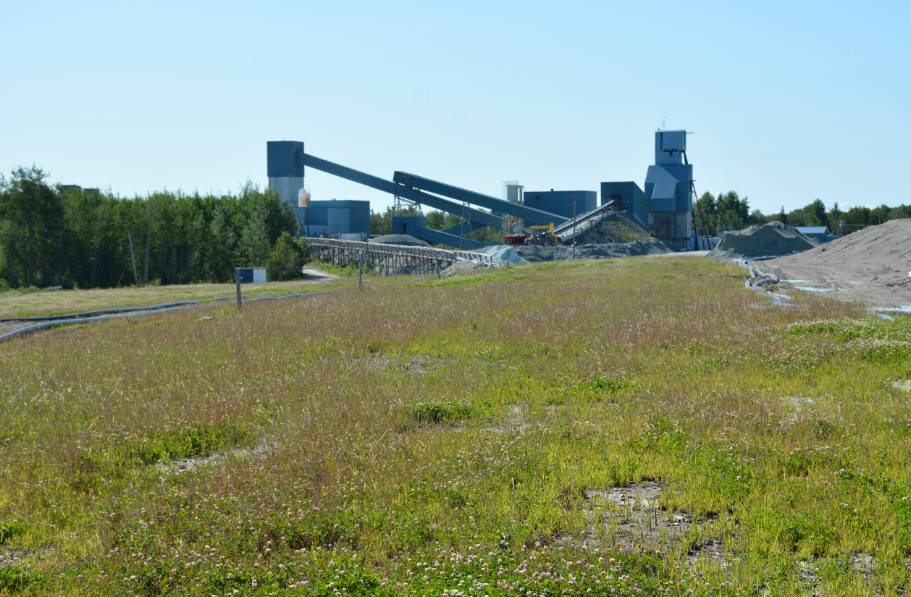
Eldorado Gold’s McIlvenna Bay underground mine in Saskatchewan has produced first copper concentrate after completing wet commissioning of its processing plant, and is ramping toward nameplate capacity of 4,900 tonnes per day with commercial production targeted for Q3 2026. The volcanogenic massive sulphide operation, valued at about C$1.24 billion and acquired via Foran Mining, is designed to average 41 million lb copper, 54 million lb zinc, 20,000 oz gold and 444,000 oz silver annually over an 18-year mine life. Near-term work centres on optimising the flotation circuit, reagent regimes and completing the paste plant and underground backfill infrastructure.
GoGold Resources has secured SEMARNAT approval to build the $227 million Los Ricos South bulk-tonnage underground gold-silver mine in Jalisco, with a 24‑month construction schedule and full funding from its C$261 million cash balance. The 15‑year operation is designed to produce 80 million oz silver-equivalent, averaging 7.3 million oz per year in the first five years, and carries a 2025 feasibility study after-tax NPV (5%) of $355 million and 28% IRR at $26.80/oz silver and $2,330/oz gold. Los Ricos South will join the Parral agglomerated heap leach tailings project and precedes potential development of the nearby Los Ricos North deposit.
According to Surbiton Associates Pty Ltd, Australian gold production slipped almost 3% quarter-on-quarter to 75 tonnes in Q1 2026, worth about A$17 billion, as heavy rain and bushfires disrupted operations at sites including Newmont’s Tanami (down 41,000 oz) and Boddington (down 35,000 oz) and Gold Fields’ Gruyere (down 20,200 oz). The impact was partly offset by higher output at Gold Fields’ Granny Smith (+19,600 oz), Newmont’s Cadia (+13,000 oz) and Northern Star’s KCGM Super Pit (+12,500 oz). Domestic gold prices swung from a record A$5,595/oz on 29 January to A$4,098/oz on 23 March, driven by Middle East tensions, portfolio rebalancing and central bank sales totalling 66 tonnes from countries including Turkey and Russia.
McEwen Mining’s pre-feasibility study for the Grey Fox underground project near Timmins, Ontario, outlines 87,000 oz/y of gold output from 2028–2041, peaking at 100,000 oz in 2029, extending the Fox Complex mine life by 15 years and feeding the existing Stock mill with 87.5% projected recovery. The $181 million initial capex project, based on 18.8 Mt at 3.28 g/t Au (nearly 2 million oz indicated, 980,000 oz in reserves), shows a post-tax NPV5 of $282 million, 25% IRR and 4.6-year payback at $3,000/oz gold. Two independent portal-accessed underground operations are planned, with construction targeted for spring 2027 and commercial production in 2029, plus a $5 million drilling programme to convert remaining resources.
Nova Scotia’s mining sector is being reshaped by reduced permitting red tape, repeal of the uranium exploration and mining ban, and new geoscience tools including a digitised drill core library and province-wide Minerals Play Fairway airborne geophysical surveys. Exploration licences doubled between 2024 and 2025, while NexGold’s Goldboro gold mine (735 jobs, C$2.1 billion GDP over 15 years), St Barbara’s Moose River stockpile processing (C$154 million GDP over 13 months) and CertainTeed’s Antrim gypsum quarry (60 jobs, ≥20-year life) move toward development. For engineers and developers, the signal is faster approvals, more data-rich targeting and a more supportive policy environment.
Antofagasta will invest $900 million to extend the Zaldívar copper mine in Chile’s Antofagasta region to 2051, under a plan that replaces all continental water use with treated wastewater supplied by sanitation company Econssa from 2028. The project centres on a new conveyance and pumping system from the La Negra sector and will generate up to 5,000 construction jobs at peak activity starting in the second half of 2026. For other operators in northern Chile’s arid copper belt, the scheme provides a full-scale reference for wastewater-based process water supply under tightening environmental constraints.
Vema Hydrogen has signed a non-binding LOI with First Atlantic Nickel & Cobalt to form a 50/50 joint venture integrating engineered mineral hydrogen (EMH) production with the Pipestone XL awaruite nickel-cobalt project, a 30 km ultramafic belt 40 km from Grand Falls-Windsor, Newfoundland. EMH accelerates serpentinisation in iron-rich ultramafic rocks to generate low-carbon hydrogen without grid electricity, with Vema targeting production costs below US$1/kg and leveraging operational experience from its Thetford ophiolite site in Quebec. Laboratory tests on Pipestone core at Vema’s Orléans facility confirmed stimulated serpentinisation and hydrogen generation, positioning the project as a template for co-located hydrogen, clean fuels and critical mineral developments at remote ultramafic mining districts.
Ericsson and Epiroc are expanding their 2018 collaboration into a global go‑to‑market alliance that embeds Ericsson’s LTE and Private 5G networks into Epiroc’s digital portfolio for both surface and underground mines. Epiroc will integrate Ericsson Private 5G with its telematics, vendor‑agnostic remote‑control platforms, and situational awareness and collision‑avoidance systems to support automation, remote operations and predictive maintenance. For mine operators, the move signals tighter coupling between OT systems and high‑reliability wireless backbones, simplifying deployment of site‑wide autonomous and semi‑autonomous fleets.
Chinese traders are driving a bidding war for US tungsten scrap, with Argus Media data showing scrap prices up 350% since May 2025, outpacing a 200% rise in tungsten metal and pushing ammonium paratungstate to record highs in late April. Dealers report offers at up to five times normal market prices as Chinese buyers bypass domestic recyclers and route material via recycling hubs in the Philippines, Taiwan, Vietnam and South Korea to circumvent China’s scrap import ban. The scramble comes amid Chinese export controls on tungsten products and US plans for up to $1.6 billion support for a Kazakhstan tungsten mine to diversify supply.
Epiroc has signed a global agreement with Ericsson to distribute LTE and 5G private network technology through Epiroc customer centres for both underground and surface mines. The deal packages Ericsson’s industrial-grade radio, core network and edge solutions with Epiroc’s digital and automation portfolio, targeting applications such as real-time fleet monitoring, remote drilling and autonomous haulage. For engineers, the move signals wider availability of carrier-grade wireless backbones to replace or supplement leaky-feeder, Wi-Fi and wired networks in harsh mining environments.
Eldorado Gold has produced first copper concentrate from its 100%-owned McIlvenna Bay project in east-central Saskatchewan, following completion of wet commissioning at the site’s processing plant. Acquired recently to bolster Eldorado’s Canadian operating platform, McIlvenna Bay transitions from construction to early operations with the concentrator now running under load. The move adds a base metals stream to Eldorado’s predominantly gold portfolio, signalling imminent ramp-up decisions on mine development, underground scheduling and long-term mill throughput planning.
Thyssen Mining has completed two 8 m diameter raise bore excavations at BHP’s Jansen potash mine in Saskatchewan, working with TRL Mining Construction LP to construct twin raises for an underground raw ore storage bin. The twin 8 m raises set a new raise bore record for Thyssen Mining and form the core vertical infrastructure for the bin system. The project signals growing confidence in large-diameter raise boring for bulk materials handling in deep potash operations.
Sandvik is investing in a new logistics hub at its Turku, Finland, factory for underground load and haul equipment, relocating key warehousing and materials-handling operations directly adjacent to production lines. The hub will replace parts of the current off-site logistics flow to cut internal transport distances and support shorter factory lead times for loaders and trucks such as the LH and TH series. For mine operators, the move signals a push for faster parts availability and more predictable delivery schedules for new fleets and rebuilds.
Construction materials distributor BRCK Group PLC is acquiring fencing manufacturer H. S. Jackson & Son for £15m plus £4.9m for land and property, expecting the deal to be earnings enhancing in the first full year. Jacksons, founded in 1947 and headquartered in Ashford with additional sites near Bath, Chester and an Autogate Systems unit in Bolton, designs and installs timber and steel fencing, acoustic barriers and access control for critical national infrastructure, schools and high-security sites. Its proprietary Jakcure timber treatment and steel systems both carry 25‑year performance guarantees, relevant for long-life perimeter and security specifications.
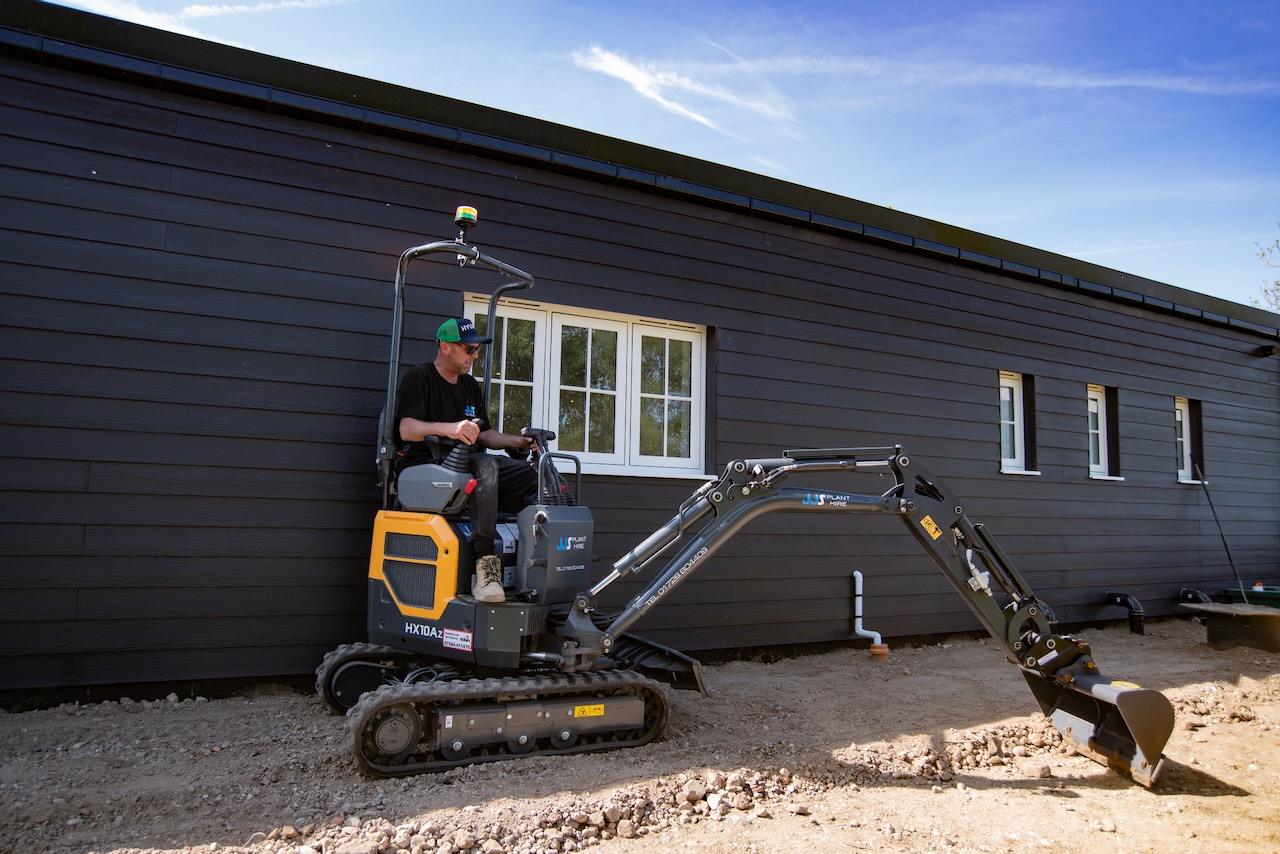
JJ Sugrue has added two Hyundai compact excavators from new dealer Tobin Plant, including one of the UK’s first HX10A Z micro excavators and a 3.8‑tonne HX35A Z, expanding a fleet that already exceeds 40 Hyundais within a 200‑machine operation. The HX35A Z, a zero‑tail swing unit with an 18.5kW Stage V engine, full‑size ROPS/TOPS cab and boom/arm/blade safety valves, is being targeted at longer‑duration housebuilding hires. The HX10A Z offers a retractable undercarriage narrowing to 730mm for doorway access, extending to 1,110mm for digging stability, with twin 10.4L/min pumps for high breakout forces on constrained sites.
SNIPEF, the Scottish and Northern Ireland Plumbing Employers Federation, has elected Dundee-based contractor Steve Craig as its 102nd president for the 2026/27 term, drawing on a career that began with an apprenticeship at Munro Petrosea in 1979 and the co-founding of APS Dundee Ltd in 2012. Craig plans to prioritise apprenticeship reform and funding, particularly for SME plumbing and heating firms that carry most of the recruitment and training burden. He will use SNIPEF’s existing research and ongoing government engagement to push for changes in apprenticeship support, skills and competence frameworks linked to net-zero building services.
Hankinson Whittle has acquired Fire Protection Compliance Ltd (FPC), adding specialist capability in fire door inspections, fire stopping and passive fire protection to its existing property maintenance and protective coatings portfolio. Managing director Sam Frame said the deal is a core element of Hankinson Whittle’s growth strategy, aimed at offering a more integrated safety and maintenance service to clients. For building owners and FM teams, the move signals a single-provider route for coatings, fabric maintenance and fire compartmentation compliance.