Geomechanics, Streamlined.
© 2026 Geomechanics.io. All rights reserved.
PLS has opened Australia’s first mine-site lithium mid-stream processing facility at its Pilgangoora operation in Western Australia, aiming to process spodumene concentrate on site rather than exporting raw material. The demonstration-scale plant, located adjacent to existing open pits and concentrators, will trial conversion steps typically performed in Chinese refineries to assess technical performance, reagent consumption and product quality under Pilgangoora ore conditions. Outcomes will inform potential scale-up to commercial mid-stream capacity, with implications for mine-site power demand, tailings management and logistics design.
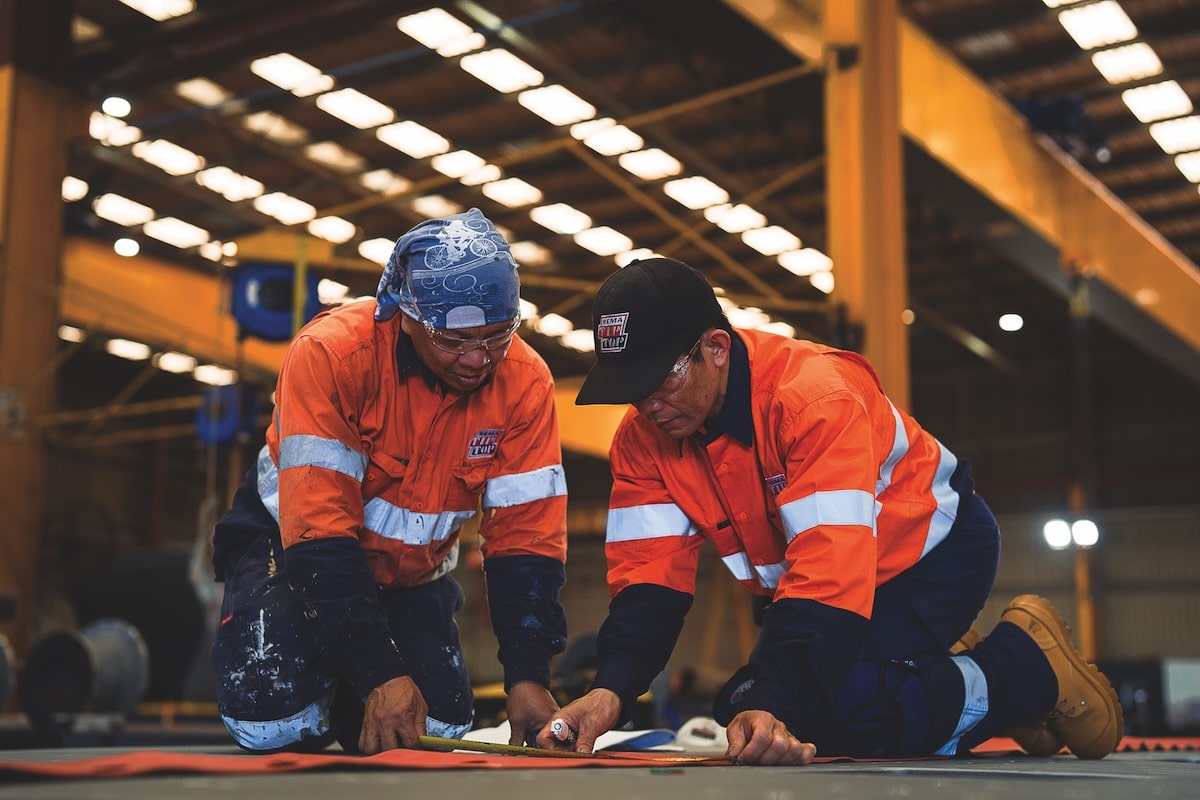
REMA TIP TOP is deploying tailored rubber, ceramic and composite lining systems across mill feed chutes, cyclones and slurry pipelines to balance wear life, cost and shutdown frequency in mineral processing plants. The company matches lining thickness, hardness and chemistry to specific duties such as coarse ore abrasion, high-velocity slurry impact and chemical attack, with modular panels designed for rapid replacement during planned outages. For plant engineers, the approach shifts decisions from generic wear packages to circuit-by-circuit optimisation of liner selection, installation method and inspection intervals.
Bellevue Gold’s namesake mine in Western Australia has operated for 155 consecutive hours on 100 per cent renewable power, running engine-off for more than six and a half days in early May. The off-grid hybrid system combines a large-scale solar farm, battery energy storage and a reduced reliance on diesel generation to maintain continuous underground and processing operations. For miners planning remote decarbonised sites, the run provides a real-world reference for renewable penetration, storage sizing and contingency planning in isolated grids.
Zenith Minerals has agreed a binding takeover implementation deed with Forrestania Resources for an all-scrip, off‑market acquisition valuing Zenith at about $93.5 million. Zenith shareholders will receive one new Forrestania share for every 4.3 Zenith shares, implying $0.132 per Zenith share based on the agreed exchange ratio. The deal consolidates Forrestania’s and Zenith’s gold and battery metals exploration portfolios under a single ASX vehicle, which may affect future drilling priorities, capital allocation and JV negotiations across their Western Australian tenements.
Yorkshire Water has awarded Barhale a £16m, four-year contract to build the Springhill SRE No.3 service reservoir near Scarborough, a 17.3ML twin-compartment reinforced concrete structure measuring 55m × 77m × 5m to replace two ageing reservoirs totalling 17.6ML. The reservoir will be hydraulically balanced with existing Springhill SREs and built using a hybrid solution with an in-situ base slab and precast walls, columns and roof to tighten quality control and shorten the programme. A bespoke concrete mix designed to resist soft water attack and chemical degradation, plus new inlet/outlet/overflow pipelines and pumping stations, aims to deliver a long-life asset, with construction scheduled for 2027.
Robertson Construction North East has started restoring Newcastle University’s Grade II listed Henderson Hall, a 1930s former student residence left largely roofless and exposed after a June 2023 fire. Works centre on fully replacing the traditional tiled roof and dormer windows, with Robertson Timber Engineering manufacturing and erecting a new timber roof structure offsite to improve build quality and reduce waste. Additional scope includes structural repairs to the external façade, chimneys and upper-floor party walls, plus stripping water-damaged internal finishes to stabilise the building envelope.
Sany Heavy Machinery has appointed E H Hassell & Son as an authorised UK dealer for its S-series material handlers, targeting scrap, waste and port operations. The Stoke-on-Trent-based firm, which has 50 years’ experience and two decades supplying these sectors, will provide full lifecycle support including sales, servicing and repairs. Hassell will also offer 0% finance through its finance partner, which could materially affect procurement decisions for high-capex handling fleets and accelerate replacement of ageing yard equipment.
Strikes by more than 1,000 Unite local government craftworkers at Bristol, Southwark, Stoke-on-Trent, Newham, Leeds and Babergh and Mid Suffolk councils will go ahead on 17, 18, 23 and 24 June after a 3.2% 2025 pay offer and the removal of apprentices from the agreement were rejected. Unite says the shift to local government job evaluation downgrades skilled craft roles, which include key maintenance and repair functions for housing, highways and public buildings. Separately, 40 Unite members at Haldane-Fisher’s central supply store in Newry will strike from 10 June after rejecting a 2% imposed rise, threatening disruption to regional building and timber material supply chains.
Egis has appointed Mike Birch as transportation director for the UK and Ireland, tasking him with integrating its light rail, heavy rail, highways and active travel workstreams and expanding the firm’s regional transport portfolio. Birch brings over 35 years’ experience, including senior roles at Jacobs and Ramboll and programme leadership on HS2, Crossrail and the West Yorkshire mass transit initiative. His initial remit centres on consolidating multidisciplinary capabilities, strengthening client and delivery‑partner relationships, and positioning Egis for more locally led, cross‑sector transport programmes.
Tilbury Douglas has appointed Simon Butler as managing director for regional building, signalling a strengthened leadership structure across its UK construction operations. Martin Home and Richard Boeg become regional managing directors for building in the North and South respectively, while Kabir Salihi takes the role of regional director for the north west. The reshuffle points to a more decentralised delivery model for complex building projects, with clearer regional accountability for programme, cost and supply-chain management.
Charities in the Better Planning Coalition, including the RSPB, Woodland Trust and CPRE, have urged the Prime Minister to reset planning reforms ahead of this summer’s National Planning Policy Framework (NPPF) decisions. Their letter backs measures on compulsory purchase, curbing “hope value”, expanding public bodies’ land assembly powers and enforcing build‑out of consented schemes, alongside extra funding for social and affordable homes. They warn that repeated weakening of planning policy is driving speculative, poor‑quality development in unsuitable locations while major housebuilders cut output amid higher costs and weak demand.
Electrical Contractors’ Association, Electrical Safety First, the Institution of Engineering and Technology, NICEIC and SELECT have jointly warned that plug‑in solar kits using 13 A socket outlets pose fire and electric shock risks if installed without proper design and verification. Concerns centre on unassessed circuit loading, lack of RCD protection, and DIY connection of microinverters and flexible cables into existing ring finals. The bodies are urging formal guidance, competent installation, and integration with fixed wiring to BS 7671 rather than ad‑hoc consumer plug‑in use.
Willmott Dixon has reported a record £4.4bn forward pipeline over the next five years in its 2025 accounts, signalling strong visibility for upcoming building and infrastructure workloads across its regional frameworks. Sister company Fortem, which focuses on property services and repairs for social housing and public estates, recorded a 22% rise in underlying profit, pointing to sustained demand for planned maintenance and retrofit programmes. Contractors, consultants and materials suppliers can expect continued tender activity and framework call-offs from both businesses in the medium term.
Vinci Construction has expanded its Latin American ground technologies portfolio by acquiring Grupo TDM’s geosynthetics division in Peru, a regional supplier of geotextiles, geomembranes and geogrids for mining, road and hydraulic works. The deal gives Vinci direct control of design–supply–install capability for reinforced soil walls, basal reinforcement and lining systems on high-embankment highways and tailings storage facilities in the Andes. For geotechnical contractors and designers, this signals stronger OEM-backed support for geosynthetic solutions on steep slopes, soft-ground foundations and aggressive seismic conditions in the region.
Transport for London has opened consultation on a Docklands Light Railway extension from Gallions Reach to Thamesmead via Beckton Riverside, which would require a new tunnel beneath the River Thames to connect the existing DLR network to major brownfield sites on the south bank. The scheme is framed as a core enabler for large-scale housing and mixed-use development in Thamesmead and Beckton Riverside, where current public transport is limited to buses. For civil and geotechnical teams, early issues will centre on tunnel alignment, riverbed ground conditions and interface with existing DLR viaduct structures.
Wales’ new deputy transport minister has written to Great British Railways Transition Team chair Heidi Alexander calling HS2 a “long-standing symbol of unfair rail funding” because the high-speed scheme is classified as an “England and Wales” project despite no HS2 track being built in Wales. He argues this designation blocks Barnett consequentials that could otherwise support upgrades on core Welsh routes such as the South Wales Main Line and the Valleys network. The row intensifies pressure over how multi‑billion‑pound rail megaprojects are accounted for in UK transport budgets.
Shanghai Boonray Intelligent Technology, Zhongguancun Technology Leasing and Iridium Molybdenum Technology have signed a tripartite strategic cooperation agreement, dated 1 June, to accelerate intelligent and electric transformation in open-pit mining. The partnership centres on developing new energy intelligent equipment for haulage and production scenarios, backed by structured leasing and financing support from Zhongguancun to move fleets away from diesel. For mine operators, the deal signals faster access to OEM-backed electric and autonomous-ready machinery without large upfront capital outlay.
Epiroc’s 2026 Capital Markets Day in Örebro set out slower-than-expected uptake of its automation and battery-electric fleets as major miners cut capex for next-generation equipment, affecting orders for systems such as 6th Sense automation and Scooptram BEV loaders. President and CEO Helena Hedblom detailed a shift towards retrofit and brownfield upgrades, remote monitoring, and staged autonomy rather than full greenfield roll-outs. For mine planners and engineers, the message is to expect incremental deployment of teleremote drilling, autonomous haulage layers, and underground charging infrastructure rather than rapid fleet-wide conversion.
The Pan Government Collaborative Agreement has awarded £3.5bn of UK public infrastructure work on 8 April 2026 without naming a single supplier, using Section 94 provisions to keep bidder identities confidential at framework award stage. This anonymity shifts early-stage qualification towards generic capability criteria and financial standing tests rather than project-specific track records on, for example, complex tunnelling, major earthworks or long-span bridge construction. Contractors and consultants may need to rely more on consortium structures and pre-agreed data-sharing protocols to prove competence once call-off competitions begin.
Mott MacDonald has been appointed to Transport for London’s Professional Services Frameworks 3 for Project, Programme and Commercial Management services, positioning it to support complex capital works across the Underground, Overground, DLR and surface transport networks. PSF3 is TfL’s key route for procuring multidisciplinary consultancy on major renewals and enhancements, from station capacity upgrades and tunnel refurbishments to bridge strengthening and highway asset management. The appointment signals continued demand for integrated project controls, cost management and risk-based planning on London’s high-intensity, brownfield transport infrastructure.
Network Rail has launched market engagement for a £125M framework to connect new renewable generation directly into the Southern Region DC traction power network, targeting decarbonisation of third-rail operations. The programme will focus on integrating distributed assets such as solar PV and onshore wind into existing 750V DC substations and feeder stations, reducing reliance on grid-supplied electricity. Contractors and developers are being invited to propose grid-interface, protection, and control solutions that can be standardised and replicated across multiple sites.
Crews have installed 14,000 bricks on the new Kirk Hill bridge at Sutton Bonington, Nottinghamshire, advancing construction of the replacement rail crossing on this section of line. The brickwork forms the architectural façade and parapets of the new bridge structure, which replaces an ageing asset that constrained clearances for modern rail operations. For geotechnical and civil teams, the milestone signals progression from primary structural works to envelope and finishing stages, with remaining tasks likely to focus on waterproofing, track alignment, and approach earthworks.
Ofwat has accepted a £44.7M enforcement package from Dŵr Cymru Welsh Water to remediate wastewater network failures and cut sewage spills across Wales. The measures will target storm overflows and underperforming treatment works, with investment directed to upgrading sewer infrastructure, increasing storage capacity and improving process control at key wastewater treatment plants. For civil and environmental engineers, the programme signals near-term demand for hydraulic modelling, network rehabilitation, and construction of additional attenuation and treatment assets under tighter regulatory scrutiny.
The Environment Agency has appointed a consortium led by AtkinsRéalis, with Stantec and Waterman as subconsultants, to deliver professional services for a new flood and coastal risk management framework across England. The framework will support planning, design and appraisal of defences and nature-based solutions for rivers, estuaries and coasts, shaping future capital works and asset management programmes. Consultants can expect significant workloads in hydraulic modelling, coastal processes, climate change allowances and whole-life risk assessments for Environment Agency schemes.