USA Rare Earth $1.6B CHIPS funding: mine‑to‑magnet build‑out lens for engineers
Reviewed by Joe Ashwell
First reported on MINING.com
30 Second Briefing
USA Rare Earth has finalised definitive agreements with the US Department of Commerce for nearly $1.6 billion under the CHIPS Act, comprising $277 million in federal funding and up to $1.3 billion in senior secured loans, supporting a total $3.5 billion capital programme. The company plans a fully integrated mine-to-magnet chain anchored by its Texas deposit (targeting production in 2028), a Stillwater, Oklahoma NdFeB magnet plant ramping to 600 tonnes this year and 10,000 tonnes/year of magnets plus 10,000 tonnes/year of heavy rare earth strip-cast, metal and alloy at full US build-out. Additional facilities are planned in Wheat Ridge, Colorado, Blacksburg, South Carolina ($1.2 billion), France (€175 million) and Brazil (a $2.8 billion mine acquisition), with yttrium already produced commercially in the UK via Less Common Metals.
Technical Brief
- CHIPS Act package comprises $277 million federal funding plus up to $1.3 billion senior secured loans.
- Loan and grant disbursements are milestone-based, tying capital release to specific project delivery stages.
- USA Rare Earth has also raised $1.5 billion in private capital alongside previous financings.
- First Stillwater, Oklahoma magnet line was commissioned in April and is already in early production.
- A second Stillwater line is planned for installation next year, doubling that plant’s magnet capacity.
- Blacksburg, South Carolina site has been selected for a $1.2 billion refining and magnet facility.
- Department of Energy is separately providing $19.3 million for a pilot-scale rare earth separations project.
- Planned €175 million investment in France targets additional metal, alloy and magnet production capacity.
- A $2.8 billion acquisition would secure Brazil’s only producing rare earth mine, pending regulatory clearance.
- Less Common Metals in the UK has produced first commercial-grade yttrium for high-temperature aerospace coatings.
Our Take
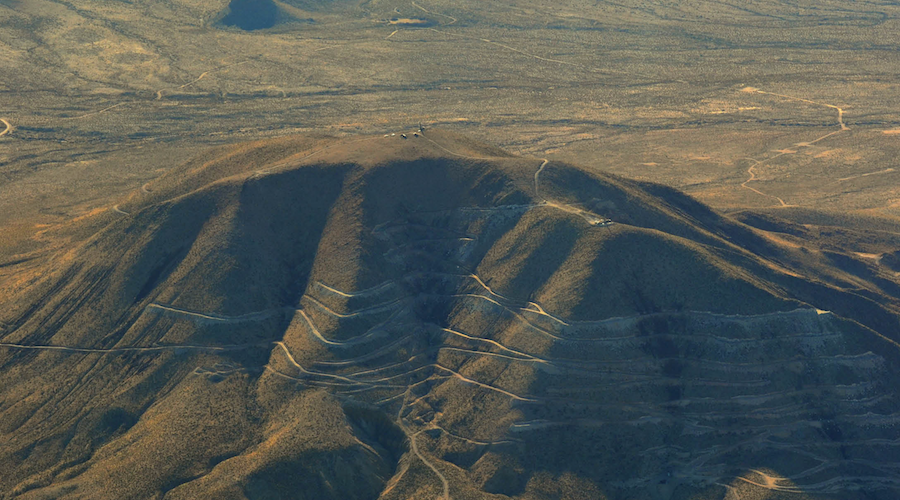
The $3.5 billion capital stack around USA Rare Earth, including the proposed $2.8 billion Serra Verde acquisition flagged in our May 13 coverage, signals a strategy to control both US-based assets like Round Top and upstream Brazilian feed, which could reduce exposure to single-jurisdiction permitting or political risk for rare earths.
With China still controlling about 60% of mined rare earth output and almost all processing capacity, as noted in the May 25 rare earths dominance piece, a fully funded USAR chain from Texas through Stillwater and Wheat Ridge would give US and allied OEMs a rare alternative source of yttrium, dysprosium and other heavy rare earths outside Asia.
The funding deal lands while MP Materials is suing USA Rare Earth over alleged magnet IP misuse (May 27 article), so any ramp-up towards the 2030 operating profile will likely proceed under tighter scrutiny of technology provenance and could influence how US agencies structure future support for competing rare earth magnet suppliers.
Prepared by collating external sources, AI-assisted tools, and Geomechanics.io’s proprietary mining database, then reviewed for technical accuracy & edited by our geotechnical team.
Related Articles


Related Industries & Products
Mining
Geotechnical software solutions for mining operations including CMRR analysis, hydrogeological testing, and data management.
CMRR-io
Streamline coal mine roof stability assessments with our cloud-based CMRR software featuring automated calculations, multi-scenario analysis, and collaborative workflows.
HYDROGEO-io
Comprehensive hydrogeological testing platform for managing, analysing, and reporting on packer tests, lugeon values, and hydraulic conductivity assessments.
GEODB-io
Centralised geotechnical data management solution for storing, accessing, and analysing all your site investigation and material testing data.