Geomechanics, Streamlined.
© 2026 Geomechanics.io. All rights reserved.
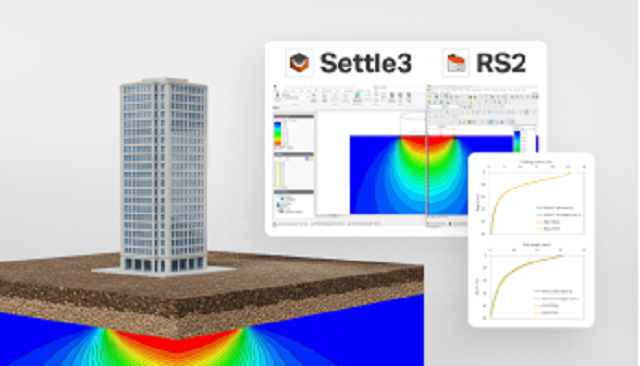
Settlement prediction in layered soils is shown to depend strongly on how vertical stress increments are computed, comparing classical Boussinesq-based methods with numerical analyses in Settle3, RS2, and RS3. The piece contrasts 1D influence-factor approaches against 2D/3D finite element and finite difference models that capture stiffness contrasts, non-linear behaviour, and complex load geometries. For practitioners, it signals when simple elastic solutions become overly conservative and when full numerical stress redistribution is needed to refine serviceability settlement estimates.
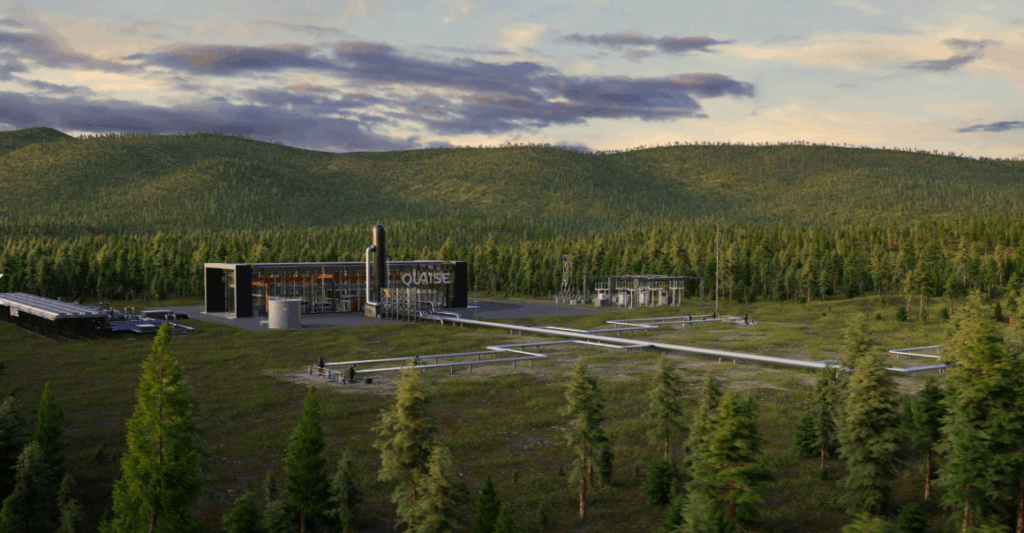
Quaise Energy is advancing Project Obsidian in Oregon, aiming to build the first superhot geothermal plant by drilling into rock above 300°C and delivering a baseload 50 MW from only a handful of wells by 2030. A modelling analysis presented at the 2026 Stanford Geothermal Workshop by senior mechanical engineer Daniel W. Dichter indicates higher subsurface temperatures could ultimately support 250 MW in phase two, with a regional goal of 1 GW. The confirmation well is due online later this year, with lab work at Oregon State University recreating extreme downhole geochemical conditions.
Keller has appointed Scott Nichols as President of Keller North America and promoted Curtis Cook to President of its US Foundations business unit, reshaping leadership at one of the region’s largest geotechnical contractors. Nichols will oversee a portfolio spanning ground improvement, grouting, deep foundations and earth retention across Canada, the United States and Mexico, while Cook will focus on US piling and shoring operations. The changes signal continuity of in-house leadership and may influence procurement, partnering and design–build delivery on major foundation and ground engineering projects.
Strabag UK has agreed to acquire Van Elle Holdings, one of the UK’s largest specialist geotechnical contractors, in a deal valuing the business at £58.8M. The takeover brings Van Elle’s piling, ground improvement and rail geotechnics capability into the Austrian Strabag Group’s UK portfolio, strengthening its in-house delivery for major infrastructure such as HS2 and National Highways schemes. Contractors and consultants can expect a better-integrated design-and-build offer on complex foundations, retaining structures and track-bed works, but also increased competition in the UK ground engineering market.
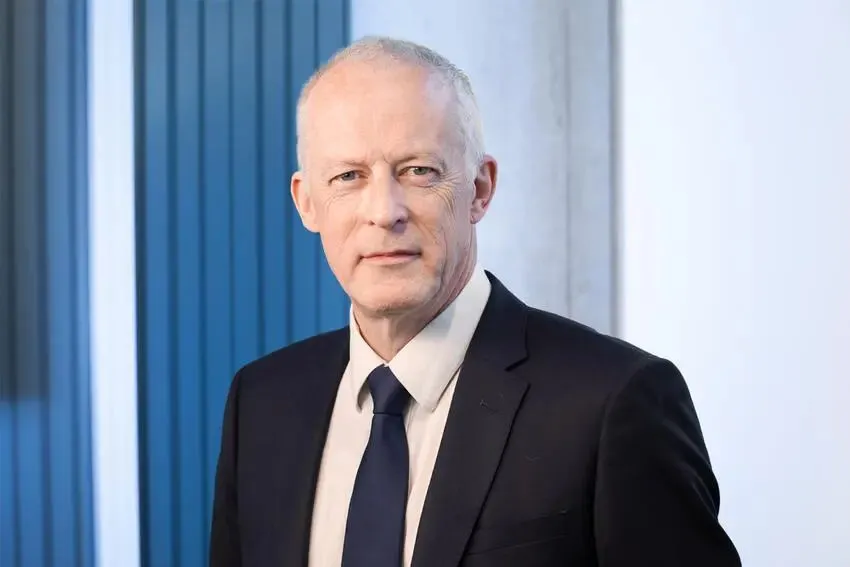
Former Keller Group chief executive Michael Speakman has died, with the ground engineering contractor announcing his death on 9 April following his passing last week. Speakman led Keller, one of the world’s largest specialist geotechnical contractors with operations across piling, ground improvement and grouting, through a period of major infrastructure delivery in transport, energy and urban development. His death removes a senior industry figure with deep experience in large-diameter piling, complex ground stabilisation and international project delivery.
NASA’s Artemis II crew has completed a geology‑focused lunar flyby, using high‑resolution imaging and LiDAR to map candidate Artemis III landing zones across the South Pole–Aitken Basin and other polar regions. Astronauts conducted real‑time visual stratigraphy logging of crater walls up to several kilometres deep and coordinated spectral observations of suspected pyroclastic deposits and boulder fields larger than 5 metres. The resulting datasets on regolith thickness, block size distributions and slope angles are expected to refine bearing capacity models, excavation strategies and ground‑anchor design for future lunar surface infrastructure.
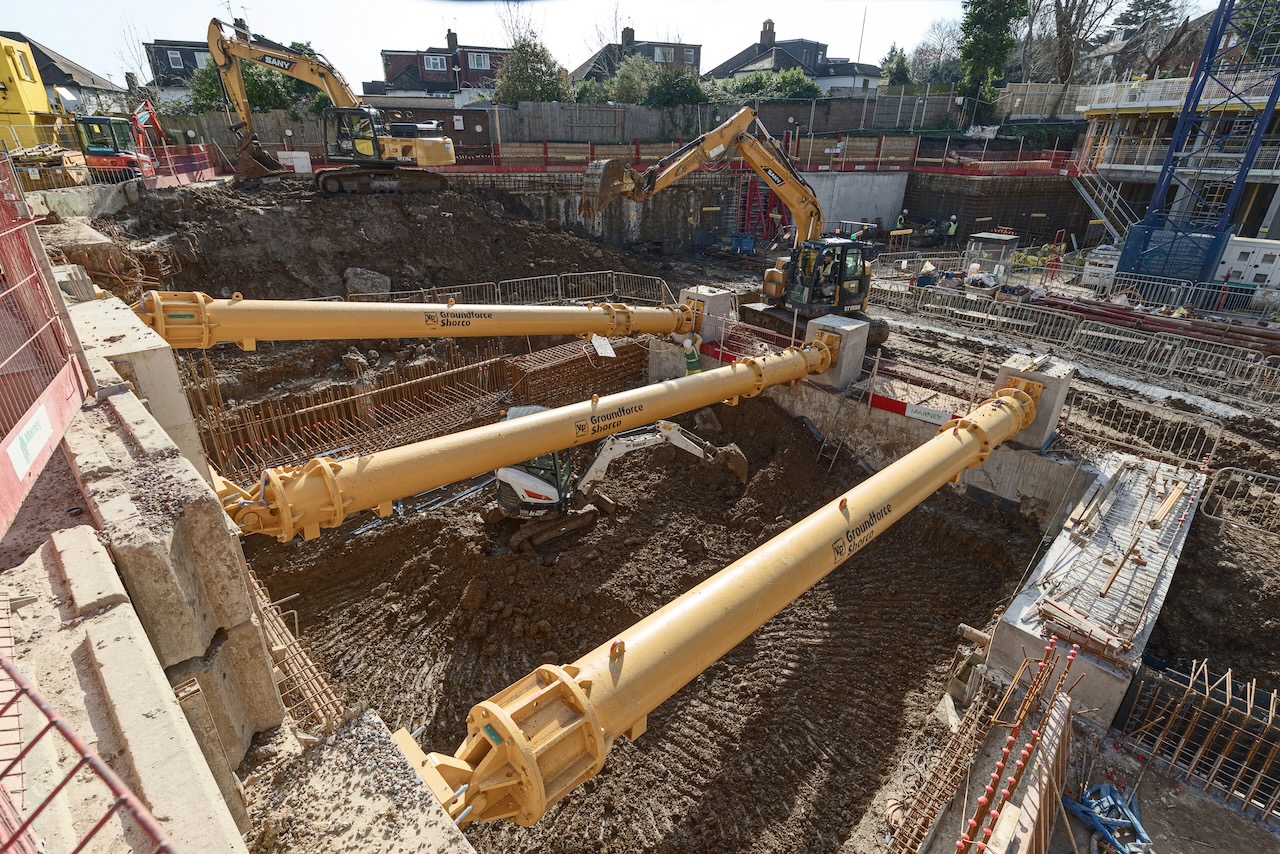
Groundforce Shorco has installed nine modular hydraulic props to brace a 4m-deep, 50m by 40m basement excavation for a new six-storey, 108-bed Clore Manor care home with underground parking in Hendon, north London. A secant-piled retaining wall is supported by six MP150 raking props (7.3–10.3m) along the northern edge and three high-stiffness MP375 props on the eastern side, adjacent to the Great North Way and a deeper attenuation-tank excavation. Deflection was limited to ±10mm, driving the choice of MP375s for stiffness rather than their 375t (3,677kN) axial capacity.
Budimex has been selected as preferred contractor for deep foundation works on the passenger terminal of Poland’s planned Centralny Port Komunikacyjny (CPK), part of the £27bn Port Polska hub between Warsaw and Łódź. The package will focus on large-scale piling and ground improvement for the main terminal superstructure, a critical early works phase on the greenfield site’s challenging alluvial and glacial deposits. Geotechnical contractors and designers will be watching for CPK’s chosen pile types, installation methods and monitoring regimes, which are likely to set benchmarks for subsequent airside and rail interfaces.
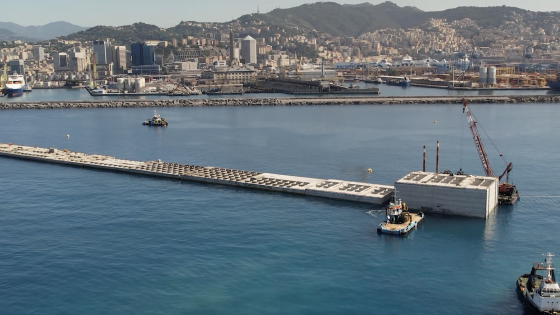
Construction of a 6km offshore breakwater with Europe’s deepest foundations is pushing marine geotechnical limits, with caissons and foundation elements installed in exceptionally deep water using heavy-lift vessels and precision positioning systems. Complex offsite fabrication of large concrete units, likely in a dedicated casting yard with slipform or match-cast techniques, is being coordinated with narrow marine weather windows and high-capacity barges to maintain programme. For designers and contractors, the project stresses accurate seabed characterisation, robust scour protection detailing and tight control of tolerances during submerged placement.
Immediate load capacity of helical anchors and piles at installation is being challenged by data showing significant “aging” effects, with shaft resistance and overall capacity increasing measurably over days to months in clays and some sands. The discussion contrasts torque-correlated design methods with time-dependent capacity gains, referencing field load tests where post-installation capacity growth alters factor-of-safety assumptions and serviceability performance. For practitioners, the key issue is whether to rely solely on installation torque or to incorporate waiting periods and ageing factors into design for temporary works, tiebacks and lightly loaded foundations.
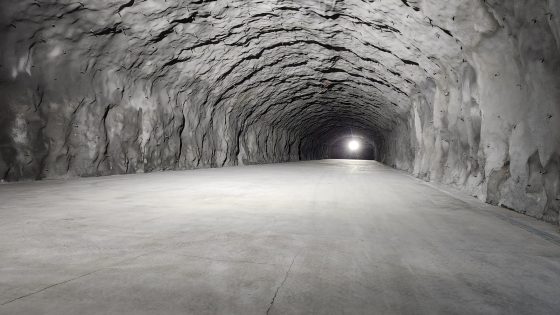
Excavation is under way 1.5km below ground at the Long Baseline Neutrino Facility in South Dakota to create three caverns, each roughly cathedral-sized, to house the Deep Underground Neutrino Experiment’s liquid-argon detectors. The 1,300km-long beamline from Fermilab to the former Homestake gold mine demands tight control of rock mass behaviour, with extensive pre-grouting, cable bolting and shotcrete linings in complex, stressed Precambrian formations. Construction sequencing, spoil handling through deep shafts and long-term groundwater management are central geotechnical risks for the multi-year programme.
JP Giroud’s legacy site consolidates more than 400 technical documents, including his 1977 geomembrane liner leakage formulation and 1982 composite liner concept, which underpin modern landfill and heap leach barrier design. The archive spans Terzaghi Lecture materials, ASCE Geo-Institute Hero content, and International Geosynthetics Society presidential work from 1986–1990, plus design charts, case histories, and conference keynotes. Practitioners gain a single reference point for Giroud’s methods on leakage control, stability of geosynthetic-lined slopes, and geosynthetic-reinforced soil structures.
Numerical modelling of deep underground excavations using RS2 and the Confinement-Dependent Visco-Plastic Model (CVBM) is used to capture spalling in jointed rock masses where confinement drops and tangential stresses concentrate around excavation boundaries. The approach contrasts brittle spalling in massive, low-porosity rock with more ductile behaviour in highly jointed rock, explicitly representing joint orientation, spacing, and strength. For design, this enables more realistic prediction of depth of failure, damage zones, and support demand around tunnels and caverns at high stress ratios.
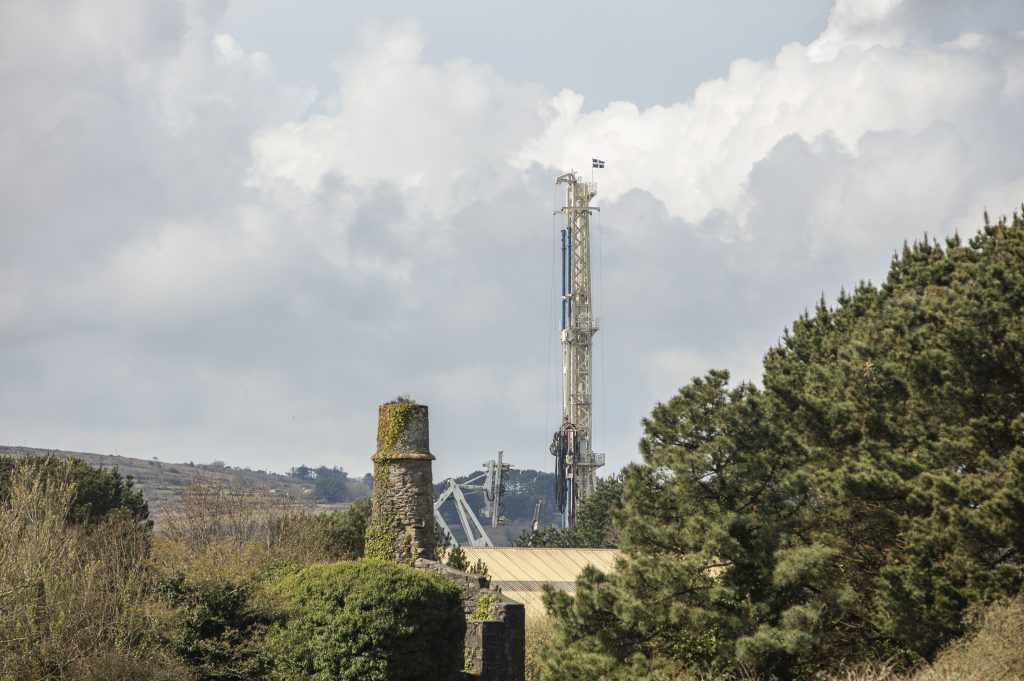
Britain’s first continuous geothermal power plant has begun commercial operation in Cornwall, supplying baseload electricity to the grid for 24/7 generation rather than heat-only or pilot‑scale output. The project uses deep geothermal wells drilled several kilometres into hot granite, circulating water through a closed-loop system to drive a surface power plant via binary-cycle technology. For civil and geotechnical engineers, the scheme tests high‑temperature casing design, long‑term borehole stability in fractured rock, and integration of geothermal infrastructure with existing grid and planning frameworks in the UK.
GeoStruxer’s digital twin of a 12,000‑square‑metre grain warehouse in Jazan, Saudi Arabia, enabled a redesign of the original slab‑on‑grade foundation to a piled solution that cut pile numbers by 70% and CO₂ emissions by 44%. Using Bentley’s PLAXIS 3D and Leapfrog, the team integrated geotechnical models with structural analysis to optimise pile length, spacing, and layout while maintaining bearing capacity and settlement criteria. The approach reduced concrete and steel quantities, shortened construction time, and provided a reusable geotechnical model for future port developments.
A levee stability example models a flood event over a confined aquifer, comparing pore-water pressure definitions under different PLAXIS licensing options (2D, LE, and LE Advanced). The case contrasts simple hydrostatic assumptions with transient seepage and confined aquifer responses, including delayed pressure dissipation and uplift at the levee toe. Results show how choice of pore-pressure model and licence level materially changes calculated factors of safety and potential slip surfaces, directly affecting design decisions for flood defence embankments on artesian foundations.
Pile Dynamics, Inc. and GRL Engineers, Inc. will run a one-day 2026 “State of Practice” seminar focused on quality control for deep foundations, covering benefits, methods, interpretations, risks and implementation. The programme centres on modern testing and monitoring approaches for driven piles and drilled shafts, including practical guidance on data interpretation and risk management. Geotechnical practitioners can expect applied content directly relevant to foundation load testing, integrity assessment and construction QC procedures.
Helical piles are being positioned as an alternative to traditional drilled or spread concrete foundations for lattice and monopole communication towers, particularly where uplift, lateral loads and variable soils control design. Screw-in steel piles with helix plates can be installed with smaller rigs, generate minimal spoil, allow immediate loading and are removable at decommissioning, contrasting with large-diameter drilled shafts or pad-and-pier systems that require curing time and substantial excavation. The comparison focuses on sites with constrained access, weak or layered soils, and projects needing rapid deployment or future relocation.
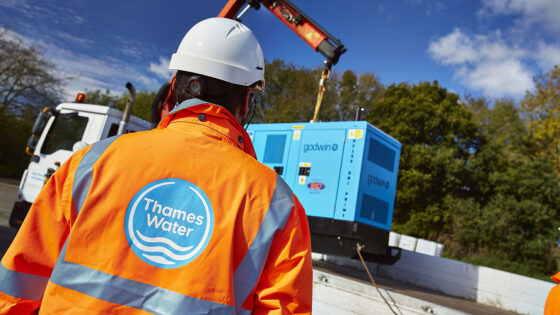
Thames Water has launched procurement for a multi‑lot framework worth up to £177M (excluding VAT) to deliver site investigation surveys across its asset base. The framework will cover intrusive and non‑intrusive ground investigations, including boreholes, trial pits, in‑situ testing and laboratory analysis to support major water and wastewater infrastructure works. Geotechnical and environmental consultants and drilling contractors can expect long‑term programmes tied to pipeline renewals, treatment works upgrades and resilience schemes across the Thames Water region.
Aarsleff Ground Engineering is promoting an integrated ground solution offer that combines vibro stone columns, rigid and hybrid inclusions, and driven precast piles into a single engineered package for each site. The firm targets projects with variable or weak soils, using mixed systems across a footprint to manage differential stiffness and keep floor slabs flat and frames within tolerance without multiple specialist contractors. For geotechnical and structural teams, the pitch is one design responsibility, coordinated load paths and programme certainty on brownfield or heterogeneous sites.
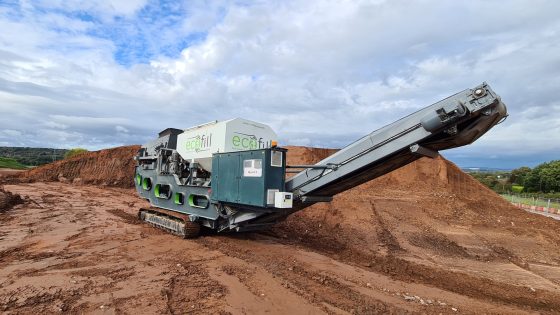
Persimmon Homes has partnered with ground engineering technology firm Ecofill to re-use site-won excavated soils as engineered fill in adoptable roads, retaining walls, piling mats, embankments and trench backfills, displacing imported primary aggregates. Ecofill’s process allows classification and treatment of cohesive and granular arisings to meet highways and structural fill specifications, reducing soil sent to landfill and cutting lorry movements for aggregate haulage. The move signals wider potential for specification-compliant reuse of marginal soils on large housing schemes under UK earthworks and highway adoption standards.
Dennis Boehm has received the Wallace Hayward Baker Award from the Deep Foundations Institute for more than three decades of work on deep foundations, starting with Hayward Baker (now Keller) in 1990. He is recognised as an expert in both wet and dry soil mixing, applying these methods on complex ground improvement and deep foundation projects across North America. For practitioners, his work reinforces the role of soil mixing in controlling settlement and improving bearing capacity where conventional piling or mass excavation is impractical.
Thames Water has begun procurement for a £5.7bn design-and-build contract to deliver the proposed Abingdon strategic reservoir in Oxfordshire, covering full design, construction, testing and commissioning under a single main contractor. The utility describes the selection as an “extensive” multi-stage process, signalling a long lead-in for bidders needing capability in large earthworks, major water-retaining structures and complex commissioning. For civil and geotechnical contractors, the scale and integrated scope point to significant opportunities in reservoir embankment design, seepage control and long-term performance monitoring systems.
Disaster recovery has started on the Bruxner Highway at Mallanganee, where Transport for NSW is repairing and stabilising two failed downslopes damaged by a landslip between Willock Street and Bulmers Road, about 40 kilometres west of Casino. Works include installing soil nails to reinforce the slope mass and control further movement, alongside reconstruction of the affected pavement and drainage. Geotechnical teams will need to manage access and traffic staging on this constrained highway section while drilling and grouting operations are underway.